Create a free account to get started

Unlock full course notes by signing up

  • Video lessons taught by top educators
  • Practice questions with guided solutions
  • Written review notes for reference
  • Expert answers anytime from course tutors

Chiral Molecules


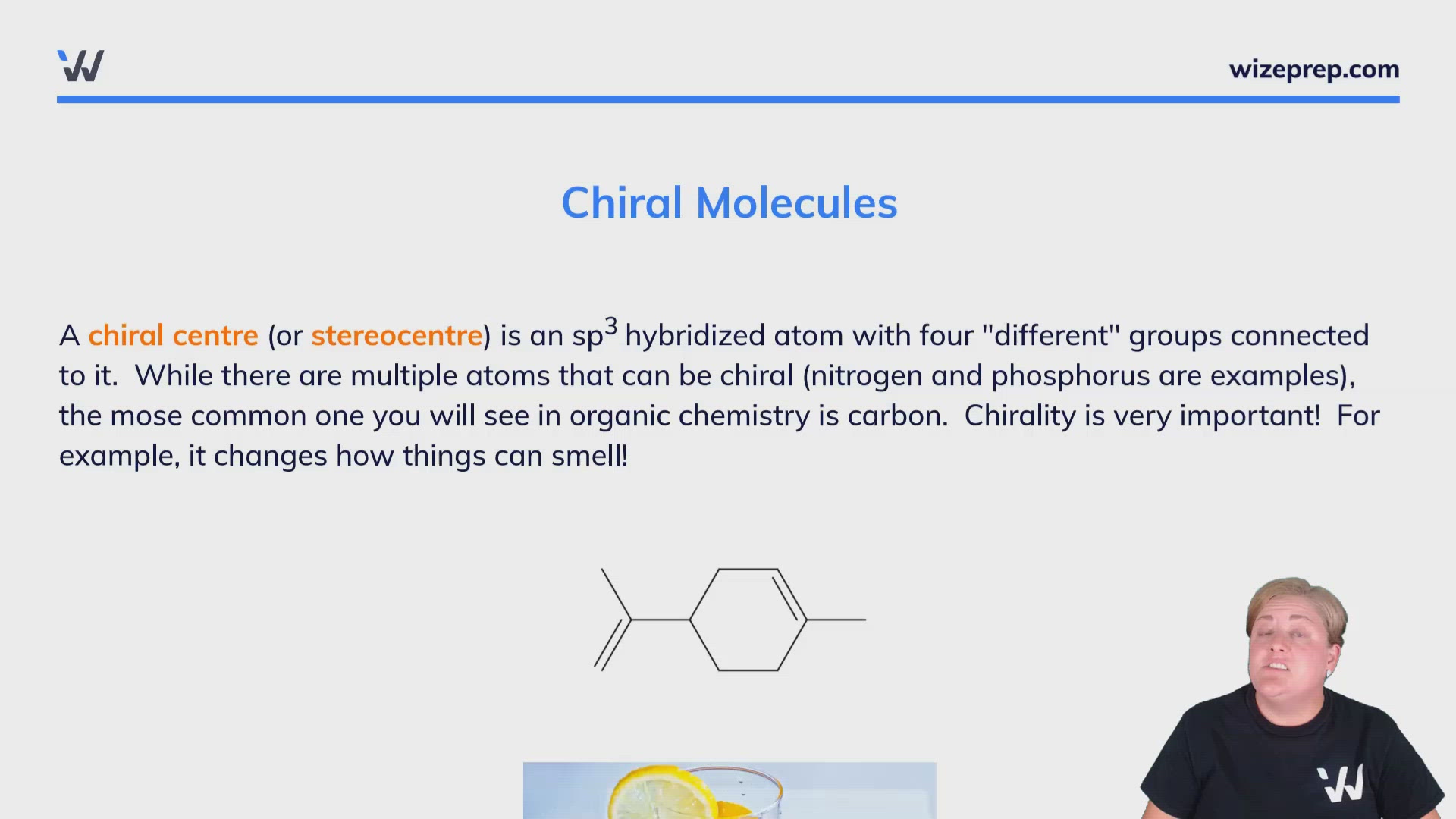
A chiral centre (or stereocenter) is an sp3 hybridized atom with four "different" groups connected to it. While there are multiple atoms that can be chiral (nitrogen and phosphorus are examples), the mose common one you will see in organic chemistry is carbon. Chirality is very important! For example, it changes how things can smell!
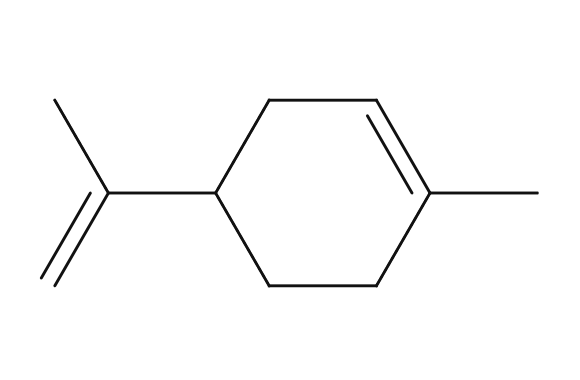

Image illustrating Chiral Molecules


Image illustrating Chiral Molecules


Create a free account to get started

Unlock full course notes by signing up

  • Video lessons taught by top educators
  • Practice questions with guided solutions
  • Written review notes for reference
  • Expert answers anytime from course tutors

Cahn-Ingold-Prelog Rules


The Cahn-Ingold-Prelog Rules allow you to assign the priority of the four different substituents to assign R and S for a stereocentre. The Rules are as follows:


  1. Find a chiral carbon - you cannot have R and S at a none chiral atom
  2. Look at the atoms directly bonded to that chiral centre - the highest atomic number/atomic mass atoms take the greatest priority
  3. If there are two or more of the same atom, book-keep and rank the three atoms bonded to that one - travel until you find a difference and find an atom that "outranks" the others.
  4. When there are substituents that contain multiple bonds, you count them as such: C=X is X-C-X and a C(triple bond here)X is C(X)3


Create a free account to get started

Unlock full course notes by signing up

  • Video lessons taught by top educators
  • Practice questions with guided solutions
  • Written review notes for reference
  • Expert answers anytime from course tutors

Assigning R and S Nomenclature


Once you have identified a chiral centre (stereocentre) and have ranked the substituents based on the Cahn-Ingold-Prelog Rules, you are ready to assign R and S nomenclature. This nomenclature is a way for chemists to talk to each other about stereocentres and stereochemistry in a convenient way.


The steps are as follows:

  1. find a chiral centre (stereocentre)
  2. rank the four substituents
  3. [if group #4 is in the back] trace from 1 to 2 to 3. If clockwise this is R; if anti-clockwise this is S
  4. [if group #4 is in the front] trace from 1 to 2 to 3. If clockwise, this is S; if anti-clockwise this is R
  5. [if group #4 is in the plane] need to redraw and follow either Step #3 or Step #4
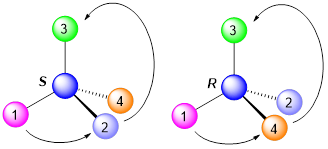

Image illustrating Assigning R and S Nomenclature


Create a free account to get started

Unlock full course notes by signing up

  • Video lessons taught by top educators
  • Practice questions with guided solutions
  • Written review notes for reference
  • Expert answers anytime from course tutors

Example: Stereochemistry

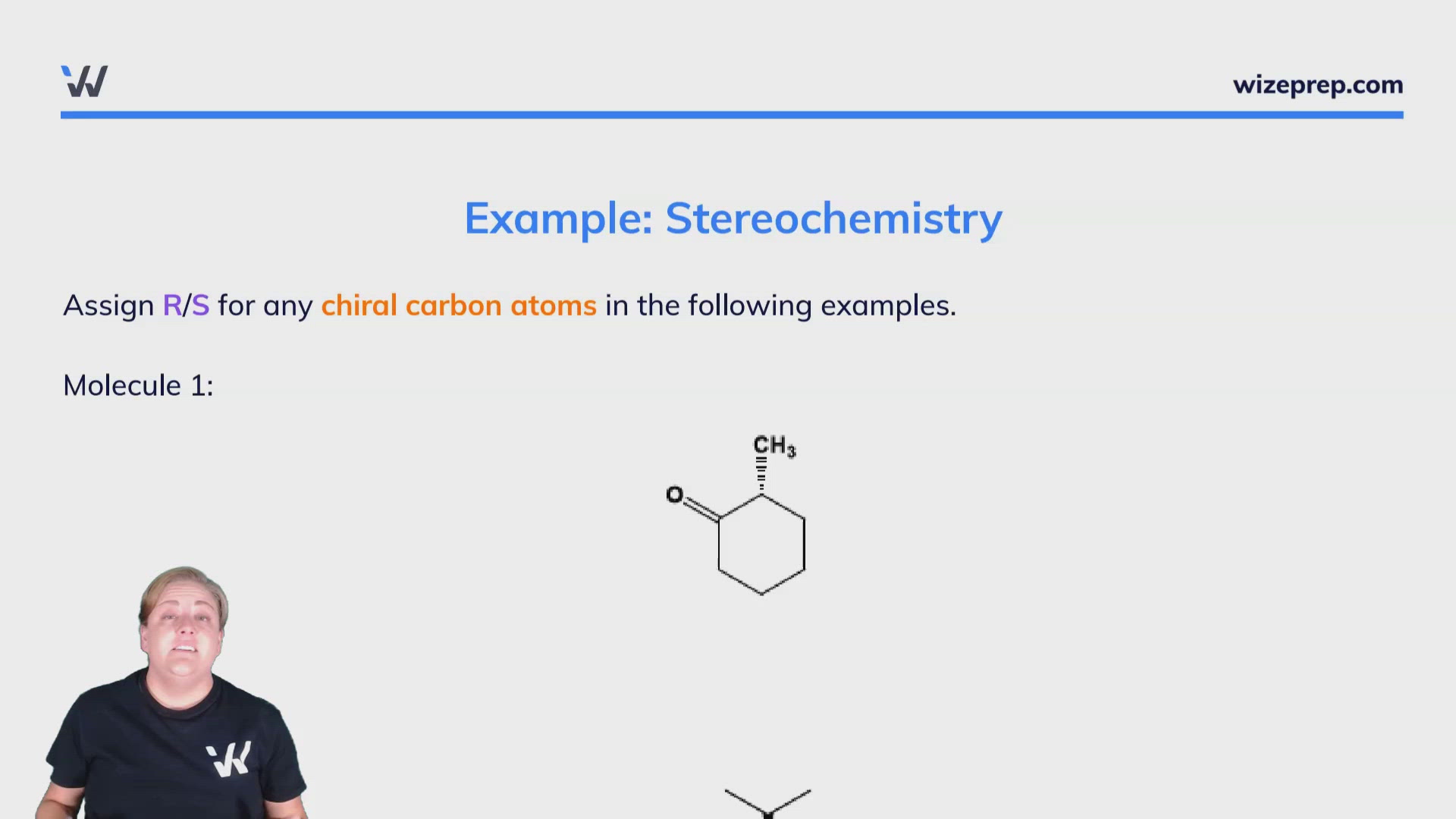
Assign R/S for any chiral carbon atoms in the following examples.


Molecule 1:
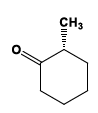
Image illustrating Example: Stereochemistry

R


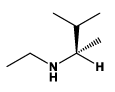
Molecule 2:

Image illustrating Example: Stereochemistry

S


Create a free account to get started

Unlock full course notes by signing up

  • Video lessons taught by top educators
  • Practice questions with guided solutions
  • Written review notes for reference
  • Expert answers anytime from course tutors

Example: Stereochemistry

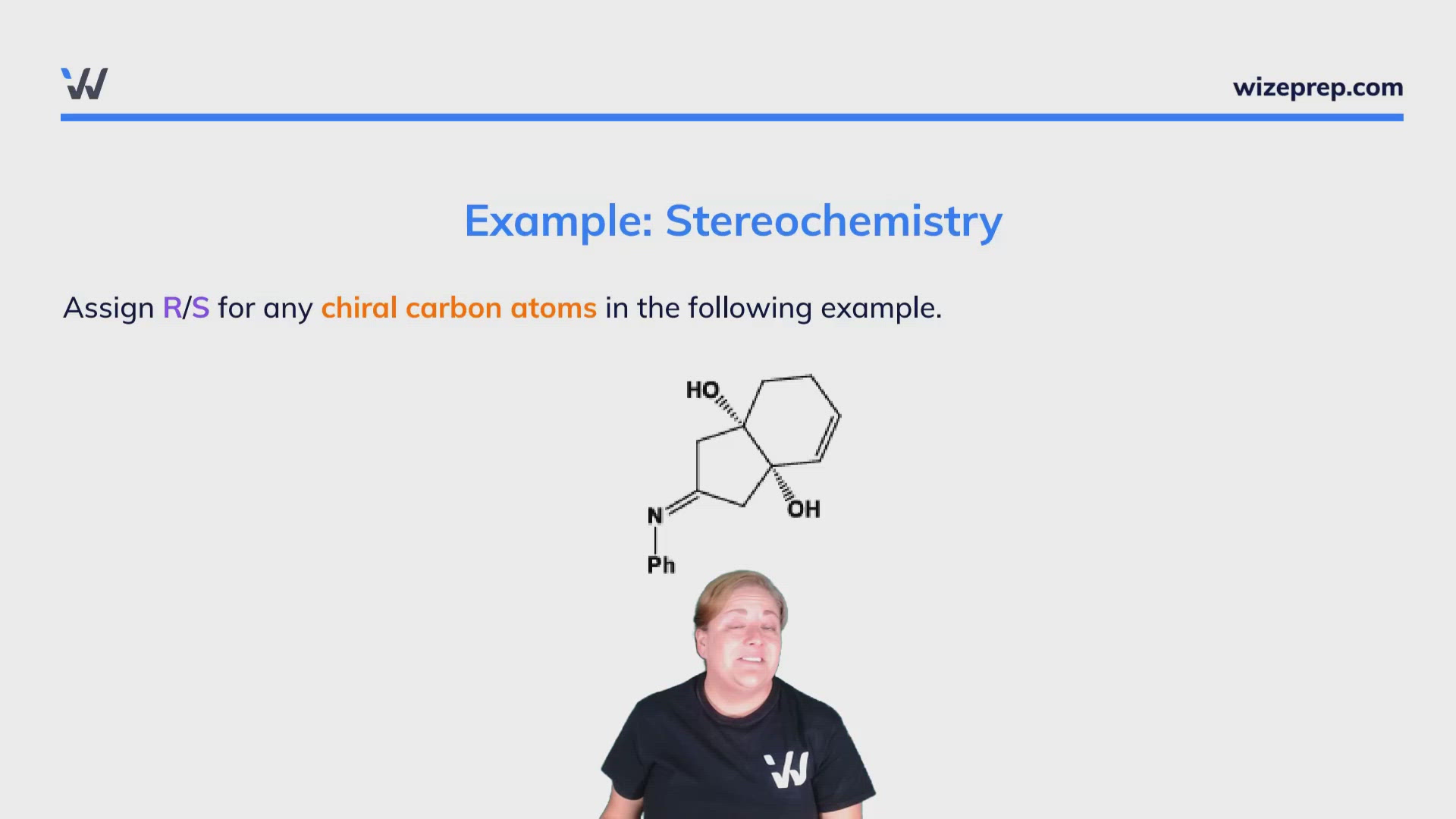
Assign R/S for any chiral carbon atoms in the following example.
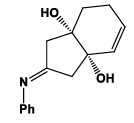

Image illustrating Example: Stereochemistry 2

(R, R)

Practice: Assigning Stereochemistry


Provide the R/S assignments for the two chiral carbon atoms (left, right).


Illustration for practice question: Stereochemistry


Choose an answer

Create a free account to get started

Unlock full course notes by signing up

  • Video lessons taught by top educators
  • Practice questions with guided solutions
  • Written review notes for reference
  • Expert answers anytime from course tutors

Practice: Geometric Isomers

Name geometric isomerism of the alkene shown below.


Illustration for practice question: Stereochemistry


Choose an answer

Create a free account to get started

Unlock full course notes by signing up

  • Video lessons taught by top educators
  • Practice questions with guided solutions
  • Written review notes for reference
  • Expert answers anytime from course tutors