Selectivity in Elimination Reactions: The E2 Reaction
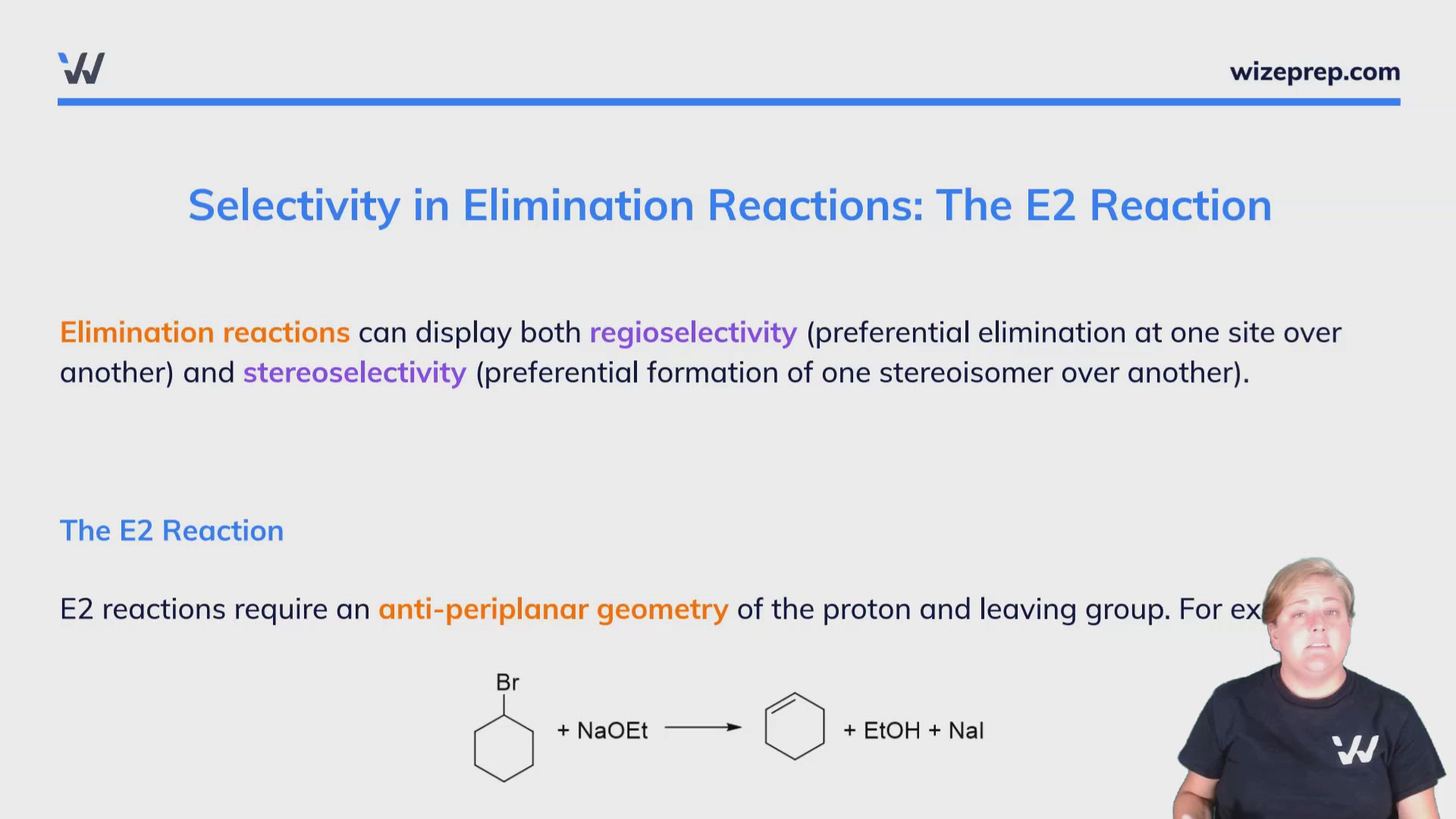
Elimination reactions can display both regioselectivity (preferential elimination at one site over another) and stereoselectivity (preferential formation of one stereoisomer over another).
The E2 Reaction
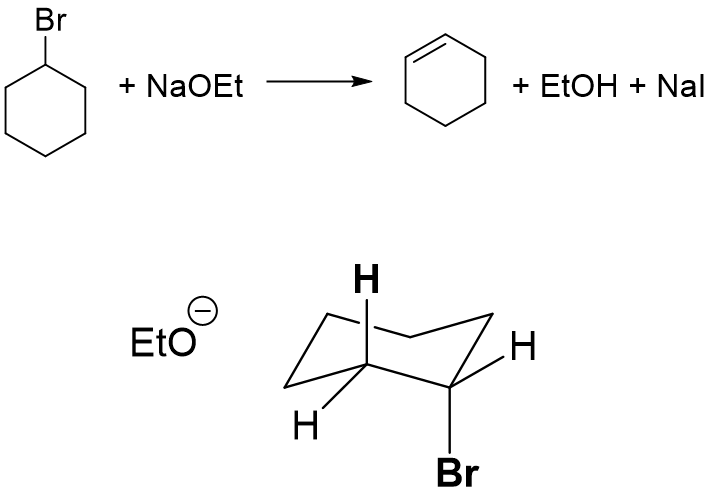
E2 reactions require an anti-periplanar geometry of the proton and leaving group. For example:
When a non-bulky base is used, the Zaitsev product is formed. The Zaitsev product has the most substituted alkene. The trans product is also favoured, due to steric hinderence.

Selectivity in Elimination Reactions: E1 Reaction
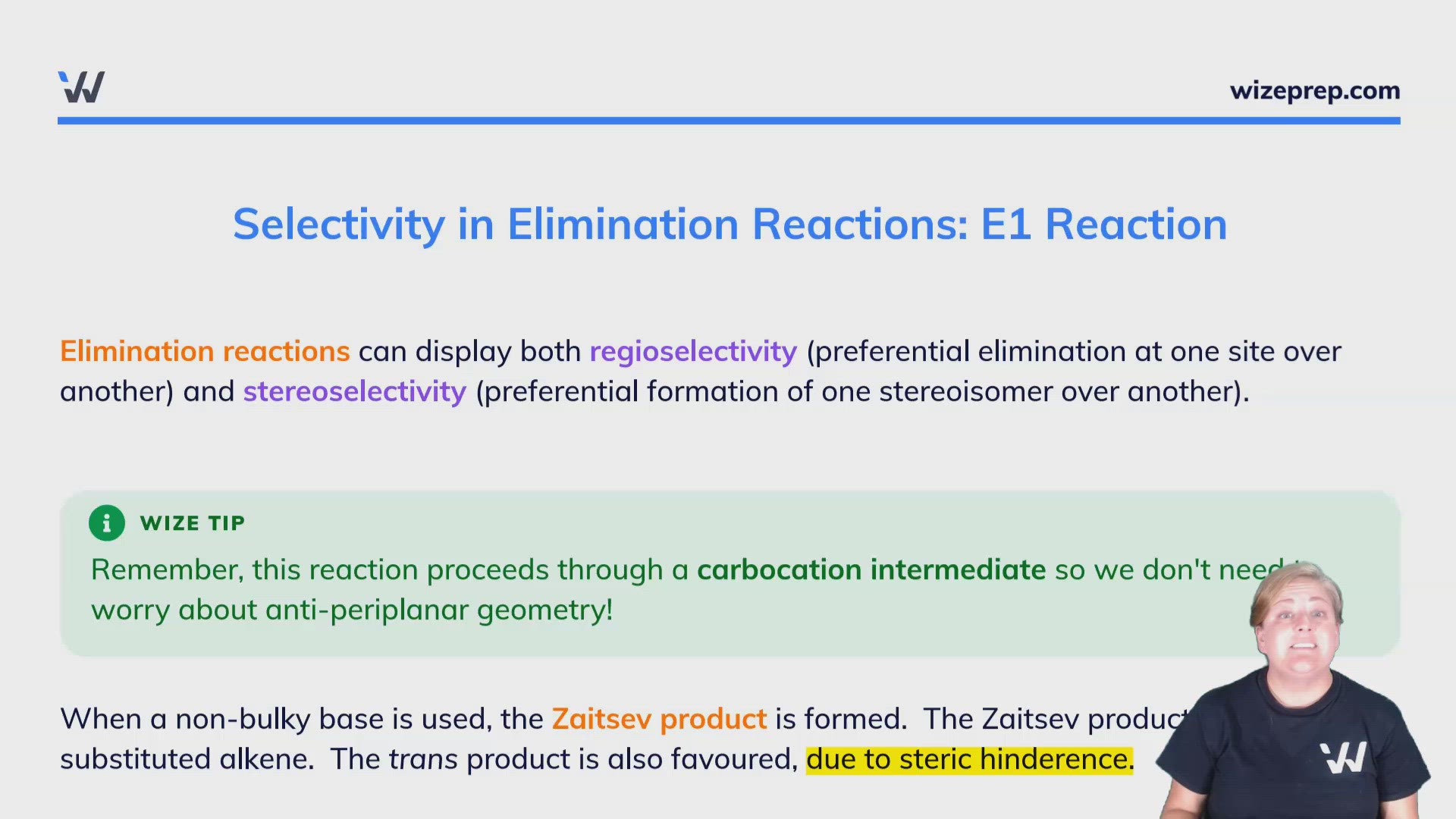
Elimination reactions can display both regioselectivity (preferential elimination at one site over another) and stereoselectivity (preferential formation of one stereoisomer over another).
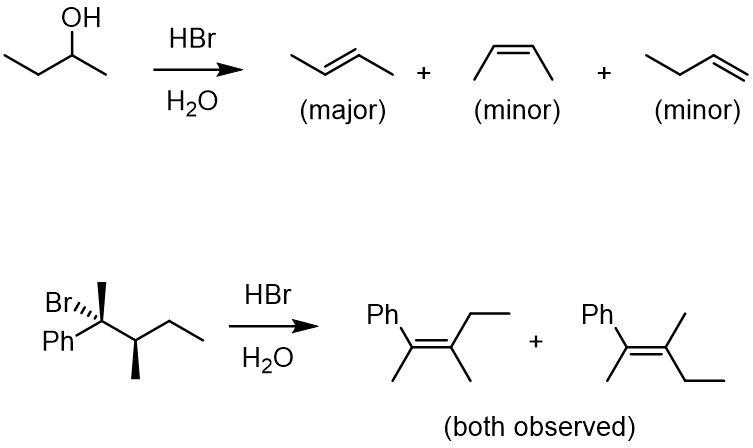
When a non-bulky base is used, the Zaitsev product is formed. The Zaitsev product has the most substituted alkene. The trans product is also favoured, due to steric hinderence.
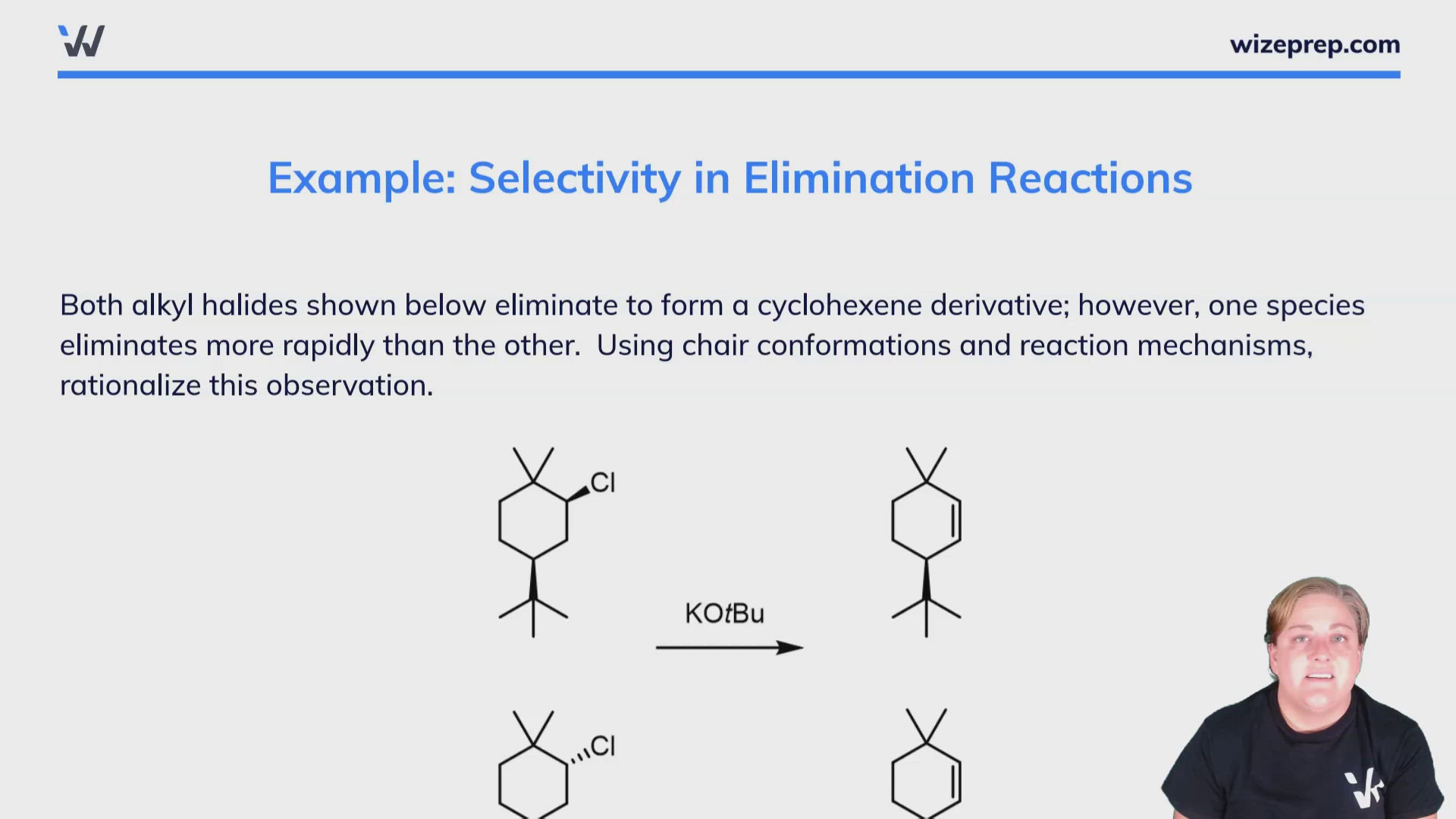
Example: Selectivity in Elimination Reactions
Both alkyl halides shown below eliminate to form a cyclohexene derivative; however, one species eliminates more rapidly than the other. Using chair conformations and reaction mechanisms, rationalize this observation.
