Covered Calls
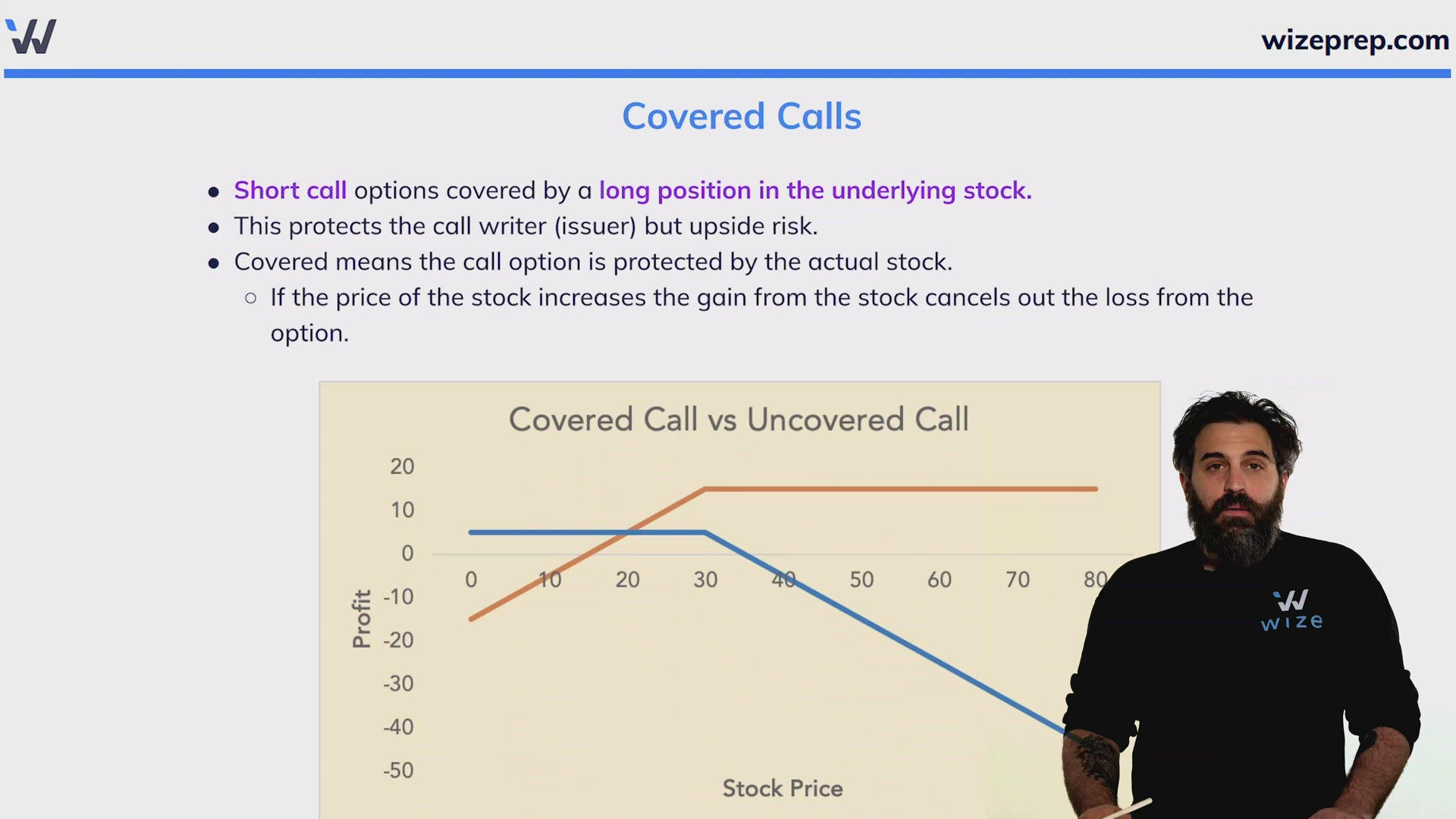
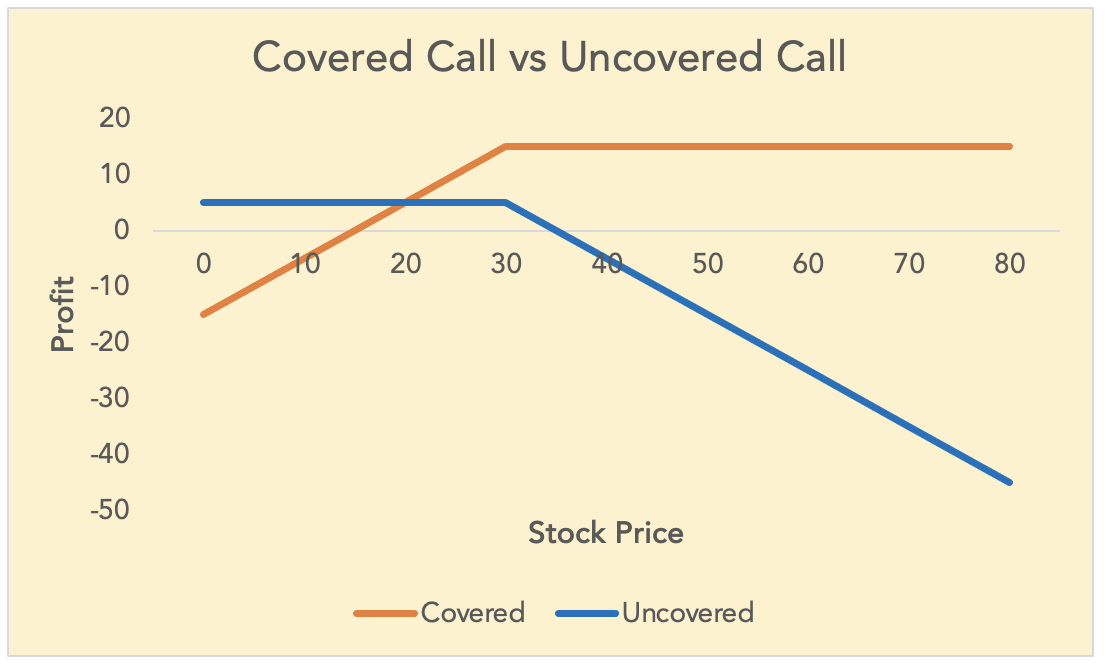
- Short call options covered by a long position in the underlying stock.
- This protects the call writer (issuer) but upside risk.
- Covered means the call option is protected by the actual stock.
- If the price of the stock increases the gain from the stock cancels out the loss from the option.
Protective Puts
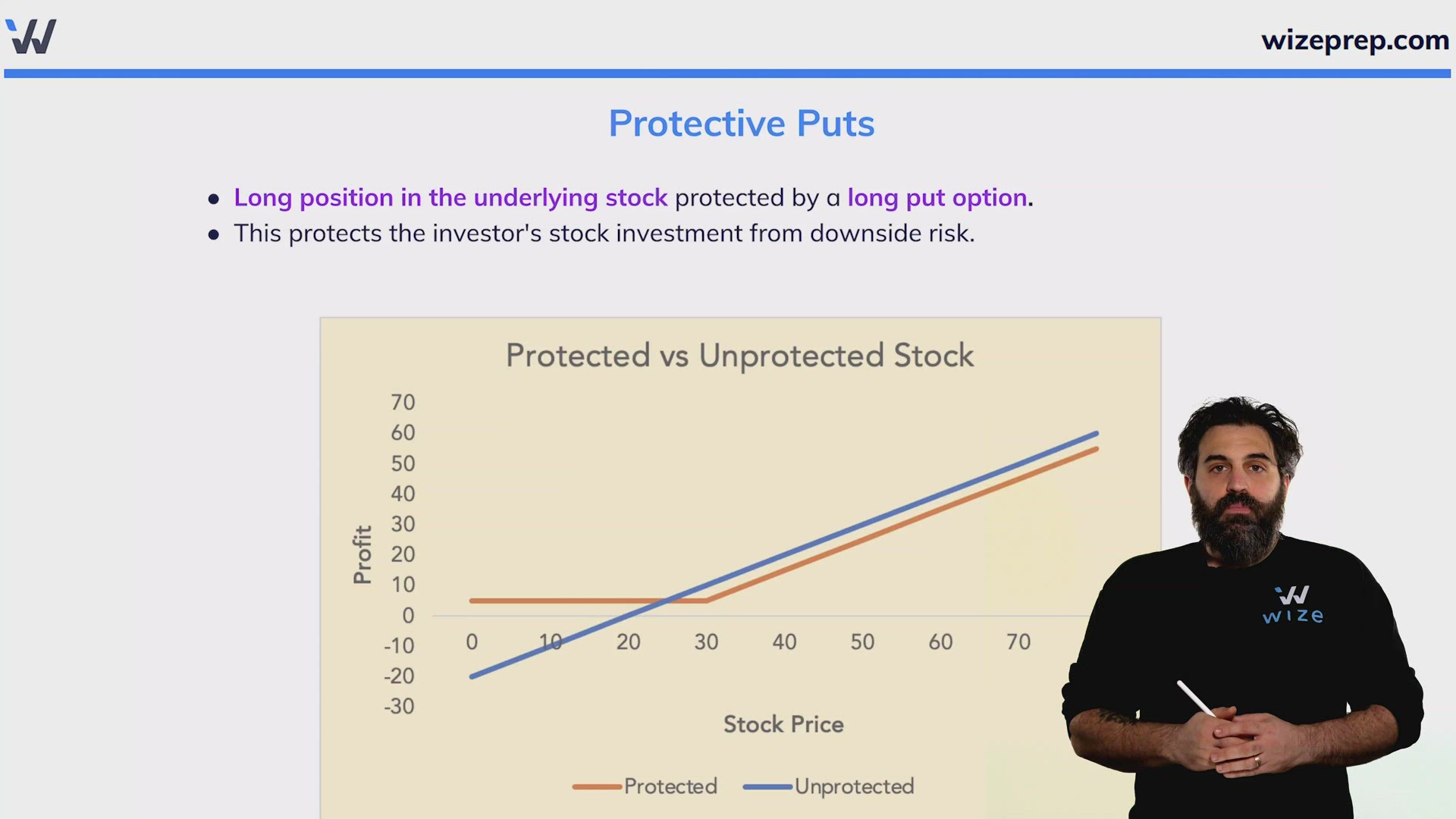
- Long position in the underlying stock protected by a long put option.
- This protects the investor's stock investment from downside risk.

Straddle
Long Straddle
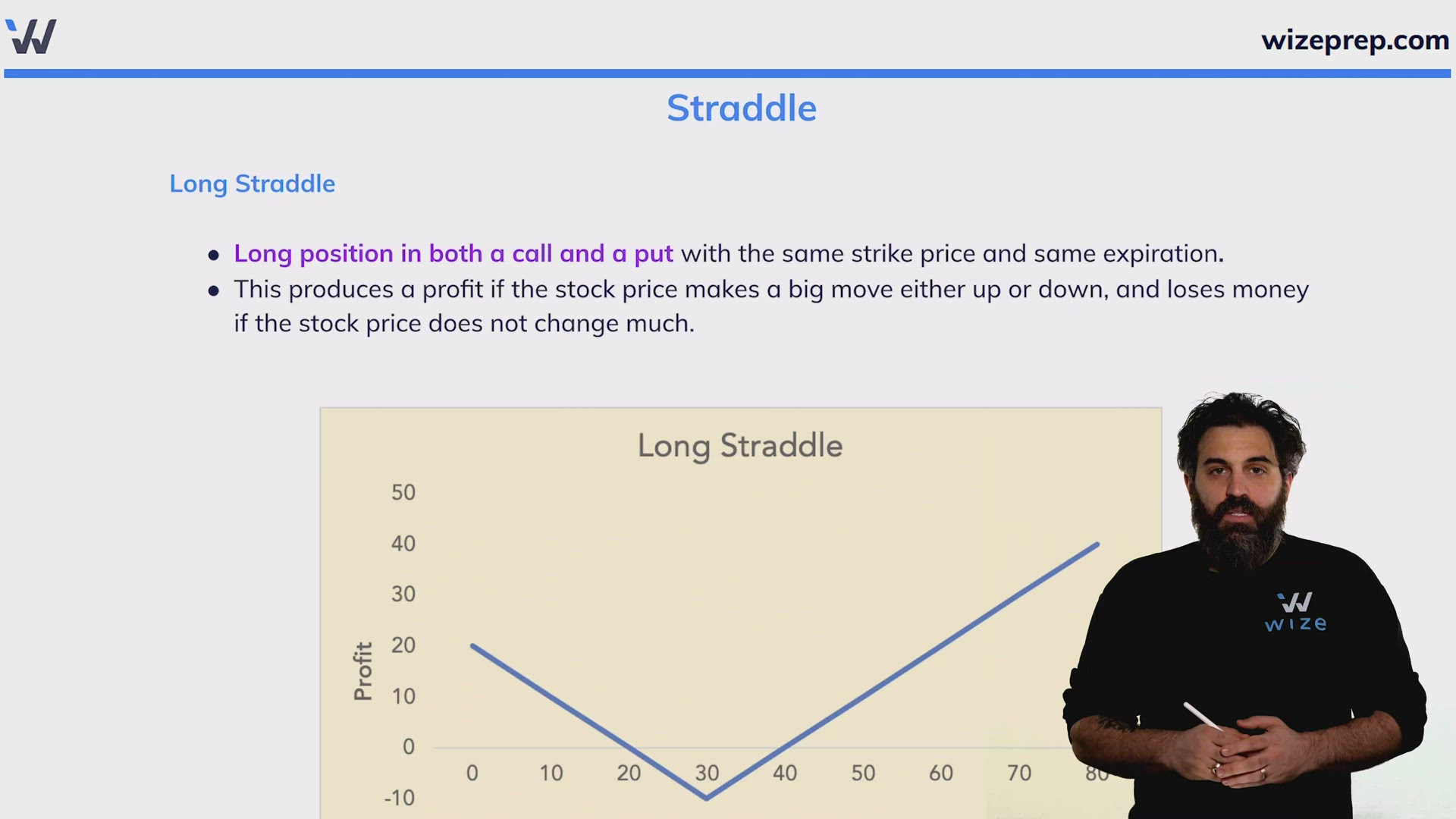
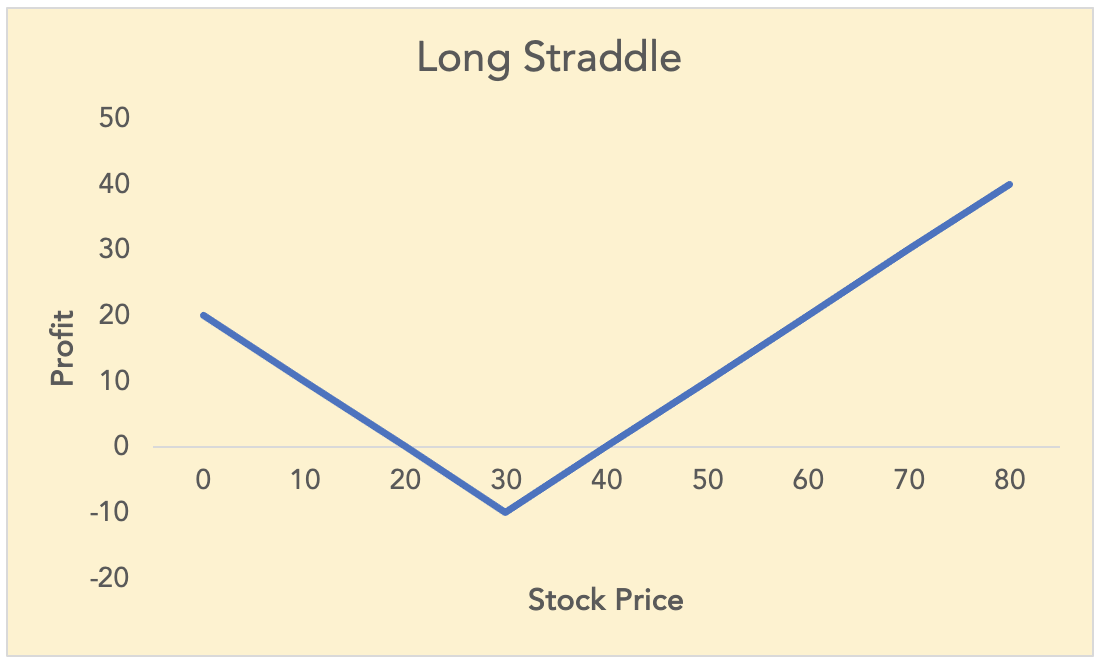
- Long position in both a call and a put with the same strike price and same expiration.
- This produces a profit if the stock price makes a big move either up or down, and loses money if the stock price does not change much.
Short Straddle
- Short position in both a call and a put with the same strike price and same expiration.
- Used when investor believes the stock price will not more significantly, but will lose money if the stock makes a big move either up or down.

Strangles
Long Strangle
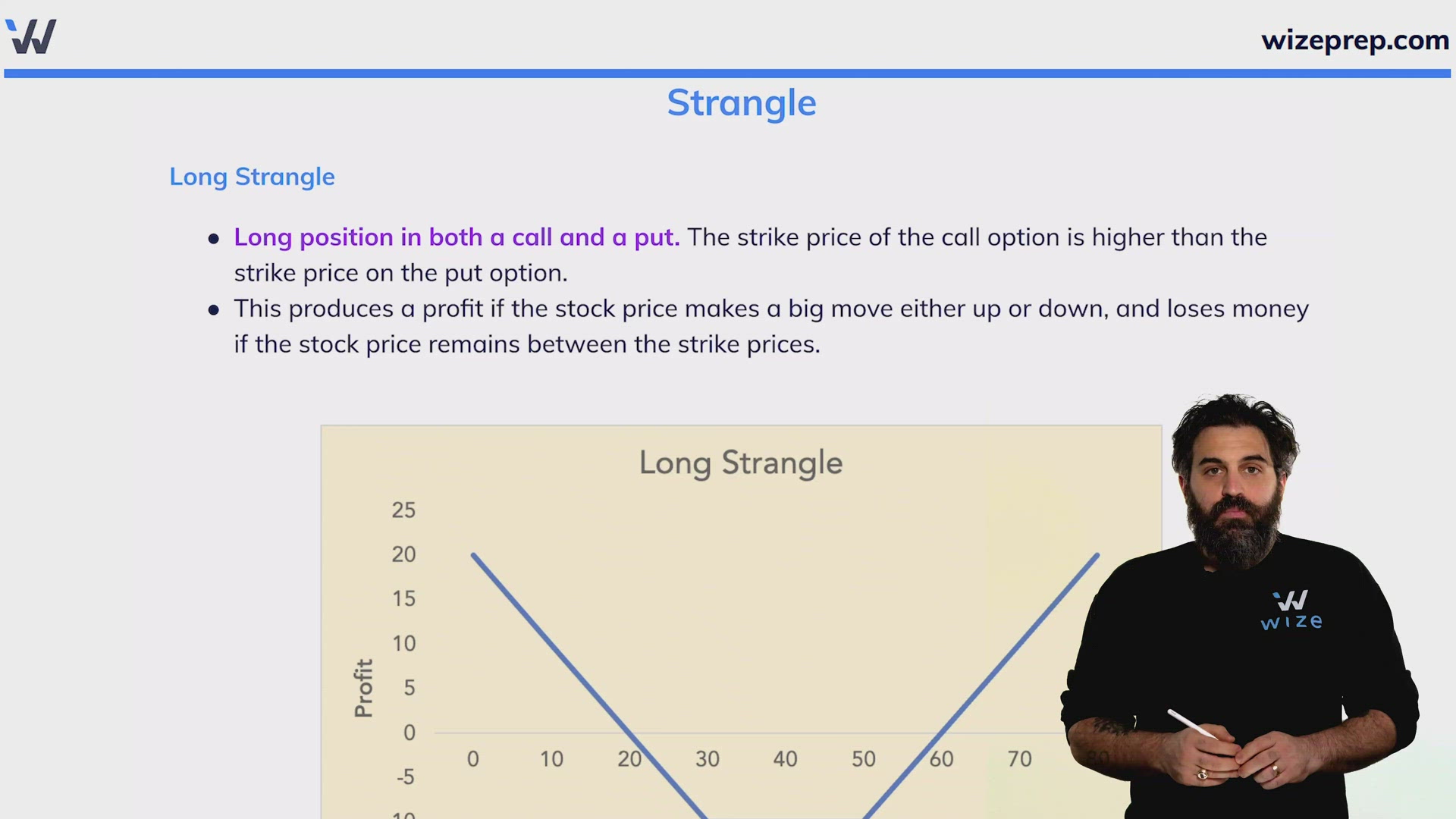
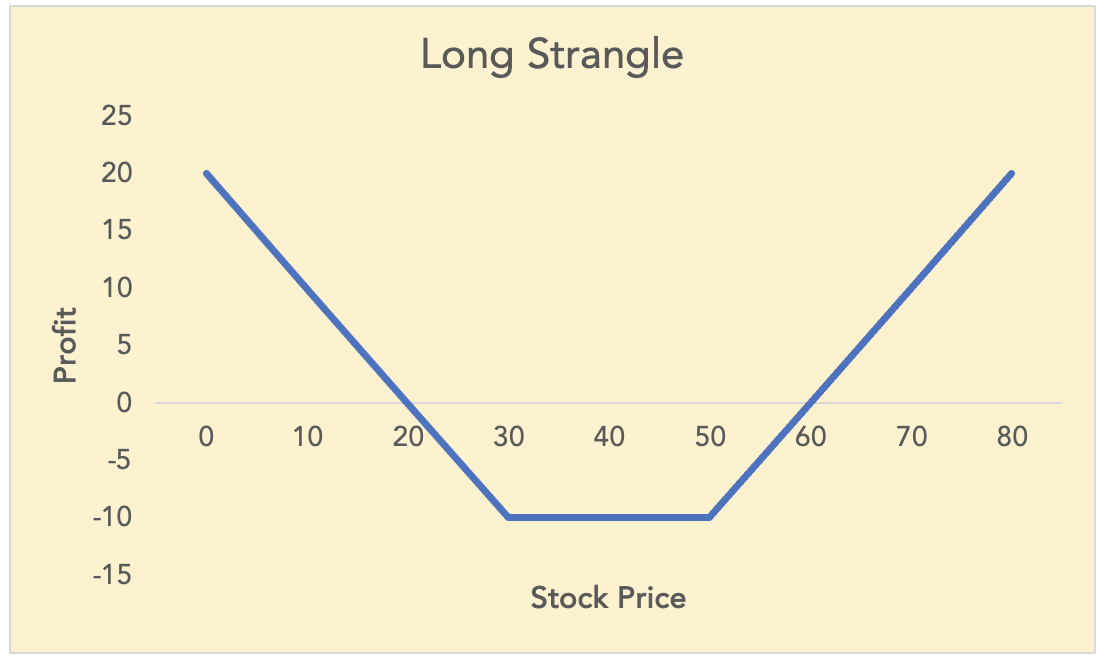
- Long position in both a call and a put. The strike price of the call option is higher than the strike price on the put option.
- This produces a profit if the stock price makes a big move either up or down, and loses money if the stock price remains between the strike prices.
Short Strangle
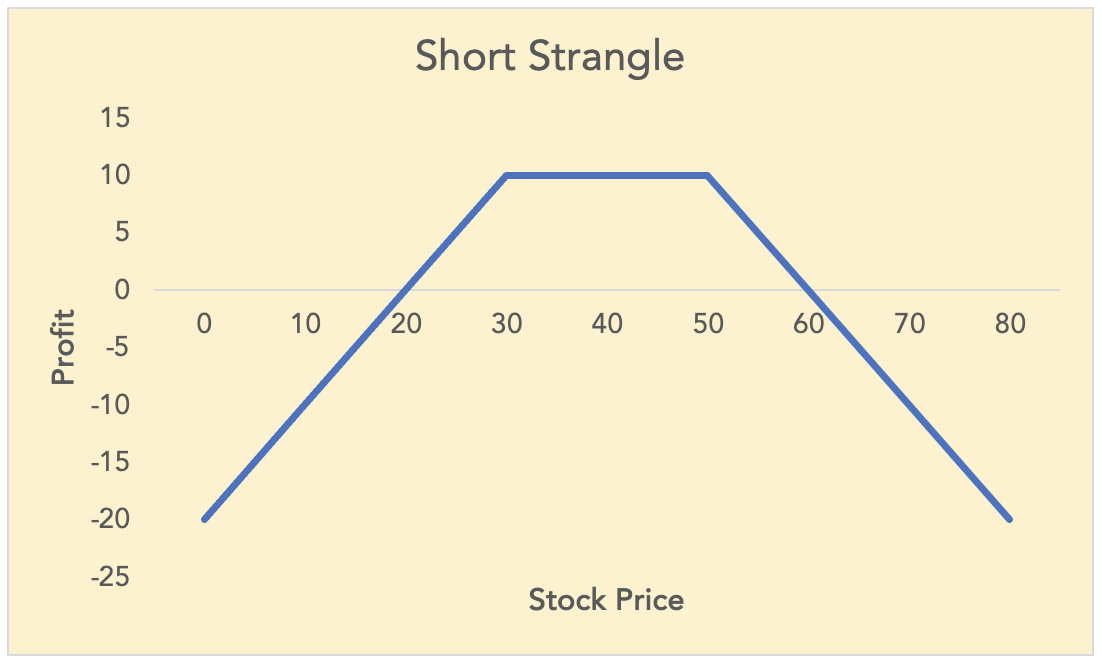
- Short position in both a call and a put. The strike price of the call option is higher than the strike price on the put option.
- This produces a profit if the stock price remains between the strike prices, and loses money if the stock price makes a big move either up or down.
Example: Option Strategies
You construct a covered call portfolio by selling one call contract of ABC Inc's stock with a strike price of $40 and buying 100 shares of ABC Inc's stock when they were trading at $42. The call option premium was $2.50. What is the profit in this portfolio if the stock price at expiration is $50?