Reflection at the Boundaries
For a travelling wave in a string, the boundary conditions are the conditions at the end of the string
Fixed Boundary Condition
In this boundary condition, the end of the rope or string is fixed to the wall. This boundary condition is also known as closed or hard boundary condition.
- The reflected wave from a fixed end of the string moves in the opposite direction of the incident wave and the displacement becomes negative compared to the incident wave

- The reflected wave has a phase shift compared to the incident wave in the diagram.
Free Boundary Condition
In this boundary condition, the end of rope is free to move up and down (For example, the end of the rope is attached to a ring which can move along a rod vertically). This condition is also known as open or soft boundary condition.
- The reflected wave from a free end of the string moves in the opposite direction of the incident wave but the displacement does not change sign
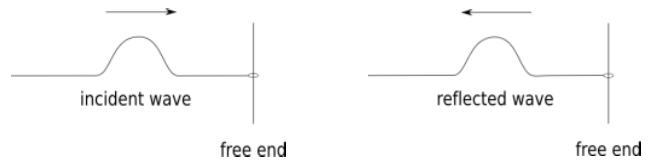
- The reflected wave has a phase shift compared to the incident wave in the diagram.
Boundary Condition Between Two Ropes
We can have similar boundary conditions if two ropes with different mass densities are attached to each other.

Example: Reflection at Closed Boundary
The following is a wave pulse traveling to the right with a speed of m/s. Draw the resulting wave pulse after s.
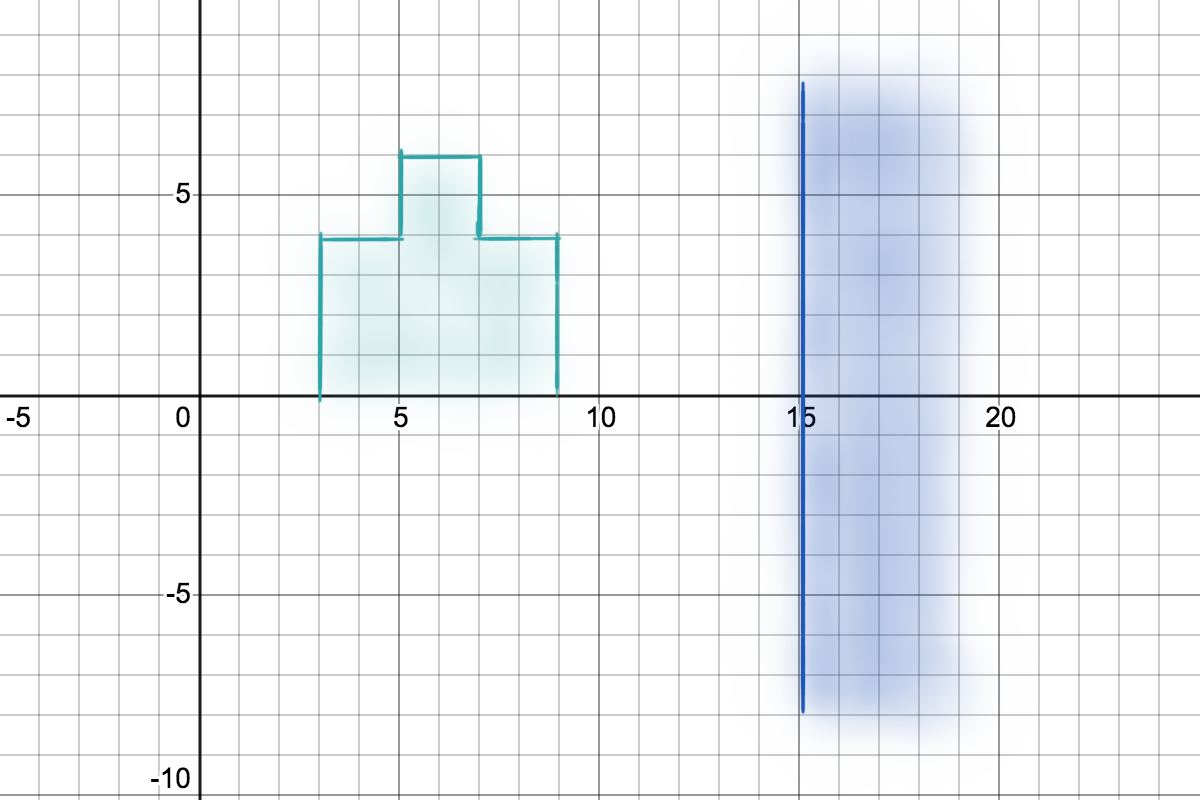
After s, part of the pulse will be reflected upside down:
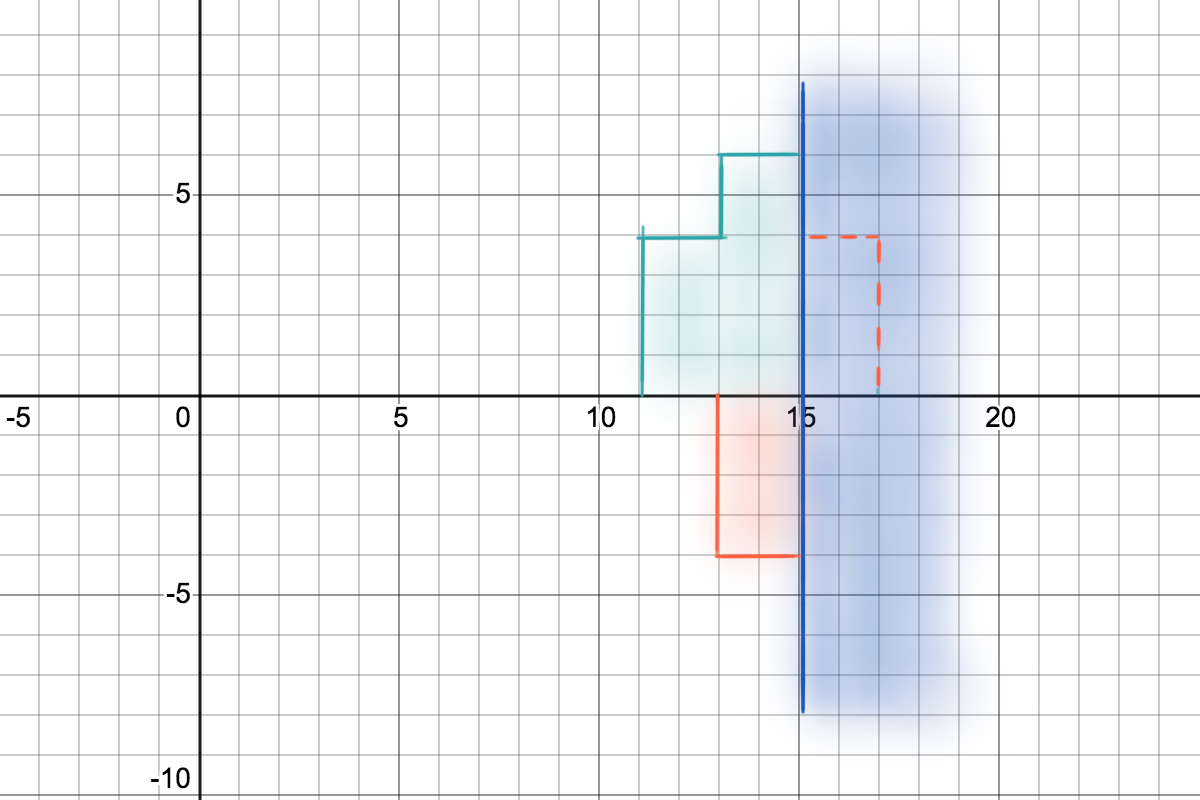
Add the displacements of the two superimposed regions to get the net displacement:
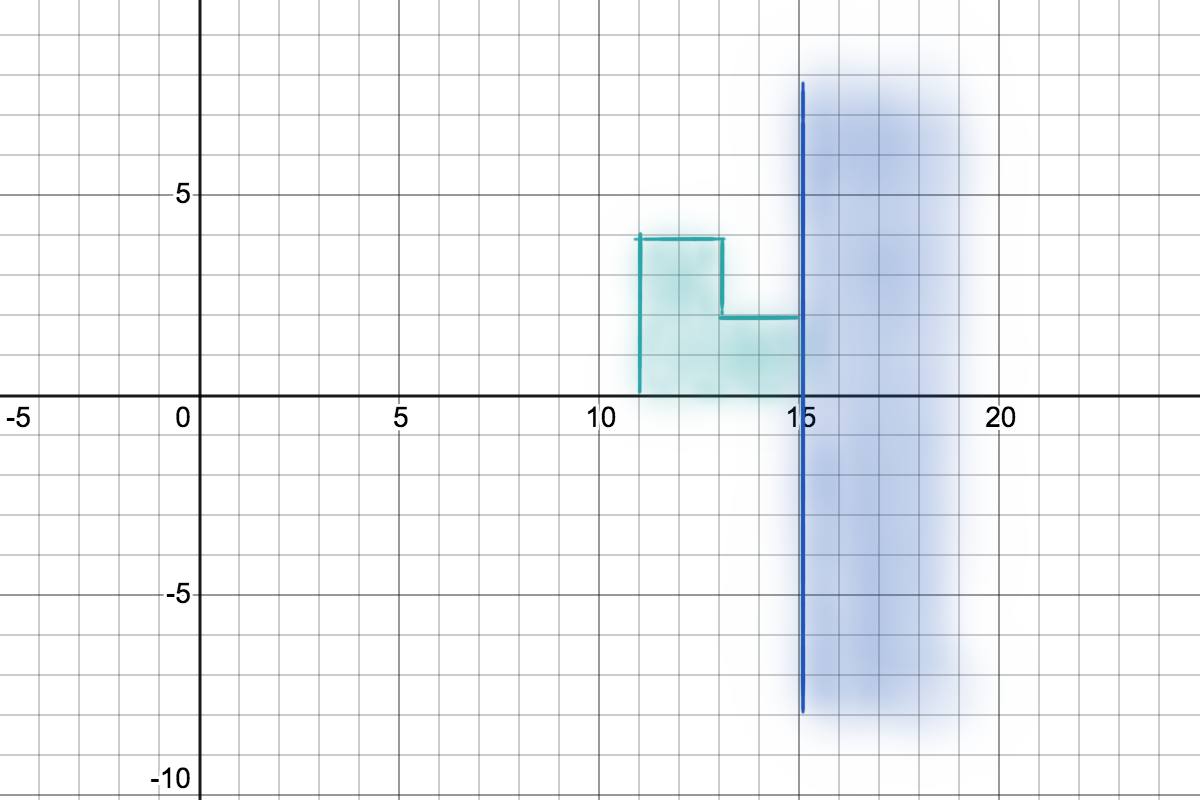
Example: Reflection and Transmission
Consider a wave that travels from medium 1 to medium 2. Part of the wave is reflected and part is transmitted. Which of the following statements is true? Select all that apply.
1) The reflected wave is always traveling in the opposite direction of the original.
2) The reflected wave is always traveling in the same direction as the original.
3) The transmitted wave is always traveling in the opposite direction of the original.
4) The transmitted wave is always traveling in the same direction as the original.
5) The speed of the reflected wave is always the same as the speed of the incident wave.
6) The speed of the reflected wave is greater than the speed of the incident wave if medium 1 has greater density.
7) The speed of the reflected wave is less than the speed of the incident wave if medium 1 has greater density.
8) The speed of the transmitted wave is always the same as the speed of the incident wave.
9) The speed of the transmitted wave is greater than the speed of the incident wave if medium 1 has greater density.
10) The speed of the transmitted wave is less than the speed of the incident wave if medium 1 has greater density.
11) The transmitted wave is upright if medium 1 has greater density.
12) The transmitted wave is upside down if medium 2 has smaller density.
13) The transmitted wave is always upright.
14) The transmitted wave is always upside down.
15) If the speed of the transmitted wave is less than the speed of the incident wave, the transmitted wave is compressed.
16) If the speed of the transmitted wave is less than the speed of the incident wave, the transmitted wave is stretched..
17) If the speed of the transmitted wave is greater than the speed of the incident wave, the transmitted wave is compressed.
18) If the speed of the transmitted wave is greater than the speed of the incident wave, the transmitted wave is stretched..
19) If the speed of the transmitted wave is the same as the speed of the incident wave, the transmitted wave could be either stretched or compressed.