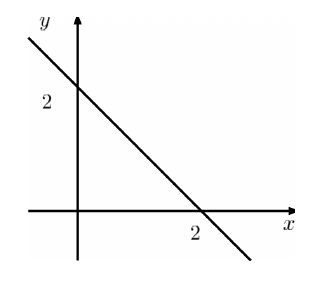
Similar to double integrals, we can define triple integrals for functions of three variables. Therefore, if is defined over a rectangular box, E, where , then the triple integral of over is equal to:
Similar to double integrals, Fubini's Theorem expresses a triple integral in terms of three single partial integrals:
Similar to double integrals, the integration over a variable is done by treating the rest of the variables as constants.

The Fubini's theorem for regions of general shapes is similar to the one for the region with a rectangular shape. If , where is the projection of region in the xy-plane, then the triple integral of over is equal to:
In general, if , then, the triple integral of over is equal to:
Effectively, after taking integration over one of the variables, the problem is converted to a double integral and we can use the methods we learned for double integrals to do the rest of calculations.
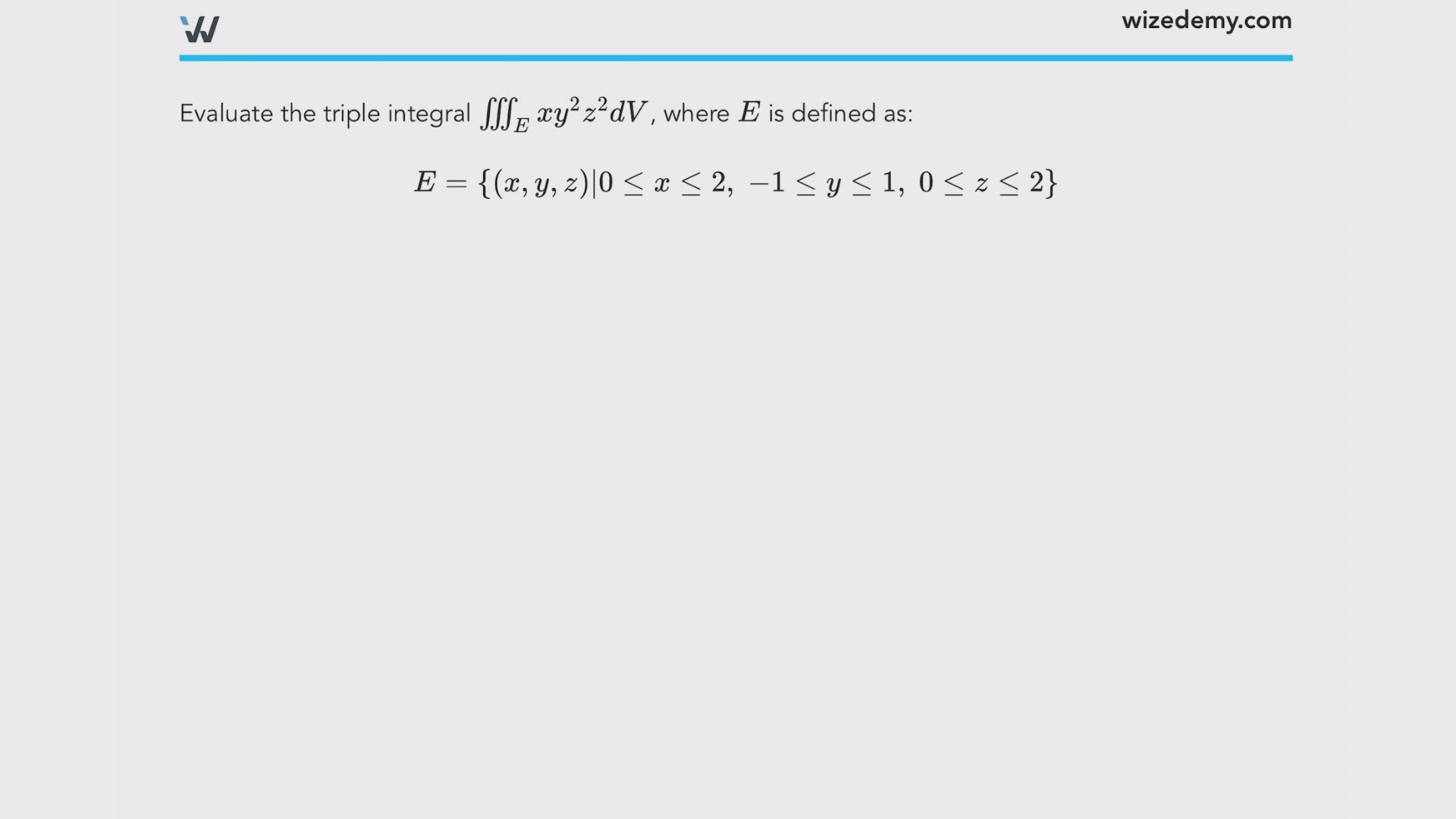
Evaluate the triple integral , where is defined as:
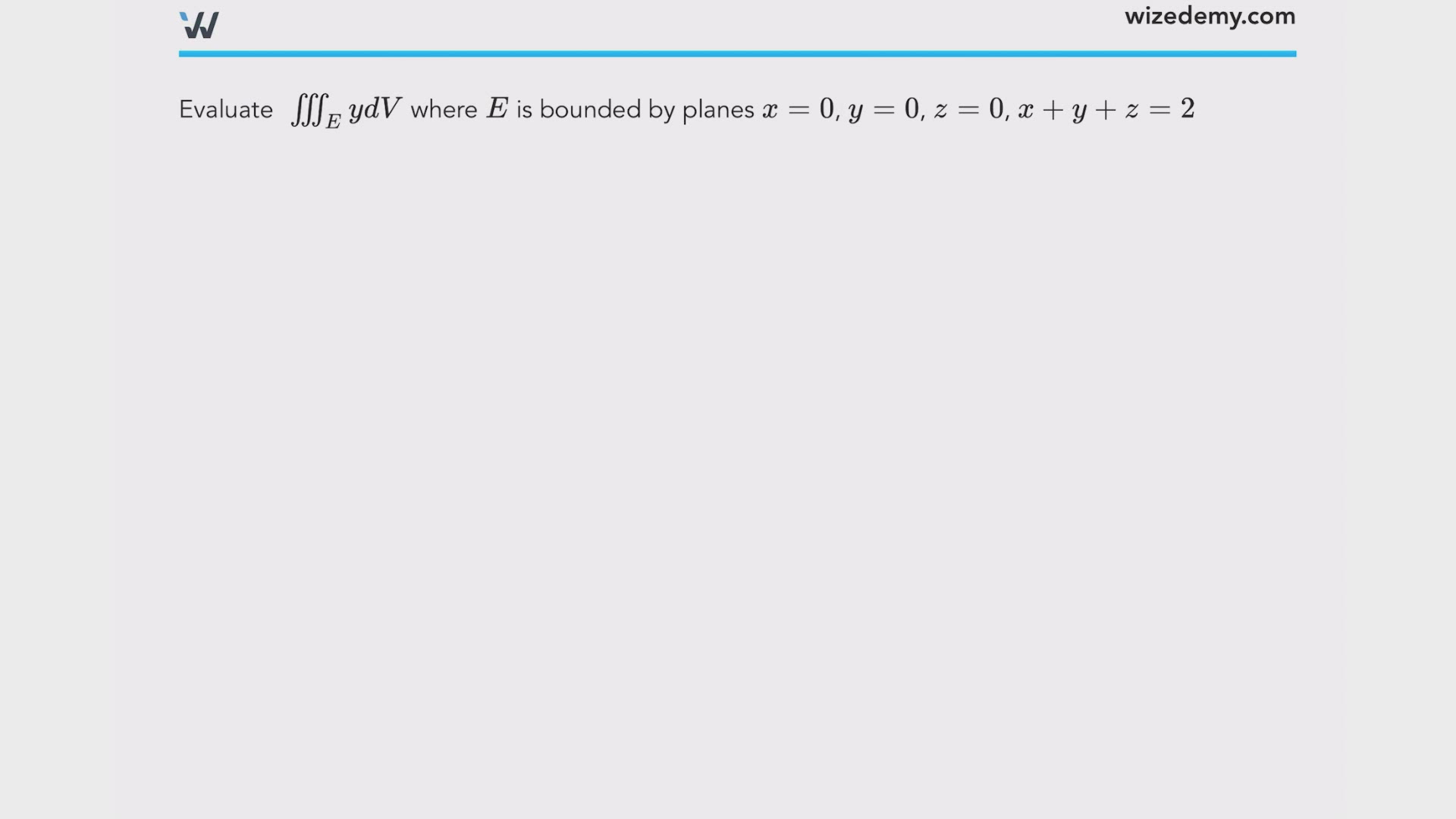
Evaluate where is bounded by planes , , ,