Create a free account to get started

Unlock full course notes by signing up

  • Video lessons taught by top educators
  • Practice questions with guided solutions
  • Written review notes for reference
  • Expert answers anytime from course tutors

Equipotential Lines and Surfaces


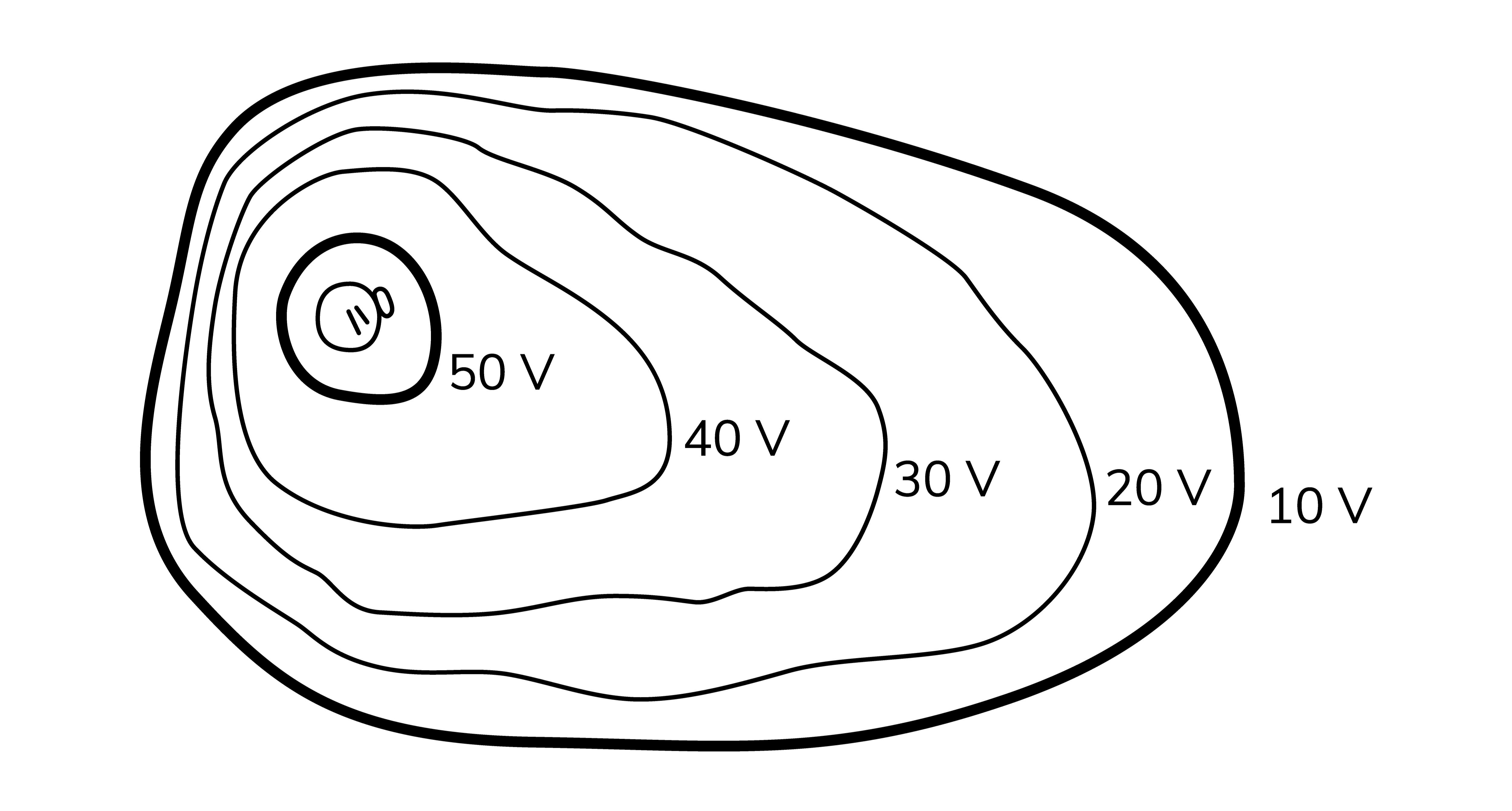
For electric potential, it is useful to define equipotential lines to visualize how the potential of some charge distribution changes with position.

  • An equipotential line connects all points where the electric potential is equal. Each line represents a different amount of electric potential.
  • If we need to consider the motion of charges in three dimensions, then we use equipotential surfaces which serve the same purpose as equipotential lines.
  • Equipotential lines can never cross.


Image illustrating Equipotential Lines and Surfaces


Problem Solving with Equipotential Lines and Surfaces

  • Two equipotential lines cannot cross.
  • Electric field lines are always perpendicular to equipotential lines.
  • If equipotential lines are very close together, this represents a rapidly changing electric potential.
  • If equipotential lines are more spread out, then the electric potential is not changing as quickly.
  • Because the potential is equal at all points along an equipotential line/surface, no work is required to move a charge along an equipotential.
  • If equipotentials are provided, they give an easy way to compute the potential difference between two points - we just need to subtract the two electric potential values.
Create a free account to get started

Unlock full course notes by signing up

  • Video lessons taught by top educators
  • Practice questions with guided solutions
  • Written review notes for reference
  • Expert answers anytime from course tutors

Example: Drawing Equipotential Lines (basic)


Draw equipotential line patterns for each charge distribution below:

a) A positive point charge

b) Between two plates of a parallel-plate capacitor (i.e. a constant and uniform electric field)


Part a)
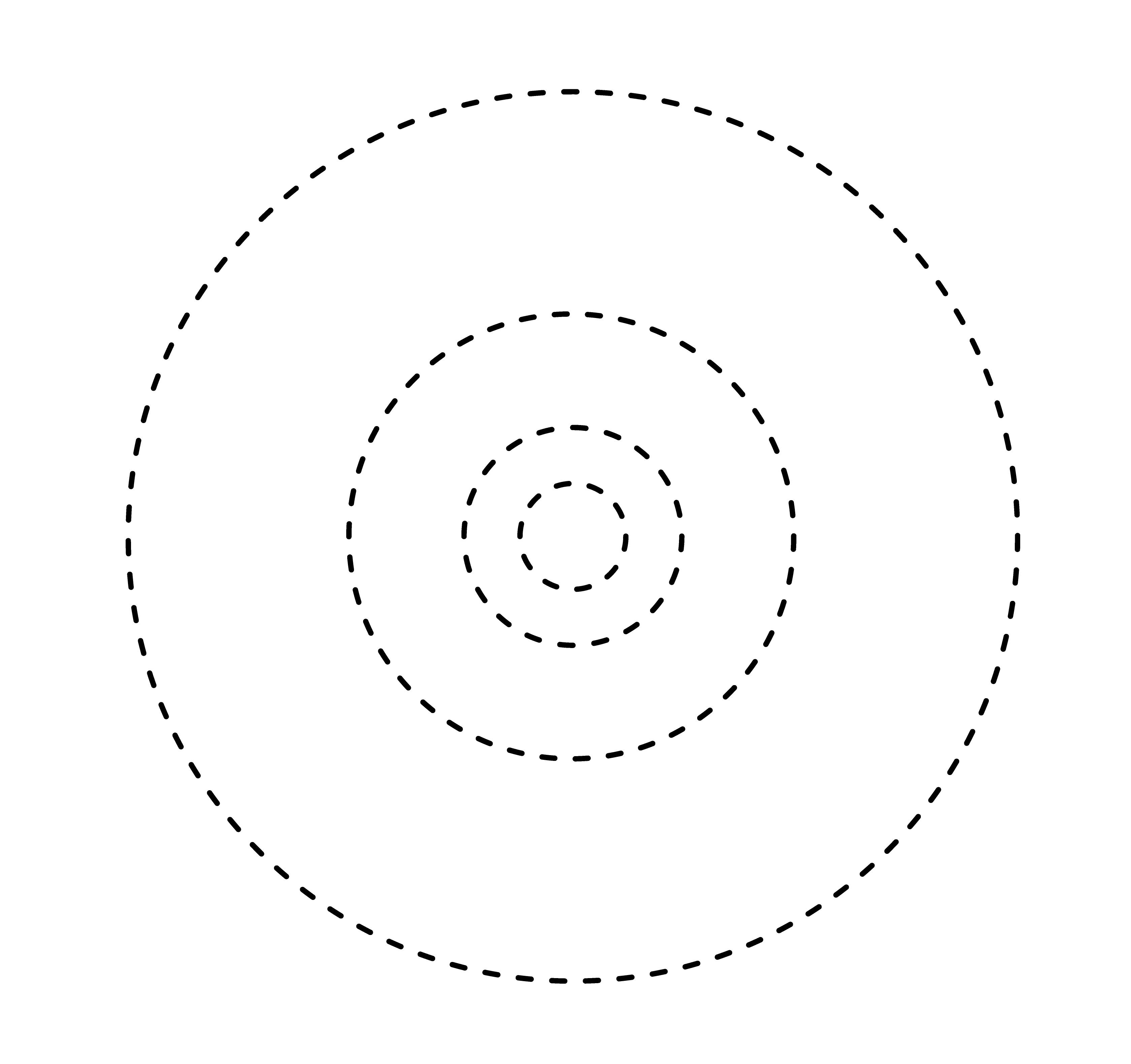
Image illustrating Example: Drawing Equipotential Lines


Note - the pattern is the same if the charge was negative! The potential would be decreasing towards the center instead of increasing (but we are just drawing the patterns in this exercise).


Part b)
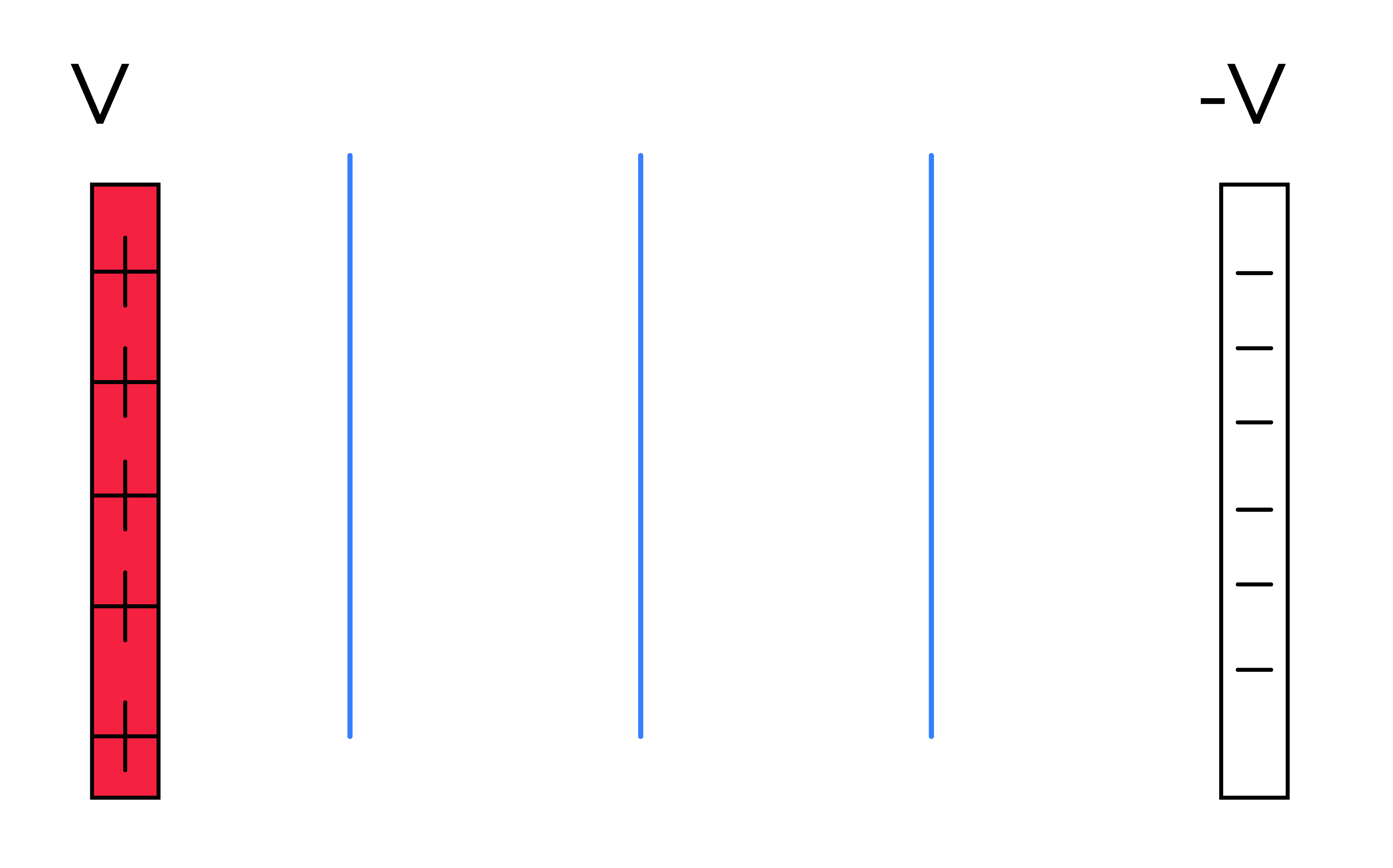
Image illustrating Example: Drawing Equipotential Lines


Mark Yourself Question

  1. Grab a piece of paper and try this problem yourself.
  2. When you're done, check the "I have answered this question" box below.
  3. View the solution and report whether you got it right or wrong.

Practice: Drawing Equipotential Lines


a) Draw equipotential lines for an electric dipole (a positive and negative point charge of equal and opposite charge).

b) Draw equipotential lines for two negative charges of equal magnitude.


Create a free account to get started

Unlock full course notes by signing up

  • Video lessons taught by top educators
  • Practice questions with guided solutions
  • Written review notes for reference
  • Expert answers anytime from course tutors

Practice: Equipotential Lines - Movement of Charge

The graph below shows the equipotential lines due to some charge distribution. A charge q=20 µC once moves from point A to B and a second time from point B to C. Work done on the charge (against the field) during each displacement respectively are


Illustration for practice question: Practice: Equipotential lines and work done


Choose an answer

Create a free account to get started

Unlock full course notes by signing up

  • Video lessons taught by top educators
  • Practice questions with guided solutions
  • Written review notes for reference
  • Expert answers anytime from course tutors

Practice: Electric Potential and Equipotentials


A charge of q=−7.5 μCq=-7.5 ~\mu C and a mass of m=2.5 gm=2.5 ~gis released from rest from position A below.

a) How fast will it be travelling once it passes the dashed equipotential line below?

b) How does your answer to (a) change if the same charge was released from point B?


Illustration for practice question: Electric Potential and Equipotentials


Part a)

Choose an answer

Create a free account to get started

Unlock full course notes by signing up

  • Video lessons taught by top educators
  • Practice questions with guided solutions
  • Written review notes for reference
  • Expert answers anytime from course tutors

Practice: Conductors, Charge, and Electric Potential


The diagram below shows a charged, spherical conductor of radius 1.0 cm. The equipotential lines below are spaced 1.0 cm from each other. The closest line (labelled 500 V below) is 3.0 cm away from the center of the sphere. Throughout this problem, we assume that V=0 at infinity.


a) What is the total charge on the conducting sphere?

b) What is the electric potential at the surface of the conductor?

c) How much work is required to move a positive 20.0 µC charge to move it from point A to B?


Illustration for practice question: Practice: Conductors, Charge, and Electric Potential


Your answers

Create a free account to get started

Unlock full course notes by signing up

  • Video lessons taught by top educators
  • Practice questions with guided solutions
  • Written review notes for reference
  • Expert answers anytime from course tutors