
Charging Capacitor
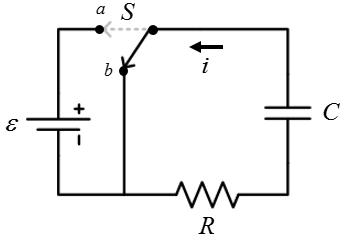
A simple RC circuit contains a resistor and a capacitor.

Assume there is no initial charge on the capacitor. At the switch S is at position "a". The capacitor acts like an ideal wire initially, and charge on it starts to increase.
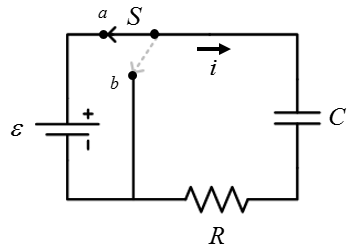
According to Kirchhoff’s voltage rule, we have .
Therefore the current is .
The charge is the solution to the first-order differential equation above, and is given by:
- is the charge on the capacitor as a function of time
- is the capacitance (of the capacitor)
- is the EMF supplied by the battery
- is the resistance (of the resistor)
- is the final (maximum) charge on the capacitor, given by
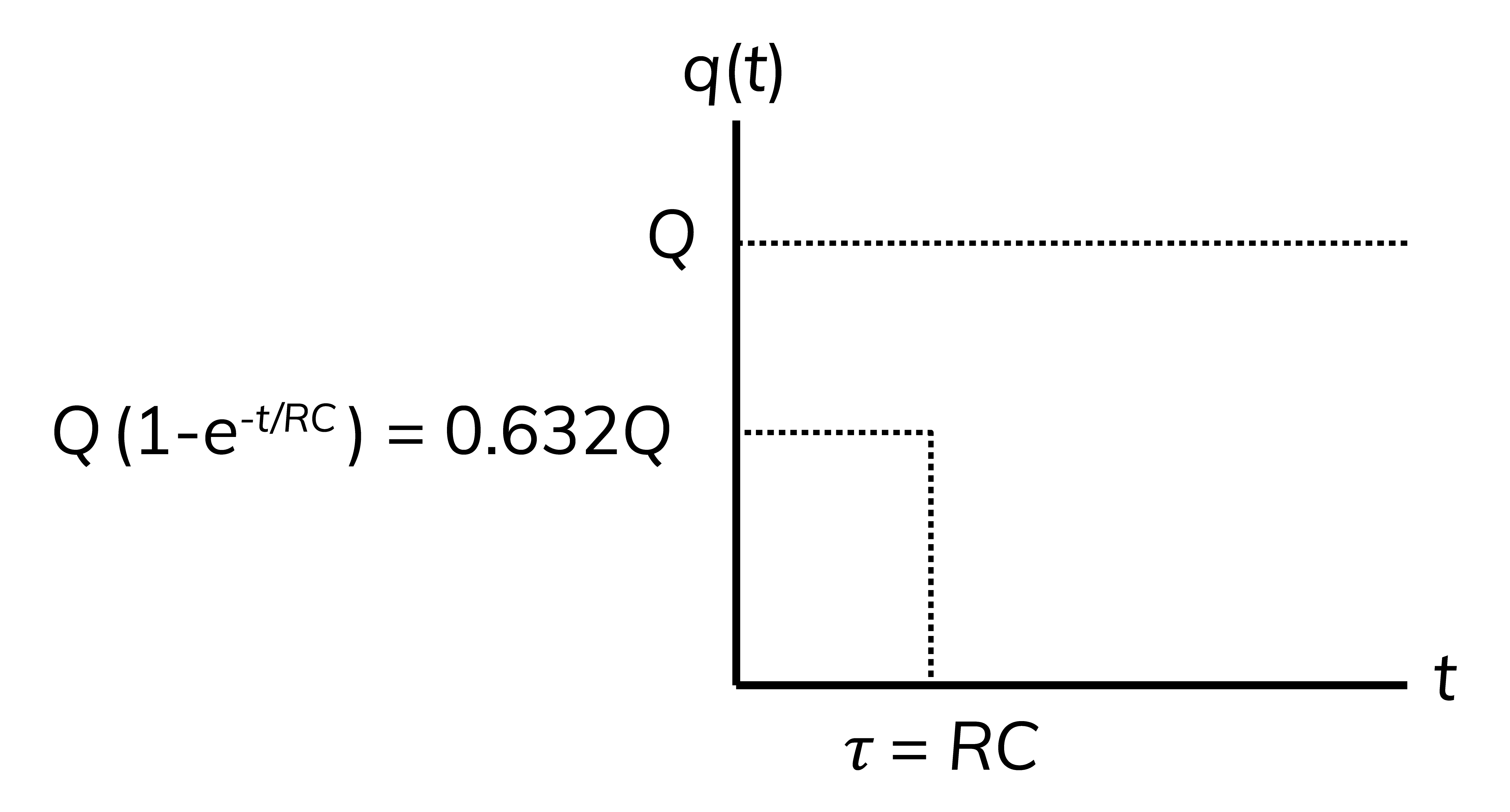
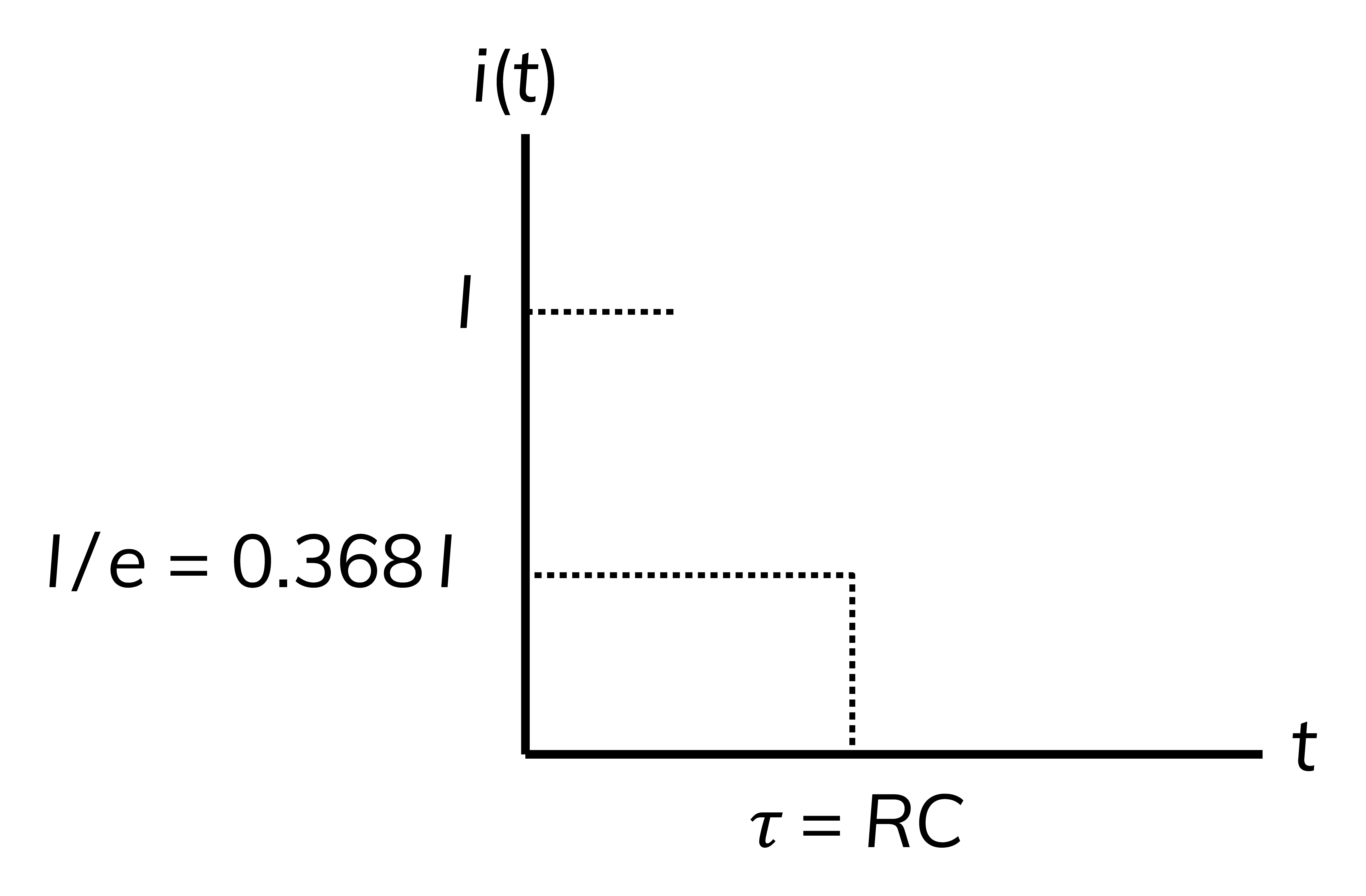
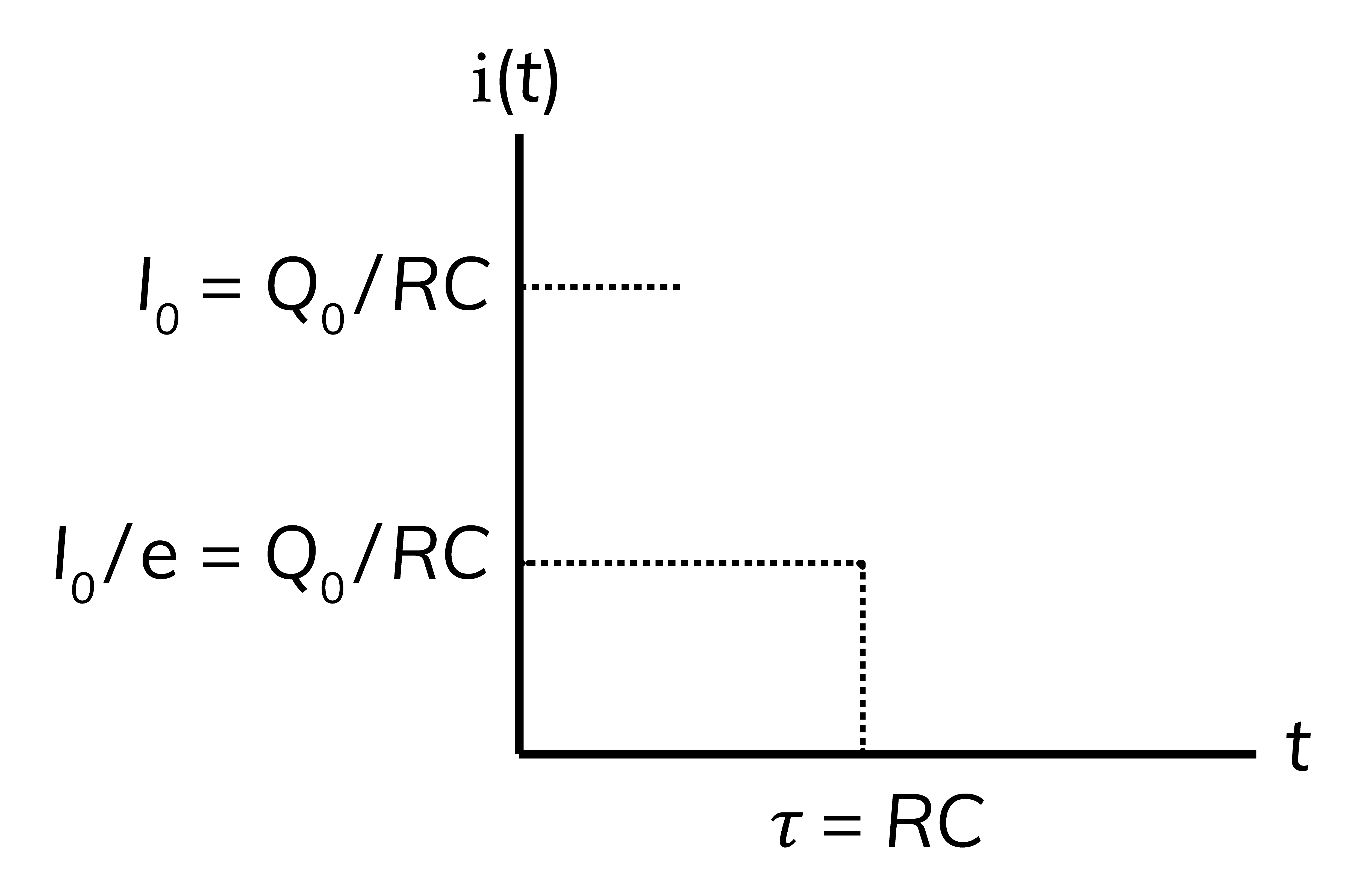
The time constant is a measure of how fast the charging or discharging happens. It is the time at which the current in the circuit has changed (dropped) by a factor of .
For RC circuits the time constant is:
Differentiating charge with respect to time gives the current as:
- is the current as a function of time
- is the initial (maximum) current in the circuit, given by
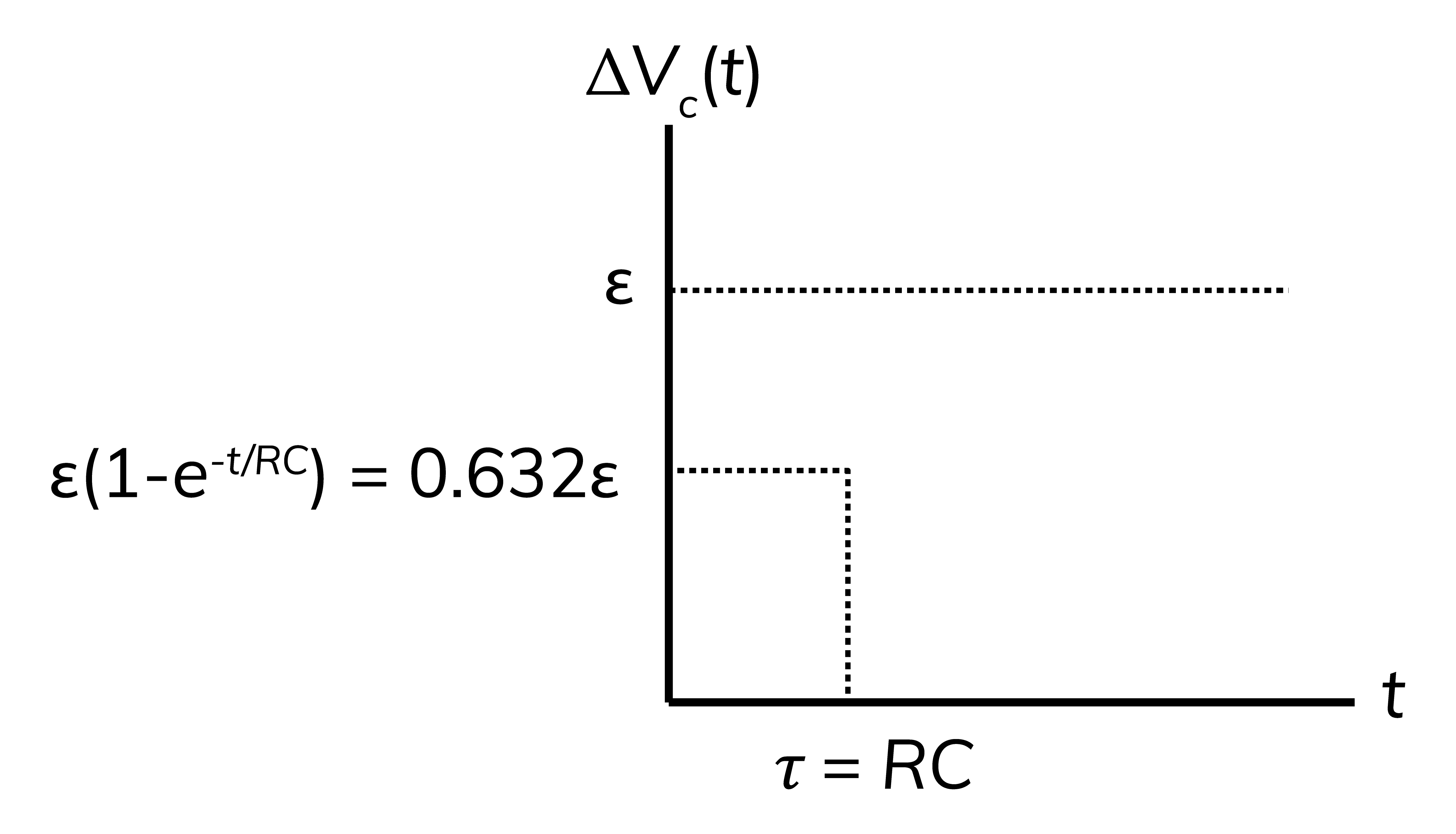
We can use to get the potential difference across the charging capacitor:
- is the voltage across the capacitor as a function of time
Discharging Capacitor
Now assume that the capacitor is charged to a value of .
The switch S is turned to position "b" at . The charge on the capacitor starts to decrease.
According to Kirchhoff’s voltage rule we have .
Therefore the current is (the negative sign means the current is decreasing).
NOTE: when the capacitor is the source of the energy, it appears as in the voltage rule when you move in the direction of the current.
The charge is the solution to the first-order differential equation above, and is given by:
- is the charge on the capacitor as a function of time
- is the capacitance (of the capacitor)
- is the resistance (of the resistor)
- is the initial (maximum) charge on the capacitor, given by (see below)
The current is also decreasing as:
- is the current as a function of time
- is the initial (maximum) current in the circuit, given by
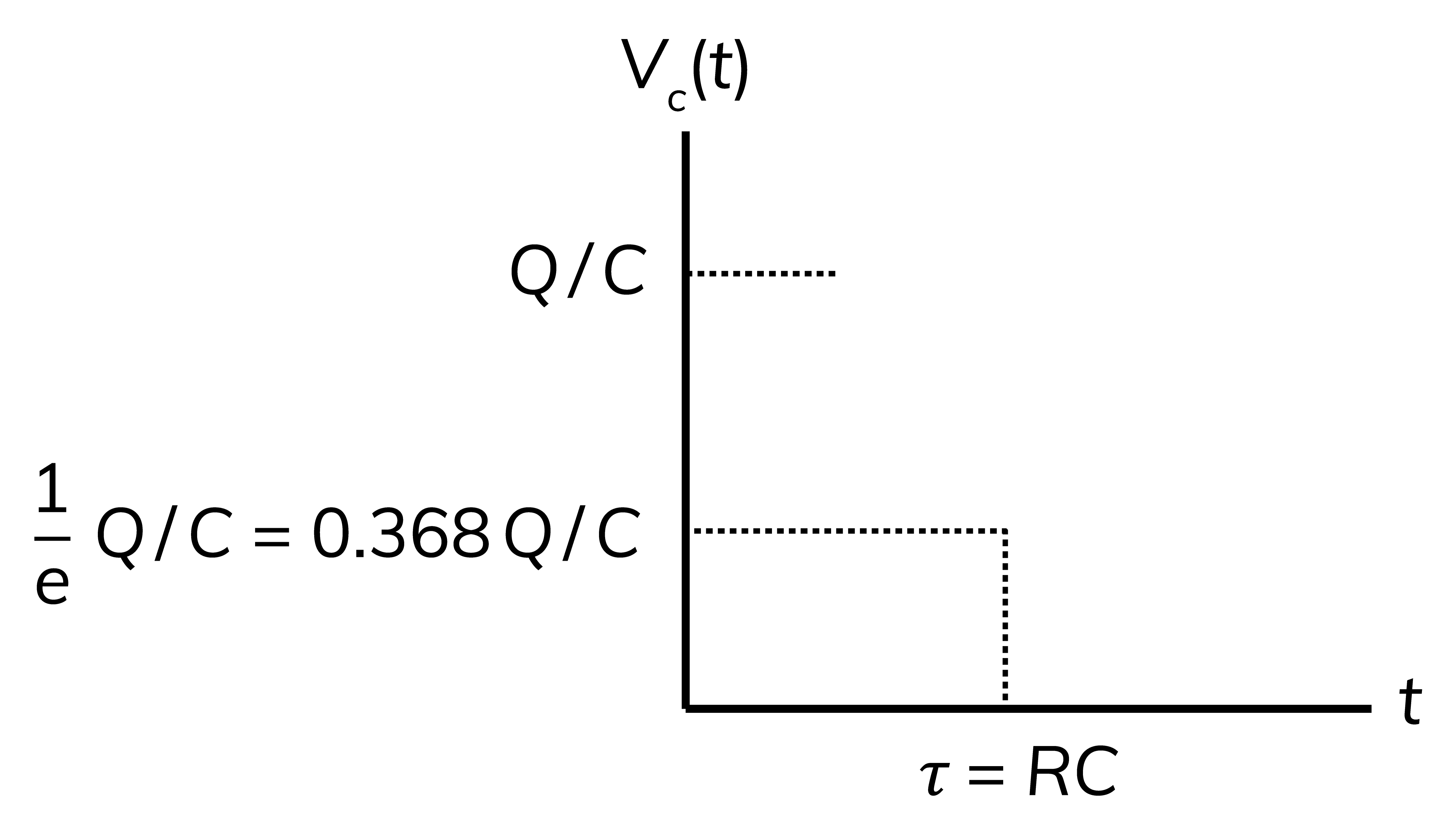
The potential difference across the discharging capacitor is:
- is the voltage across the capacitor as a function of time
- is the initial (maximum) voltage across the capacitor
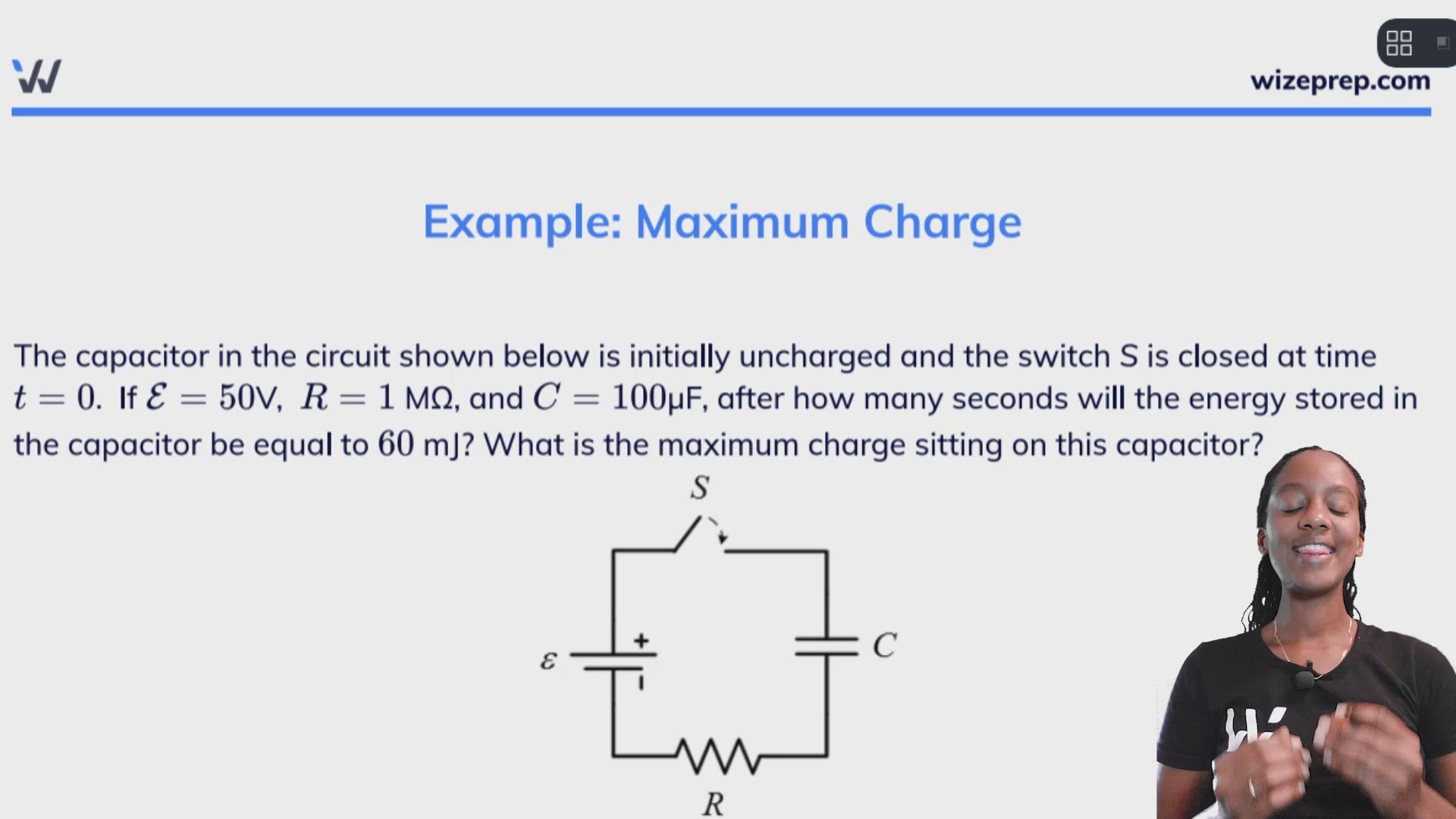
Example: Maximum Charge
The capacitor in the circuit shown below is initially uncharged and the switch S is closed at time . If V, MΩ, and µF, after how many seconds will the energy stored in the capacitor be equal to mJ? What is the maximum charge sitting on this capacitor?

The energy stored by the capacitor is given by:
Let's put the charge into this:
Rearrange for the time:
Put the numbers in:
Change to log form:
(s)
If we wait for a very long time, the charge will increase up to the maximum charge given by:
(C)