Popular Courses
PHYSICS 1E03
McMaster University
PHYS*1300
University of Guelph
PHYSICS 1402A/B
Western University
PHYS 205
Concordia University
PHYS 110
University of Victoria
PHYS 142
McGill University
ENGG 212
University of Calgary
PHY132H1
University of Toronto
PHY132H1
University of Toronto
PHYS-1300
University of Windsor
PHY 1121
University of Ottawa
PHYS 121
University of Waterloo
PHYSICS 1102A/B
Western University
PHYS 227
University of Calgary
SC/PHYS 2020 3.00
York University
PHY 9B
University of California - Davis
PHY 131
Arizona State University - Tempe
MCG 1101
University of Ottawa
PHYS 1010
York University
PHYS 1020
University of Manitoba
0:00 / 0:00
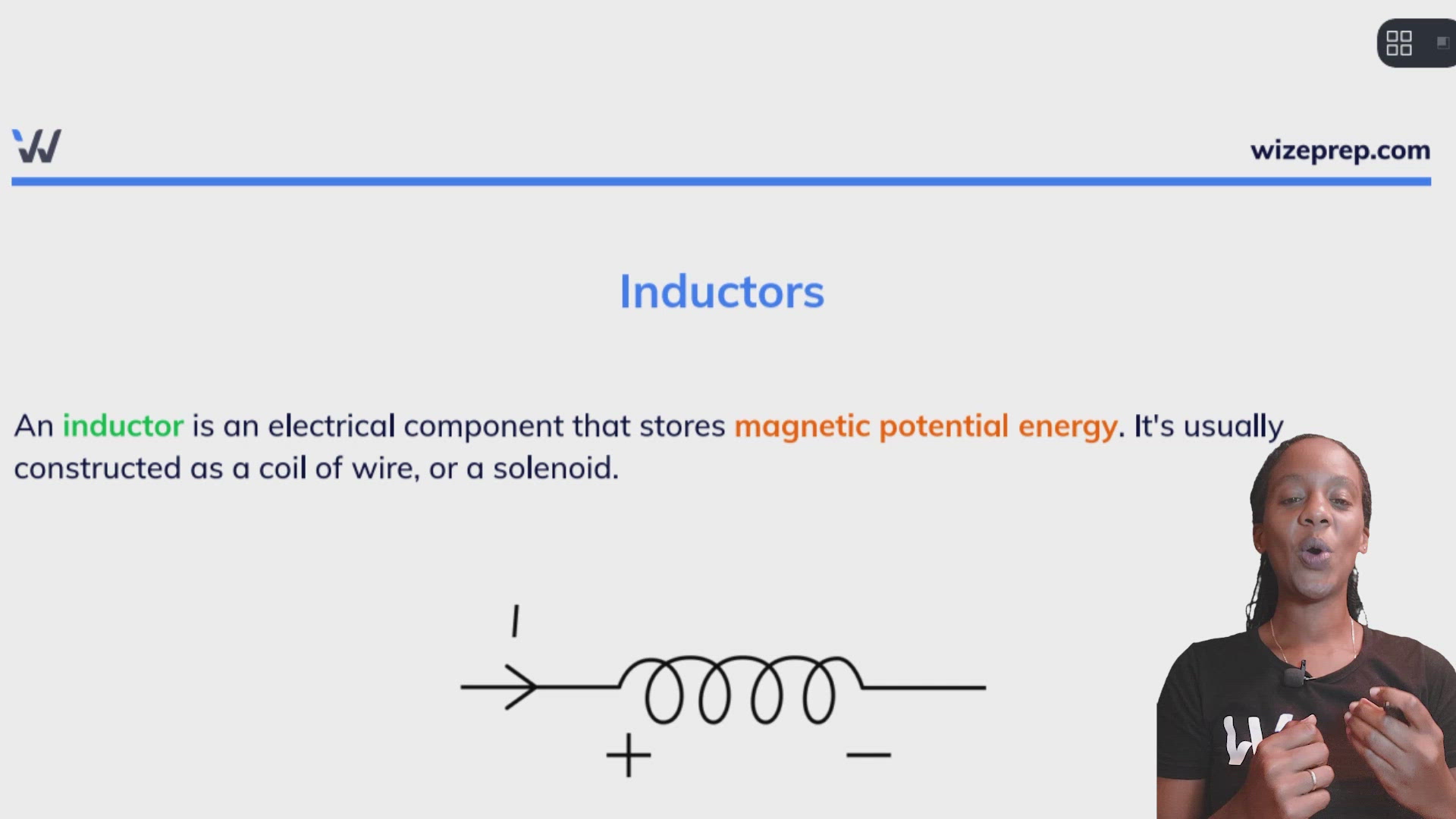
Inductors
An inductor is an electrical component that stores magnetic potential energy. It's usually constructed as a coil of wire, or a solenoid.
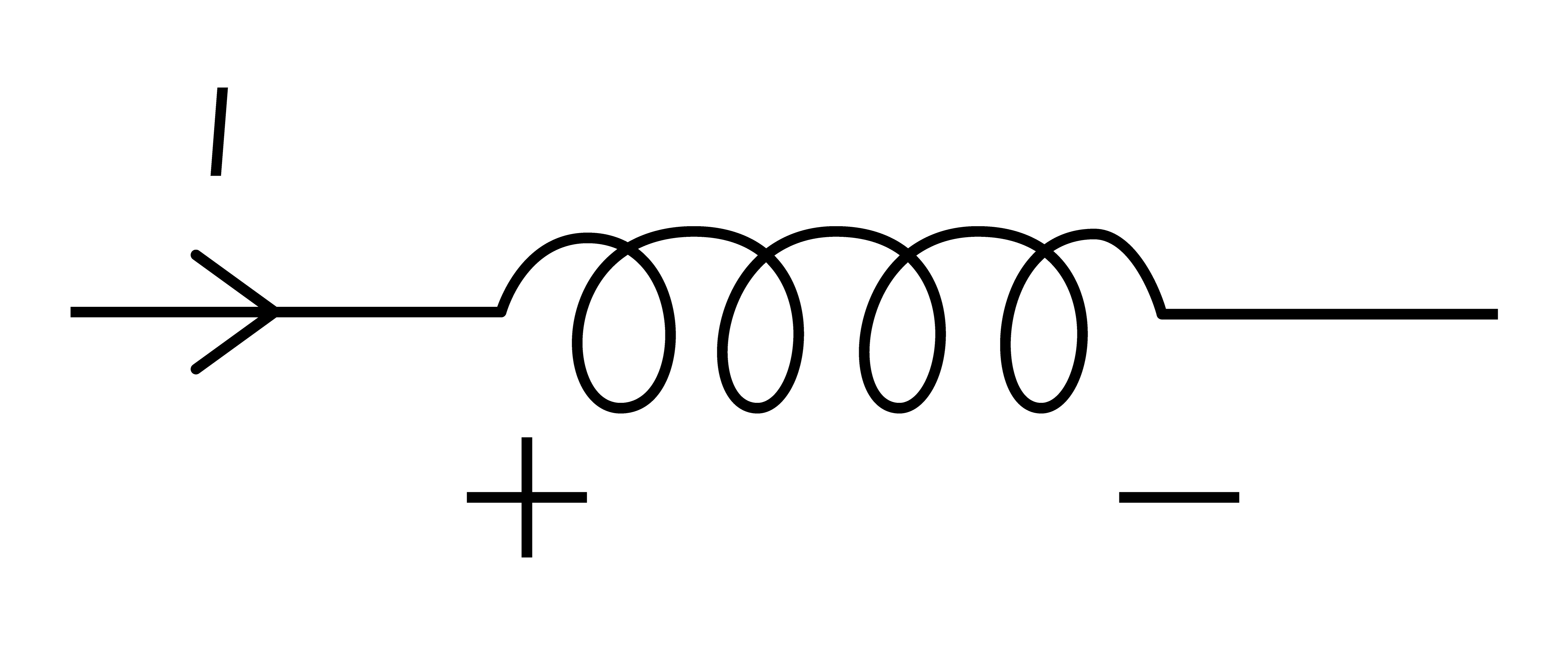
When current flows through the inductor, it produces a magnetic field inside the inductor. When this magnetic flux changes due to the current changing, there will be an induced EMF in the inductor that opposes the change in the external flux.
As a result, the inductor will always oppose sudden changes in current, and will slow down the process of changing the current.
Wize Concept
When the circuit is turned on, the current will start to flow. At the initial time the inductor acts like an open switch.
As the current (and thus magnetic flux) changes with time, the inductor generates an EMF that opposes the change in the magnetic flux.
After a long time when the current (and thus the magnetic flux) is constant, the inductor behaves like a simple wire.
The voltage drop across an inductor is given by:
Wize Concept
Use a negative/positive in the equation above depending on the role of the inductor in the circuit:
- Increasing current corresponds to a potential drop (inductor acts as a load).
- Decreasing current corresponds to potential gain (inductor acts as an EMF source).
The magnetic potential energy stored in an inductor when the current increases from to is:
Note: in some ways, an inductor is like the opposite of a capacitor. An inductor stores magnetic potential energy, while a capacitor stores electric potential energy. They also behave in opposite ways when the circuit is turned on vs. on for a long time.
Inductors in Series and Parallel:
Inductors in series:
Inductors in parallel:
Exam Tip
Inductors combine the same way as resistors.
0:00 / 0:00
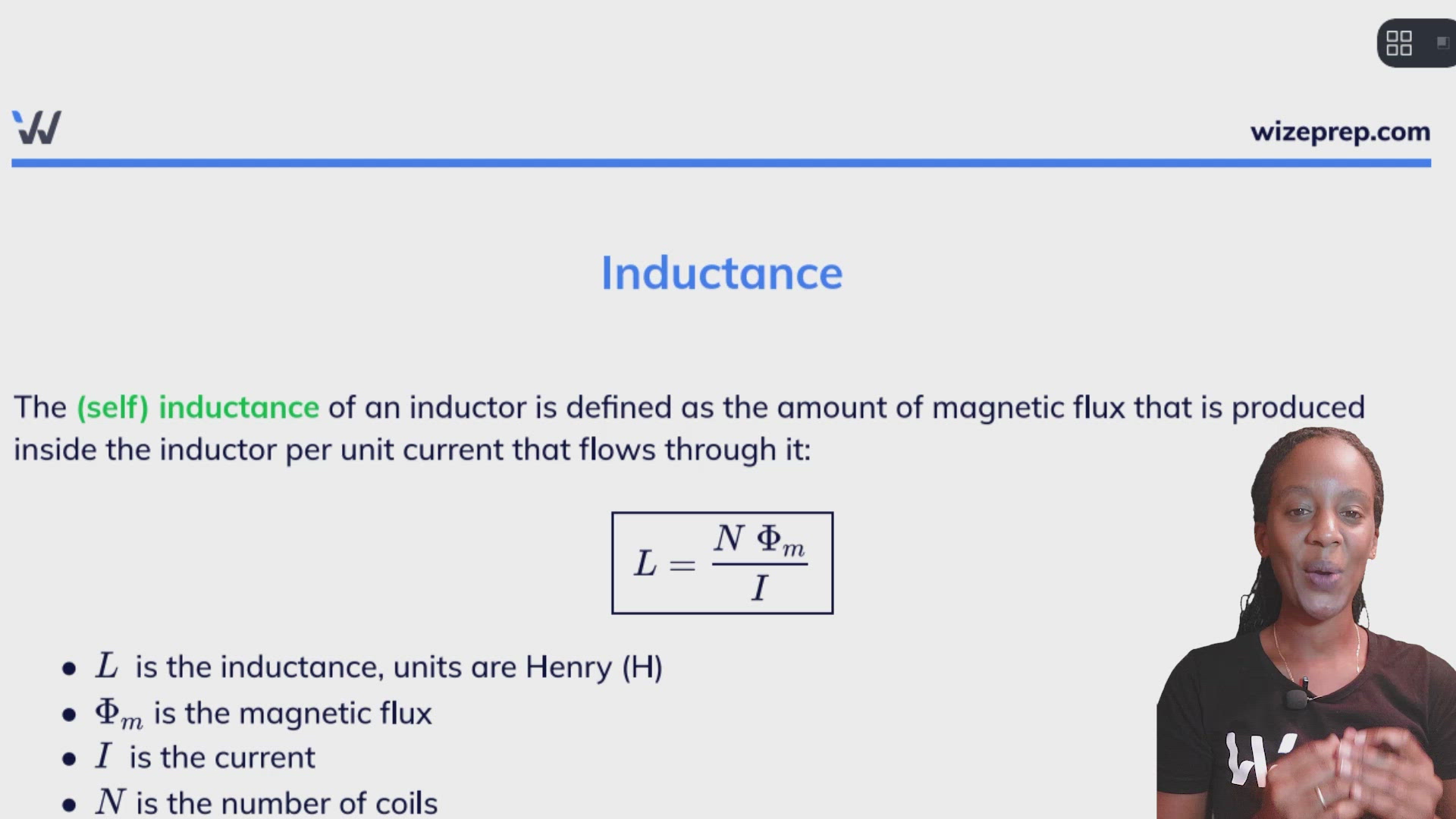
Inductance
The (self) inductance of an inductor is defined as the amount of magnetic flux that is produced inside the inductor per unit current that flows through it:
- is the inductance, units are Henry (H)
- is the magnetic flux
- is the current
- is the number of coils
Like capacitance, inductance depends only on the geometry and materials of the inductor. We can write the inductance as:
- is the magnetic permeability, H/m
- is the cross-sectional area of the solenoid
- is the length of the solenoid
- is the number of loops per unit length
0:00 / 0:00
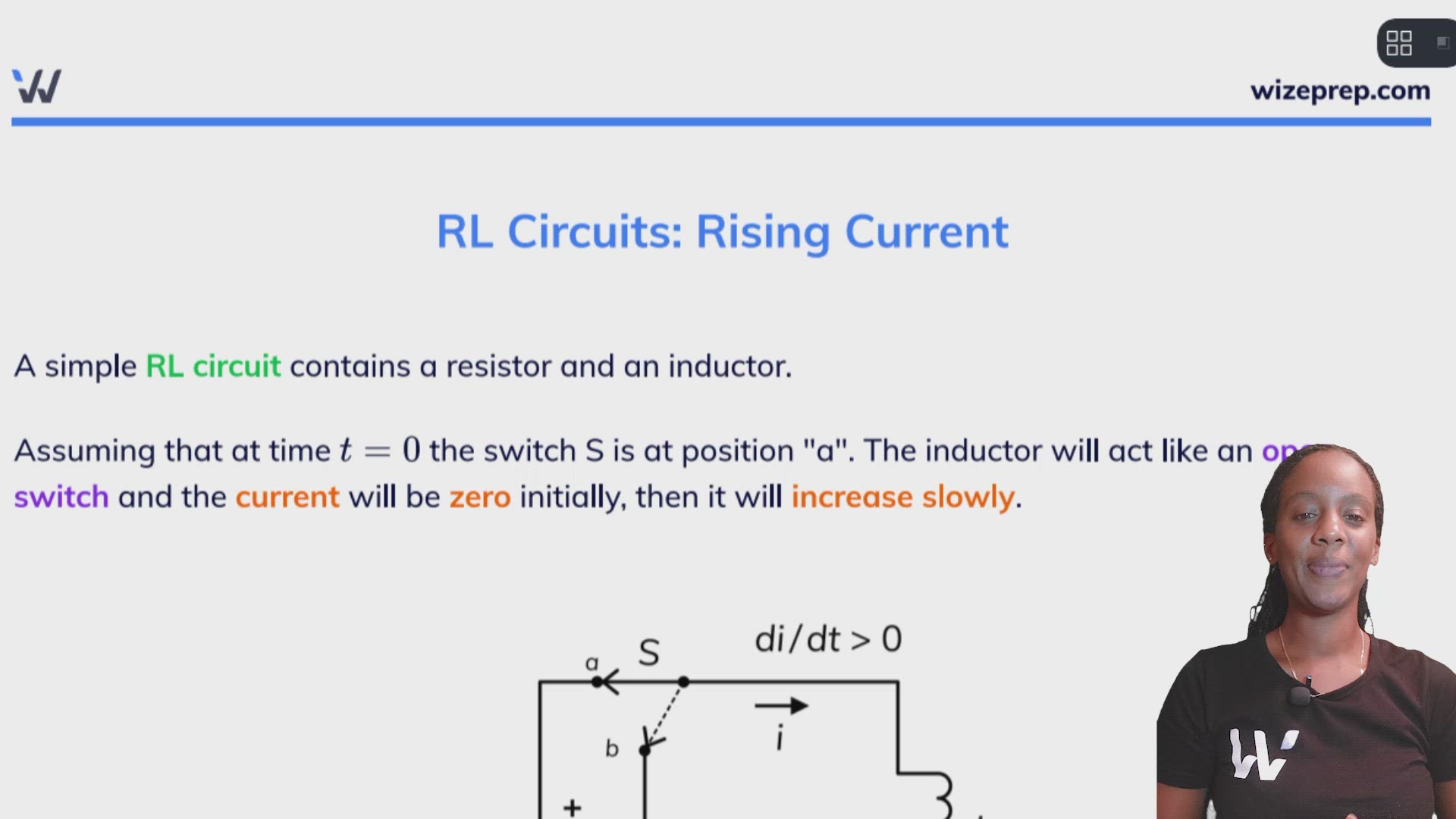
RL Circuits: Rising Current
A simple RL circuit contains a resistor and an inductor.
Assuming that at time the switch S is at position "a". The inductor will act like an open switch and the current will be zero initially, then it will increase slowly.
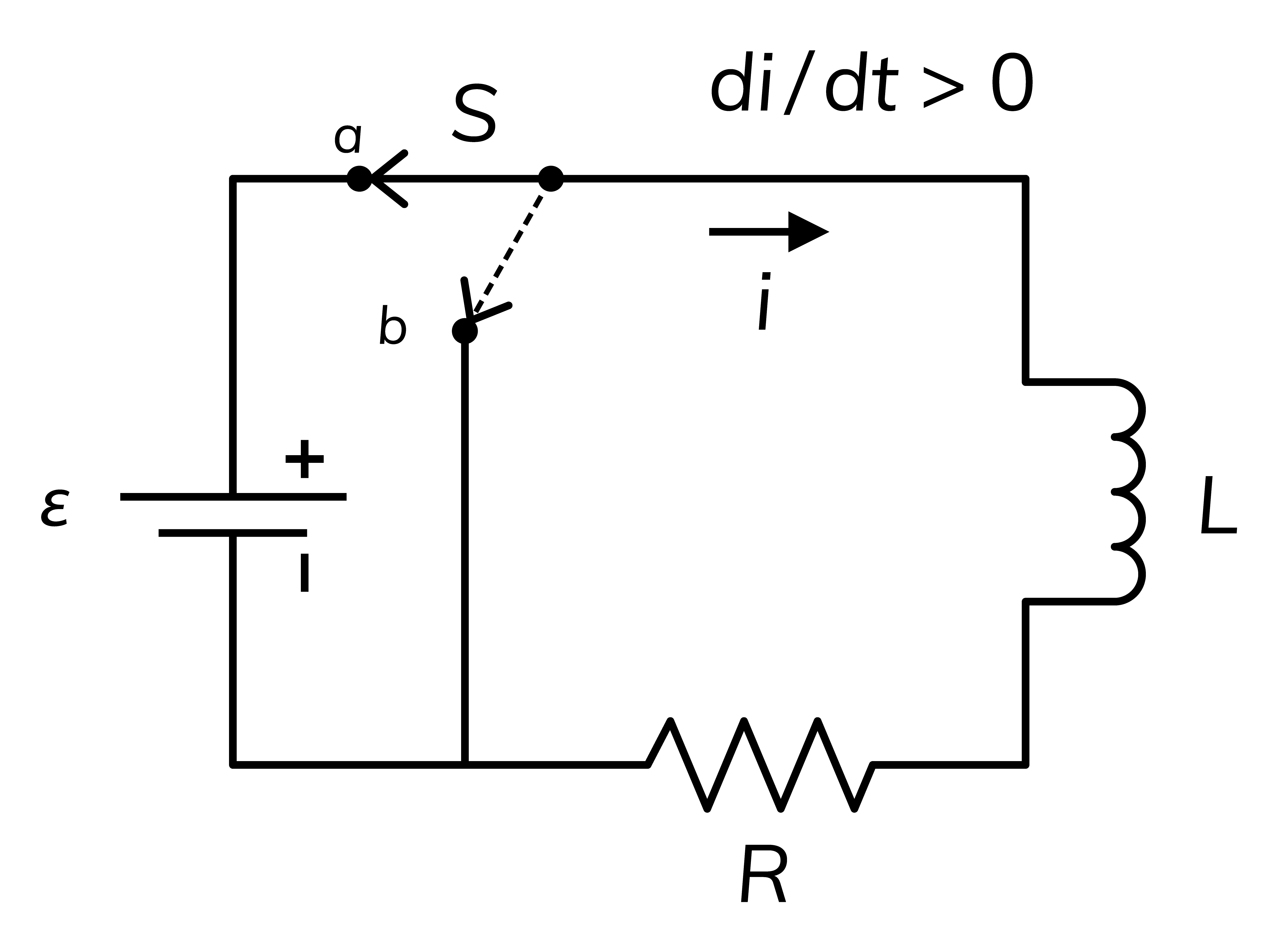
According to Kirchhoff’s voltage rule, we have .
Therefore the current is:
- is the current as a function of time
- is the EMF of the battery
- is the resistance
- is the inductance
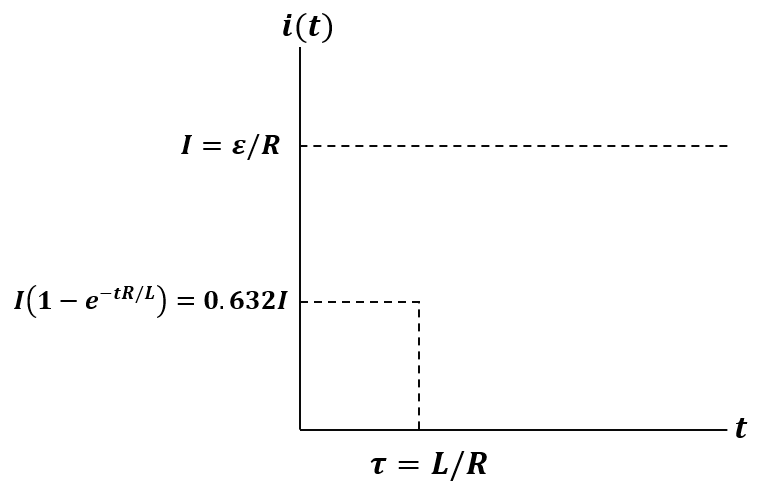
The time constant for an RL circuit is the time it takes for the voltage across the inductor to change (drop) by a factor of , and is defined as:
Exam Tip
- At (immediately after the switch is closed), the current is zero.
- As (after a very long time), the current approaches the maximum value of .
The voltage is given by:
0:00 / 0:00
RL Circuits: Decaying Current
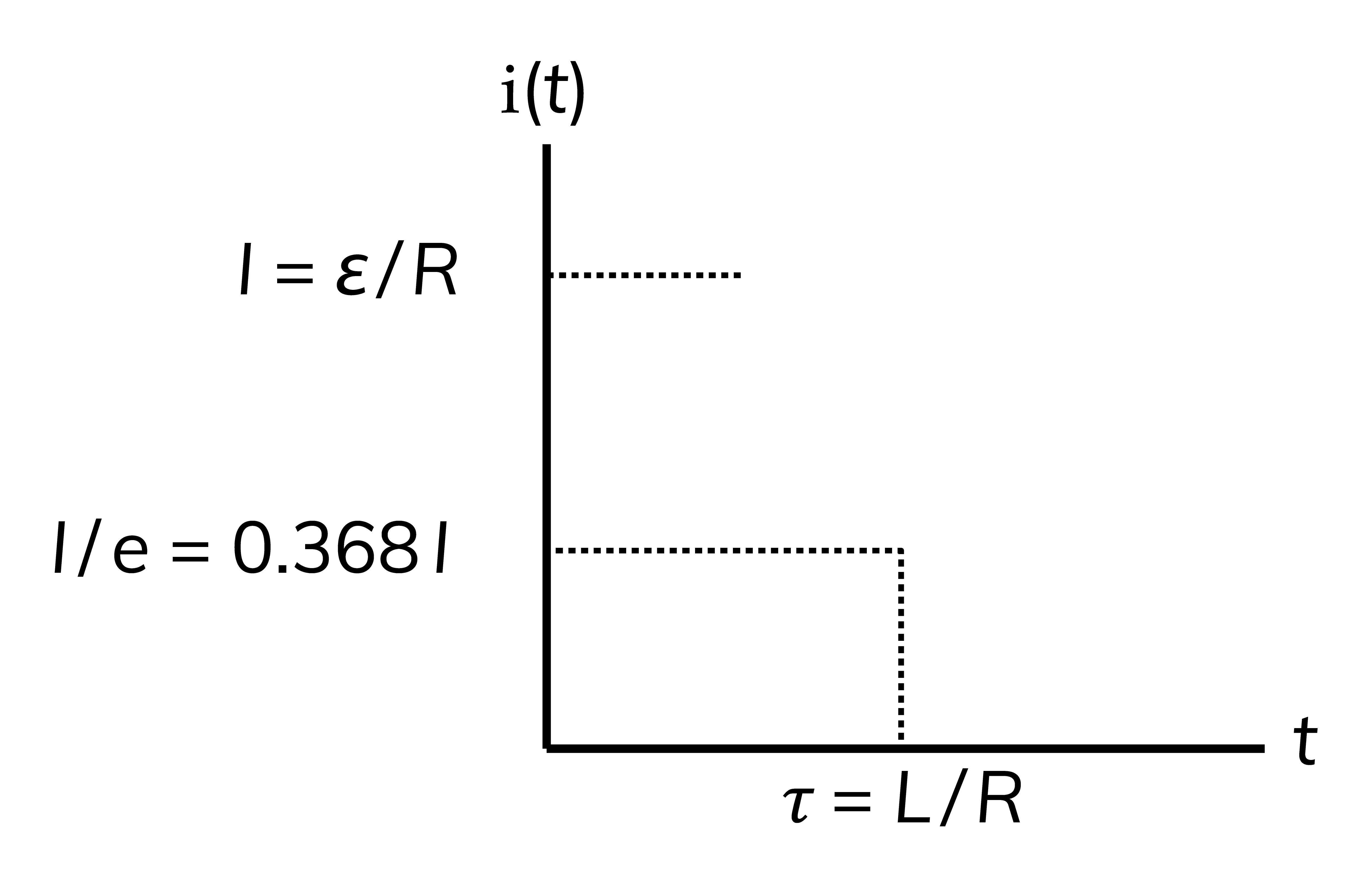
In the circuit below, at the switch S changes to position 2 from 1, after it has been at position 1 for a long time.
Now there is a sudden drop in current from the battery. But the current in the circuit will decrease slowly, and is generated due to the magnetic potential energy stored in the inductor.
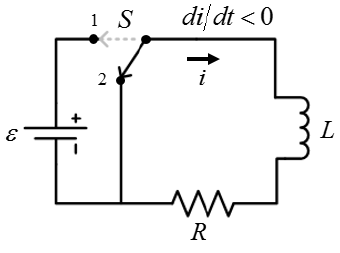
According to Kirchhoff’s voltage rule, we have .
Therefore the current is:
- is the current as a function of time
- is the EMF of the battery
- is the resistance
- is the inductance
The voltage across the inductor is:
0:00 / 0:00
Example: RL Circuit
In the following circuit, V, Ω, Ω, Ω and H. Initially there is no energy stored in the inductor.
a) Find the current in the circuit if the switch S has remained at position "a" for long time .
b) If the switch is moved to position "b", determine the time constant for the circuit.
c) Find the current and potential difference across and just after the switch changes to position "b".

Part a)
After a very long time, the inductor will act as a simple wire and the equivalent circuit looks like this:
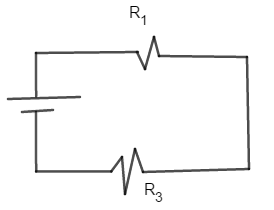
The current is now a maximum, and is given by:
(A)
Part b)
Now we have the resistors 2 and 3 in series. The time constant is:
(s)
Part c)
Just after the switch is closed at "b", the inductor keeps the current at its maximum.
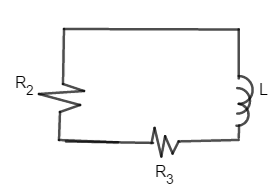
Therefore we have:
(A)
We can now use the current to find the voltage across the resistors:
(V)
(since resistor 1 is out of the circuit now)
Practice: Two Switches
For the following circuit, the voltage is V, inductance mH, and both resistors Ohms. The circuit has been held in the following position for a long time. Then, we open S1 and close S2 simultaneously.
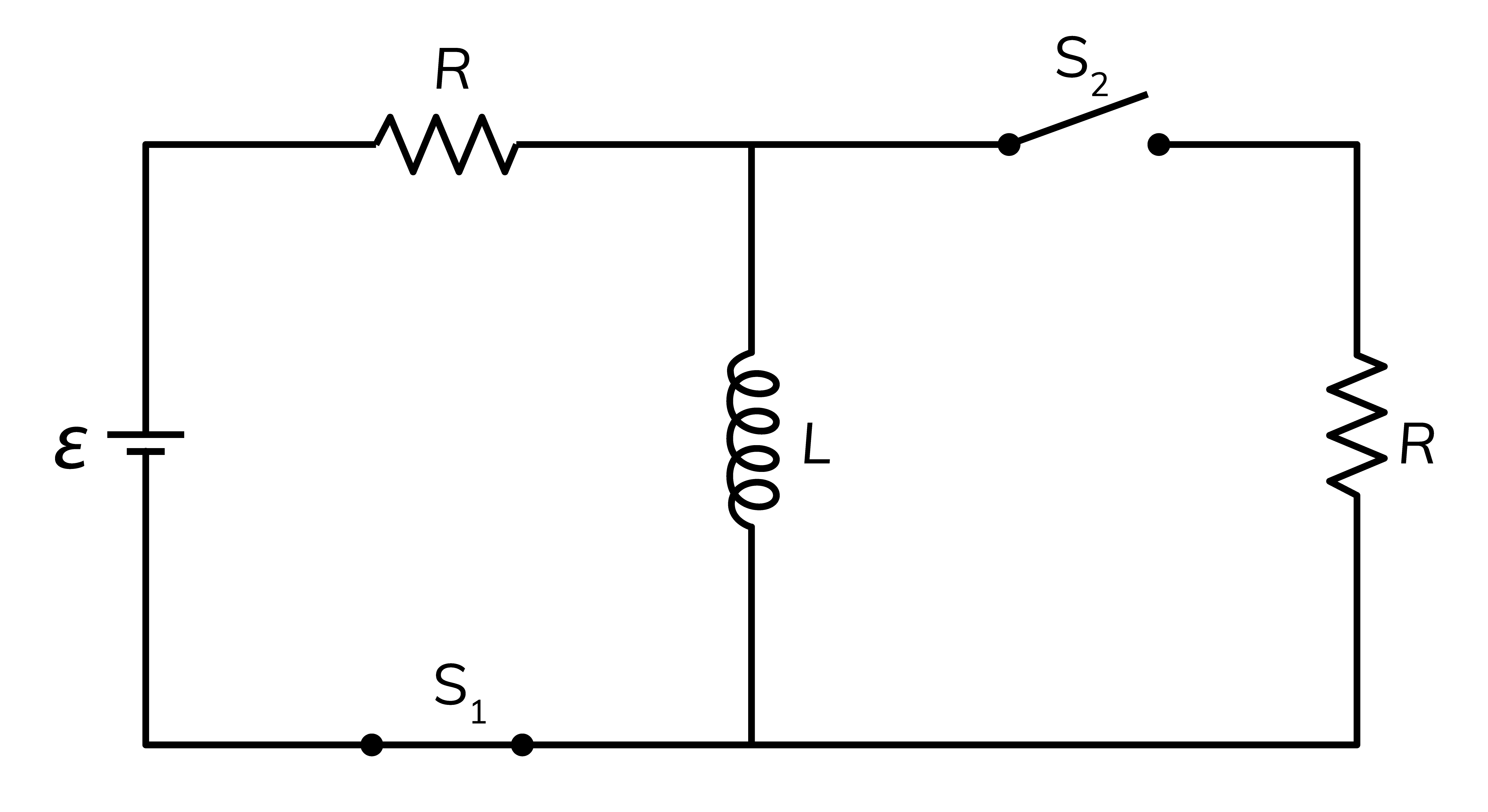
a) Determine the current through the inductor at time .
b) Determine the current through the inductor at time s.
c) At the same time, what is the voltage across the inductor?
At this same time (), we swap the switches back to their original positions (as shown in the diagram).
d) What is the new current through the inductor, immediately after replacing the switches?
e) What is the new voltage across the inductor, immediately after replacing the switches?