Wize University Physics Textbook (Master) > DC Circuits
RC Circuits: Charging and Discharging of Capacitors
Popular Courses
PHYSICS 1E03
McMaster University
PHYS*1300
University of Guelph
PHYSICS 1402A/B
Western University
PHYS 205
Concordia University
PHYS 110
University of Victoria
PHYS 118
University of British Columbia
PHYS 142
McGill University
ENGG 212
University of Calgary
PHY132H1
University of Toronto
PHY132H1
University of Toronto
PHYS-1300
University of Windsor
PHY 1121
University of Ottawa
PHYS 121
University of Waterloo
PHYSICS 1102A/B
Western University
PHYS 227
University of Calgary
SC/PHYS 2020 3.00
York University
PHYS 116
Queen's University
PHY 9B
University of California - Davis
PHY 131
Arizona State University - Tempe
MCG 1101
University of Ottawa

0:00 / 0:00
Charging Capacitor
A simple RC circuit contains a resistor and a capacitor.

Assume there is no initial charge on the capacitor. At the switch S is at position "a". The capacitor acts like an ideal wire initially, and charge on it starts to increase.
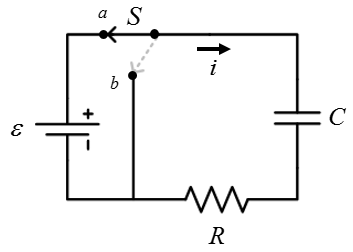
According to Kirchhoff’s voltage rule, we have .
Therefore the current is .
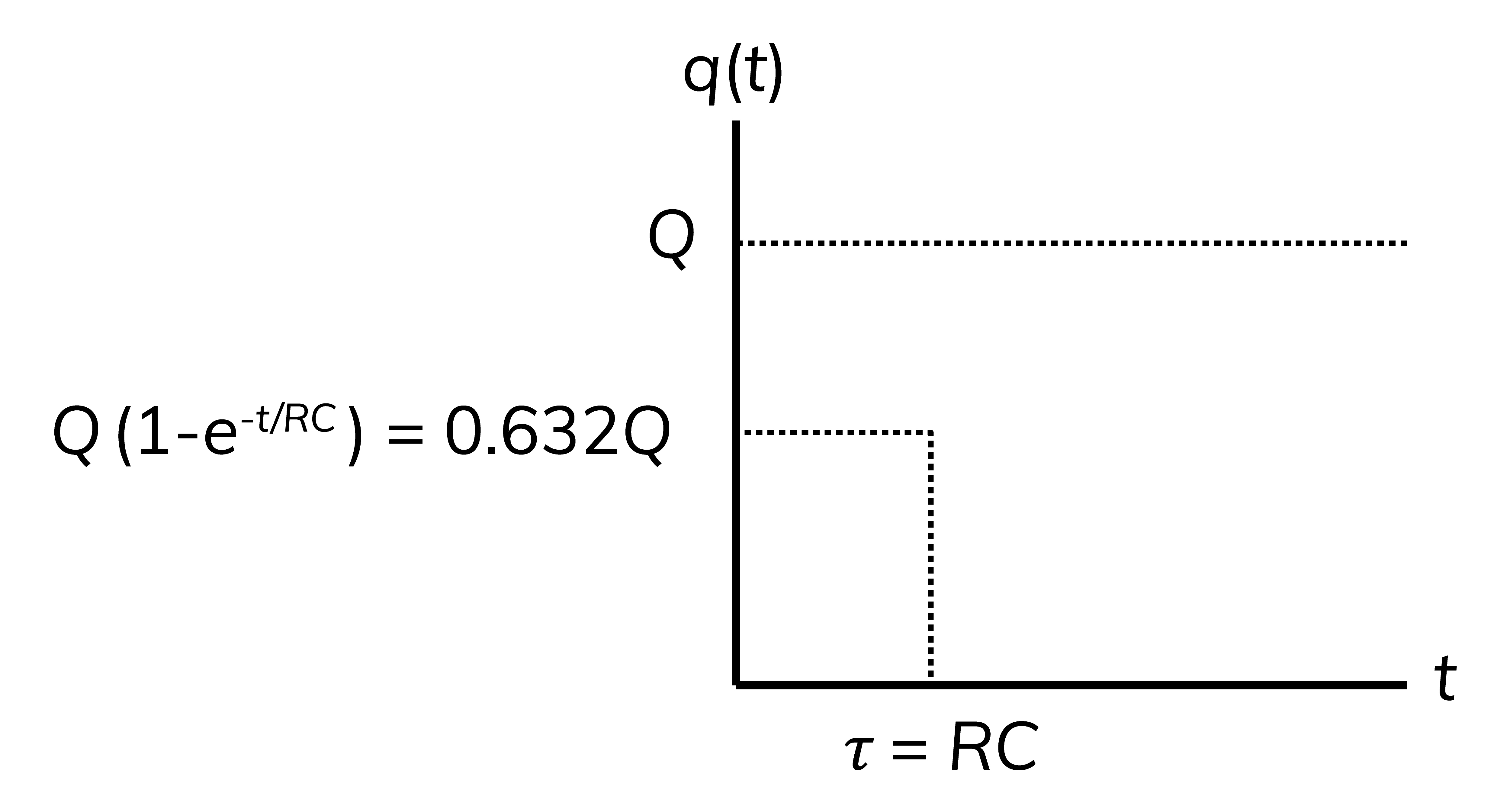
The charge is the solution to the first-order differential equation above, and is given by:
- is the charge on the capacitor as a function of time
- is the capacitance (of the capacitor)
- is the EMF supplied by the battery
- is the resistance (of the resistor)
- is the final (maximum) charge on the capacitor, given by
Wize Concept
As time increases , we have , and the charge increases from zero to the maximum value .
The time constant is a measure of how fast the charging or discharging happens. It is the time at which the current in the circuit has changed (dropped) by a factor of .
For RC circuits the time constant is:
Exam Tip
The larger the time constant, the more time it takes to charge or discharge, and vice-versa.
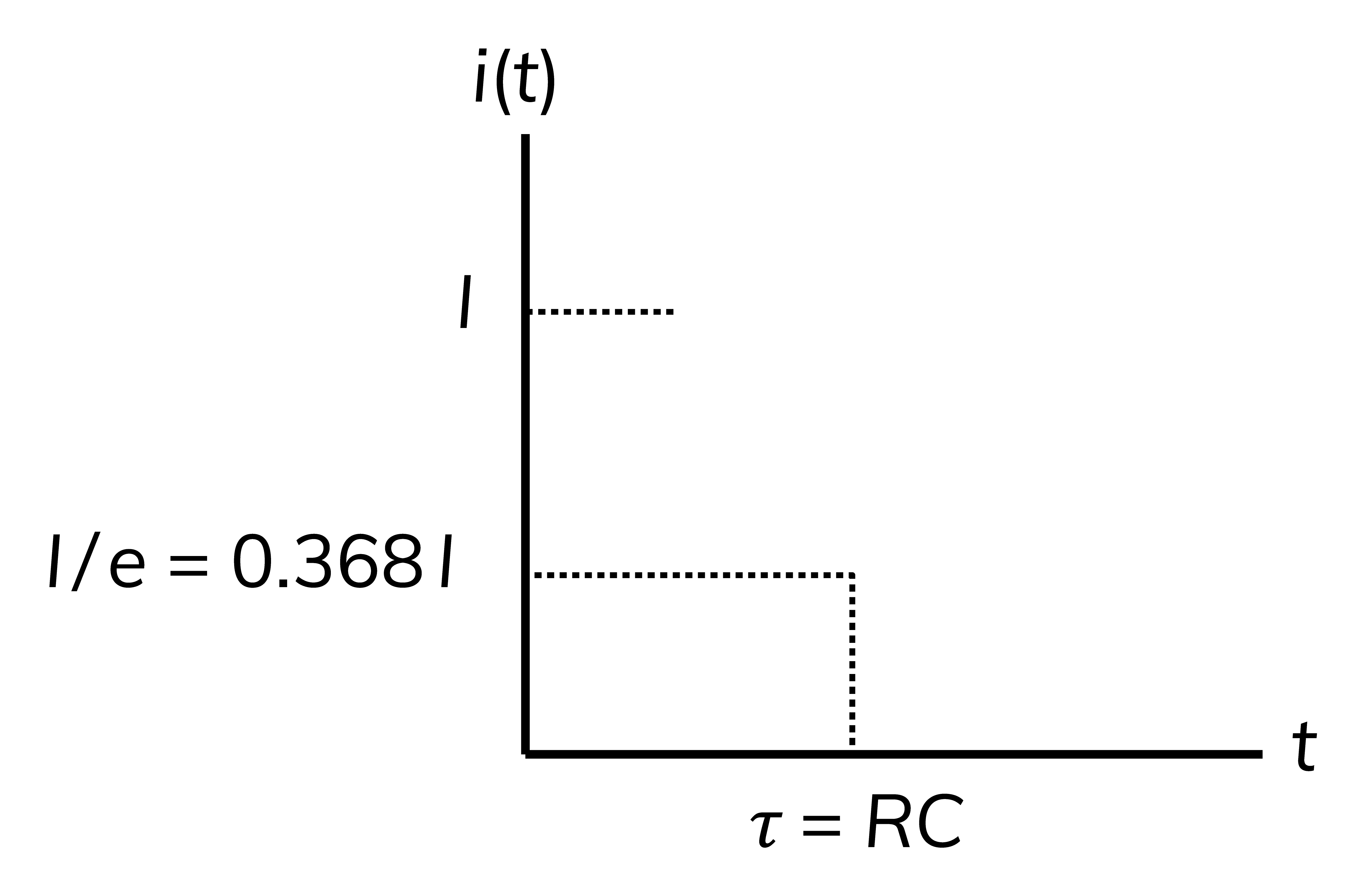
Differentiating charge with respect to time gives the current as:
- is the current as a function of time
- is the initial (maximum) current in the circuit, given by
Wize Concept
As time increases , we have , and the current decreases from the maximum value to zero.
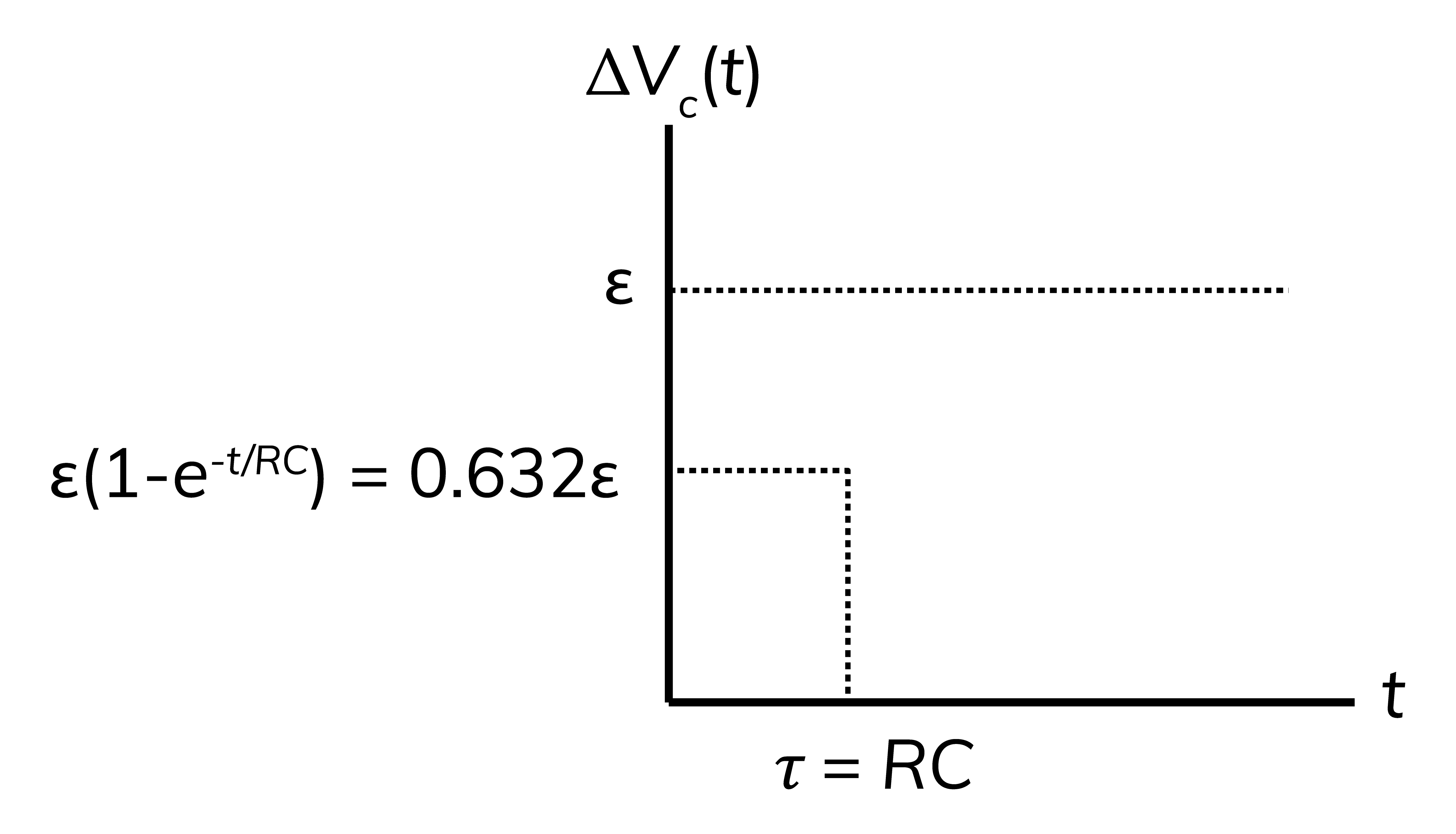
We can use to get the potential difference across the charging capacitor:
- is the voltage across the capacitor as a function of time
Wize Concept
As time increases , we have , and the potential difference increases from zero to the maximum value of the supplied by the battery.
Exam Tip
- An empty capacitor behaves like a simple wire, because the potential difference across it is zero.
- A full capacitor behaves like an open switch, because the current passing through it is zero.
0:00 / 0:00
Discharging Capacitor
Now assume that the capacitor is charged to a value of .
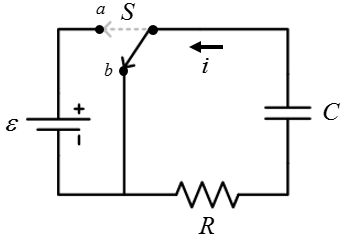
The switch S is turned to position "b" at . The charge on the capacitor starts to decrease.
According to Kirchhoff’s voltage rule we have .
Therefore the current is (the negative sign means the current is decreasing).
NOTE: when the capacitor is the source of the energy, it appears as in the voltage rule when you move in the direction of the current.
Wize Concept
- When a capacitor is discharging (when there is no battery linked to it), it almost acts like a battery. It will start giving off its energy (which is limited, unlike a battery).
- When the capacitor is linked to a battery, it will store energy. When it's fully charged it will behave like an open switch.
Exam Tip
The direction of the current for discharging is opposite to the direction for charging.
The charge is the solution to the first-order differential equation above, and is given by:
- is the charge on the capacitor as a function of time
- is the capacitance (of the capacitor)
- is the resistance (of the resistor)
- is the initial (maximum) charge on the capacitor, given by (see below)
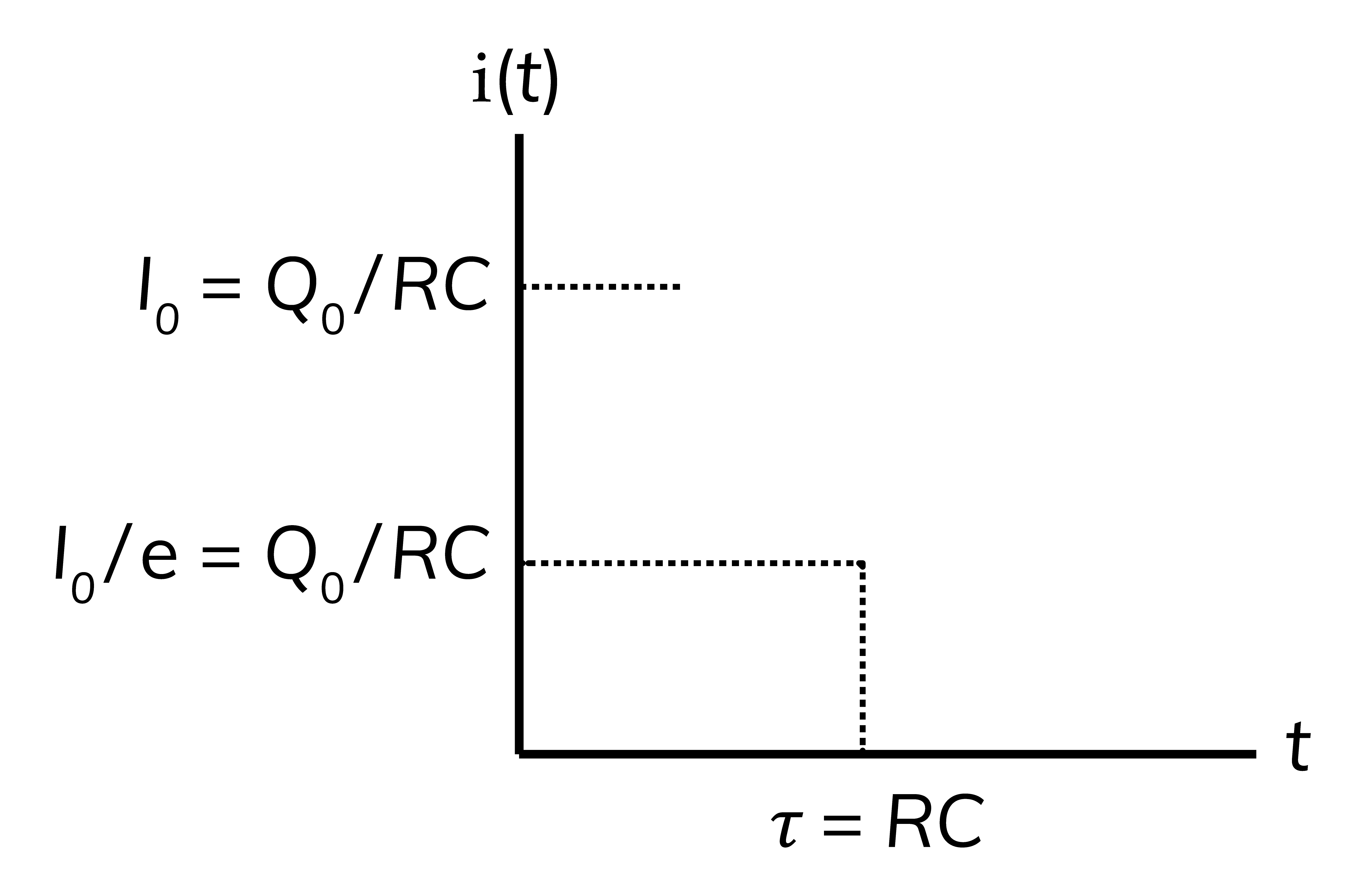
The current is also decreasing as:
- is the current as a function of time
- is the initial (maximum) current in the circuit, given by
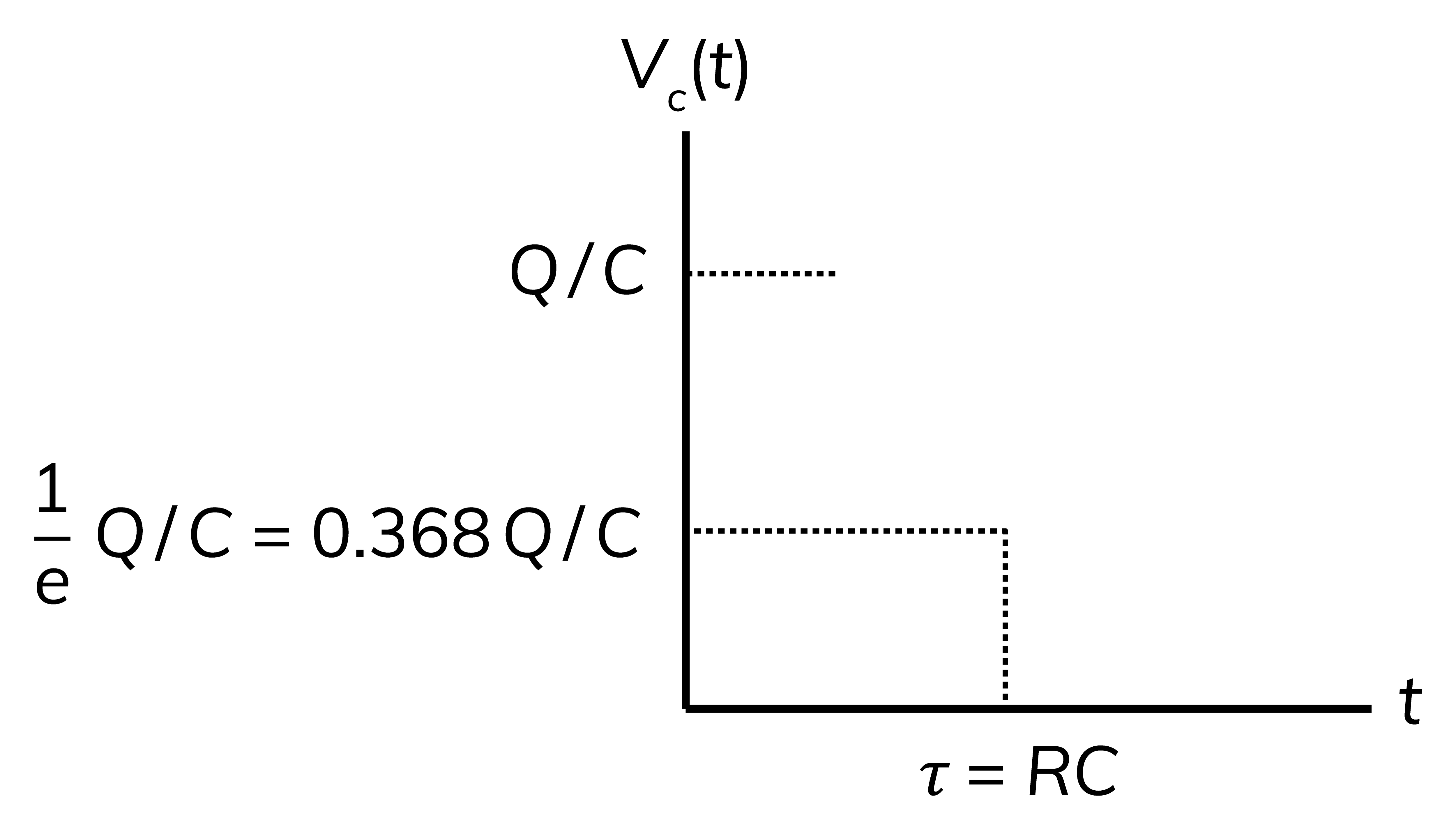
The potential difference across the discharging capacitor is:
- is the voltage across the capacitor as a function of time
- is the initial (maximum) voltage across the capacitor
Wize Concept
As time increases , all the collected charge will be used up, the current and voltage will approach zero, and the capacitor will became like an open switch again.
Exam Tip
For problems involving RC circuits it's important to remember what happens at two key times:
- immediately after the switch is closed
- after a very long time
0:00 / 0:00
Example: Maximum Charge
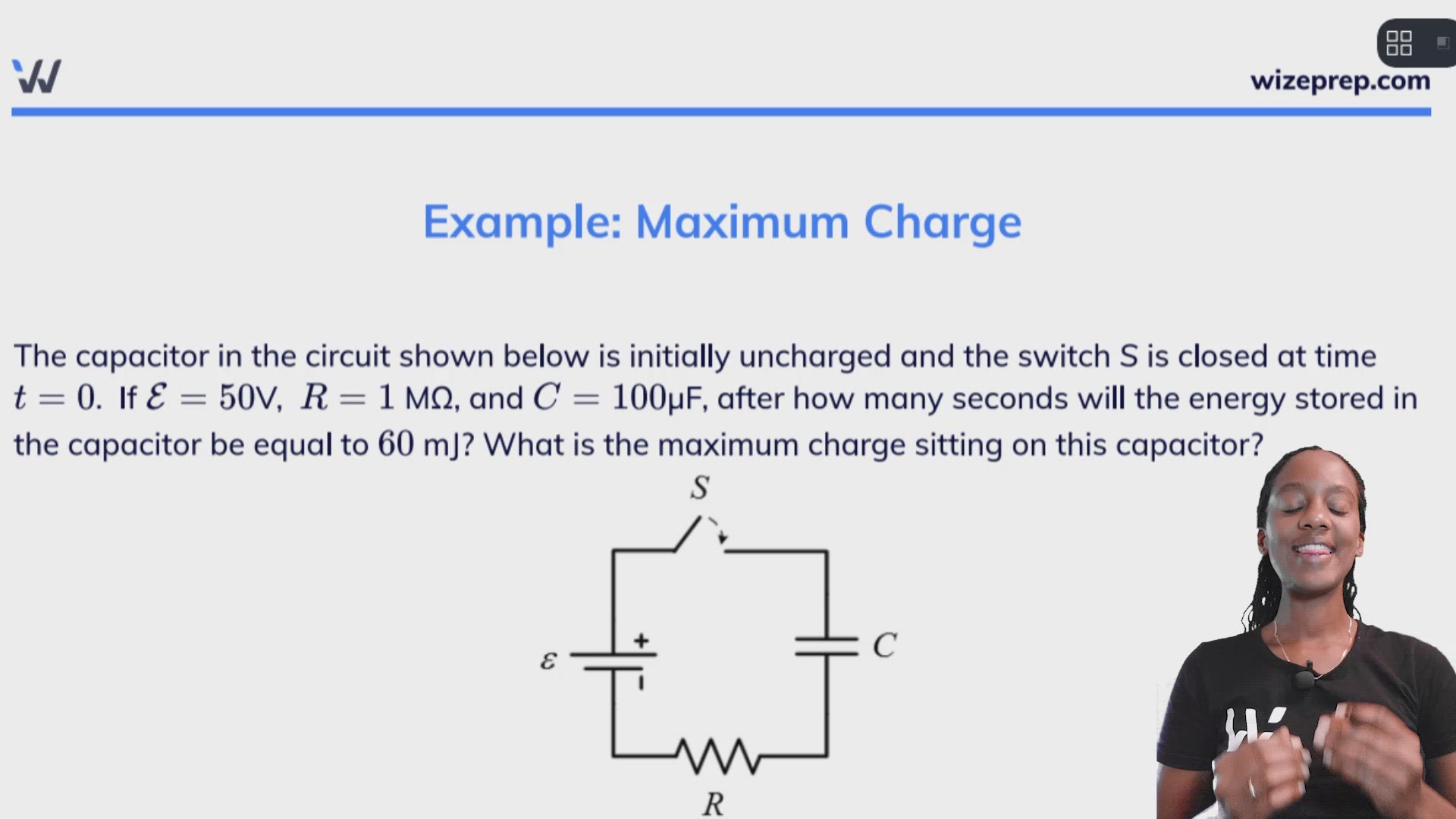
The capacitor in the circuit shown below is initially uncharged and the switch S is closed at time . If V, MΩ, and µF, after how many seconds will the energy stored in the capacitor be equal to mJ? What is the maximum charge sitting on this capacitor?

The energy stored by the capacitor is given by:
Let's put the charge into this:
Rearrange for the time:
Put the numbers in:
Change to log form:
(s)
If we wait for a very long time, the charge will increase up to the maximum charge given by:
(C)

Mark Yourself Question
- Grab a piece of paper and try this problem yourself.
- When you're done, check the "I have answered this question" box below.
- View the solution and report whether you got it right or wrong.
Practice: Charge & Discharge
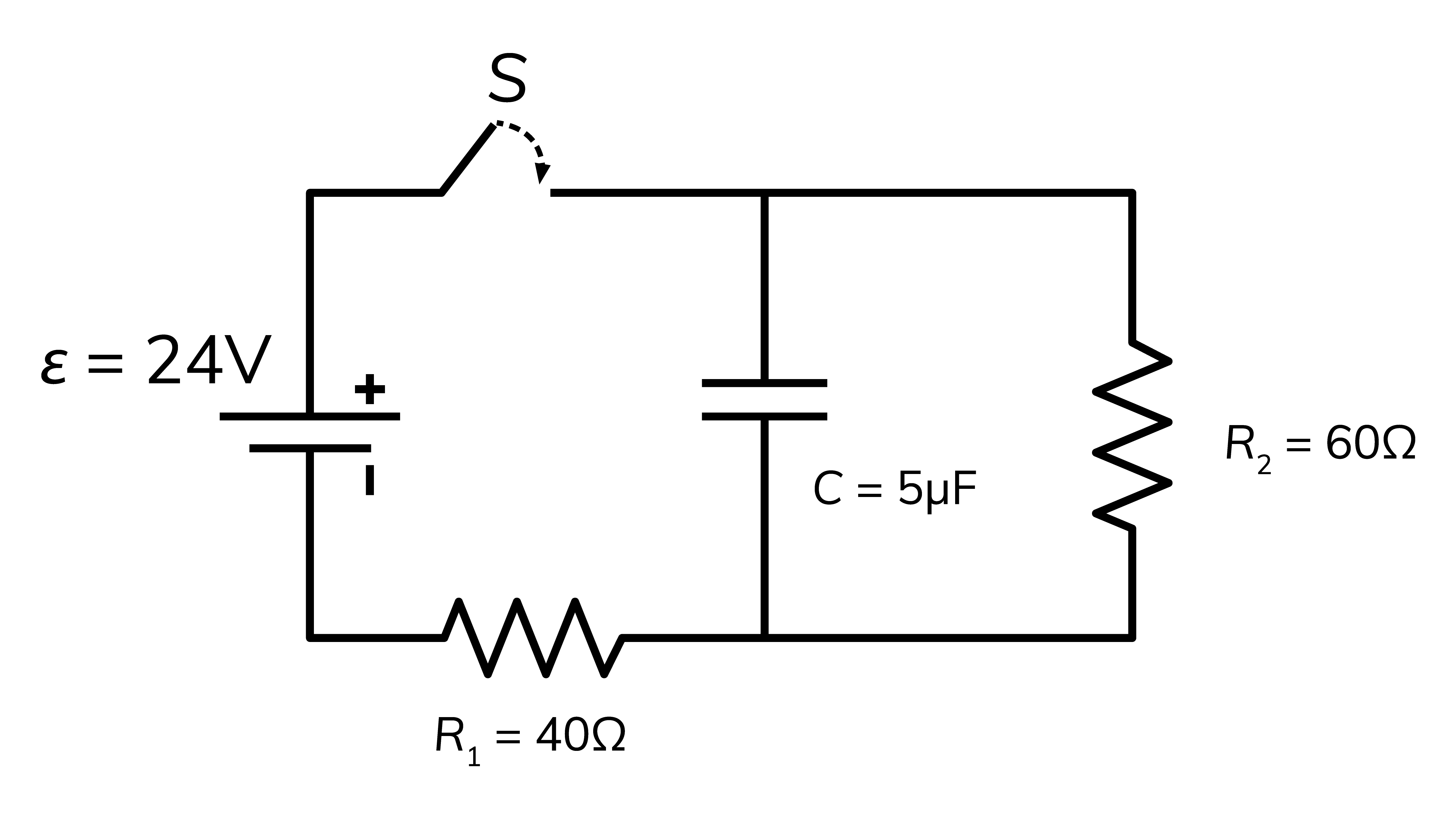
In the circuit depicted below, the switch S has been open for a very long time.
a) The switch is closed at time . At the instant the switch is closed, find the power supplied by the battery, the power dissipated by resistors and , and the charge stored by the capacitor.
b) Repeat part a) after the switch has remained closed for a long time, i.e. .
c) Derive the expression for the power that's supplied to the capacitor at any time during the charging process. Evaluate the derived expression at and .
d) The switch is now opened again after the capacitor has been fully charged. After how many seconds will the energy stored in the capacitor drop to of its maximum value?