Wize AP Biology Textbook > DNA Replication & Repair
DNA Structure and Sequence
Popular Courses
Find My Course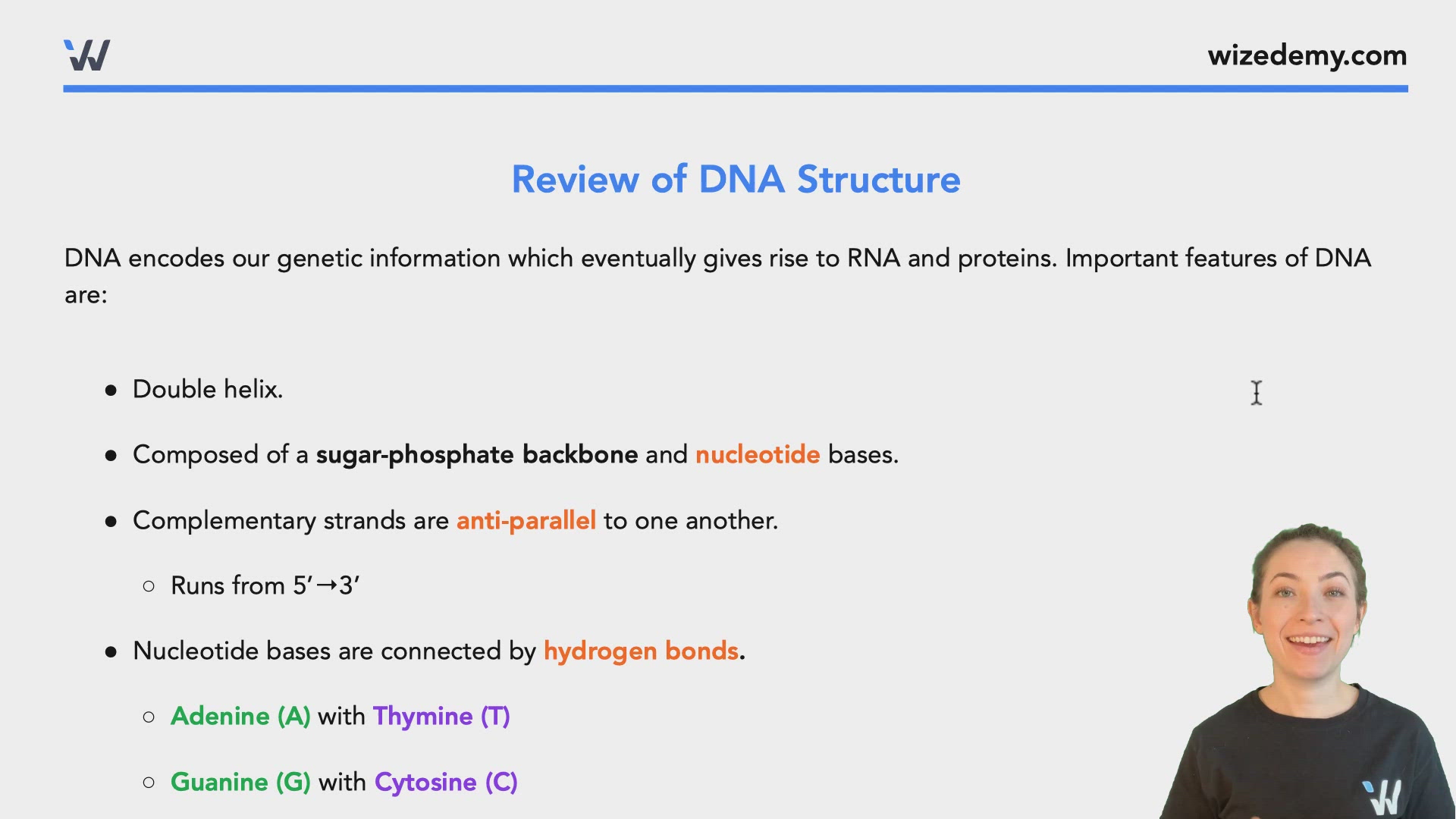
0:00 / 0:00
Review of DNA Structure
DNA encodes our genetic information which eventually gives rise to RNA and proteins. Important features of DNA are:
- Double helix.
- Composed of a sugar-phosphate backbone and nucleotide bases.
- Complementary strands are anti-parallel to one another.
- Runs from 5’→3’
- Nucleotide bases are connected by hydrogen bonds.
- Adenine (A) with Thymine (T)
- Guanine (G) with Cytosine (C)
- Purines hydrogen bond with pyrimidines:
- Purines = A & G
- Pyrimidines = T & C
- In RNA, Uracyl (U) replaces T
- C and G have 3 hydrogen bonds between one another, while A and T have only two.
- This makes the bonds between C and G harder to break, requiring more energy (i.e. higher temperature).
Wize Tip
Remember the mnemonic below to memorize which nucleotides are purines and which are pyrimidines:
- CUT the Py = Cytosine, Uracil and Thymine are Pyrimidines.
- Pure As Gold = Purines are adenine and Guanine.

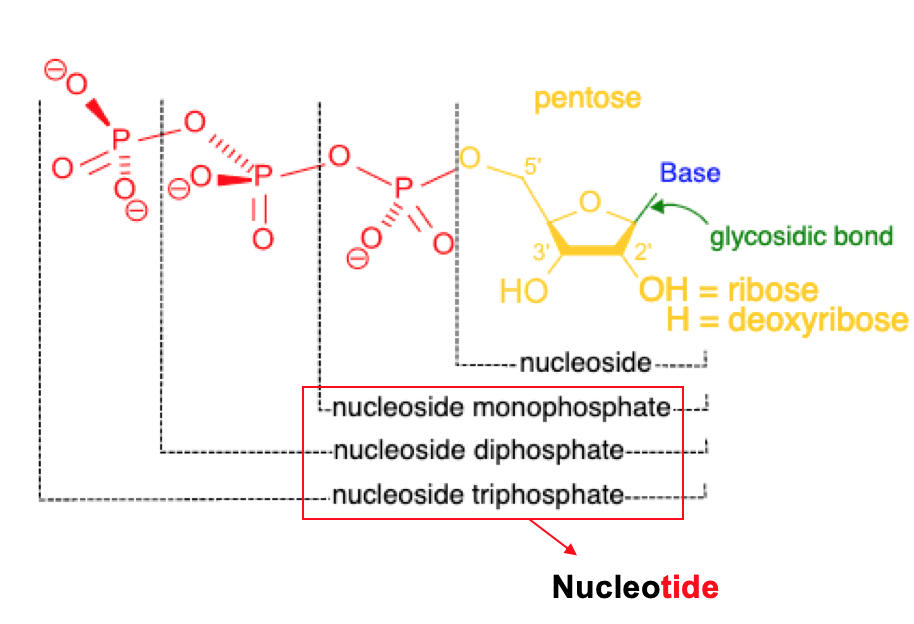
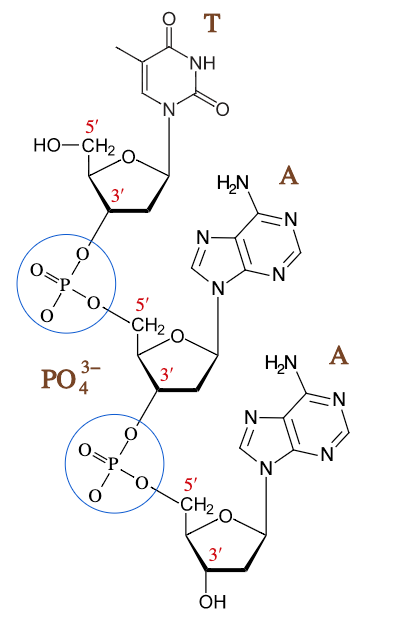
How is the DNA backbone elongated?
- Phosphodiester bonds form between the 3' -OH group of one nucleoside to the 5' phosphate group of an incoming nucleoside.
Practice: Levels of DNA Structure
Select the three levels of DNA structure.
Practice: Nucleotide Base Pairing
Which of the following is the correct 5' to 3' sequence of the complimentary strand to: 5'-AGGTCTGATTCGTA-3' ?