Wize University Biology Textbook > Chemistry of Life
Nucleic Acids
Popular Courses
MCAT
General Course
AP Biology Exam Prep Course
AP Exam Prep
Biology
General Course
General Biology
University Study Guides
BIOL 107
University of Alberta
BIOL 102
Queen's University
BIOL 112
University of British Columbia
BIOL 112
University of British Columbia
Grade 12 Biology
Canada High School
DAT
General Course
High School Biology
US High School
Grade 11 Biology
Ontario High School
Grade 11 Biology
Canada High School
BIOL 200
McGill University
General Biology
University Study Guides
BIOL 130
University of Waterloo
SC/BIOL 1000 3.00
York University
Biology 20
Alberta High School
BIOL 311
University of Calgary
BLG 143
Toronto Metropolitan University

0:00 / 0:00
Nucleic Acids
Nucleic acids are what constitutes our genetic code. The monomers of nucleic acids, which includes both DNA and RNA, are called nucleotides. Nucleotides have three key ingredients:

- Phosphate
- Sugar
- Base
Difference Between RNA and DNA
DNA and RNA nucleotides differ in the structure of the sugar group.
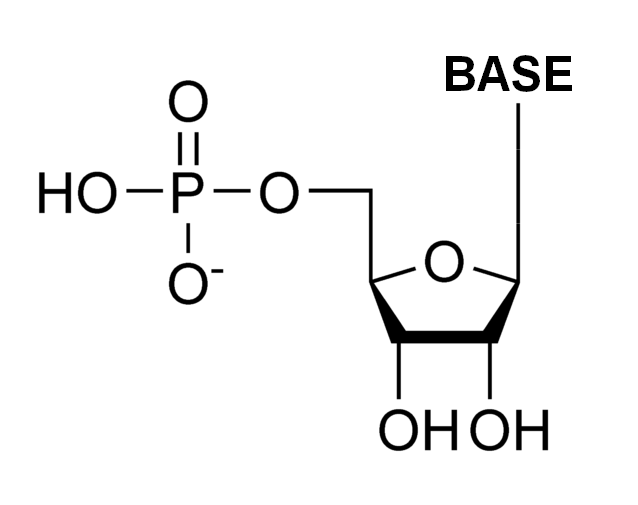
- The nucleotide shown above would be found in DNA.
- In RNA, there are two -OH groups attached to the sugar molecule while in DNA there is only one (this is why it is called "deoxyribonucleic acid", because one oxygen has been removed).
Diversity of Nucleotides
- There are five possible nitrogenous bases that may be attached to a nucleotide.
- These nitrogenous bases can be divided into two groups: purines and pyrimidines:
- Purines have a two-ring structure, while pyrimidines are composed of just one ring.
- Adenine, Guanine, Cytosine, and Thymine can be found in DNA (A,G,C,T).
- Adenine, Guanine, Cytosine, and Uracil can be found in RNA (A,G,C,U).

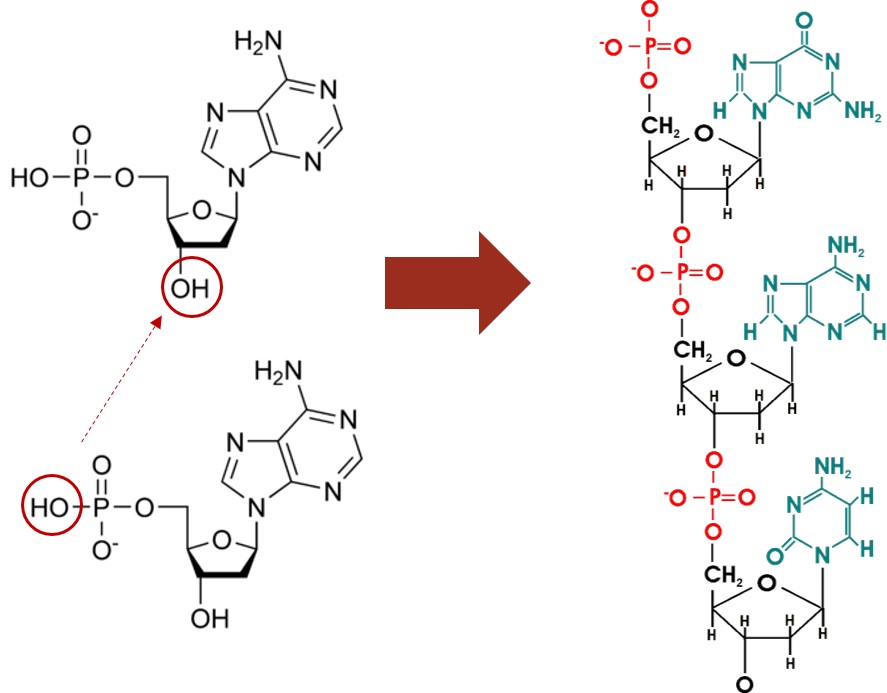
- Nucleotides are joined together to form long chains through a dehydration / condensation reaction to form a phosphodiester bond between the phosphate group of one nucleotide and the hydroxyl group on the sugar of another nucleotide.
- When joined together, one end of the chain will have a free phosphate group, while the other end of the chain will have a free carboxyl group.
- The end with the free phosphate group is called the 5' end, because the phosphate is attached to the 5' carbon of the sugar.
- The end with the free carboxyl group is called the 3' end, because the carboxyl is attached to the 3' carbon of the sugar.
0:00 / 0:00
The DNA Double Helix
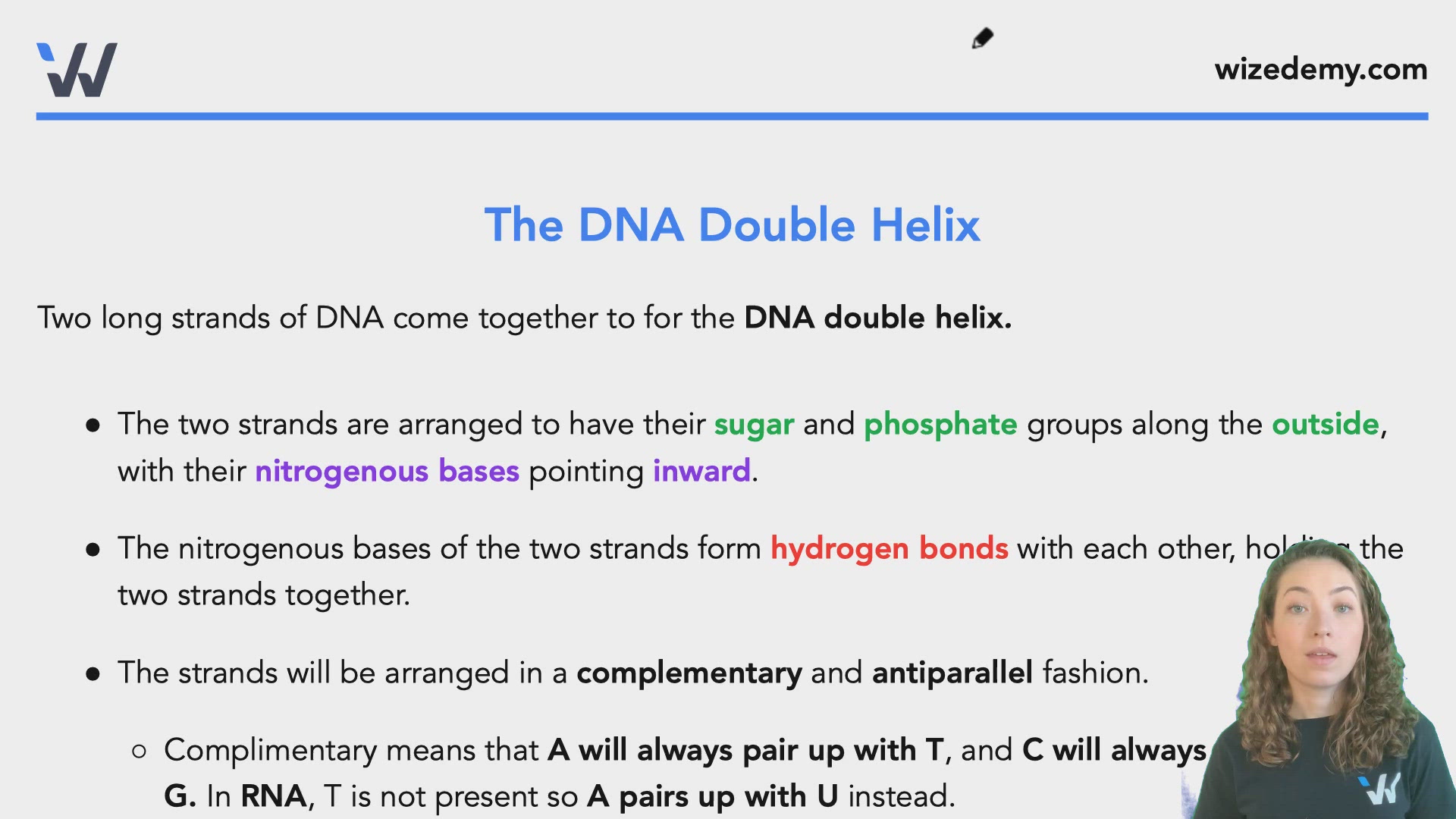
Two long strands of DNA come together to for the DNA double helix.
- The two strands are arranged to have their sugar and phosphate groups along the outside, with their nitrogenous bases pointing inward.
- The nitrogenous bases of the two strands form hydrogen bonds with each other, holding the two strands together.
- The strands will be arranged in a complementary and antiparallel fashion.
- Complimentary means that A will always pair up with T, and C will always pair up with G. In RNA, T is not present so A pairs up with U instead.
- Two hydrogen bonds form between A and T base pairs, and three hydrogen bonds form between C and G base pairs.
- The strands are antiparallel, meaning that one strand will be running from the 5' end to the 3' end, while the strand it is paired up with will be running in the opposite direction.

0:00 / 0:00
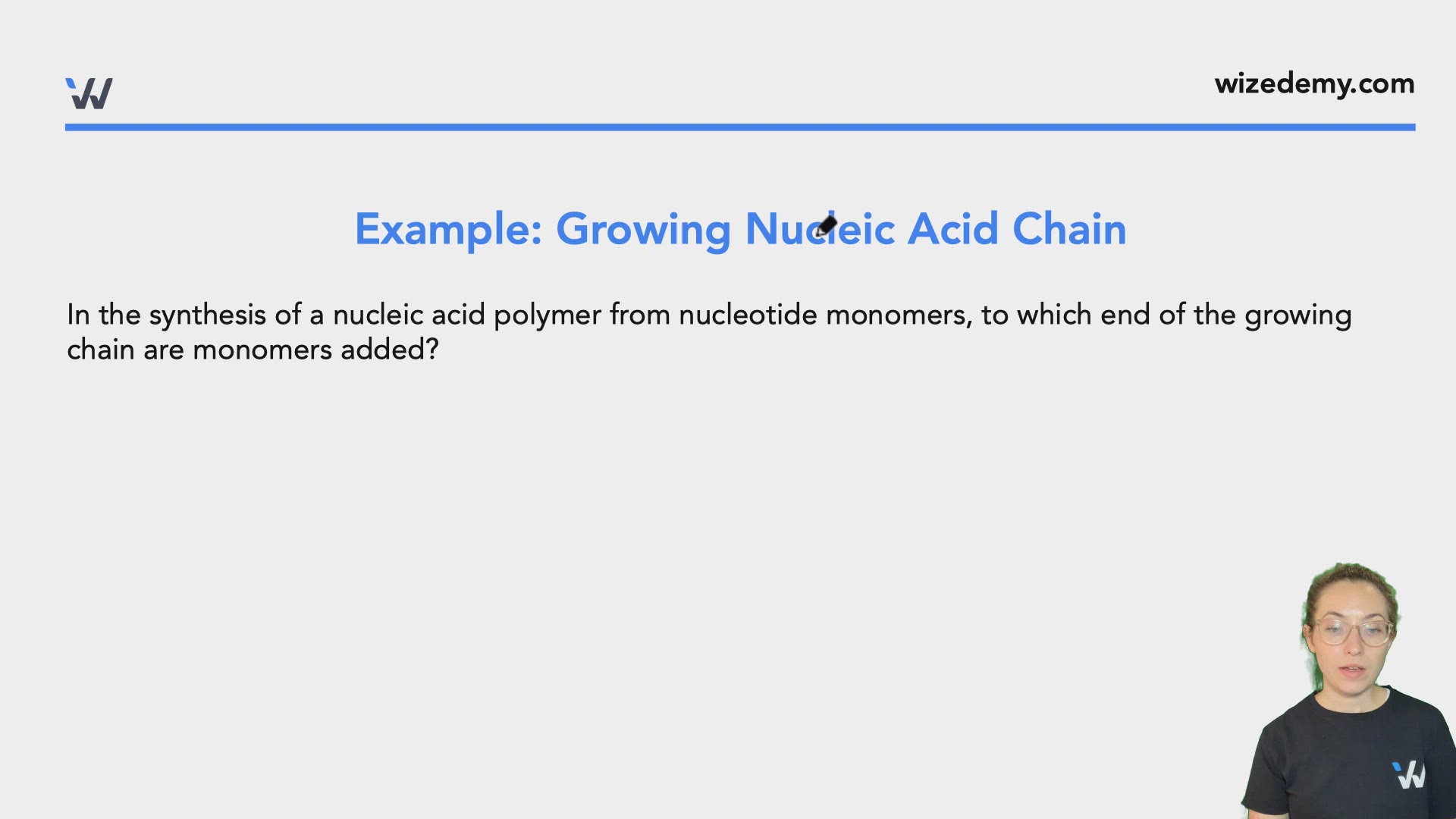
Example: Growing Nucleic Acid Chain
In the synthesis of a nucleic acid polymer from nucleotide monomers, to which end of the growing chain are monomers added?
Nucleotides are added to the 3’ end of a growing nucleic acid chain.
Practice: Bonds in DNA
Describe the kinds of chemical bonds that make up the DNA double-helix. (i.e. what bonds form in the backbone, between bases).
Practice: Making Nucleic Acids
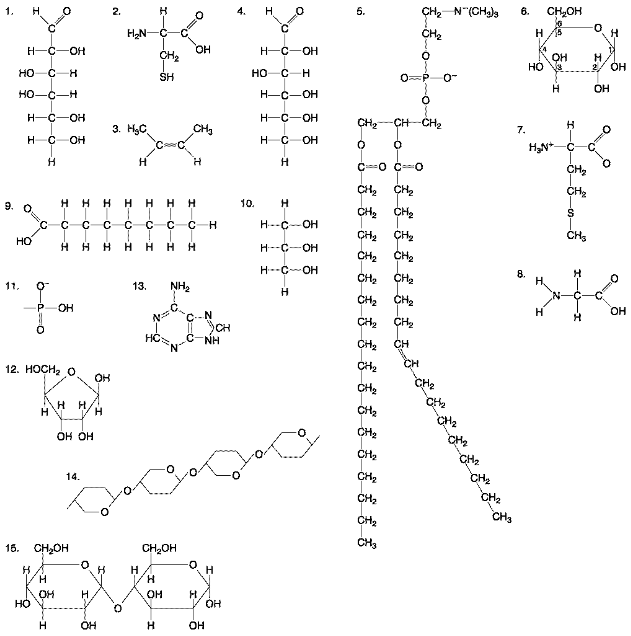
Which of the following combinations could be linked together to form a nucleotide?

Mark Yourself Question
- Grab a piece of paper and try this problem yourself.
- When you're done, check the "I have answered this question" box below.
- View the solution and report whether you got it right or wrong.
Practice: Macromolecular Bonds
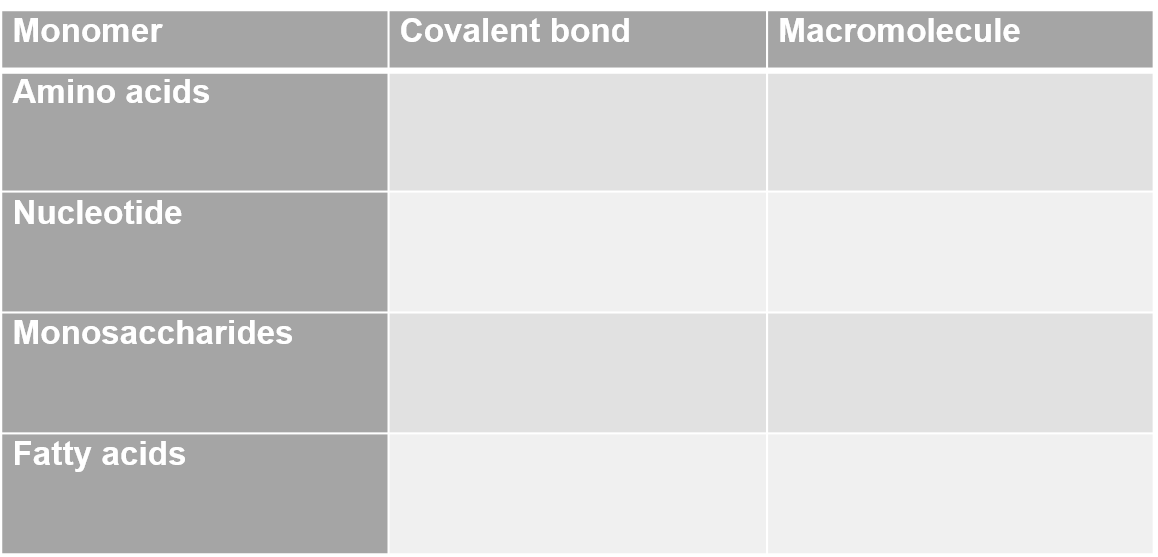
Fill in the table below:
Practice: Nucleic Acid Building Block
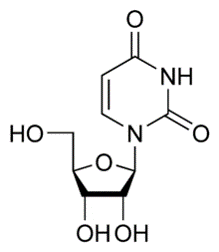
Which macromolecule does the molecule below belong to?