Wize University Biology Textbook > Cell Structure
Prokaryotic Cells
Popular Courses
MCAT
General Course
AP Biology Exam Prep Course
AP Exam Prep
Biology
General Course
General Biology
University Study Guides
BIOLOGY 1002B
Western University
BIOL 211
University of Calgary
BIOL 102
Queen's University
BIOL 112
University of British Columbia
Grade 12 Biology
Canada High School
High School Biology
US High School
DAT
General Course
BIOL*1090
University of Guelph
General Biology
University Study Guides
SC/BIOL 1000 3.00
York University
BIO 1141
University of Ottawa
BLG 143
Toronto Metropolitan University
BIOL 112
McGill University
BIOL 186
University of Victoria
BIOL 1010
Dalhousie University
BIOL-1101
University of Windsor
0:00 / 0:00
Prokaryotic Cells
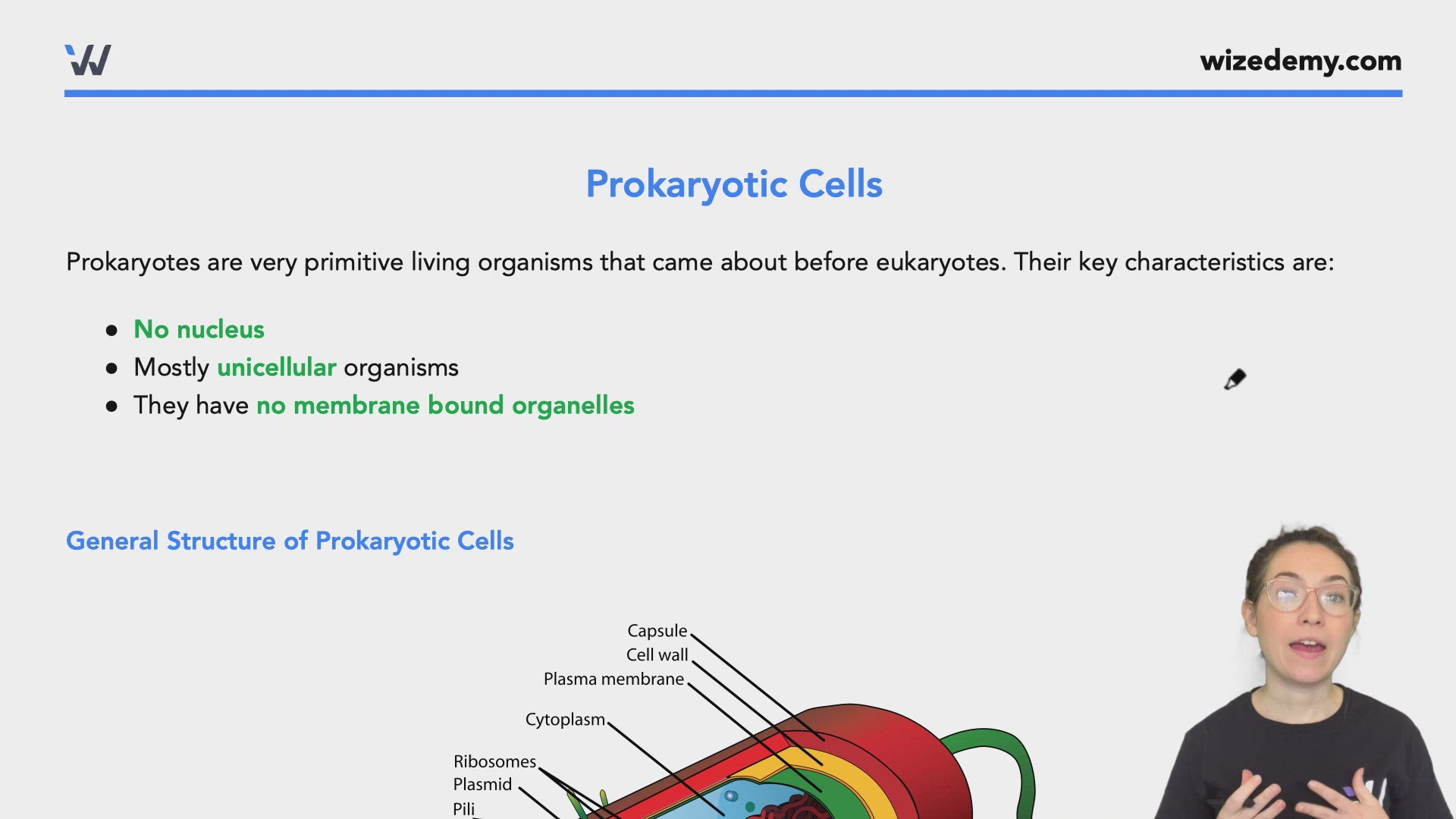
Prokaryotes are very primitive living organisms that came about before eukaryotes. Their key characteristics are:
- No nucleus
- Mostly unicellular organisms
- They have no membrane bound organelles
General Structure of Prokaryotic Cells
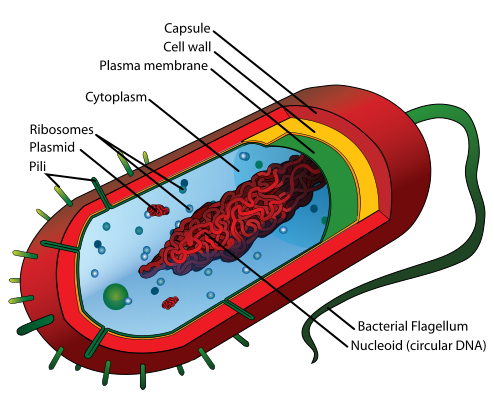
- Ribosomes are organelles that are responsible for producing proteins.
- The prokaryotic DNA is not protected by a nuclear membrane and is found in the cytoplasm.
- The cytoskeleton are long polymer proteins that form thin fibers.
- The cytoskeleton is responsible for: cell shape, cell division, transportation of plasmids, organization of cell interior.
- Flagella are located on the surface of the cell and allow for bacteria to move.
- Cell walls surround the plasma membrane and function to protecting the organism, giving shape and rigidity.
- Capsule enables cell attachment.
- Pili allows for exchange of genetic information with other bacteria.
- Fimbriae (not shown) can also be found and are used to attach to surfaces such as a cell the bacteria might infect.
Practice: Parts of Prokaryotes
Which of the following are part of a prokaryotic cell?
0:00 / 0:00
Bacteria and Archaea Cell Wall Composition
Bacteria
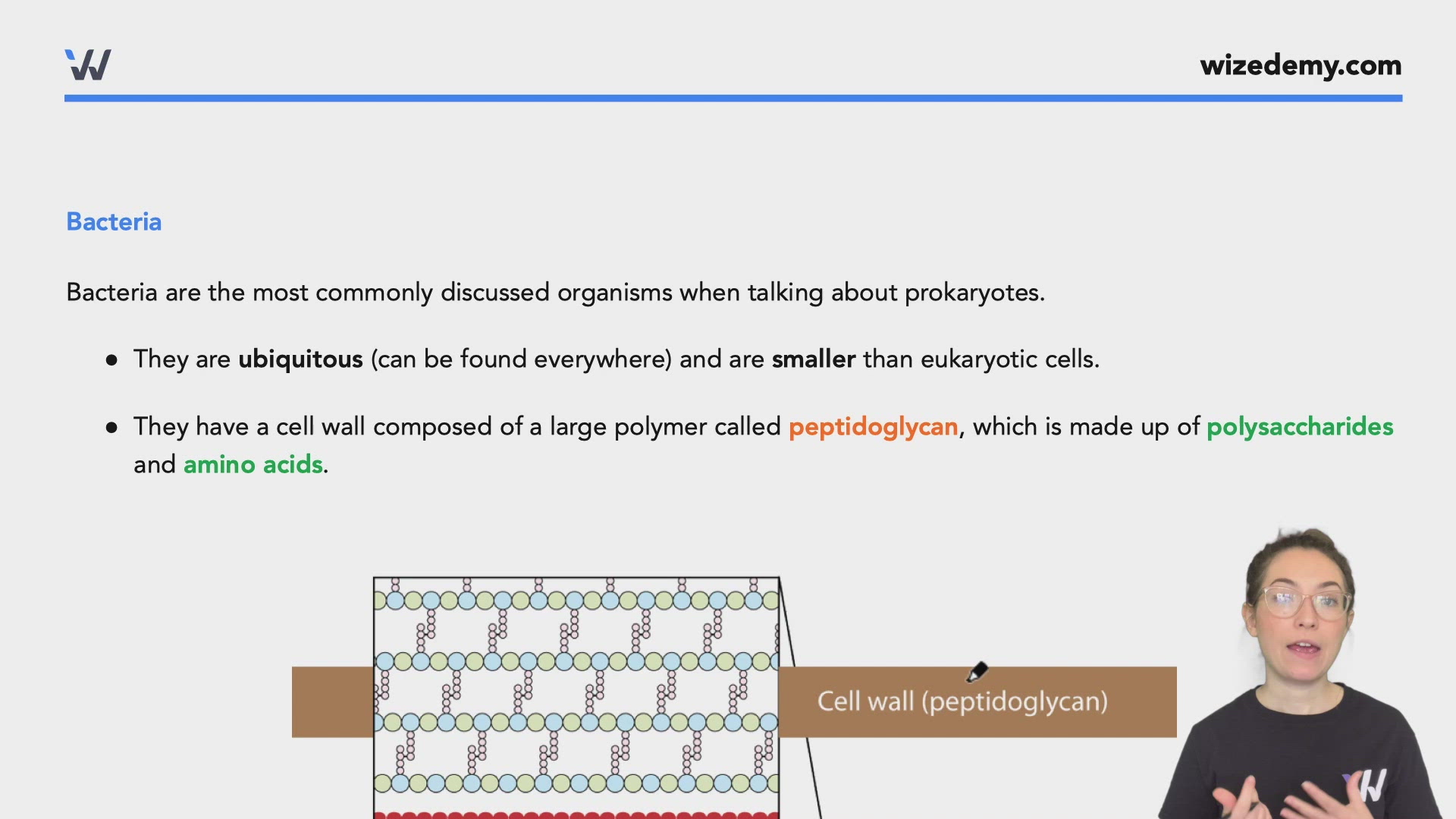
Bacteria are the most commonly discussed organisms when talking about prokaryotes.
- They are ubiquitous (can be found everywhere) and are smaller than eukaryotic cells.
- They have a cell wall composed of a large polymer called peptidoglycan, which is made up of polysaccharides and amino acids.

- Bacterial membrane lipids have ester bonds.

Archaea
Archaea are another type of prokaryote.
- They are often extremophiles (live in extreme environments such as extremely high temperatures, salt concentration, etc.).
- Their cells walls are composed of pseudo-peptidoglycan (different from bacterial peptidoglycan).
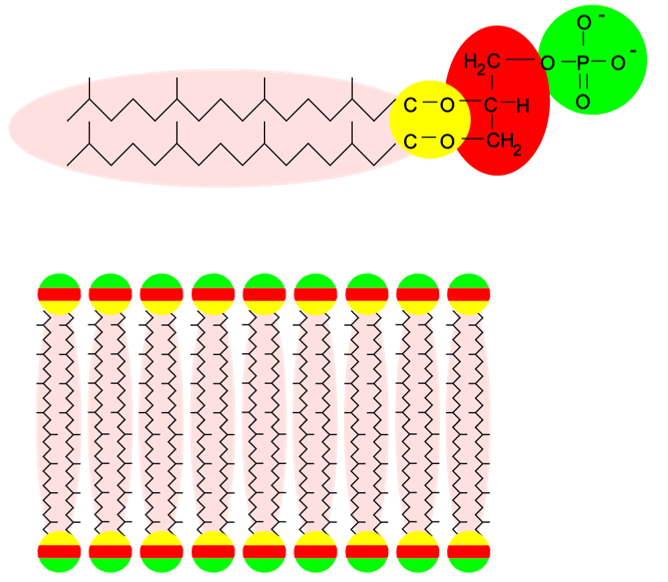
- Their membrane lipids have ether bonds.
Practice: Function of Cell Wall
Which of the following are functions of the cell wall?
Practice: Archaea and Bacteria
Label the following statements as true or false:
A. Only Archaea have plasma membranes that are lipid monolayers
B. One feature the differentiates Bacteria and Archaea is their shape
C. Bacteria have circular DNA, while Archaea have linear DNA
D. No Archaea are known to cause human disease.