Wize University Biology Textbook > Cell Structure
Eukaryotic Cells [short]
Popular Courses
MCAT
General Course
AP Biology Exam Prep Course
AP Exam Prep
Biology
General Course
General Biology
University Study Guides
BIOL 211
University of Calgary
BIOL 107
University of Alberta
BIOL 102
Queen's University
BIOL 112
University of British Columbia
Grade 12 Biology
Canada High School
High School Biology
US High School
DAT
General Course
General Biology
University Study Guides
BIOL 130
University of Waterloo
BIOL 200
University of British Columbia
BIOL 186
University of Victoria
BIOL 1010
Dalhousie University
BIOL-1101
University of Windsor
BIOL 1201
Western University
BISC 101
Simon Fraser University
BIOL 1P91
Brock University
0:00 / 0:00
Eukaryotes
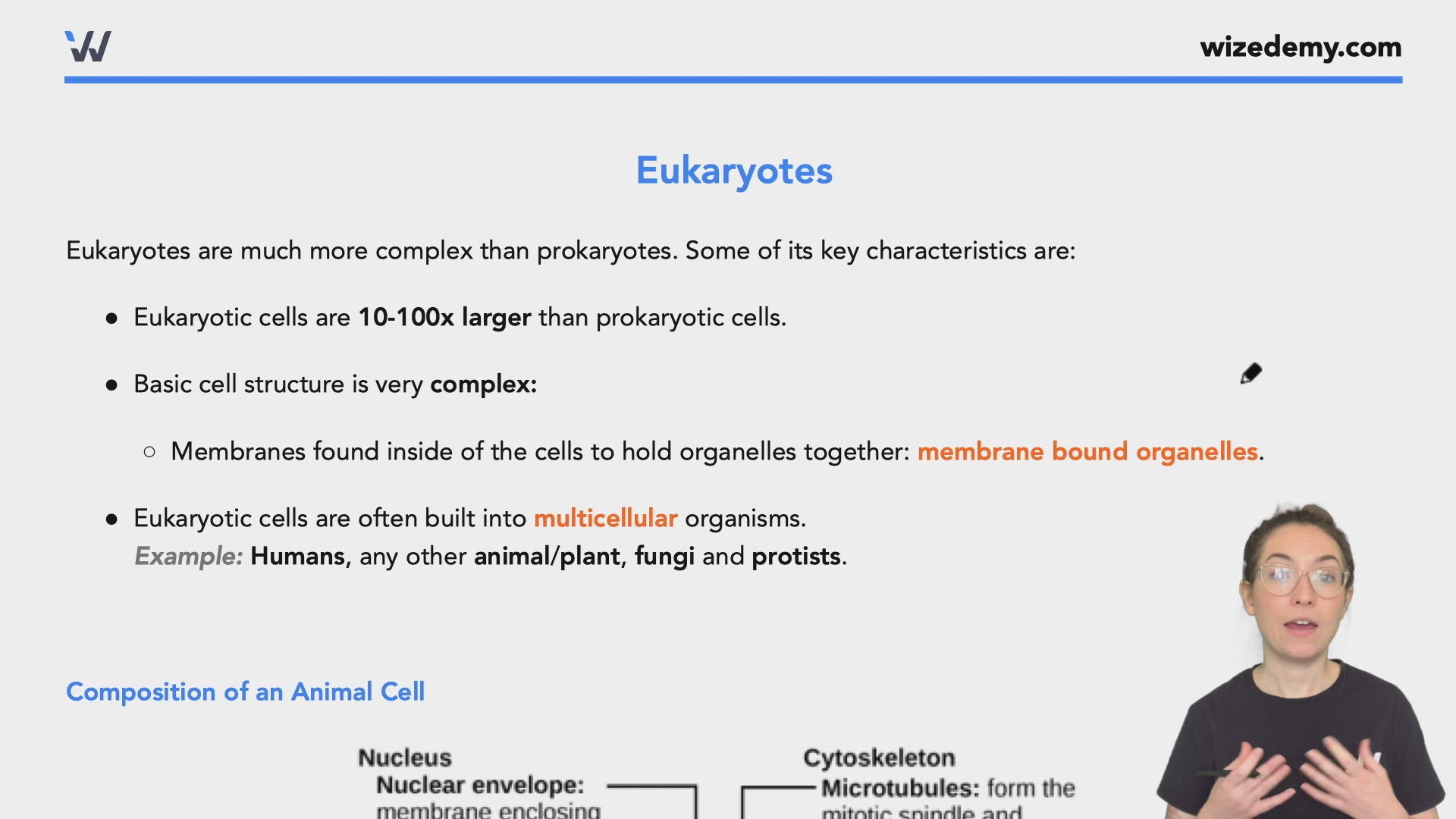
Eukaryotes are much more complex than prokaryotes. Some of its key characteristics are:
- Eukaryotic cells are 10-100x larger than prokaryotic cells.
- Basic cell structure is very complex:
- Membranes found inside of the cells to hold organelles together: membrane bound organelles.
- Eukaryotic cells are often built into multicellular organisms. Example: Humans, any other animal/plant, fungi and protists.
Composition of an Animal Cell

Components of a Plant Cell

Roles of Different Organelles
- Ribosomes synthesize proteins.
- Endoplasmic Reticulum (ER) - sacs that are continuous with the nuclear envelope.
- Rough ER:
- Is "decorated" with ribosomes;
- Interior is called the lumen: new proteins are processed here;
- Ribosomes synthesize proteins in the rough ER that will later be exported elsewhere.
- Smooth ER:
- Lacks ribosomes;
- Functions as a lipid-processing center.
- Nucleus contains chromosomes and is the genetic information storage and processing center for eukaryotes.
- The nucleus is surrounded by a double-membrane known as the nuclear envelope.
- The nucleolus is where the ribosome is assembled.
- Golgi Apparatus: many flattened sacs called cisternae.
- Sort and package proteins for transport;
- Transportation of lipids.
- Cytosol: Aqueous fluid portion of cytoplasm.

- Peroxisomes
- Center for oxidation reactions.
- Lysosomes
- In animal cells functions as a major digestive center;
- Contains hydrolytic enzymes.
- Vacuoles
- Takes up much of the volume of a plant cell;
- Are also found in fungi, and certain other groups.
- Mitochondria
- Powerhouse of the cell!
- Has its own small chromosome that encodes its own genes and manufactures its own ribosomes;
- Contains the ATP required to build organelles.
- Chloroplast
- Have a double membrane and contain their own DNA;
- Perform photosynthesis.
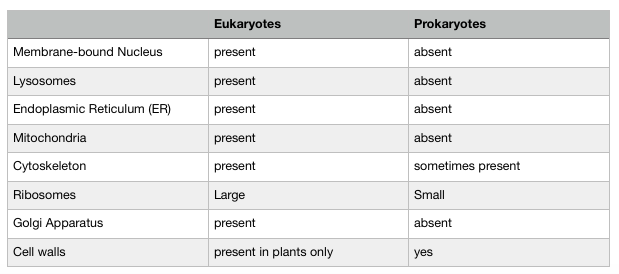
Eukaryotes vs Prokaryotes
Wize Tip
Instead of memorizing everything in the table, just memorize what BOTH the eukaryotes and prokaryotes have. Everything else will be present in a eukaryote but not in a prokaryote.
0:00 / 0:00
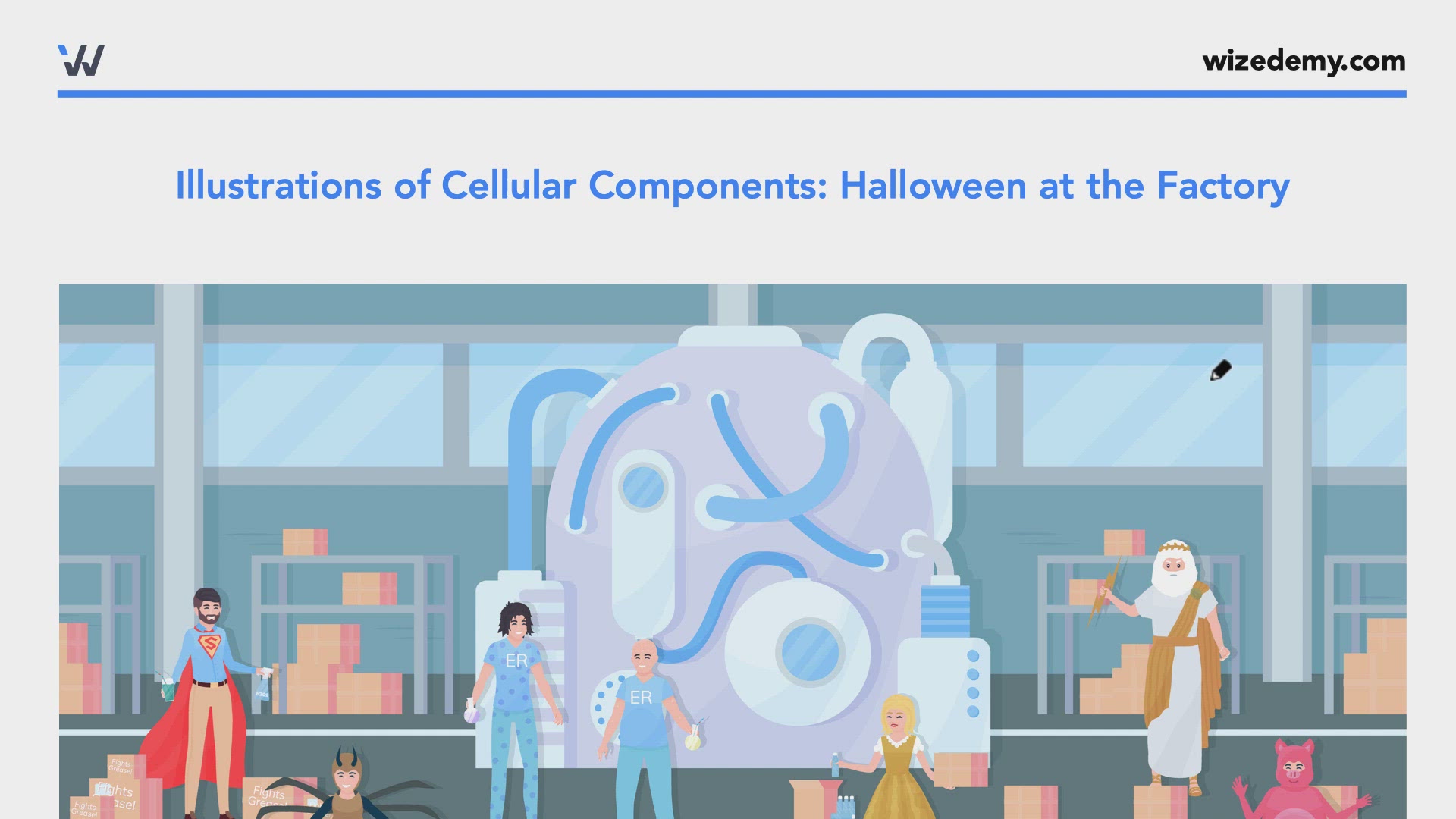
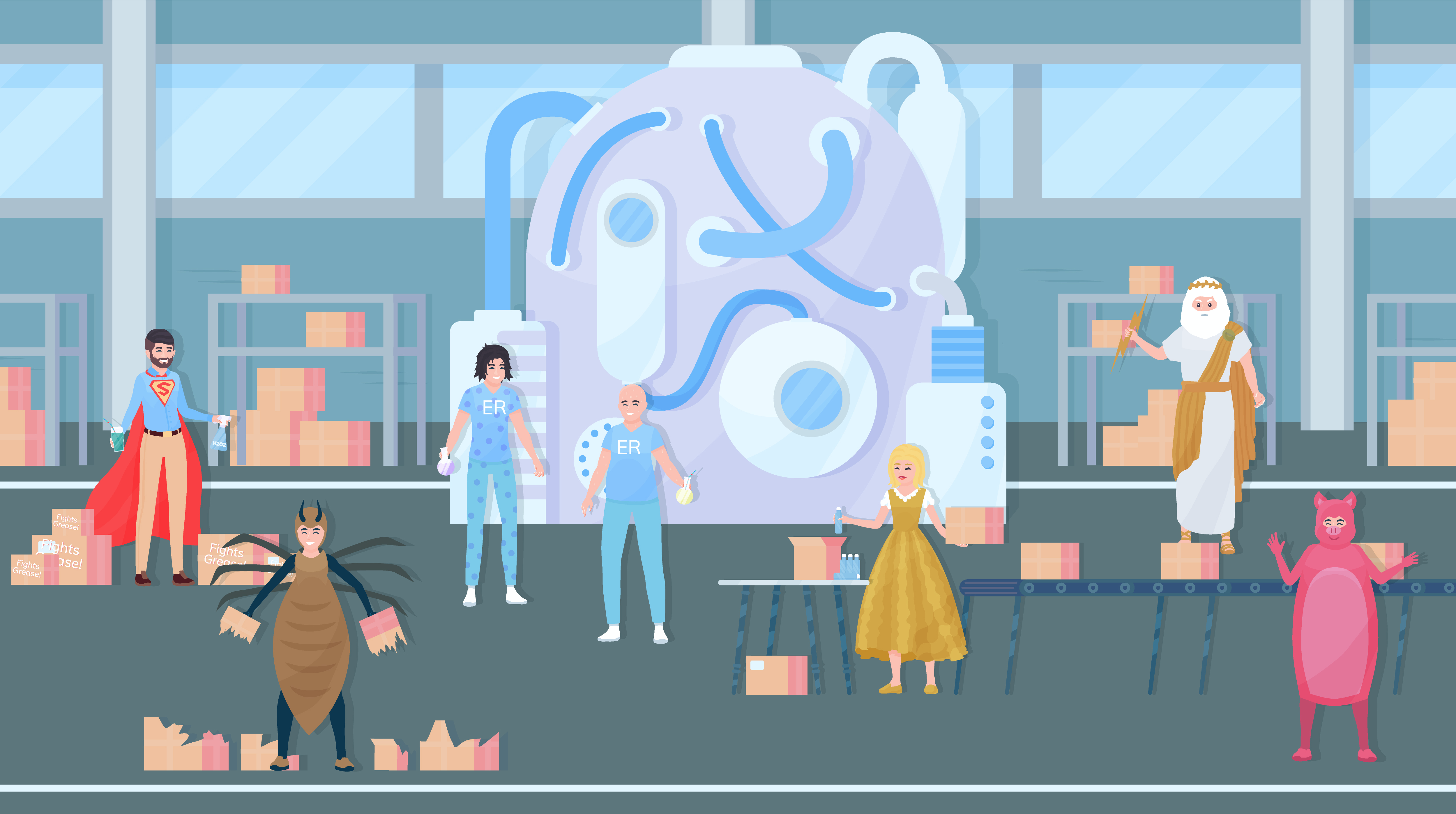
Illustrations of Cellular Components: Halloween at the Factory
Practice: Prokaryotes vs Eukaryotes
Which of the following is the same about prokaryotes and eukaryotes?
Practice: DNA in Plant Cells
Where is DNA found in a plant cell?