Wize High School Grade 11 Biology Textbook > Genetics of Inheritance
Meiosis: Making Sex Cells
0:00 / 0:00
Meiosis I
Meiosis is a process of cell division that occurs specifically to produce gametes (sex cells – sperm and eggs). Unlike mitosis, which produces two daughter cells identical in number of chromosomes to the original cell, meiosis produces 4 daughter cells, each with half the number of chromosomes as the original cell (so they are haploid).
- Sperm and egg cells have half the number of chromosomes because when the sperm and egg fuse they will then produce a diploid fertilized egg.
- Meiosis is a two-step cell division process: meiosis I and meiosis II.
- In each round of cell division, the cell goes through interphase and the same 5 phases as in mitosis: prophase, prometaphase, metaphase, anaphase, and telophase.
- Interphase occurs before entering meiosis I:
- The cell grows during the G1 phase of interphase;
- The DNA is replicated in the S phase;
- The cell prepares for division in the G2 phase.
Meiosis I
Let's go through the steps of meiosis I:
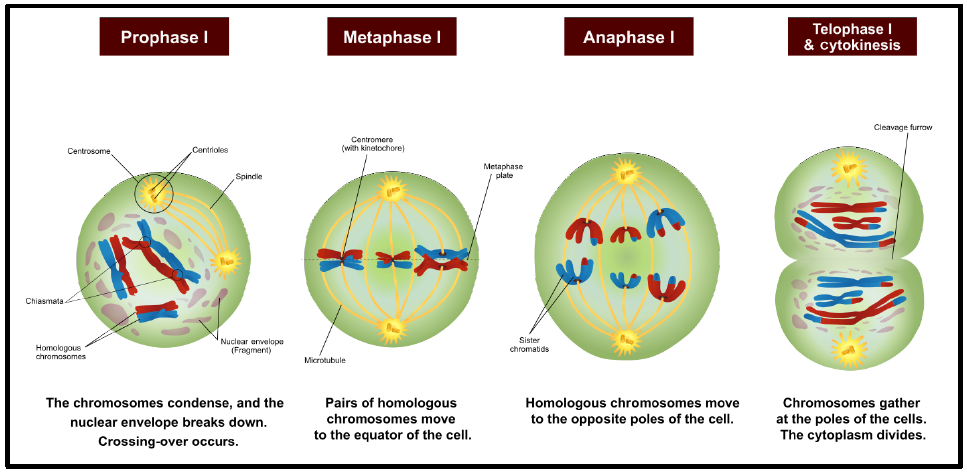
- Prophase I
- As in mitosis, chromosomes being to condense.
- Each chromosome lines up with its homologous pair.
- An overlap forms – called the chiasmata.
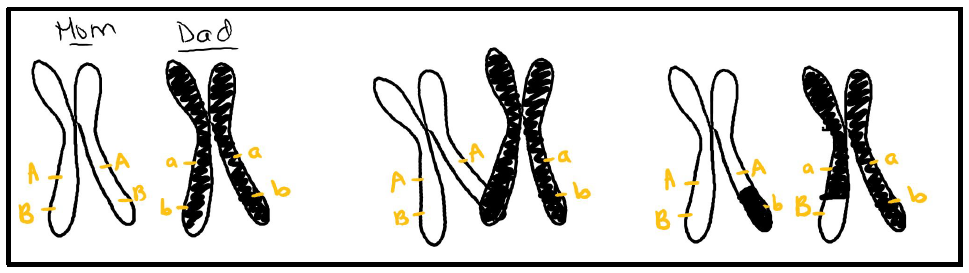
- Crossing over occurs – the exchange of DNA between the two homologous chromosomes.
- Genetic variability leads to offspring being more likely to thrive!
Exam Tip
This is what makes meiosis so special! Crossing over creates genetic diversity in the offspring. Remembering that this occurs during prophase I is important for exams.
- Metaphase I
- After crossing over, chromosomes begin to move to metaphase plate.
- Homologous pairs (rather than individual chromosomes like in mitosis) line up in a random orientation independent assortment.
- Anaphase I
- Homologous chromosomes are pulled apart by the microtubules.
- Sister chromatids remain attached, unlike in mitosis.
- Telophase I
- Chromosomes are separated.
- Cytokinesis occurs.
- End result is two haploid daughter cells.

0:00 / 0:00
Meiosis II
Prophase II, Metaphase II, Anaphase II, Telophase II, and cytokinesis are repeated to yield 4 daughter cells.
- They are the same as in mitosis since no crossover occurs at this stage.
- Unlike in mitosis, these daughter cells are haploid (only one chromosome of each kind or 23 chromosomes in total).

Summary - Mitosis vs. Meiosis


0:00 / 0:00
Chromosomal Crossover
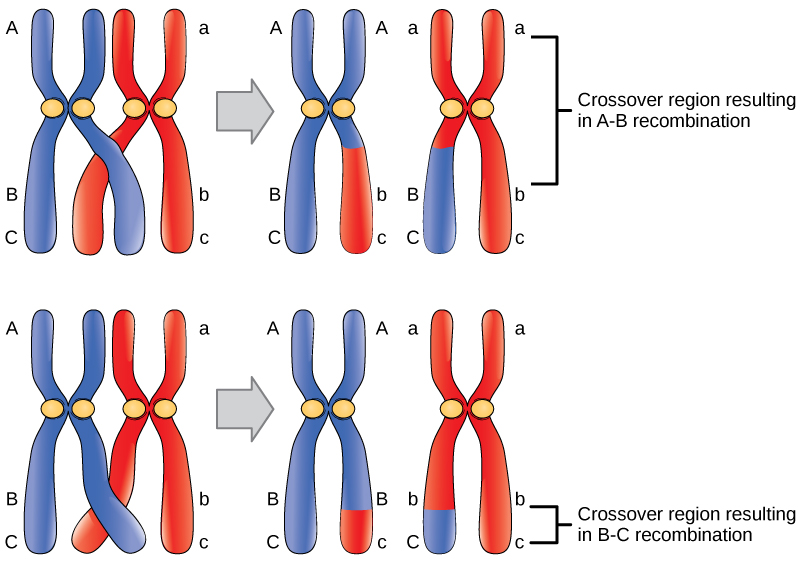
Chromosomal crossover can occur when homologous chromosomes align during
prophase
of meiosis one
.- This results in genetic variation (i.e. new genotypes) by combining information from each parent on a single chromosome.
- Homologous chromosomes align and swap portions which can contain various genes.
- The synaptonemal complex is a lattice of proteins that form between the entire length of homologous chromosomes to enable tight pairing.
- This tight pairing is called synapsis. The genes on each chromatid are precisely aligned with one another.
- It can occur on several locations but the loci must be homologous to each other (contain alleles of the same gene).

0:00 / 0:00
Chromosomal Nondisjunction, Aneuploidy and Polyploidy
Chromosomal Nondisjunction
Nondisjunction (i.e. non-separation) during meiosis can lead to cells containing more than the correct number of homologous chromosomes. Can occur during meiosis I (right) or meiosis II (left).

Aneuploidy and Polyploidy
Numerical mutations are those in which there's a change to the number of chromosomes in a specie's cell. An organism with the appropriate number of chromosomes for their species is called euploid.
- Aneuploidy: change in number of chromosomes (2n + #)
- Generally occurs due to nondisjunction (sister chromatids did not separate) during meiosis.
- This usually results in the abortion of the child but can result in a child being born with genetic disorders. Example: Down's syndrome, also called Trisomy 21.

- Polyploidy: increase in chromosome sets (3n, 4n, 5n, etc...)
- Extremely rare in animals and more commonly found in plants.
- Autopolyploidy: chromosome sets multiply from within the same species (1 parent).
- Allopolyploidy: chromosome sets multiple from 2 or more species (2 distinct parents).

0:00 / 0:00
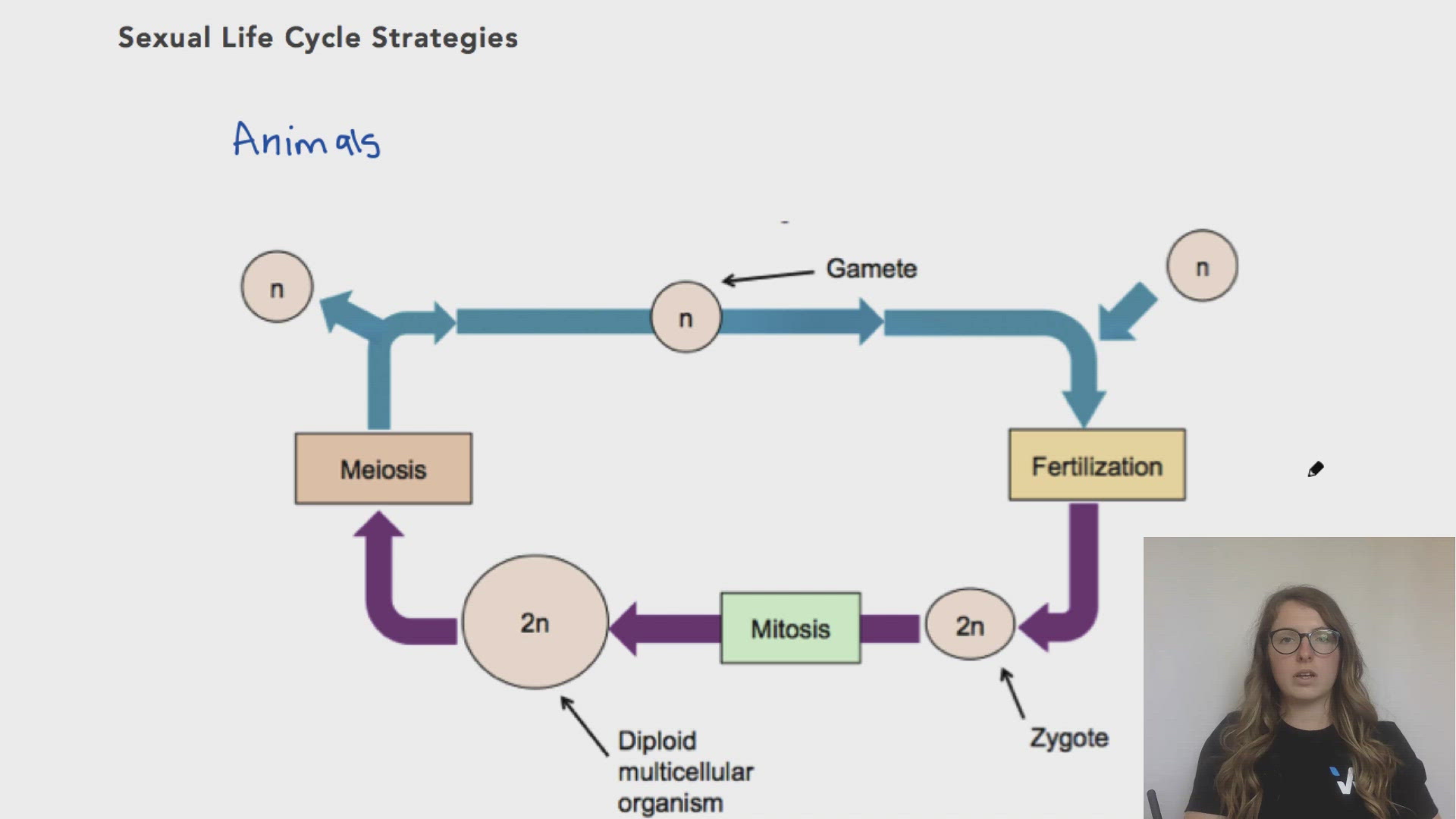
Sexual Life Cycle Strategies
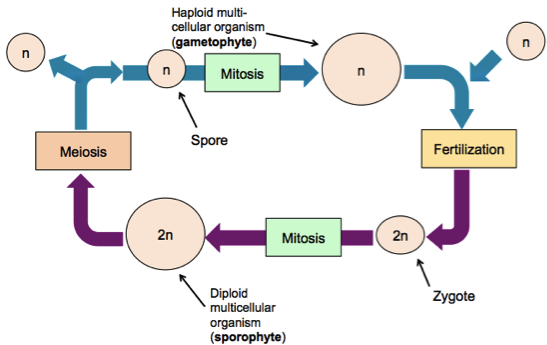
Different organisms have different life cycle strategies in terms of how they have been selected through evolution to undergo meiosis and mitosis at various life stages.
Top = animal life cycle, middle = plants and some algae, bottom = fungi and protists
In the bottom cycle label the haploid cell after meiosis as a spore
Animal Life Cycle

Plant & Algae Life Cycle
Fungi & Protists Life Cycle

0:00 / 0:00
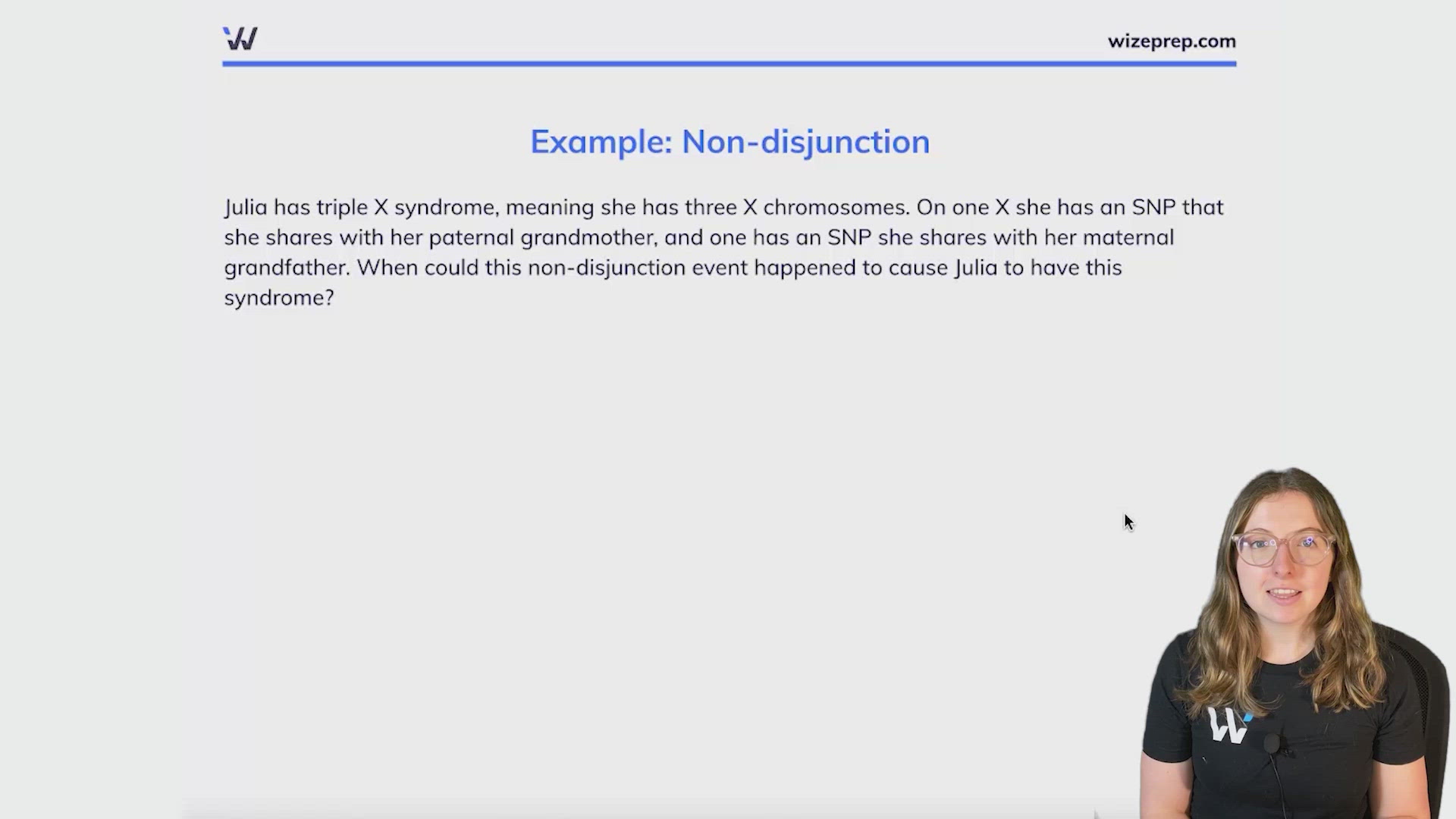
Example: Non-disjunction
Julia has triple X syndrome, meaning she has three X chromosomes. On one X she has an SNP that she shares with her paternal grandmother, and one has an SNP she shares with her maternal grandfather. When could this non-disjunction event happened to cause Julia to have this syndrome?
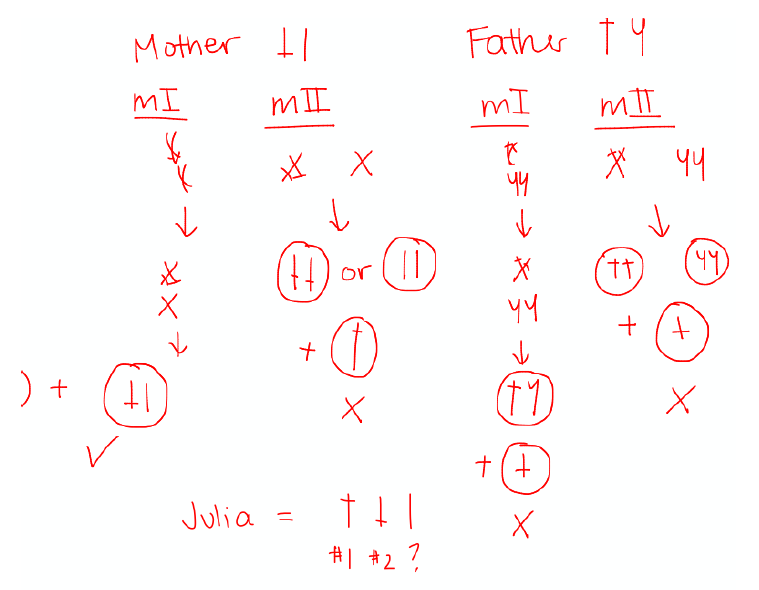
It could only have happened during meiosis I in the mother.
Practice: Fertilized Zygote
Which of the following describes a newly fertilized human zygote?
Practice: End Prophase II
Which of the following describes a cell at the end of prophase II?
Practice: Mitosis vs Meiosis Metaphase
Which of the following is different between mitosis metaphase and meiosis metaphase II