Wize High School Grade 11 Biology Textbook > Cell Biology
Cellular Membranes
0:00 / 0:00
The Fluid Mosaic Model

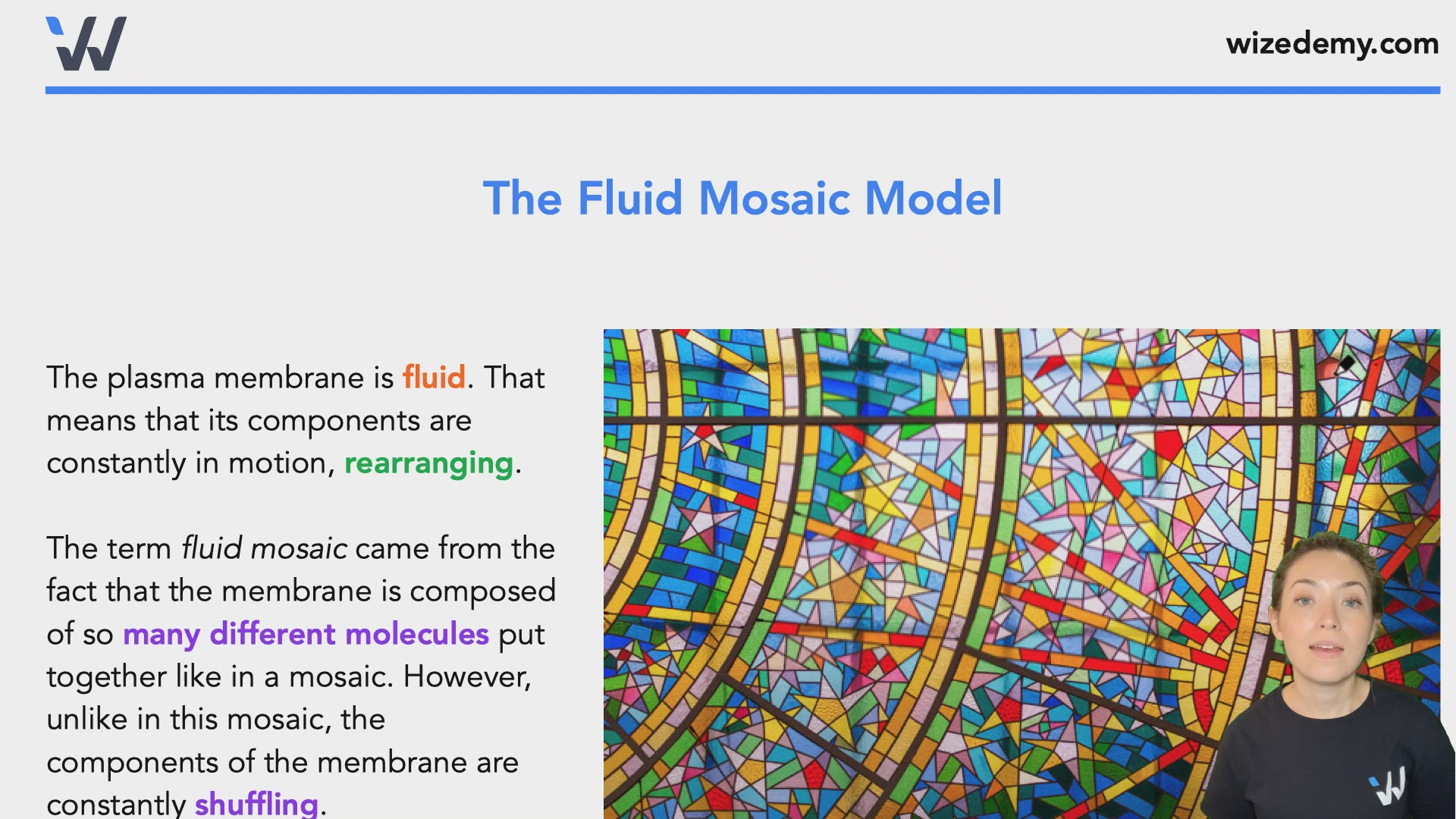
The plasma membrane is fluid. That means that its components are constantly in motion, rearranging.
The term fluid mosaic came from the fact that the membrane is composed of so many different molecules put together like in a mosaic. However, unlike in this mosaic, the components of the membrane are constantly shuffling.
Components of the Cell Membrane
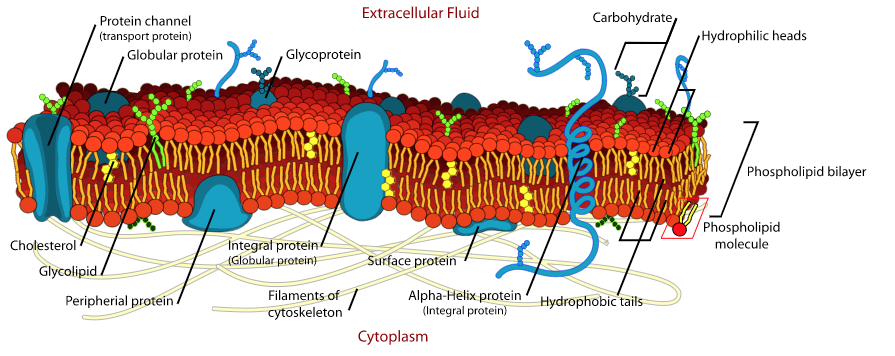
The cell membrane forms the barrier between the inside and outside of the cell. It is composed of a phospholipid bilayer and many other proteins, glycolipids and cholesterol.
- The phosphate head groups of the phospholipids are hydrophilic and face the aqueous environment inside and outside the cell.
- The lipid tails are hydrophobic and face one another, away from the aqueous environment.
- Cholesterol is another lipid found in cell membranes.
- Glycoproteins are proteins modified with carbohydrates (prefix "glyco-" refers to sugars). Sometimes, the carbohydrates are attached directly to the lipids: these are glycolipids.
- These carbohydrates are always facing the outside of the cell, forming the glycocalix.
Membrane Proteins
- Proteins can be part of the membrane itself (integral) or only be on the outer edges of the lipid bilayer (peripheral).
- Integral proteins go through the lipid bilayer (transmembrane portion is not charged);
- Peripheral proteins can be located on the cell interior or exterior by associating with integral proteins or phospholipids.
- These proteins have many important functions, which include:
- Catalyzing reactions (enzymes);
- Transporting molecules through the lipid bilayer;
- Receptors for signaling between internal and external environment;
- Anchor internal structures to the cell membrane;
- Attach adjacent cells to one another;
- Serve as a marker for cell identification.
0:00 / 0:00
Factors Affecting Membrane Fluidity
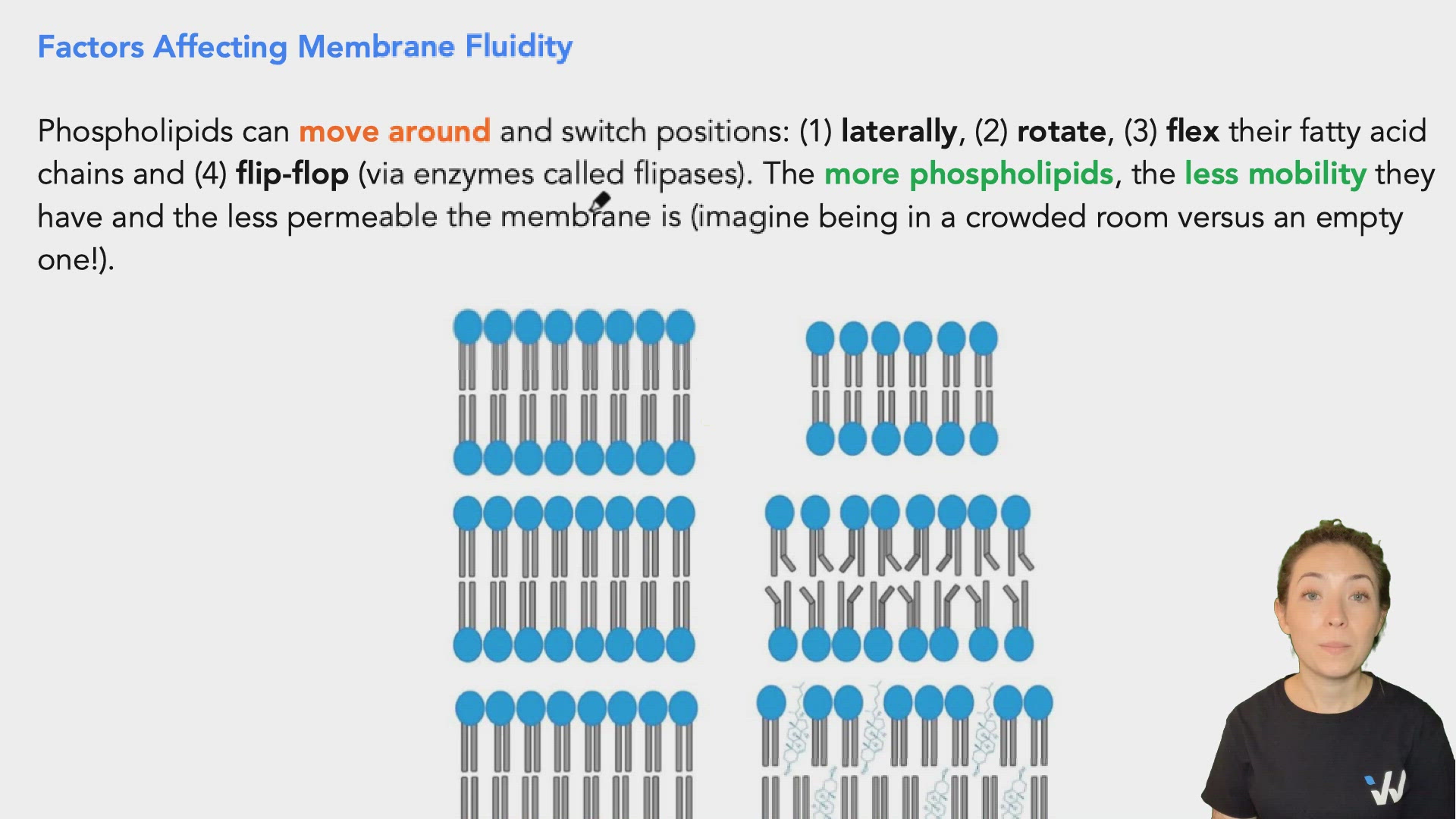
Phospholipids can move around and switch positions: (1) laterally, (2) rotate, (3) flex their fatty acid chains and (4) flip-flop (via enzymes called flipases). The more phospholipids, the less mobility they have and the less permeable the membrane is (imagine being in a crowded room versus an empty one!).

Some of the factors affecting the degree of membrane fluidity are:
- Temperature: at higher temperatures, the membrane has more fluidity than at lower temperatures.
- Tail length: longer fatty acid tails allow for more intermolecular interactions between phospholipids, leading to less fluidity.
- Degree of unsaturation: Unsaturated fatty acids have one or more double bonds in the fatty acid tails. Double bonds lead to a "bend", pushing the adjacent phospholipids further apart. The increased spacing reduces the number of intermolecular interactions and increases fluidity.
- Cholesterol: the presence of cholesterol in the phospholipid bilayer affects fluidity depending on the temperature; it acts as a buffer:
- High temperature: cholesterol decreases fluidity.
- Low temperature: cholesterol increases fluidity.
Practice: Membrane Protein Functions
Cellular membrane proteins can:
A. Directly alter gene expression
B. Serve as transporters
C. Signal the cell regarding activity in the extracellular environment
D. Perform translation of mRNA into protein
Practice: Cholesterol
Cholesterol:
0:00 / 0:00
Getting Proteins Into Membranes
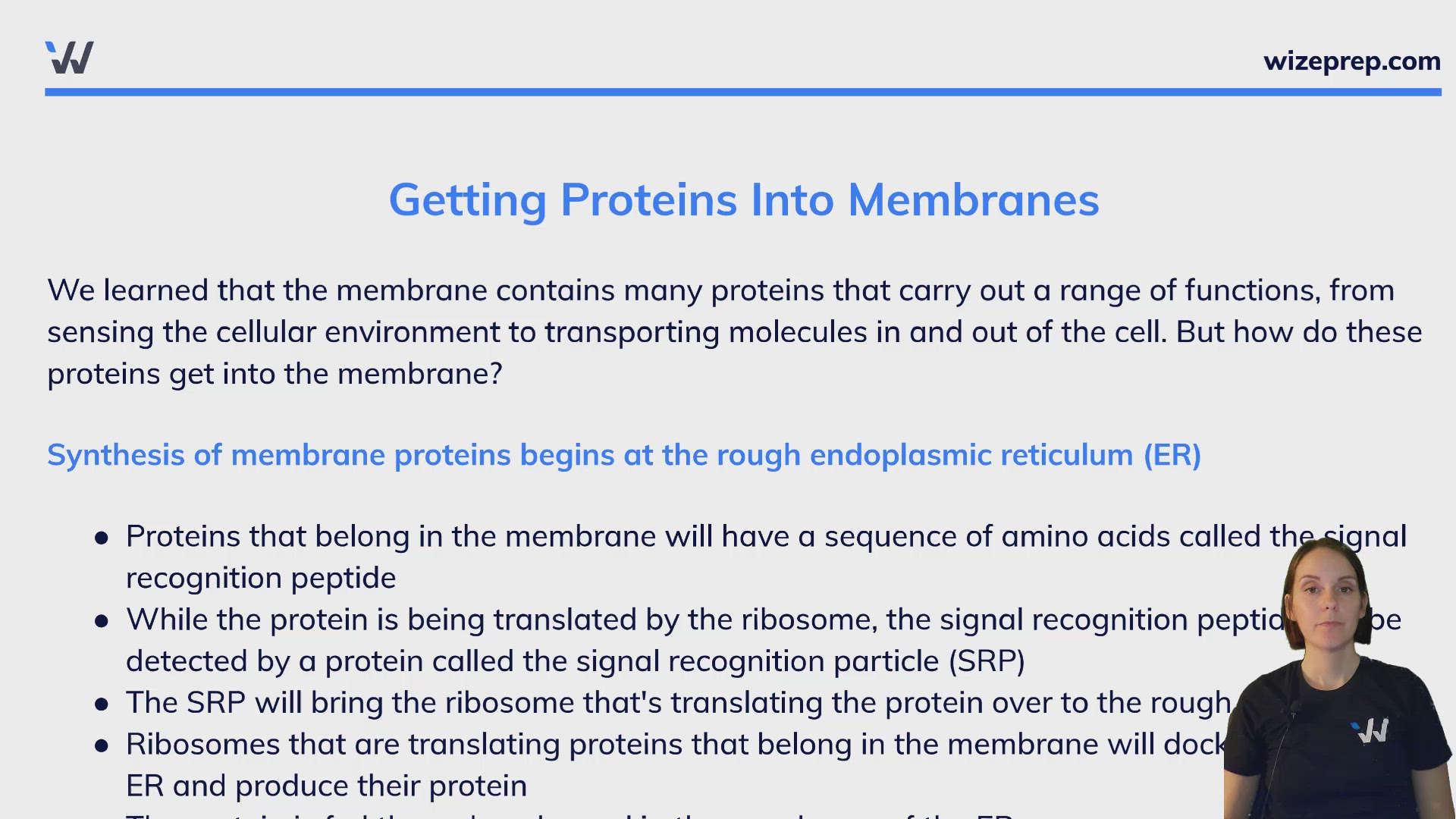
We learned that the membrane contains many proteins that carry out a range of functions, from sensing the cellular environment to transporting molecules in and out of the cell. But how do these proteins get into the membrane?
Synthesis of membrane proteins begins at the rough endoplasmic reticulum (ER)
- Proteins that belong in the membrane will have a sequence of amino acids called the signal recognition peptide
- While the protein is being translated by the ribosome, the signal recognition peptide will be detected by a protein called the signal recognition particle (SRP)
- The SRP will bring the ribosome that's translating the protein over to the rough ER
- Ribosomes that are translating proteins that belong in the membrane will dock at the rough ER and produce their protein
- The protein is fed through a channel in the membrane of the ER
- The signal peptide is removed and the protein ends up embedded in the ER membrane
- Once the protein is produced and processed by the golgi, it ends up in the membrane of a vesicle
- The vesicle then fuses with the plasma membrane, which is the protein's final destination
0:00 / 0:00
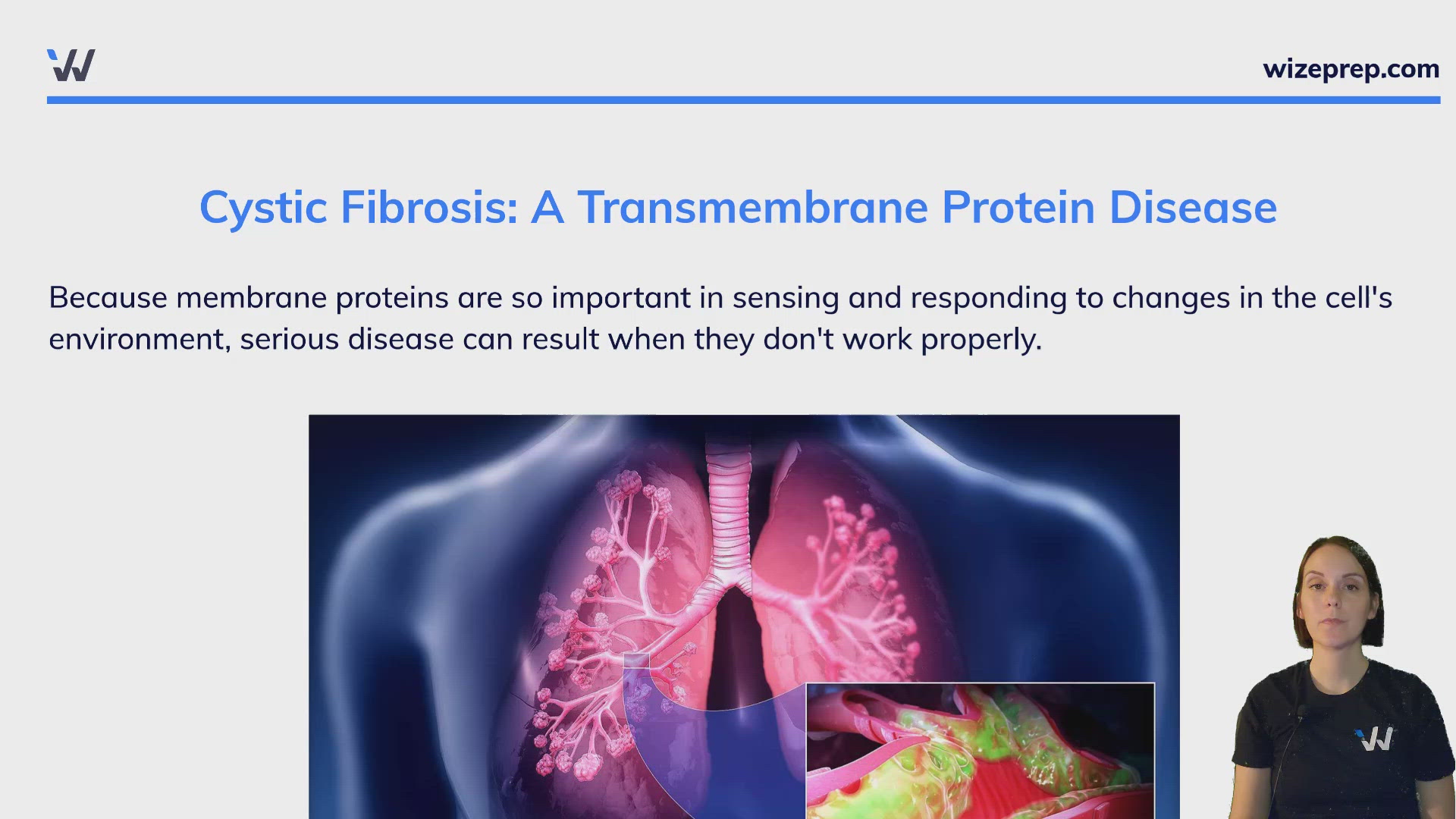
Cystic Fibrosis: A Transmembrane Protein Disease
Because membrane proteins are so important in sensing and responding to changes in the cell's environment, serious disease can result when they don't work properly.
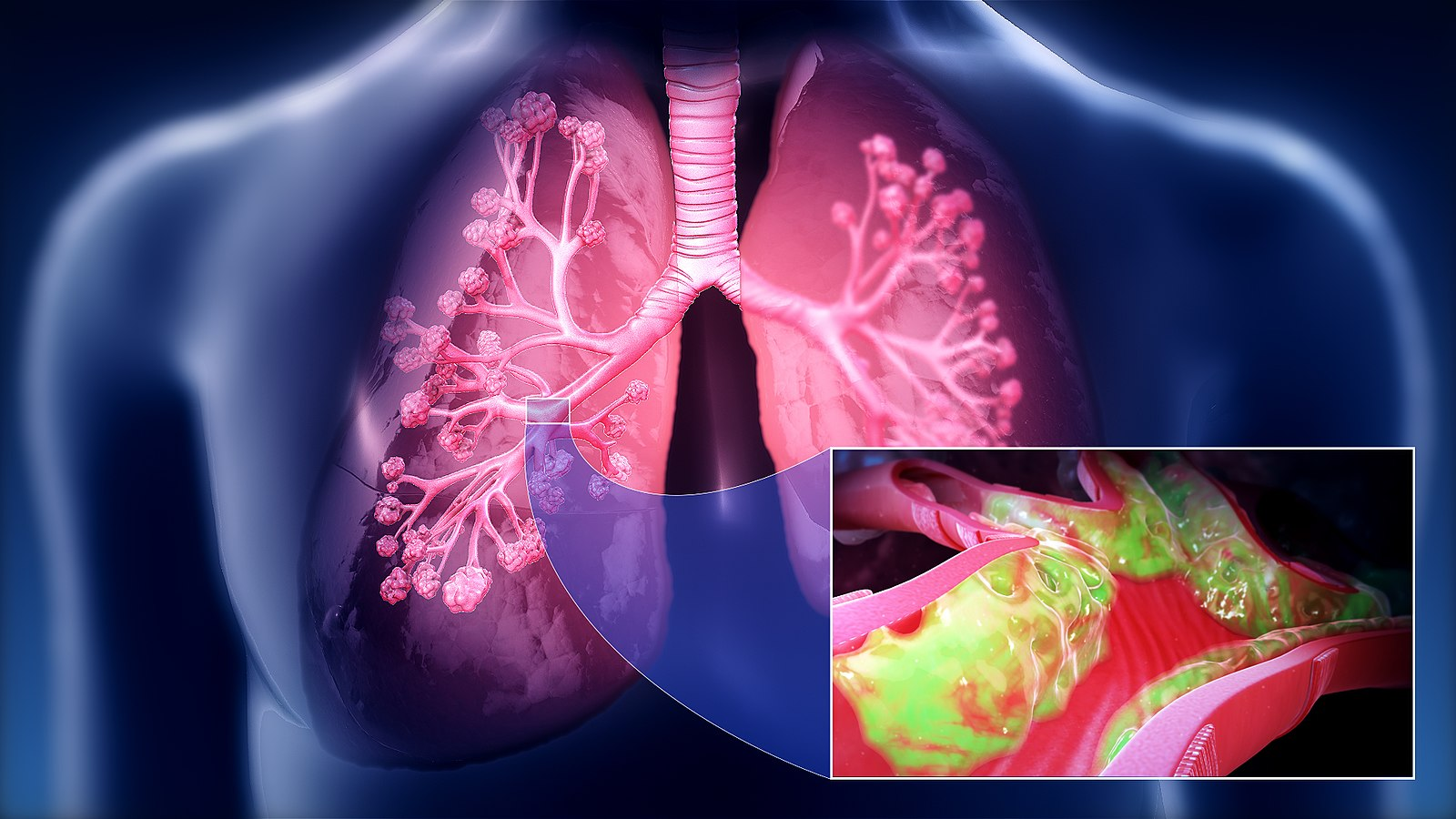
Cystic fibrosis is a genetic disorder in which a membrane protein, called transmembrane conductance regulatory (CFTR), is mutated. This malfunction leads to the build up of chloride ions outside of the cell and sodium ions inside the cell, causing water to move into the cell by osmosis.
In patients with the disease, the cells lining mucous membranes, including those lining the lungs, intestines, and pancreas, remove too much water from the mucous, leading to build up of very thick and sticky mucous. This makes patients very susceptible to respiratory infections and lead to the inability to properly absorb nutrients.
0:00 / 0:00
Example: Fibrosis
What happens at the molecular level in patients with cystic fibrosis?
The mutation in CFTR causes the protein to not fold properly when it is produced by ribosomes of the rough ER. Misfolded proteins do not get properly transported to the membrane and end up being degraded.
Practice: Cystic Fibrosis
Fill the the blanks in the following sentences.
Cystic fibrosis is a disease where an membrane protein is no longer found on the membranes of cells in the lung and intestines. This causes to build up, leading to infections. The most prominent CF causing mutations lead to protein mis-folding in the causing helper proteins known as to target the membrane protein to be degraded.
Practice: Cystic Fibrosis
Trace the path of the CFTR protein as it is being produced in someone who does not have cystic fibrosis.
Put the following steps in the correct order.
A.
The protein is embedded in the rough ER membrane
B.
The protein is fed through a pore on the rough ER as it is being produced
C.
The protein is transported in a vesicle to the plasma membrane
D.
The protein transports ions across the membrane
E.
The protein is transported to the golgi membrane
F.
The ribosome docks onto the rough ER
G.
The protein is modified
H.
The protein is recognized as it is being produced by the ribosome
1
2
3
4
5
6
7
8