Wize High School Grade 11 Biology Textbook > Human Physiology: The Digestive System
Human Health & The Digestive System
0:00 / 0:00
Food Energy & Activity
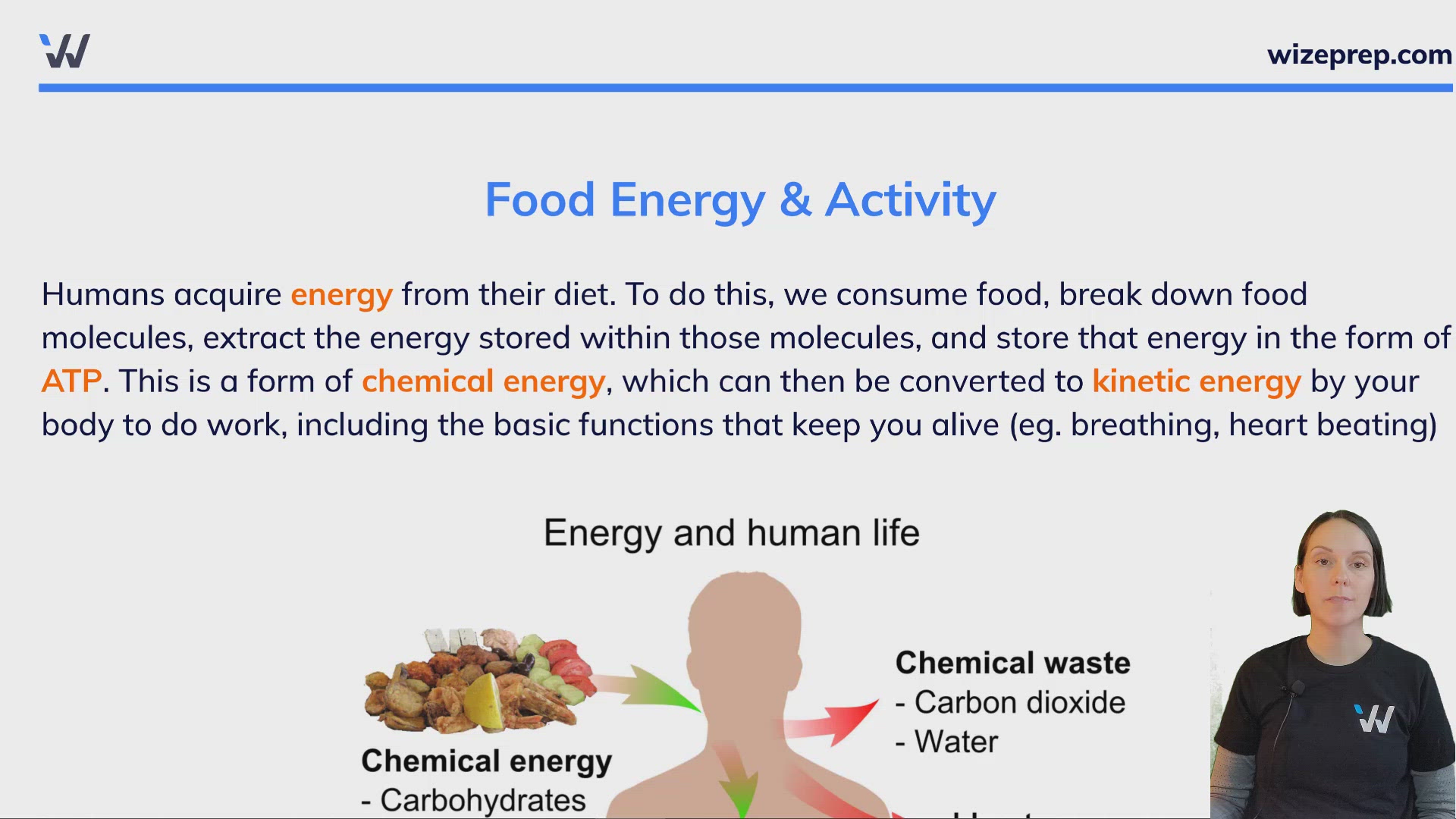
Humans acquire energy from their diet. To do this, we consume food, break down food molecules, extract the energy stored within those molecules, and store that energy in the form of ATP. This is a form of chemical energy, which can then be converted to kinetic energy by your body to do work, including the basic functions that keep you alive (eg. breathing, heart beating)

Food Energy Units
Food energy is measured differently depending on the country. In Canada, energy is measured in joules. In the US, energy is measured as calories.
The basal metabolic rate is the amount of energy needed to keep you alive while at rest. This value depends on age and activity level:
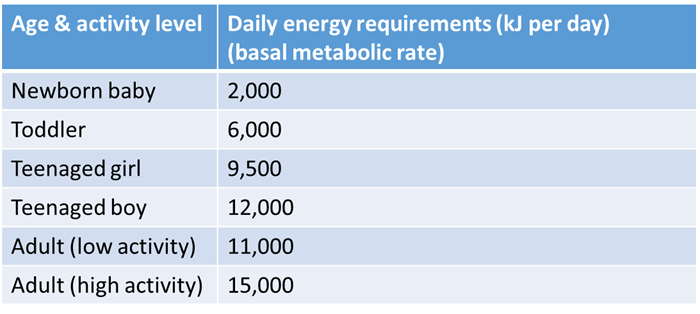
Energy requirements are determined by several factors
Factors that affect metabolic rate include:
- Activity level
- Size of a person (body mass index)
- Activity of the thyroid (controls metabolic rate)
The energy factor for different activities can be determined in a laboratory. For example, writing has an energy factor of 6.0 kj/kg/hr while running has an energy factor of 62 kj/kg/hr.
The energy required for an individual to carry out a particular activity can be calculated by:
0:00 / 0:00
Energy Requirements
Calculate the amount of energy a 50 kg woman requires to first run for 30 minutes, then play tennis for 1 hour.
The energy factor for running is 62 kJ/kg/hr and the energy factor for playing tennis is 36.2 kJ/kg/hr.
Running:
Energy requirements = (energy factor) x (body mass) x (time)
= (62 kJ/kg/hr) x (50 kg) x (0.5 hr)
= 1,550 kJ
Tennis:
= (36.2 kJ/kg/hr) x (50 kg) x (1 hr)
= 1,810 kJ
Total: 1,550 kJ + 1,810 kJ = 3,360 kJ
0:00 / 0:00
Essential Nutrients & Dieting
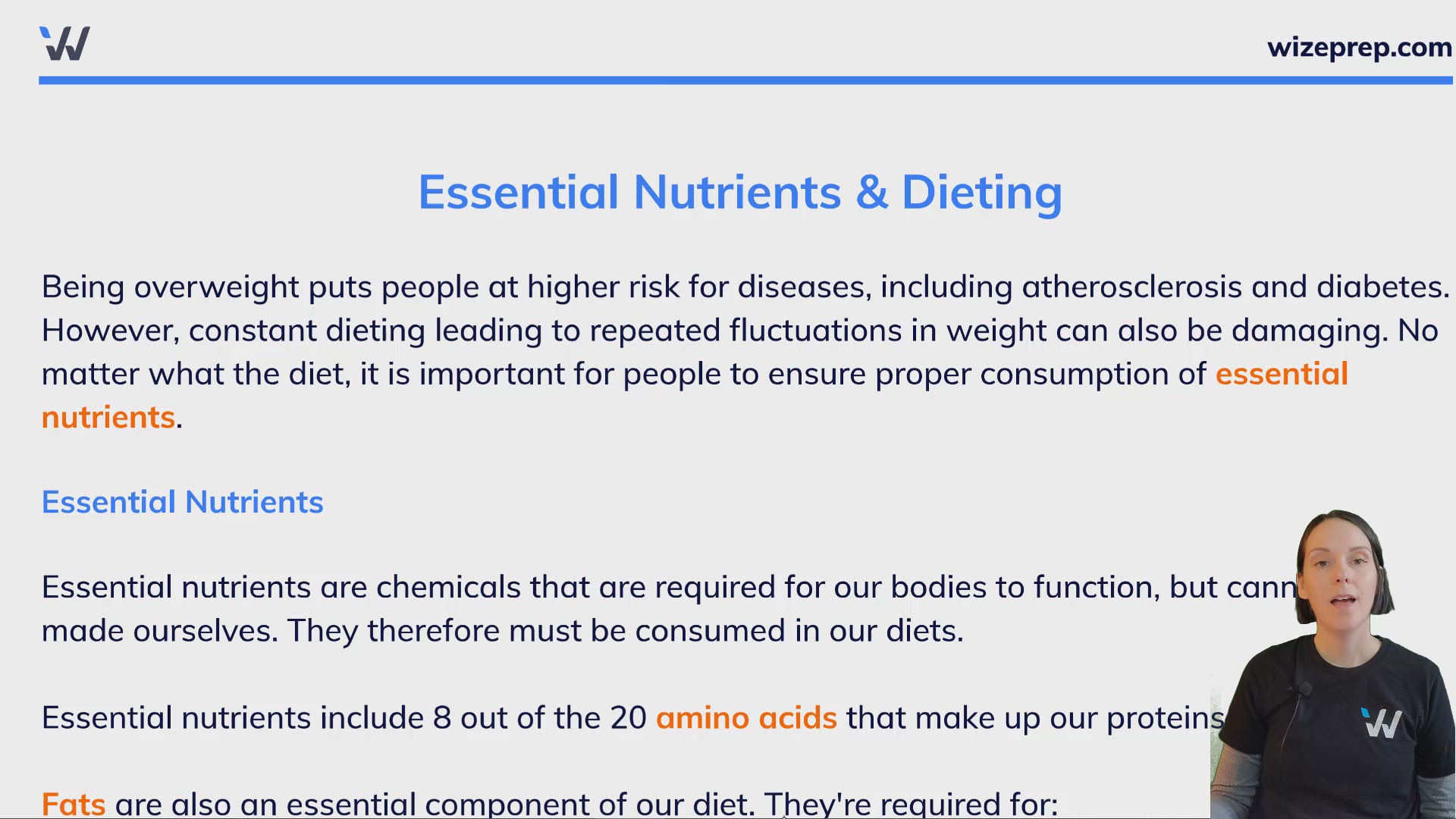
Being overweight puts people at higher risk for diseases, including atherosclerosis and diabetes. However, constant dieting leading to repeated fluctuations in weight can also be damaging. No matter what the diet, it is important for people to ensure proper consumption of essential nutrients.
Essential Nutrients
Essential nutrients are chemicals that are required for our bodies to function, but cannot be made ourselves. They therefore must be consumed in our diets.
Essential nutrients include 8 out of the 20 amino acids that make up our proteins.
Fats are also an essential component of our diet. They're required for:
- the absorption of certain vitamins,
- protection of crucial organs in our bodies,
- provide a protective coating around nerves
- cell membrane structure
Vitamins are also required to help break down food in the body. Some vitamins (A, D, E, K) are fat-soluble, meaning they require fat in order to be absorbed. Others (B1, B2, C) are water-soluble.
Our bodies also require minerals. These include:
- calcium
- iron
- iodine
- phosphorus
- potassium
- sodium
0:00 / 0:00
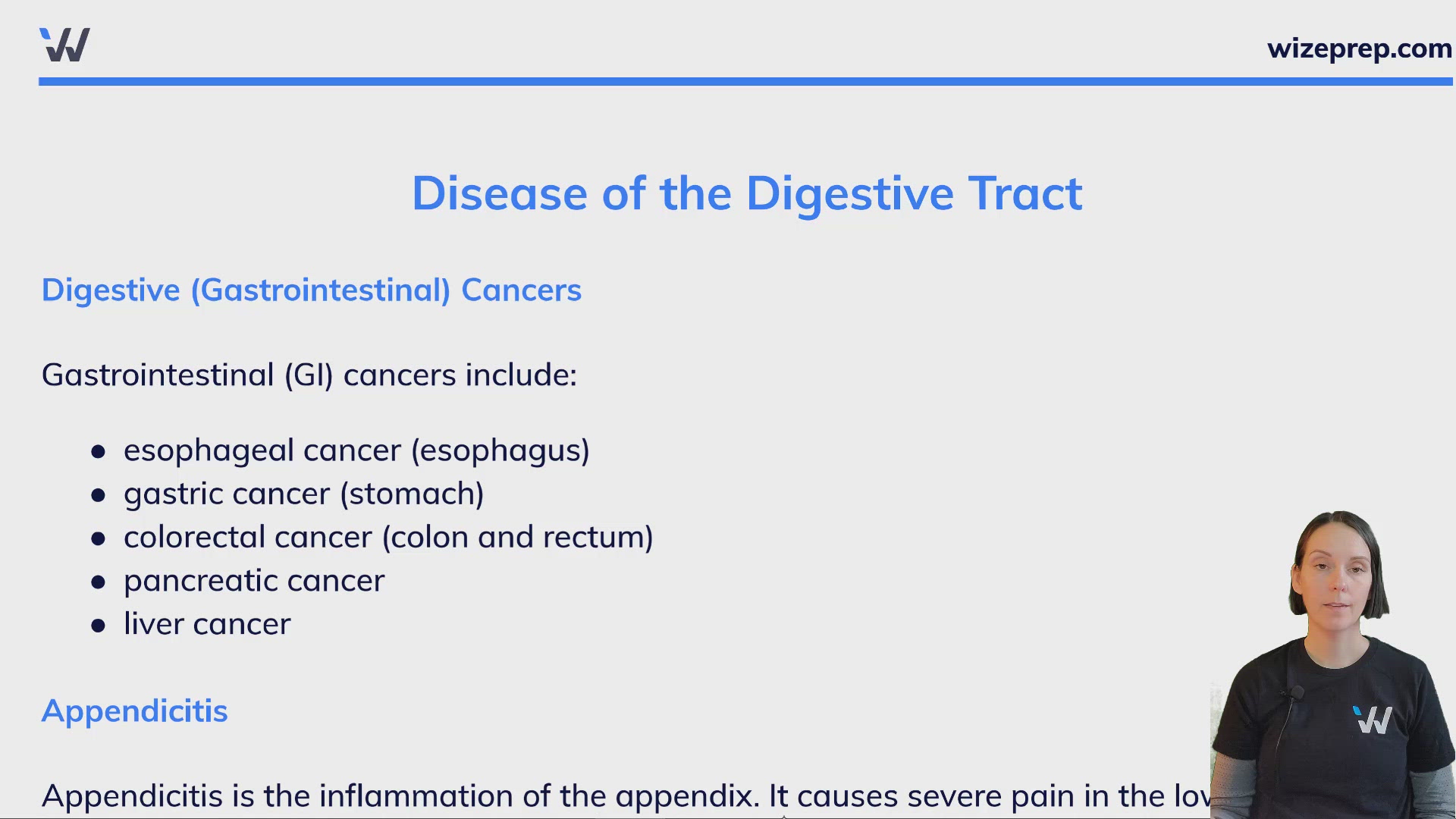
Disease of the Digestive Tract
Digestive (Gastrointestinal) Cancers
Gastrointestinal (GI) cancers include:
- esophageal cancer (esophagus)
- gastric cancer (stomach)
- colorectal cancer (colon and rectum)
- pancreatic cancer
- liver cancer
Appendicitis
Appendicitis is the inflammation of the appendix. It causes severe pain in the lower right abdomen where the appendix, a finger-like projection off the colon, is located. Appendicitis occurs when the appendix is blocked by feces, a foreign object that was ingested, infection, or cancer.
The condition is treated with surgery to remove the appendix followed by a course of antibiotics to clear the infection.
Gallstones
Gallstones are solid particles that can be made of cholesterol or bilirubin that can accumulate in the gallbladder. Symptoms include:
- pain on the right side, just under the ribs
- pain in the right shoulder or back
- vomiting
- other digestive problems
Some gallstones clear up on their own, but most people with gallstones will eventually need to have their gallbladder removed.
Practice: Basal Metabolic Rate
Which of the following will have the highest basal metabolic rate?
Practice: Diet
A woman has a blood test that shows a vitamin A deficiency. She eats a strict vegetarian diet that includes green vegetables, carrots, and tomatoes, all of which are rich in vitamin A. What might be missing from her diet?
Practice: Energy Requirements
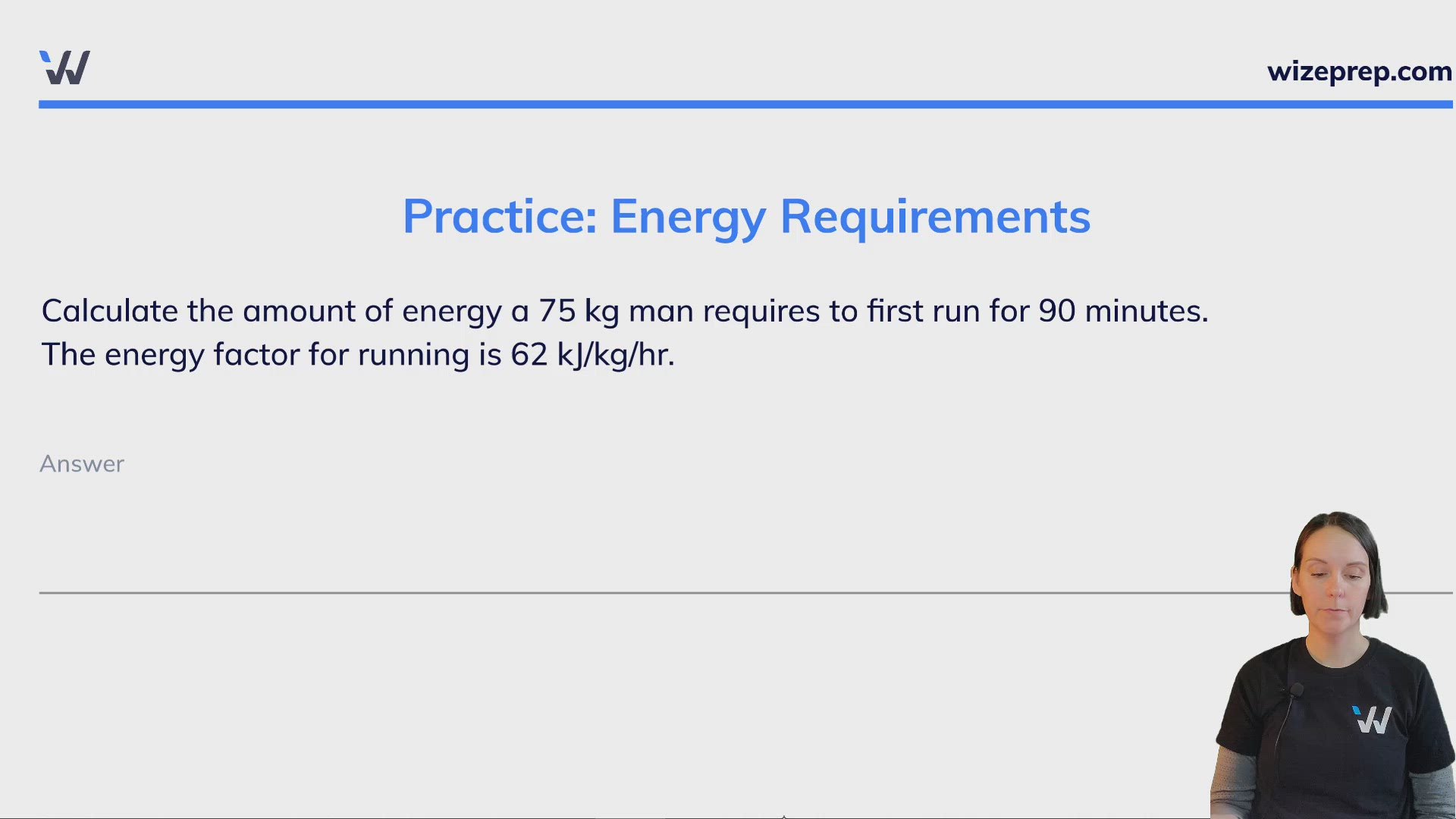
Calculate the amount of energy a 75 kg man requires to first run for 90 minutes.
The energy factor for running is 62 kJ/kg/hr.