Wize High School Grade 11 Biology Textbook > Human Physiology: The Excretory System [Under construction]
Anatomy of the Excretory System
0:00 / 0:00
Functional Anatomy
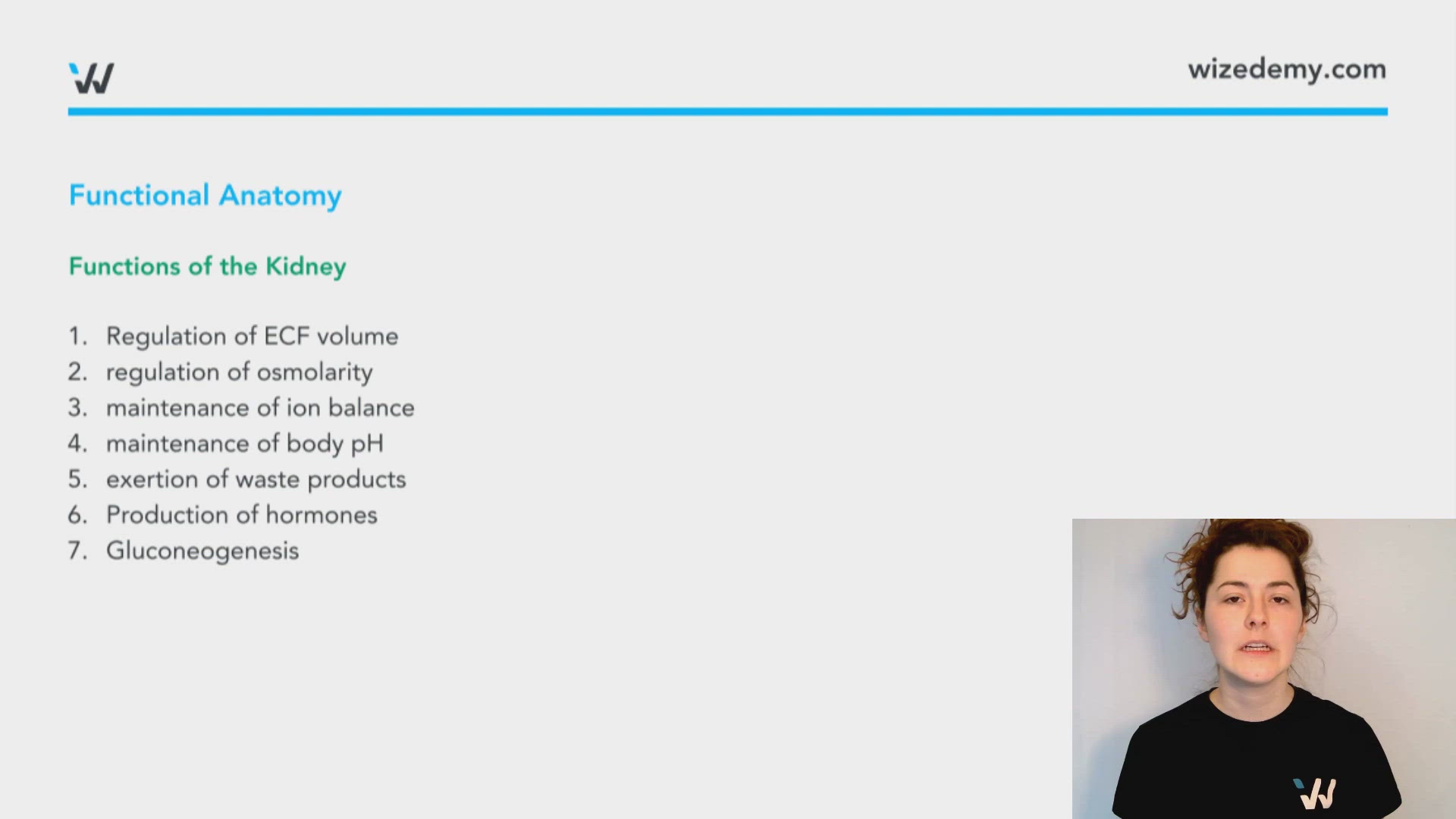
Functions of the Kidney
- Regulation of ECF volume
- regulation of osmolarity
- maintenance of ion balance
- maintenance of body pH
- excretion of waste products
- Production of hormones
- Gluconeogenesis
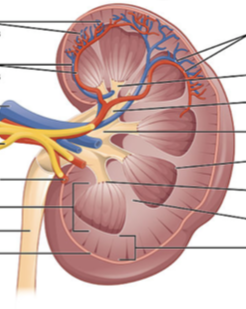
Label the structure with the following terms.
- Renal Artery
- Renal Vein
- Smaller blood vessels
- Cortex
- Medulla
- Nephron
- Minor Calyces
- Major Calyces
- Renal Pelvis
- Ureter
0:00 / 0:00
Water/Ion Balance
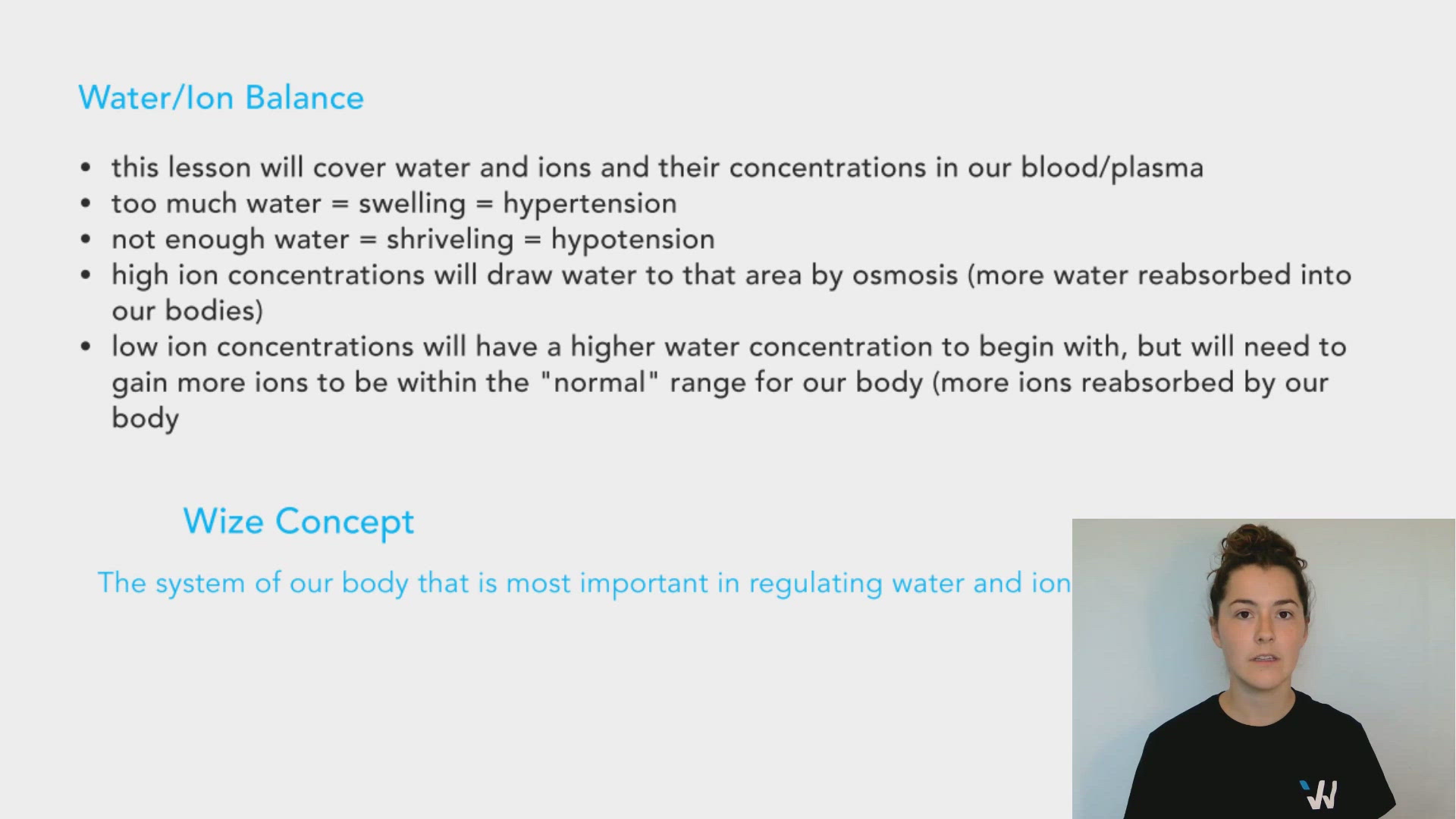
- this lesson will cover water and ions and their concentrations in our blood/plasma
- too much water = swelling = hypertension
- not enough water = shriveling = hypotension
- high ion concentrations will draw water to that area by osmosis (more water reabsorbed into our bodies)
- low ion concentrations will have a higher water concentration to begin with, but will need to gain more ions to be within the "normal" range for our body (more ions reabsorbed by our body
Wize Concept
The system of our body that is most important in regulating water and ion levels is the KIDNEY!
The Nephron
- major functional unit of the kidney
- causes re-absorption of water or ions if needed, or secretion if we have too much.
- ANALOGY: the nephron is like a dumpster diver - it picks through the trash to find the treasures!
- major responsibilities include
- Excreting waste
- Regulating concentrations of solutes in the blood
- Regulating blood volume/ water concentration
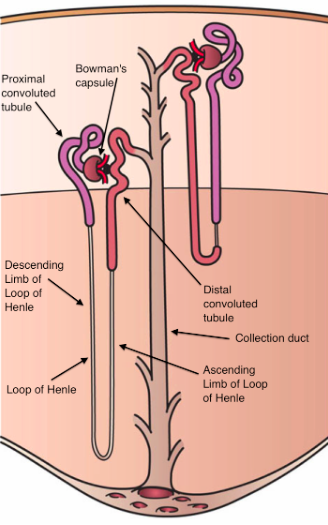
Important parts of the Nephron
- glomerulus corpuscle - capillary bed where blood contents enters the nephron. located inside Bowmans capsule
- proximal convoluted tubule
- loop of Henle
- distal convoluted tubule
- cortical collecting duct
commons.wikimedia.org
Filtration Process
- Filtration - waste products are filtered out of the blood and into the nephron
- Reabsorption - products that the body still needs are reabsorbed back into the blood
- happens in the majority of the nephron. look at the figure below to see what gets reabsorbed and where reabsorption occurs.
- Secretion - whatever is left in the nephron after reabsorption is secreted as waste
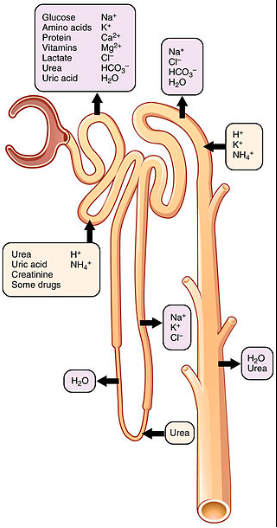
commons.wikimedia.org
0:00 / 0:00
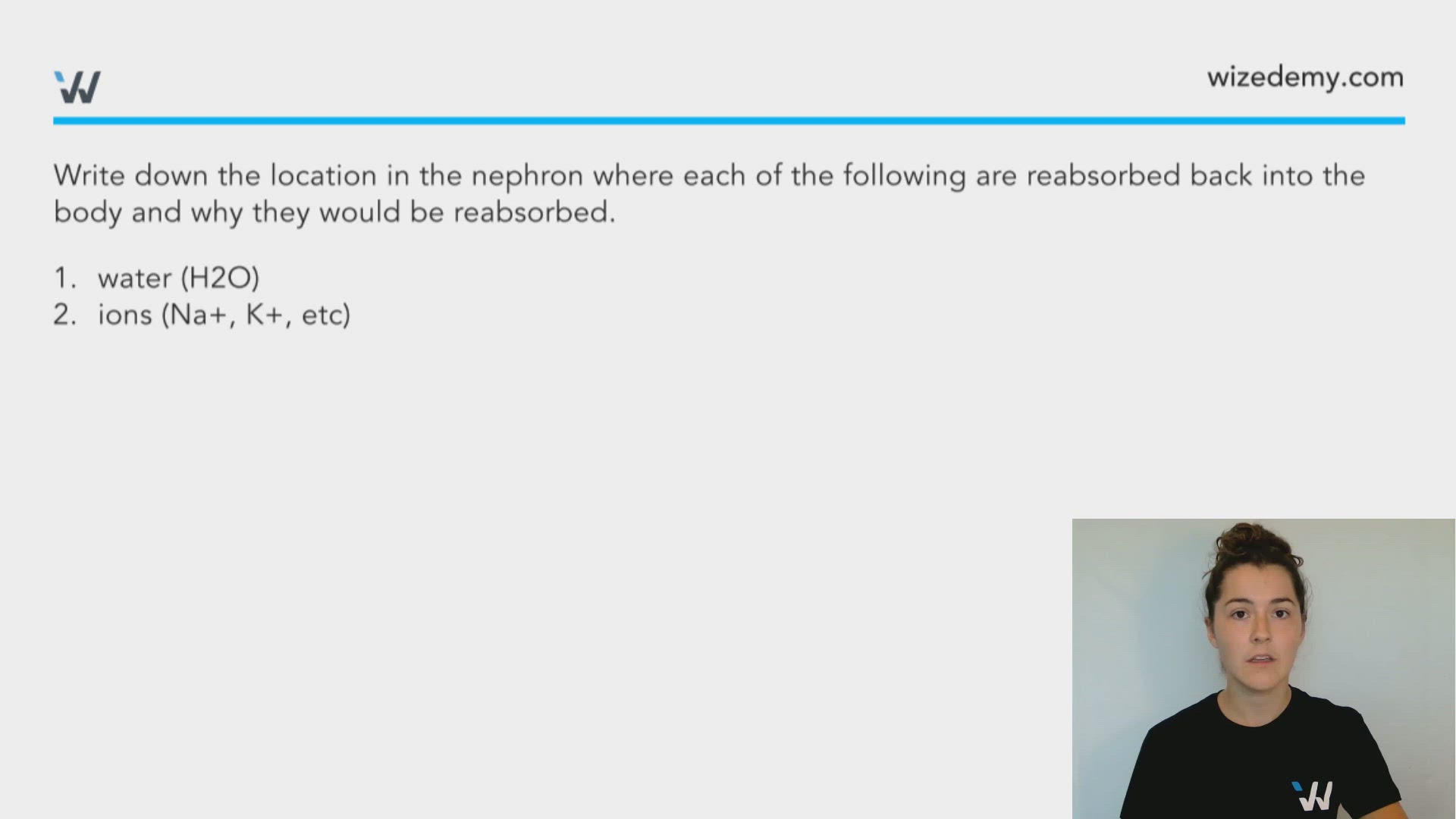
Write down the location in the nephron where each of the following are reabsorbed back into the body and why they would be reabsorbed.
- water (H2O)
- ions (Na+, K+, etc)
H2O taken back through the collecting duct. This happens because our blood pressure is low, or the solute concentration in our blood is too high (it needs to be watered down)
Na+ and K+ are taken back through the ascending loop of Henle. This happens when we have low ion concentrations in our blood.

Mark Yourself Question
- Grab a piece of paper and try this problem yourself.
- When you're done, check the "I have answered this question" box below.
- View the solution and report whether you got it right or wrong.
Mark Yourself Question
- Grab a piece of paper and try this problem yourself.
- When you're done, check the "I have answered this question" box below.
- View the solution and report whether you got it right or wrong.
Mark Yourself Question
- Grab a piece of paper and try this problem yourself.
- When you're done, check the "I have answered this question" box below.
- View the solution and report whether you got it right or wrong.