Popular Courses
MCAT
General Course
AP Biology Exam Prep Course
AP Exam Prep
Biology
General Course
General Biology
University Study Guides
BIOLOGY 1002B
Western University
BIOL 211
University of Calgary
BIOL 107
University of Alberta
BIOL 102
Queen's University
BIOL 112
University of British Columbia
BIOL 112
University of British Columbia
BIOL 112
University of British Columbia
Grade 12 Biology
Canada High School
High School Biology
US High School
Grade 11 Biology
Ontario High School
Grade 11 Biology
Canada High School
DAT
General Course
BIOL 200
McGill University
BIOL*1090
University of Guelph
General Biology
University Study Guides
BIOL 130
University of Waterloo

0:00 / 0:00
Proteins
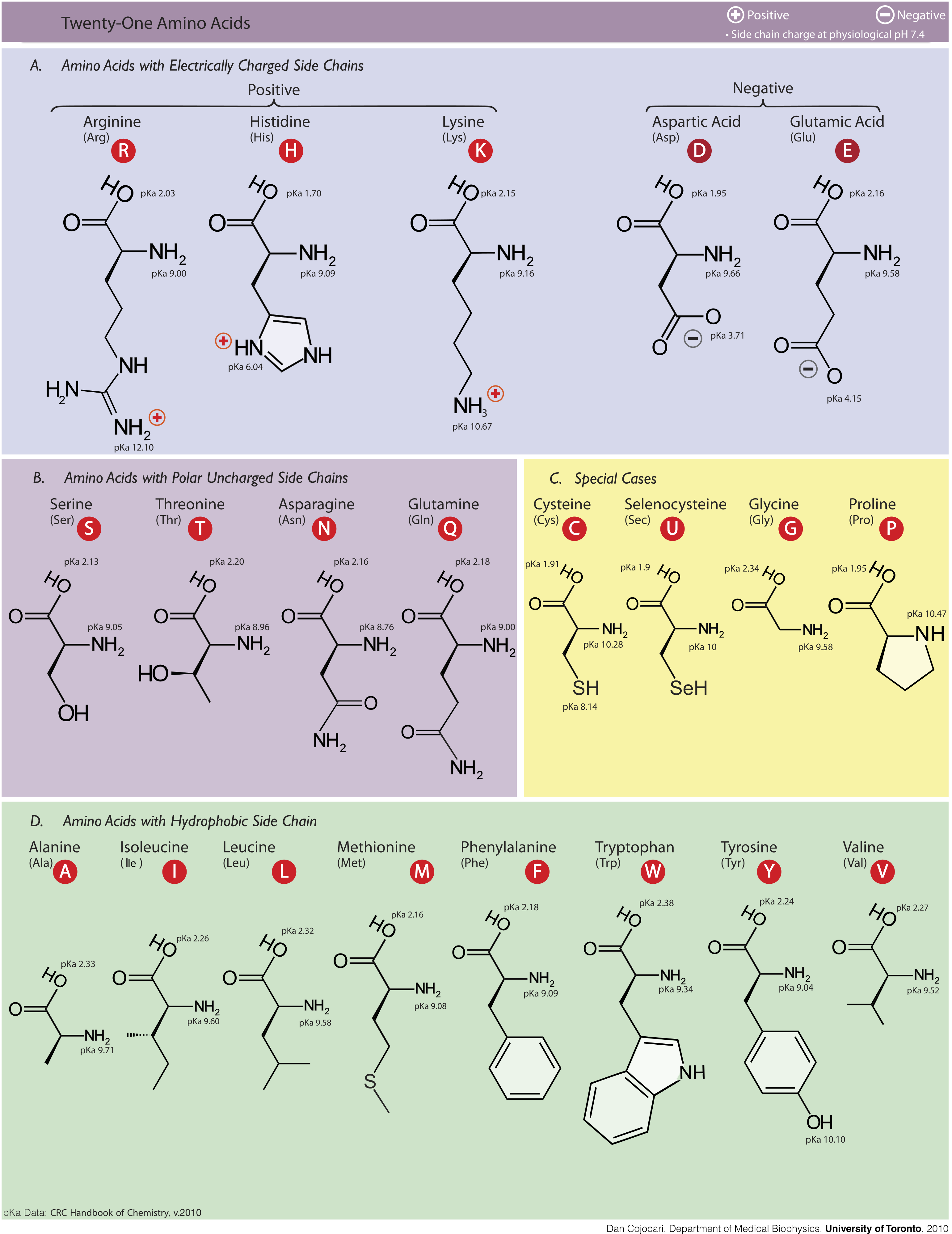
The monomers of proteins are called amino acids. Amino acids have a conserved structure consisting of three main parts:
- An amino group
- A carboxyl group
- An "R group"

- There are 20 different "R groups" that can be attached to the amino acid.
- This diversity in possible R-groups is what leads to the diverse array of proteins within a cell, each with its own particular structure and function.
- Interactions between R-groups give proteins their overall 3-dimensional structure.
- Different R-groups have different biochemical properties:
- Some are hydrophobic;
- Others are positively charged;
- Or negatively charged;
- Some are "special cases."
Reactions Between Amino Acids
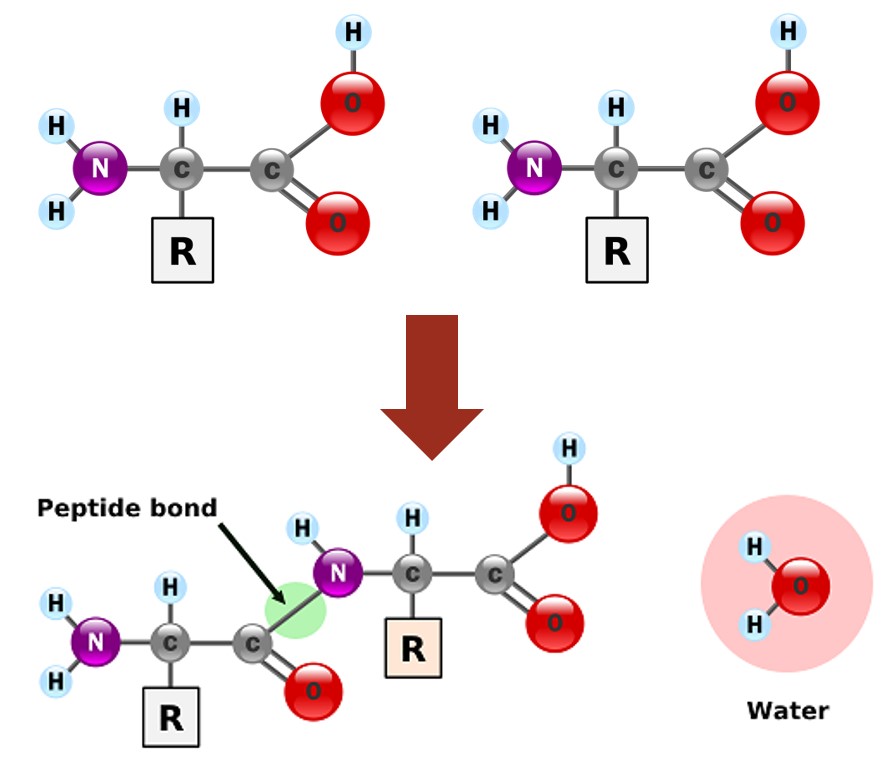
- Amino acids are joined together by a dehydration / condensation reaction in order to form a peptide bond.
- The peptide bond forms between the carboxyl group of one amino acid and the amino group of the other amino acid.
- Once amino acids are joined together into a long chain, a repeating backbone of N-C-C atoms forms. Each individual "N-C-C" is one amino acid in the chain.
- The amino group of the first amino acid in the chain is on one end, while the carboxyl group of the last amino acid is on the other end of the chain.
- The end with the amino group is called the N-terminus, while the end with the carboxyl group is called the C-terminus.

0:00 / 0:00
The Four Levels of Protein Structure
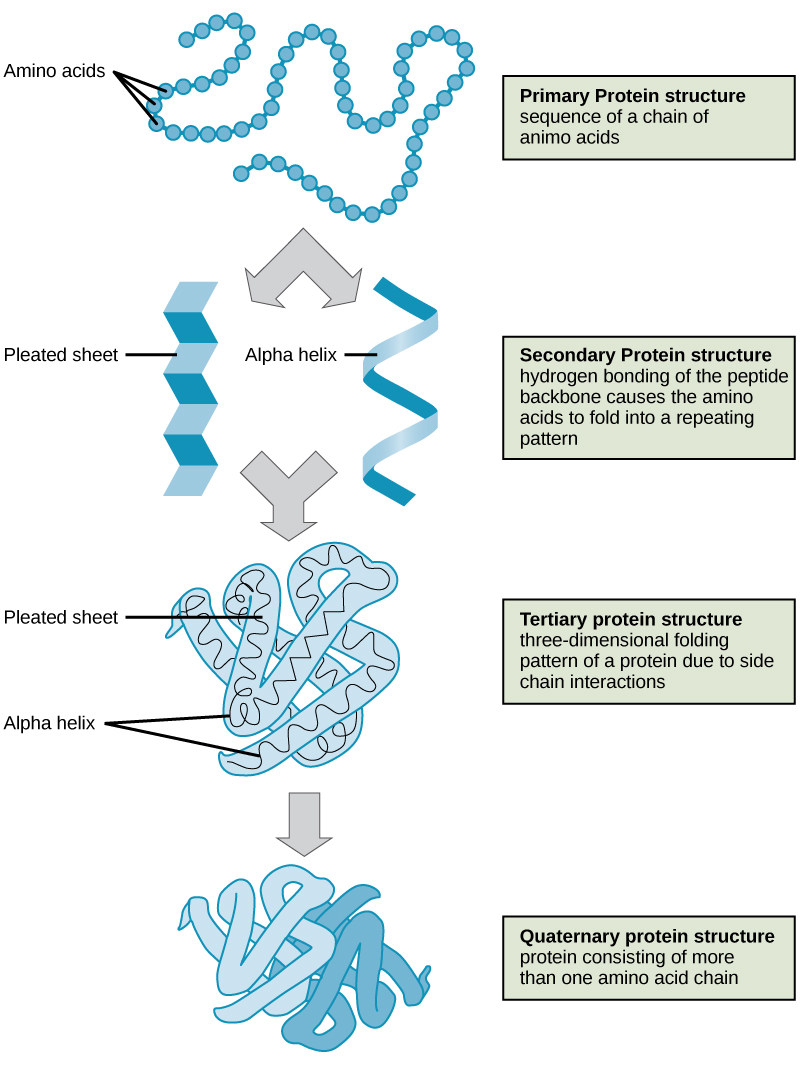
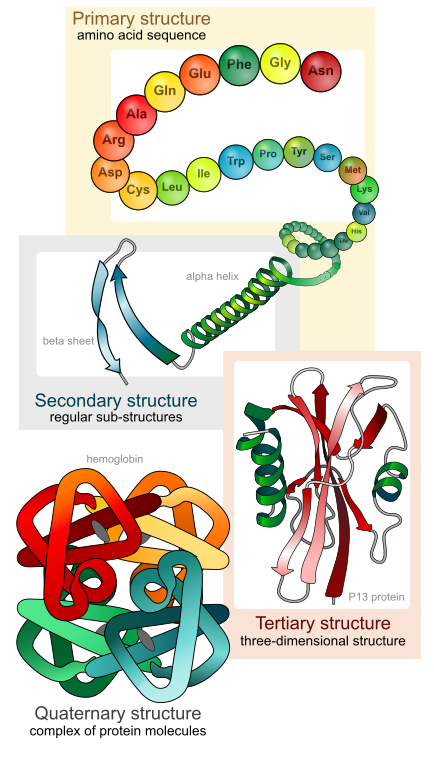
- Primary Structure: the sequence of amino acids.
- Secondary Structure: hydrogen bonding between backbone atoms, leading to the formation of alpha-helices or beta-sheets.
- Tertiary Structure: interactions between R groups (e.g. hydrogen bonds, Van der Waals interactions).
- Quaternary Structure: interactions between two or more fully folded proteins.
0:00 / 0:00
Functions of Proteins
Proteins are the products of what's encoded in our DNA and cells produce proteins to carry out functions. Some of the functions of proteins are:
- Enzymes - catalyze (increase the speed of) reactions. Example: breakdown of lactose during digestion is carried out by the enzyme lactase.
- Transportation - proteins can shuttle things around/in/out of the cell. Example: ion channels allow for electrolytes to enter and leave cells.
- Support - maintaining cell structure. Example: cytoskeleton of cells.
- Signaling - communication between different parts of the cell or the entire body. Example: insulin is a short protein (peptide) hormone that facilitates glucose entry into certain cells.
- Movement - movement of things in the cell or movement of the cell itself (e.g. cilia or flagella). Example: the airways keep themselves clean from pollution by moving cilia.
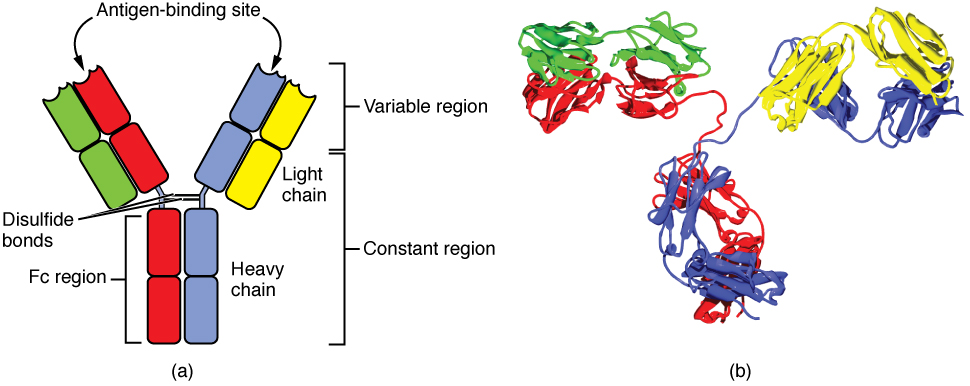
- Defense - proteins that are active in the immune system. Example: antibodies are proteins.
Wize Concept
STRUCTURE DETERMINES FUNCTION. In order for proteins to function properly they need to maintain their structure.
Protein Folding
Some proteins need to assume a specific shape in order to be functional and carry out their roles properly.
- This shape is dictated by the sequence of amino acids and the chemical interactions between their side groups, resulting in secondary, tertiary or quaternary structures.
- Protein folding can occur naturally as proteins are produced in the cell or they may require assistance from other proteins called chaperones. Example: antibodies fold in a such a way that pockets form where antigens can fit in and bind.
Denaturation
Maintenance of protein structure is essential for function.
- When proteins lose their natural shape they are said to be denatured.
- Note that in this case the actual protein sequence does not change.
- Proteins can be denatured by:
- Changes in pH
- High temperatures
- Chemicals
0:00 / 0:00
Example: Absence of Amino Acids
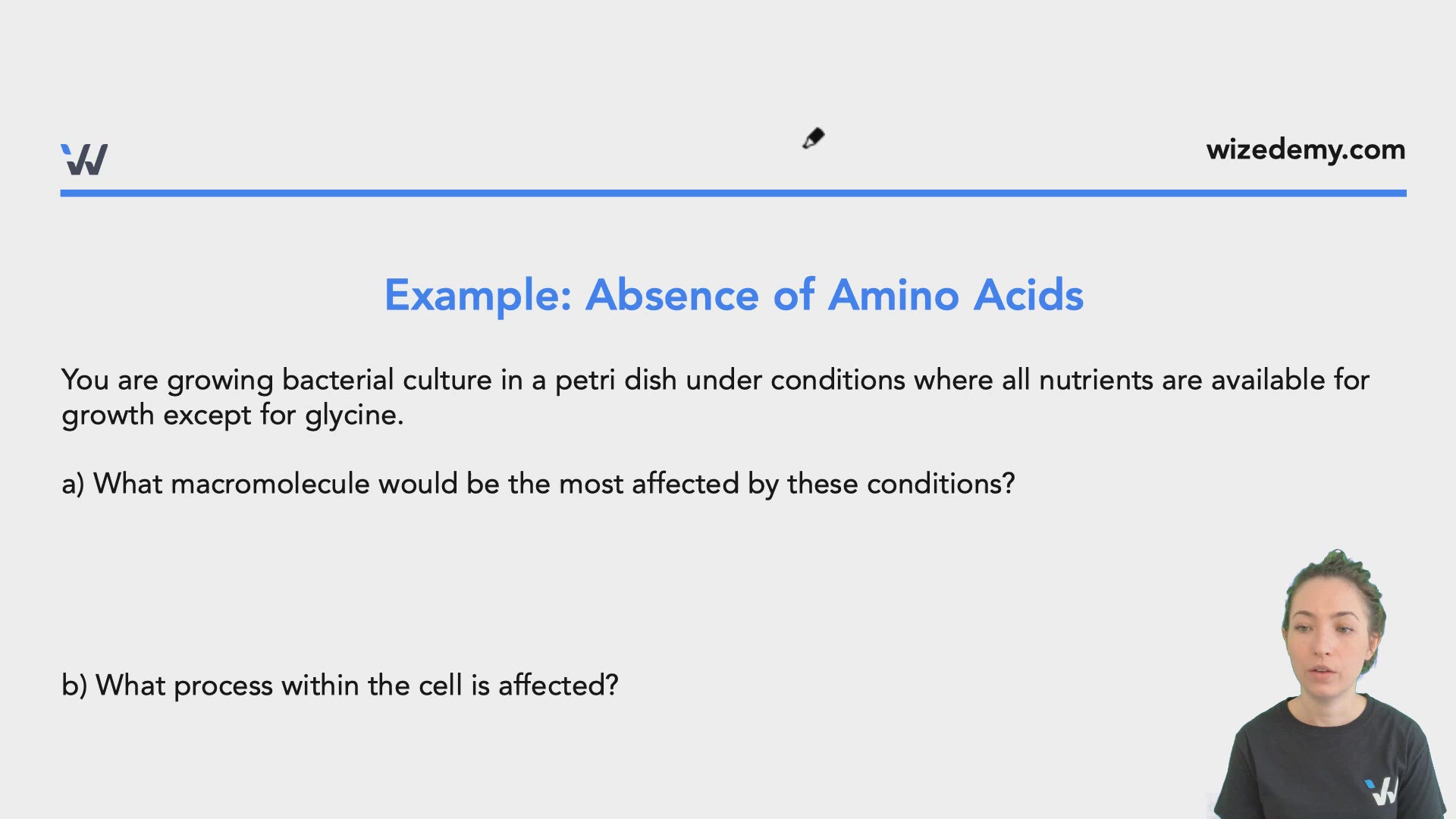
You are growing bacterial culture in a petri dish under conditions where all nutrients are available for growth except for glycine.
a) What macromolecule would be the most affected by these conditions?
Proteins would be most affected because most of them will include at least one glycine amino acid.
b) What process within the cell is affected?
Protein synthesis is affected, but this will affect all aspects of the cell because proteins are required for enzymatic reactions, DNA replication, transcription, translation, cell replication, etc
Practice: Protein Structure and Bonding
What kinds of chemical bonds form during protein synthesis in its primary structure, secondary structure, tertiary structure, and quaternary structure?
Practice: Building Blocks of Proteins
The building blocks of proteins are composed of which of the following?
Practice: Beta Sheet
A beta sheet is an example of what?
Practice: Protein 3D Folding
Which of the following dictates the 3D protein folding structure?