Wize University Biology Textbook > Chemistry of Life
Carbohydrates
Popular Courses
MCAT
General Course
AP Biology Exam Prep Course
AP Exam Prep
Biology
General Course
General Biology
University Study Guides
BIOL 107
University of Alberta
BIOL 102
Queen's University
BIOL 112
University of British Columbia
Grade 12 Biology
Canada High School
DAT
General Course
High School Biology
US High School
Grade 11 Biology
Ontario High School
Grade 11 Biology
Canada High School
General Biology
University Study Guides
BIOL 130
University of Waterloo
SC/BIOL 1000 3.00
York University
Biology 20
Alberta High School
BLG 143
Toronto Metropolitan University
BIOL 112
McGill University
BIOL 186
University of Victoria
BIOL 1010
Dalhousie University

0:00 / 0:00
Carbohydrates (Sugars)
Sugars are essential for life and energy in the human body. They receive their name for being hydrates (meaning, containing water molecules) of carbon; as such, their general formula is (CH2O)n.
- Can be simple sugars (monosaccharides), disaccharides, or polysaccharides.
- A disaccharide is two monosaccharides joined together;
- A polysaccharide is many monosaccharides joined together.
Structure of Monosaccharides
These are simple sugars made of 3-7 carbons with functional groups. Their general structure is as follows:
- Carbon chain or ring
- Functional groups off the side:
- Hydroxyl (OH)
- Carbonyl (C = O)
- At end of chain: aldehyde
- In the middle of chain: ketone Example: glucose (C6H12O6)

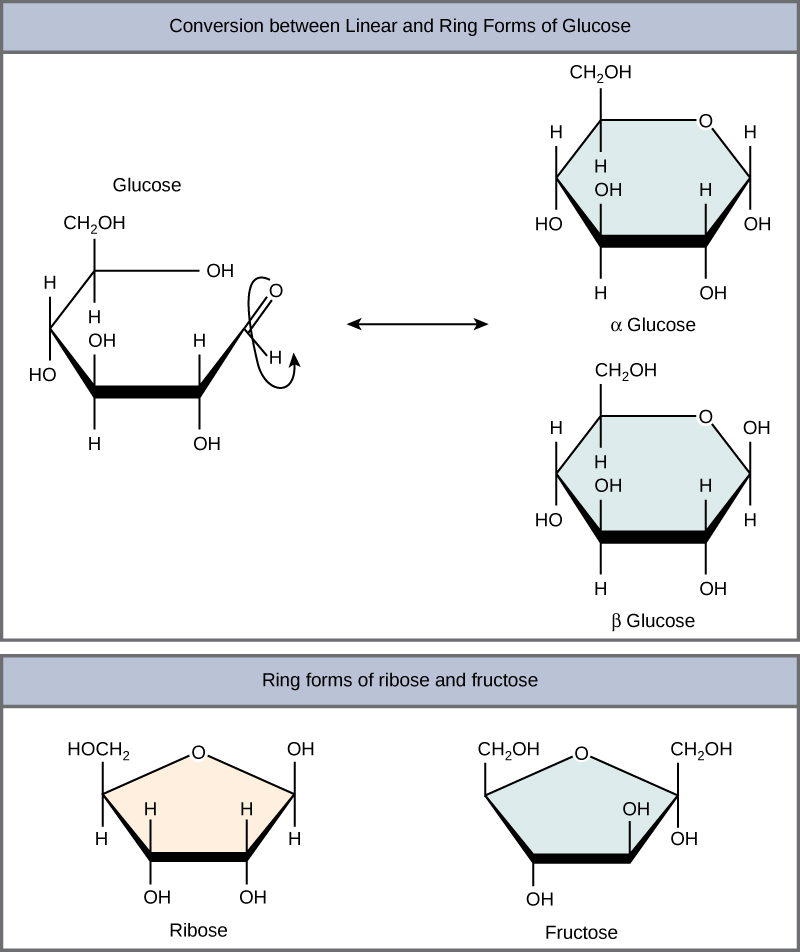
- Sometimes monosaccharides have the same chemical formula, but their functional groups are located in different places. We call all of these monosaccharides with the same formula isomers.
- Structural isomers have functional groups located on different carbons. Example: glucose vs fructose.
- Stereoisomers have functional groups are on the same carbon but different arrangements. Example: glucose vs galactose.
- Monosaccharides can be found as straight lines (linear) or rings.
Disaccharides
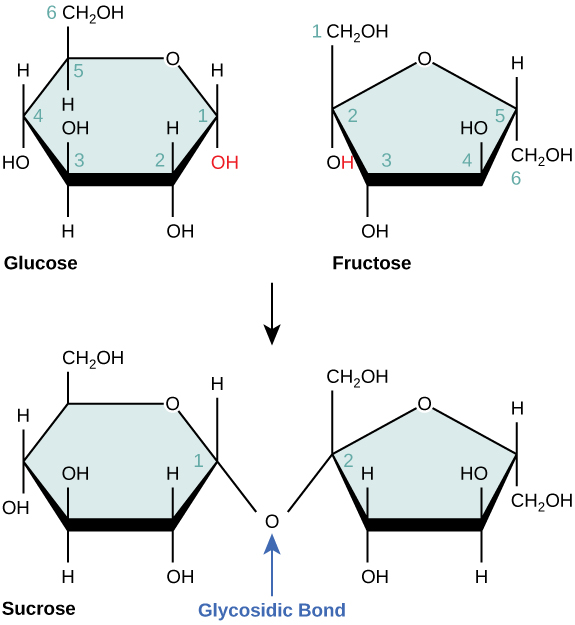
- Monosaccharides are joined together by a dehydration or condensation reaction to form a glycosidic linkage.
- Common disaccharides include lactose (milk), and sucrose (table sugar).
0:00 / 0:00
Polysaccharides
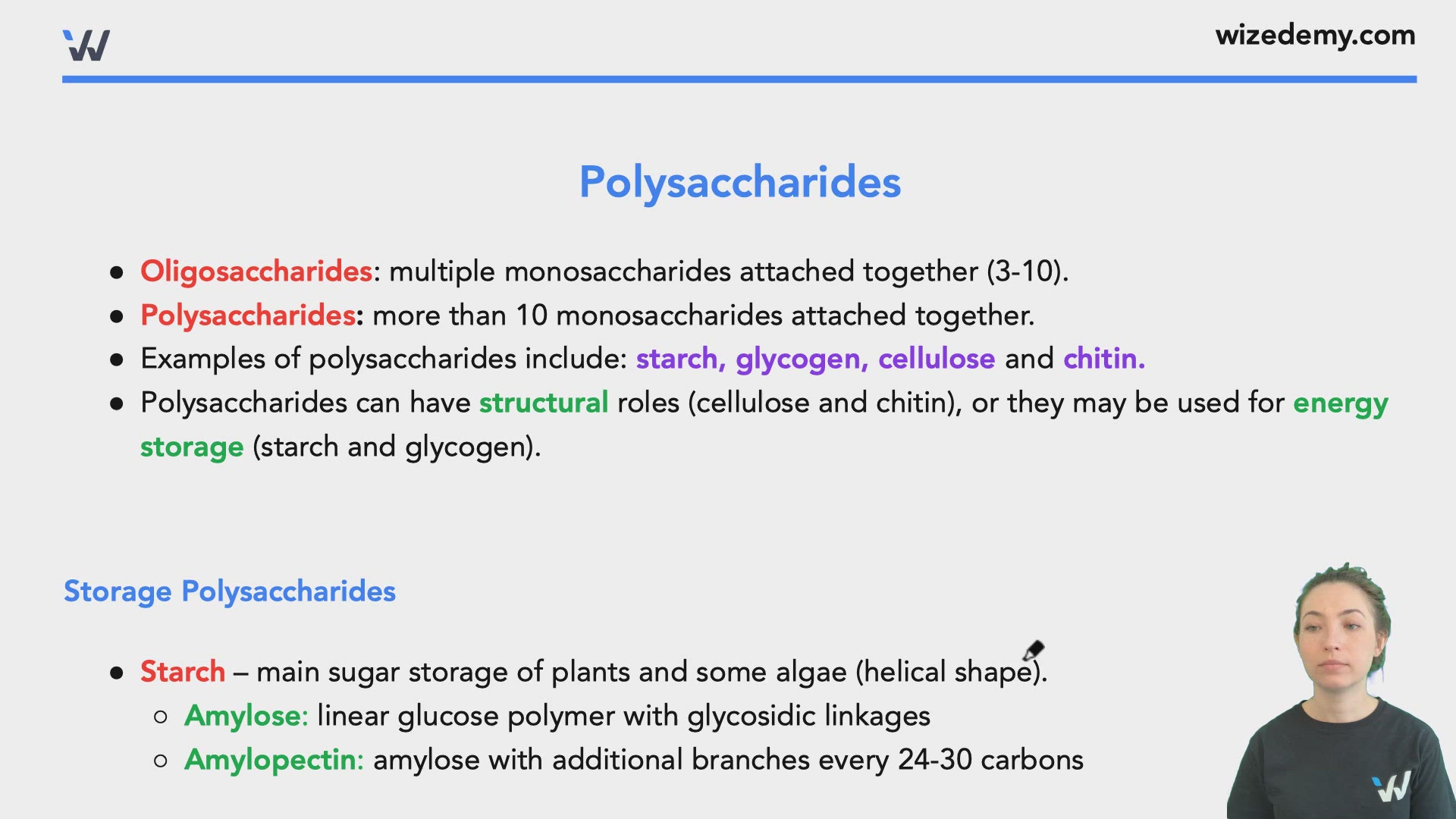
- Oligosaccharides: multiple monosaccharides attached together (3-10).
- Polysaccharides: more than 10 monosaccharides attached together.
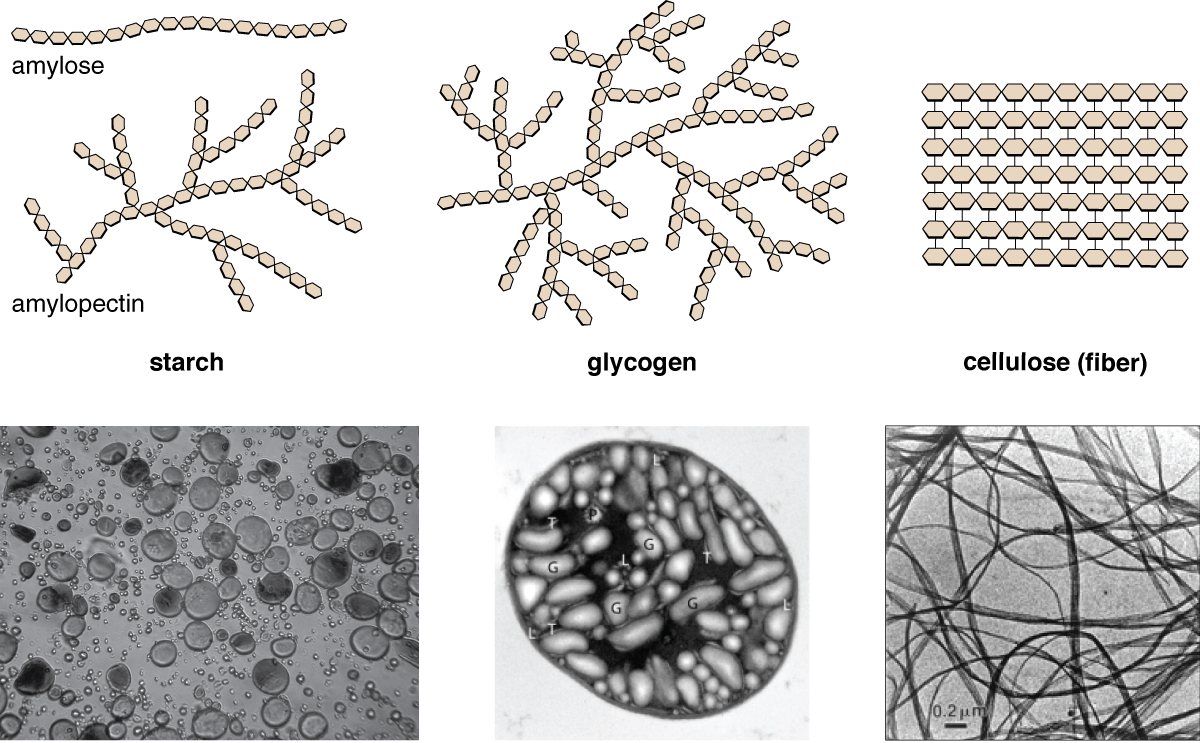
- Examples of polysaccharides include: starch, glycogen, cellulose and chitin.
- Polysaccharides can have structural roles (cellulose and chitin), or they may be used for energy storage (starch and glycogen).
Storage Polysaccharides
- Starch – main sugar storage of plants and some algae (helical shape).
- Amylose: linear glucose polymer with glycosidic linkages
- Amylopectin: amylose with additional branches every 24-30 carbons
- Glycogen – main sugar storage of animals.
- Similar structure to amylopectin (branched).

Structural Polysaccharides
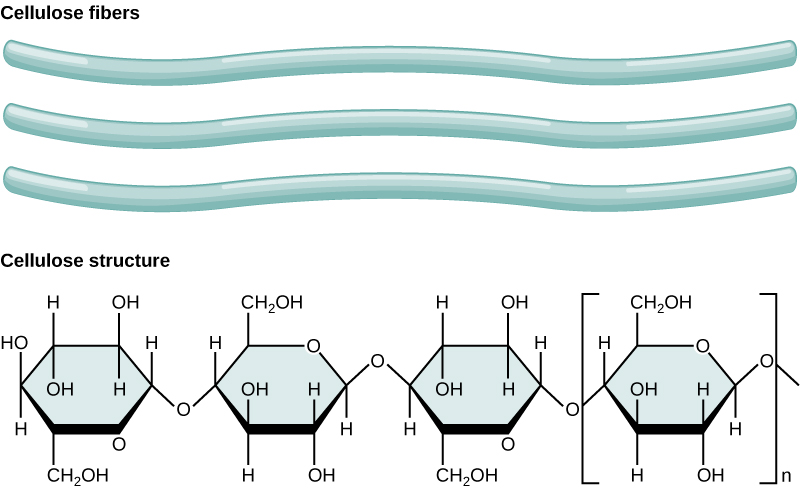
- Cellulose – main component of plant cell walls.
- Most abundant polysaccharide in nature.
- Glucose molecules linked together like in starch, but it uses a different isomer of glucose.
- Cellulase is the enzyme needed to break down cellulose, which very few organisms have; confers strong layer of protection to plant cells.
- Chitin – found in cell walls of fungi and in some animal exoskeletons.
- Doesn't use glucose, but instead uses the monomer acetylglucosamine.
Practice: Amylose
Which of the following is NOT true about amylose?
Practice: Monosaccharide Functional Groups
Which of the following could be a monosaccharide functional group?
Practice: Glycosidic Linkages
Which of the following sugars contains a glycosidic linkage?