Popular Courses
Find My CourseVacuoles
Vacuoles are membrane-bound organelles that form when multiple vesicles fuse together, these vesicles are derived from the endoplasmic reticulum and the golgi apparatus. Vacuoles can be found in all eukaryotic cells, varying in number and size.

Structure
All vacuoles have a membrane consisting of a single lipid bilayer which surrounds a mass of fluid. This membrane controls what goes in and out of the vacuoles. Thus the solution
inside
the vacuole differs in composition to that of the cytosol's.Generally the vacuoles present in animal cells are smaller than the vacuoles present in plant cells.
Functions
Vacuoles are capable of performing a variety of functions in different types of cells

- Food vacuoles; Form during the process of phagocytosis. A process that can be carried out by unicellular eukaryotes or specialized eukaryotic cells.
- Contractile vacuoles: These types of vacuoles are present in many fresh water unicellular eukaryotes. They help pump out excess water upon contraction.
- Enzymatic hydrolysis: In some fungi and plants, small vacuoles carry out enzymatic hydrolysis of compounds, similar to the functioning of lysosomes.
- Storage bubbles: Help to temporarily store a variety of nutrients a cell might need to survive, and they can even temporarily store waste products so that the rest of the cell is protected from contamination. This is mainly seen in animal cells.
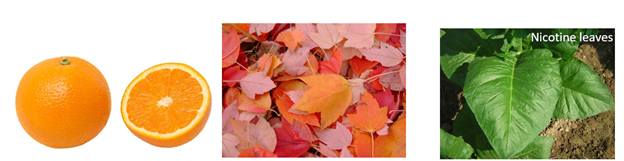
- Protection: In plant cells some vacuoles may store toxic or off-putting flavored compounds so as to deter herbivores.
- Pigmentation: In plant cells some vacuoles may contain pigments, helping to attract insects for pollination.
- Central vacuole: Mature plant cells generally contain a large central vacuole that developed by the aggregation of many smaller vacuoles.

- Acts as a reservoir for inorganic ions, such as potassium and chloride.
- These ions can be found dissolved in the solution contained within the central vacuole called sap and play many vital roles for overall plant health.
- Can hold large amounts of water or food.
- Helps in maintaining plant cell structure by its ability to lose or gain water depending on how much water is available to the plant.
- Plant cells can shrink or expand due to changes in the central vacuole, not the cytoplasm. This can manifest when leaves wilt vs. leaves standing firm.
Practice: Vacuole Functions
Answer each question by writing the correct term beneath it: