Wize Grade 12 Biology Textbook > Transport Across Membranes
Resting Membrane Potential and Electrochemical Gradients
Popular Courses
Find My CourseResting Membrane Potential and Electrochemical Gradients
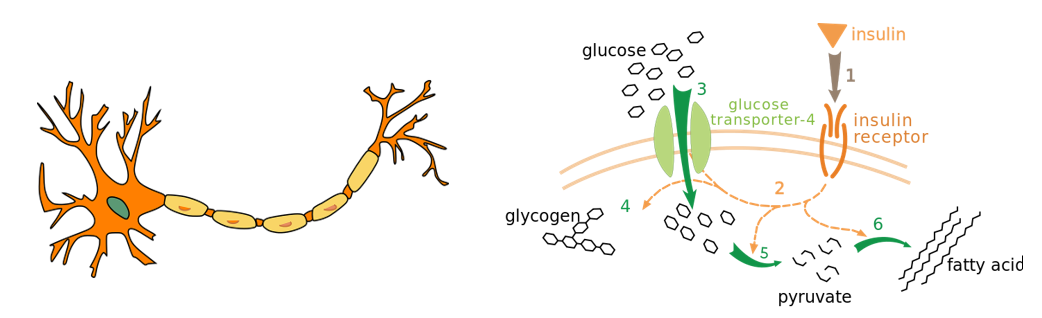
What is a cell's resting membrane potential?
- There is an electrical voltage difference between the inside and outside of a cell. This is because ions are constantly being transported inside and outside of the cell.
- All cells have a unique resting membrane potential that they are actively maintaining.
- Generally most cells have a resting membrane potential ranging from -40 to-80 millivolts, with the negative sign indicating that the inside of the cell is more negative than the outside of the cell.
- Changes in a cell's resting membrane potential can bring about physiological effects:
- Bring about a response in some cells.
- Example: Nerve cells
- Proteins activity
- Example: Proteins that move glucose molecules
Wize Concept
I cover how resting membrane potentials form and are maintained in more detail in another section of the course.
Electrochemical Gradients
The term electrochemical gradient is used to refer to two types of gradients; the chemical (concentration) gradient and the electrical gradient.
- Chemical gradient: Forms due to the difference in concentrations on opposite sides of a membrane.
- Electrical gradients: Forms due to difference in charge on opposite sides of a membrane. It describes the energy required or released to move an ion across a membrane.

There are cases where the simple diffusion of an ion down it's concentration gradient opposes the electrical gradient present due to the membrane potential; they are acting in opposite directions. This is why energy would be needed so that they can be actively transported.
Wize Concept
Recall simple diffusion is a passive transport mechanism. During simple diffusion ions move down their concentration gradient and down the electrical gradient as well; both are acting in the same direction. This is why no energy is needed!
Example: Resting Membrane Potential and Electrochemical Gradients
How does the more negative interior of a cell impact the diffusion of ions across the cell membrane?
Practice: Resting Membrane Potential
Which of the following statements is true?
Practice: Resting Membrane Potentials and Electrochemical Gradient
A solution bathing an artificial cell has a chloride ion concentration of 140mM, while the internal chloride ion concentration is 70 mM. Using your knowledge of resting membrane potentials and electrochemical gradients, which statement is correct?