
0:00 / 0:00
Atomic and Ionic Radii
- Atomic radius is the radius of the atom, which includes the nucleus and all the way to the valence electrons.
Periodic Trend
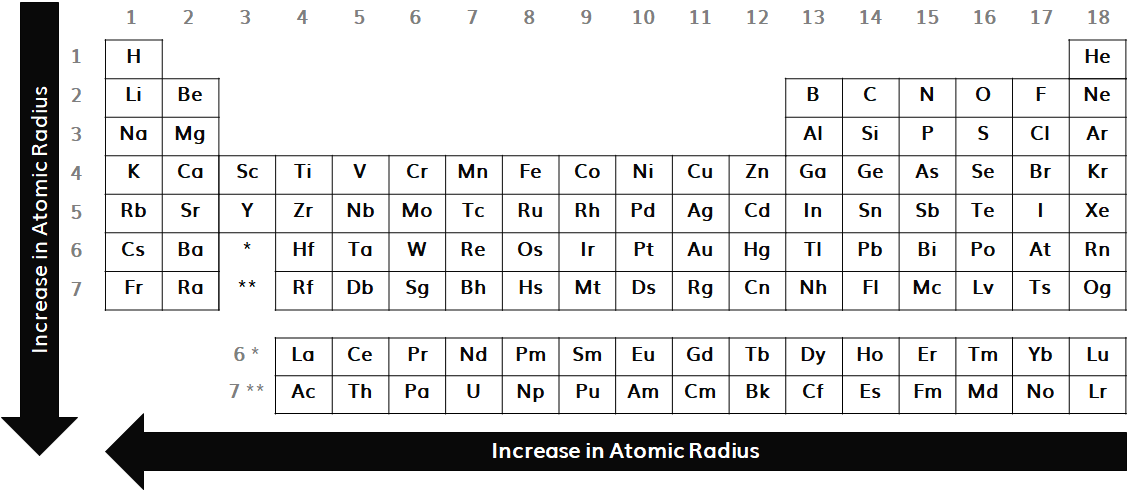
- In a period the atomic radius increases from right to left; The nuclear “pull” on valence electrons decreases, which means these valence electrons can wander farther away from the nucleus.
- In a group the atomic radius increases from top to bottom; The number of electron shells increases and makes the atom larger.
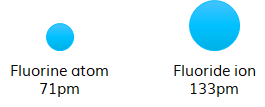
- The ionic radius of an ion is the distance from the center of the atom to the outermost electrons
- For a cation, when you remove an electron the ionic radius is smaller than the atomic radius The remaining electrons in the ion feel a stronger pull by the nucleus

- For an anion, when you add an electron, the ionic radius is greater than the atomic radius. The added electron is not strongly attracted by the nucleus

0:00 / 0:00
Ionization Energy
- Ionization energy is the energy required to remove a single electron from an atom in a gaseous state.
- More positive value means more energy is required to remove electrons. The atom or the ion really wants to hang onto its electrons!
Periodic Trend
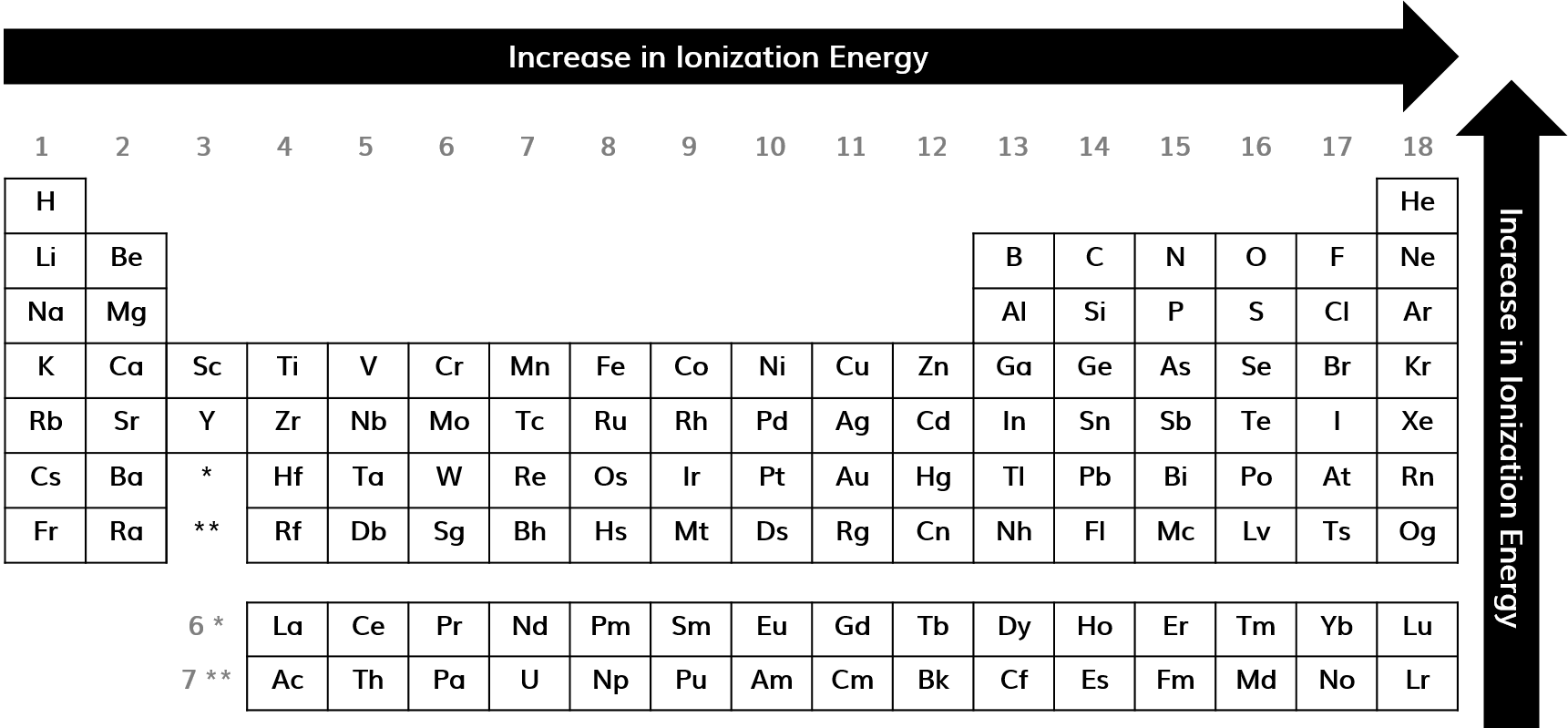
- In a period, ionization energy increases from left to right; This can be explained by the smaller atom size, hence electrons feel a stronger pull by the nucleus
- In a group, ionization energy increases from the bottom to the top. It is easier to remove electrons that are further away from the nucleus.

0:00 / 0:00
Electron Affinity
- Electron affinity is the energy associated with the addition of an electron to an atom
- Depending on element, reaction can be endothermic (require energy) or exothermic (releasing energy). More negative value means more stability in gaining electrons (the atom really wants extra electron)
Periodic Trend
- In a period electron affinity increases from left to right The attraction between the nucleus and electrons increases as you go across a period, hence easier to add an electron
- In a group electron affinity increases from bottom to top It is easier to add electrons to smaller atoms, the extra electron will be easily attracted to the nucleus
Watch Out!
This trend excludes noble gases. Noble gases have stable, completely filled shells. Adding electrons to noble gases will break the noble gas configuration.


0:00 / 0:00
Example: Periodic Trends
Label the following statements as either TRUE or FALSE
- Ionization energy decreases when the atomic size decreases
- As atomic size increases it gets easier to add an additional electron
- False, ionization energy is high for small atoms
- False, as atomic size increases, it is harder to add additional electrons
Practice: Atomic and Ionic Size
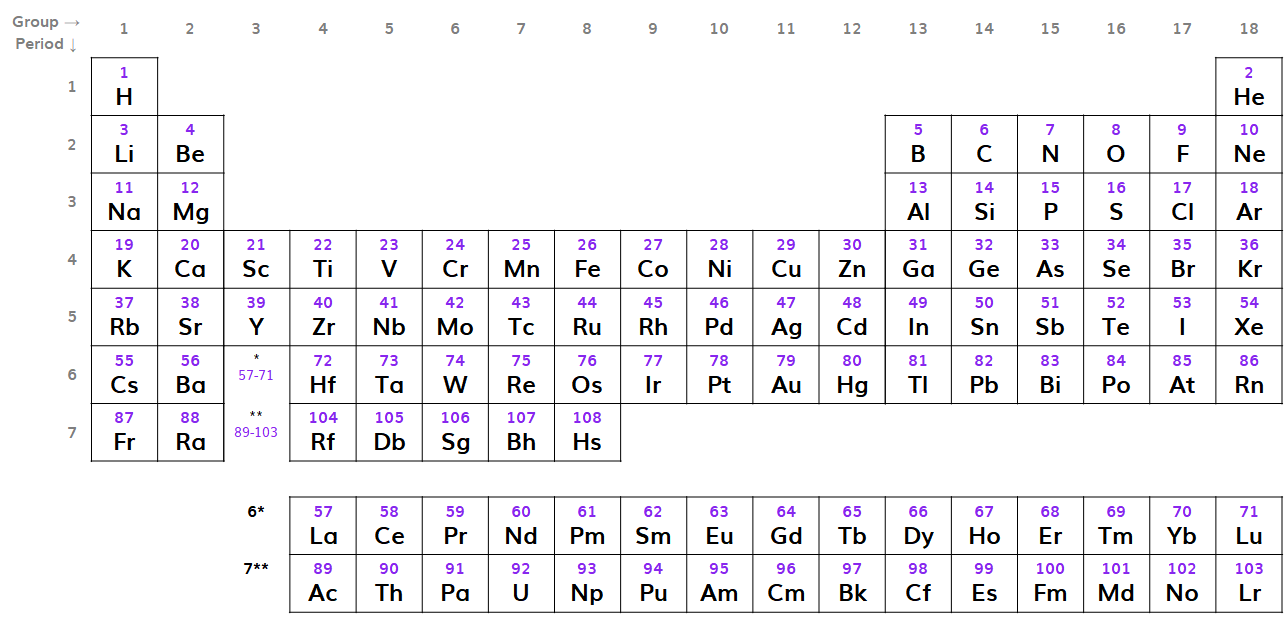
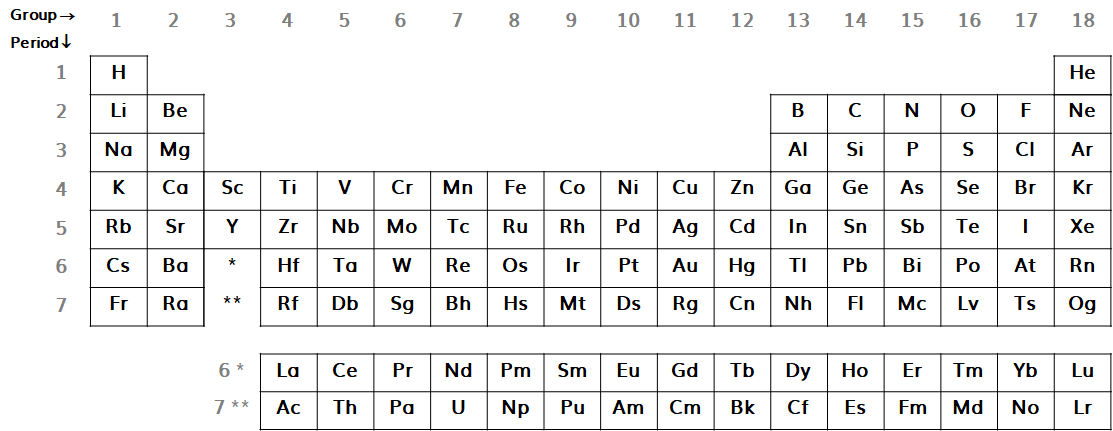
Use the periodic table to choose the largest atom in the following set
Practice: Ionization Energy
Rank the following atoms in order of increasing ionization energy: C, Ca, Al, K, Si, Ne (1 = smallest ionization energy, 6 = largest ionization energy).
A.
2
B.
1
C.
5
D.
3
E.
4
F.
6
C
Ca
Al
K
Si
Ne
Practice: Electron Affinity
Which of the following has the lowest electron affinity?