0:00 / 0:00
The Periodic Table of Elements
Periodic Law
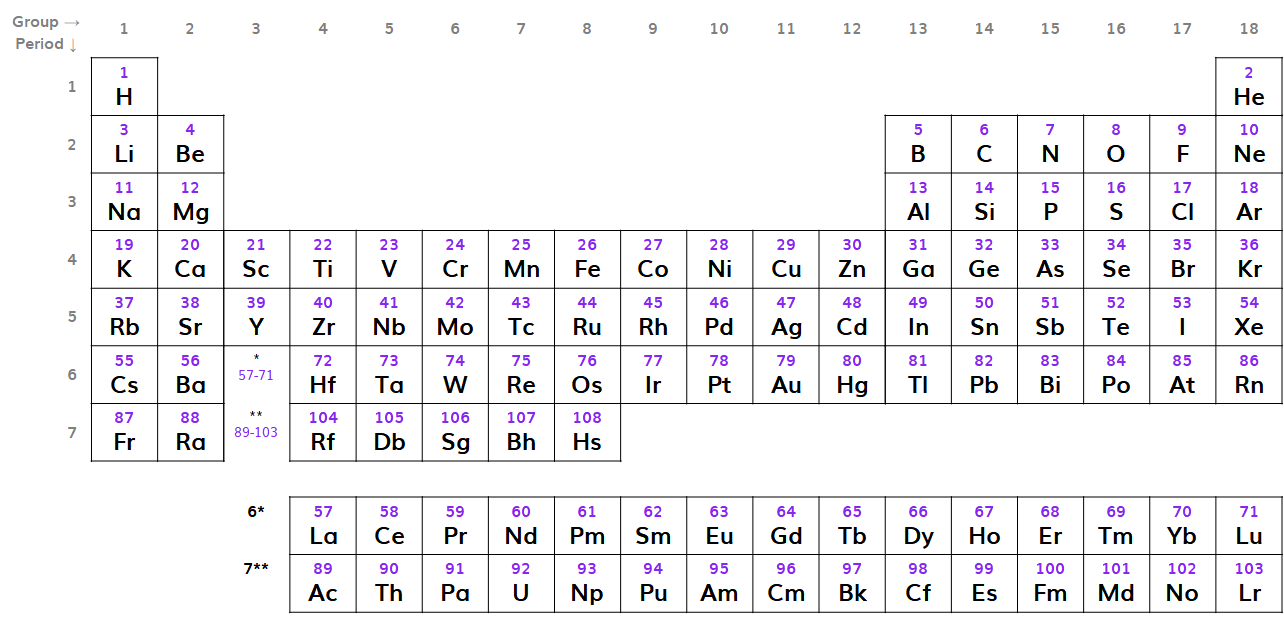
- The periodic table organizes the elements by their atomic number (Z) and is organized into groups (columns) and periods (rows).
- Elements in the same group have very similar reactivity

Metals
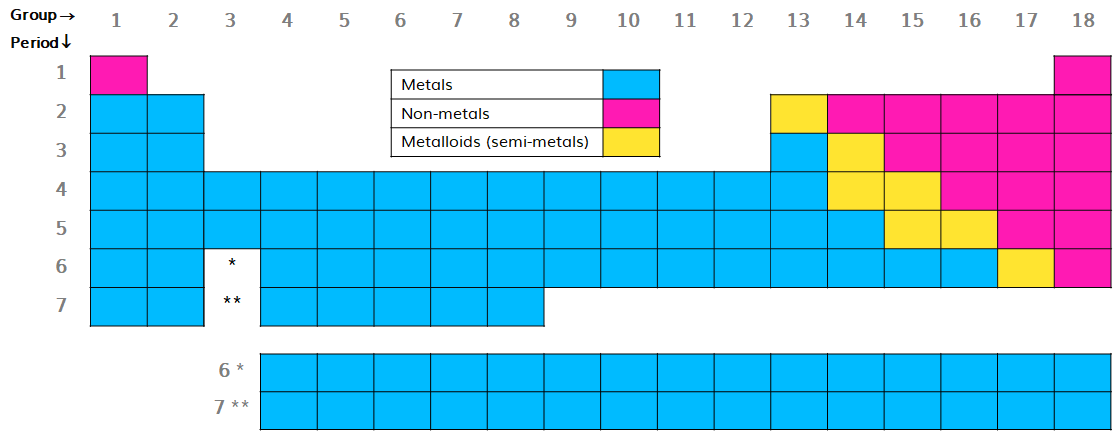
- Metals are found on the left hand side of the periodic table
- They are solid at room temperature, with the exception of mercury which is a liquid
- They are generally shiny and flexible
- Most metals are good conductors of heat and electricity
Non-metals
- Non-metals are found on the right hand side of the periodic table
- Most are gas or solid at room temperature, with bromine being the only liquid element
- They are dull and non-malleable
- They are poor conductors of heat and electricity

0:00 / 0:00
Families and Series of Elements
Alkali Metals
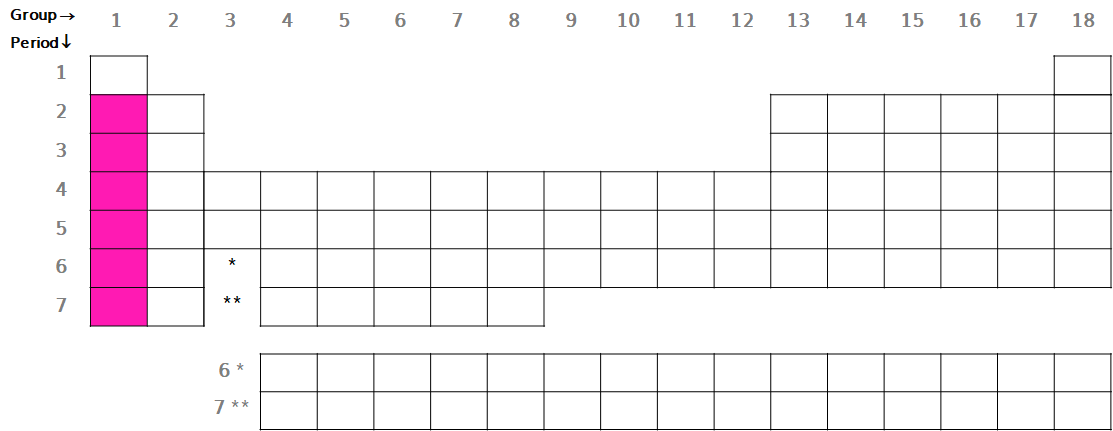
- Chemical properties:
- react with water to form strong bases and release hydrogen Example:
- react with oxygen to form oxides Example:
- react with halogens to form metal halides Example:
Alkaline Earth Metals

- Chemical properties:
- react with water to form strong bases and release hydrogen (with the exception of Be) Example:
- react with halogens to form metal halides Example:
- react with oxygen to form metal oxides Example:
Transition Metals
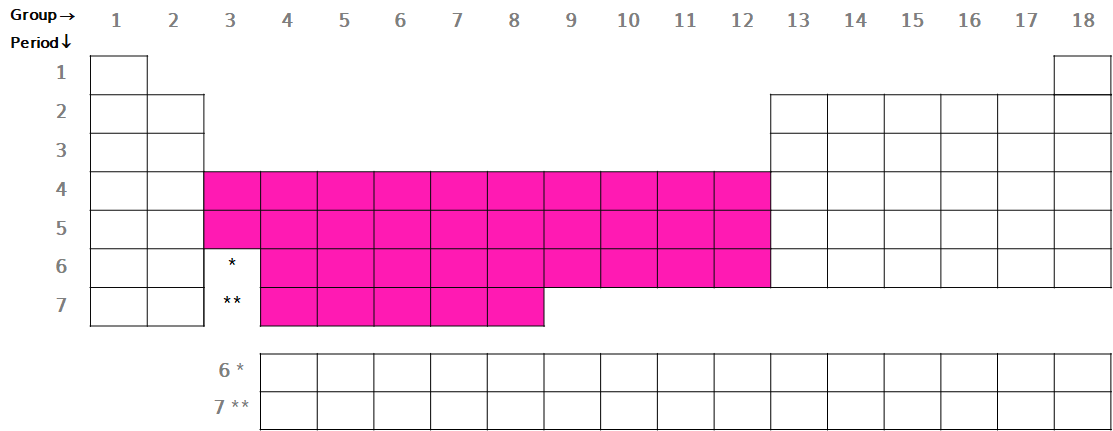
- Chemical properties:
- form colored ions with different charges
- overall, less reactive then alkali and alkaline metals
- Ag and Au are unreactive
Rare Earth Metals
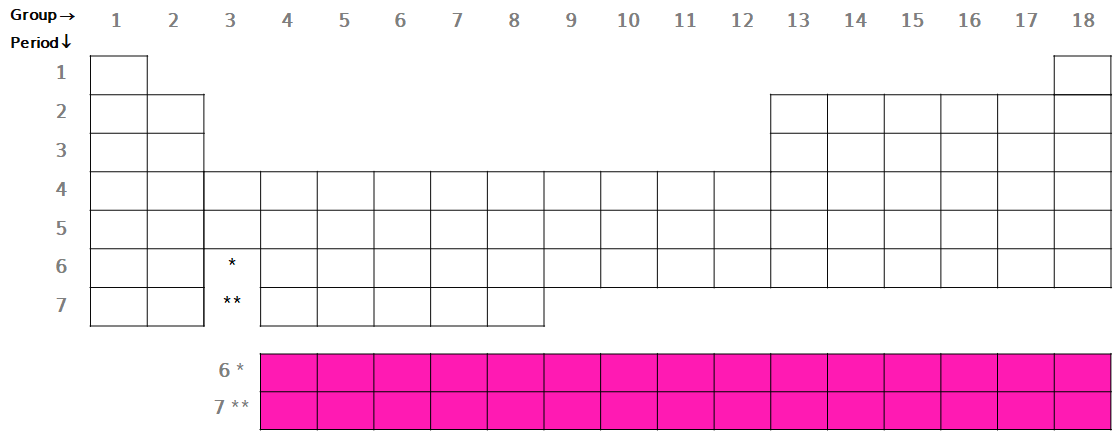
- The rare earth metals are the lanthanides and actinides
- Rare earth metals tend to share many of their properties; that means that sometimes it is hard to distinguish them from one another
Noble Gases
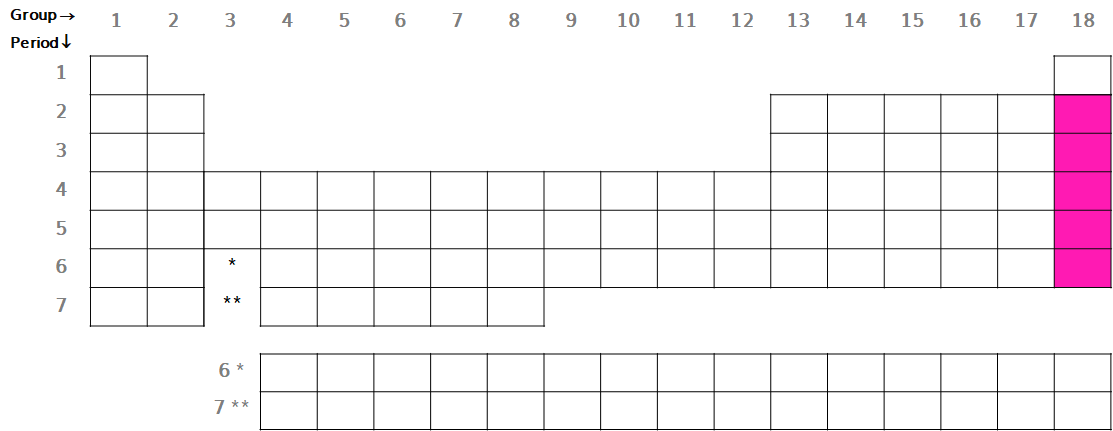
- Chemical properties:
- inert; they are unreactive
Halogens
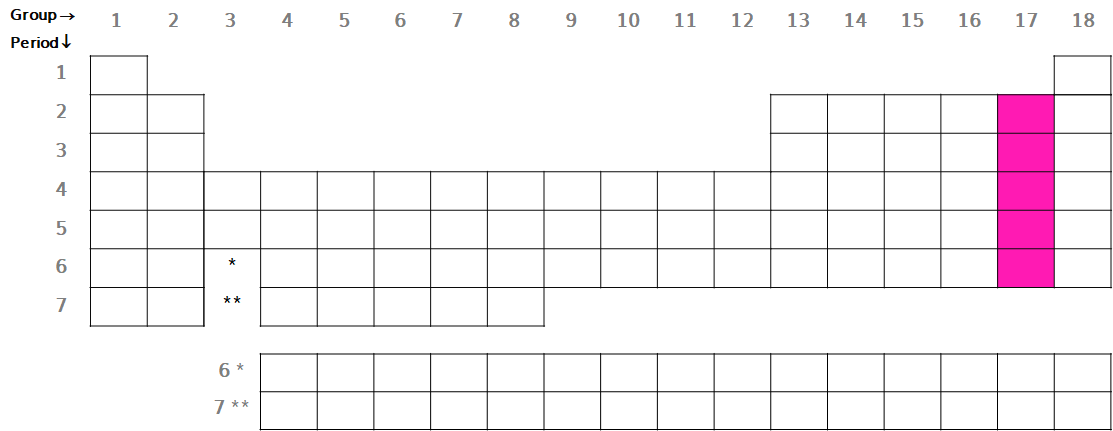
- Chemical properties:
- all exist as diatomic molecules
- react with water to produce acids Example:
- react with metals to produce metal halides Example:
- react with hydrogen to produce hydrogen halides Example:

0:00 / 0:00
Example: The Periodic Table
Using the periodic table, give an example of each of the following:
- a gas
- an element that is a solid at room temperature
- a noble gas
- an alkaline earth metal
- an element that is a liquid at room temperature
Practice: Periodic Law
Select all that apply. In the modern periodic table elements are arranged in order of increasing:
Practice: Families of Elements and Their Properties
Match each term with the correct definition below.
A.
Very stable due to the fact that they have a full outermost energy level
B.
Highly reactive elements that belong to group 1
C.
Group 2 elements that have two valence electrons
D.
Reactive elements of group 17 that are poor conductors
E.
Elements that belong to groups 3 - 12 and are somewhat reactive
halogens
alkaline - earth metals
alkali metals
transition metals
noble (inert) gases
Practice: Families and Series of Elements
The greatest similarity in chemical properties is expected for elements with the atomic numbers: