Popular Courses
Grade 12 Chemistry
Ontario High School
Grade 12 Chemistry
Ontario High School
Grade 12 Chemistry
Canada High School
General Chemistry
University Study Guides
AP Chemistry Exam Prep Course
AP Exam Prep
CHEM 121
University of British Columbia
High School Chemistry
US High School
CHEM 1AA3
McMaster University
Chemistry
General Course
DAT
General Course
General Chemistry
University Study Guides
CHEM 121
Simon Fraser University
APSC 131
Queen's University
CHEM 1100
University of Manitoba
CHEM 1481
Texas A & M University
CHY 113
Toronto Metropolitan University
CEM 141
Michigan State University
CHMA10H3
University of Toronto
SC/CHEM 1100 4.00
York University
CHM 2045
University of Florida

0:00 / 0:00
Introduction to Hybridization
Why do We Need Hybridization?
- Looking at atomic orbitals (and electron configurations) are not sufficient to explain all observations. Example: it does not explain how carbon is bound to 4 hydrogen atoms in
- If we examine what the orbital filling diagrams would look like without hybridization we can quickly see that carbons ground state electron configuration only allows two bonds to be formed.

Unhybridized Carbon Valence Bond Diagram
- However we know from experiment that the true form is and there are actually 4 C-H bonds (not 2!)
- To explain how this comes about we need to invoke hybridization
What is Hybridization?
- Hybridization is a theoretical tool we use to explain experimental observations
- To explain observed bonding, we combine atomic orbitals and create hybrid orbitals!
Wize Concept
Hybridization does not consume or create orbitals. Therefore if we hybridize one s-orbital and one p-orbital we create two sp hybrid orbitals.
The names of the hybrid orbitals are based purely on which orbitals were combined to make the hybrid. They are named as follows.
Analogy:
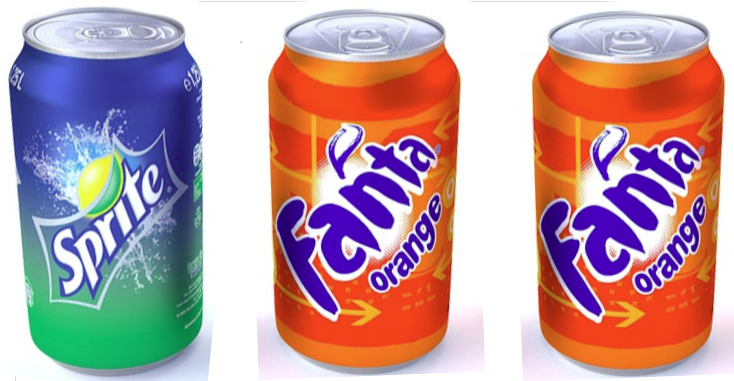
- Your roommate is experimenting with drinks. He decides to mix 1 can of sprite and 2 cans of Fanta together.
- In total he used 3 cans so the end result will have the volume of 3 cans.
- His end result will also be 1/3 Sprite and 2/3 Fanta!
- This is like how if we took 1 s atomic orbital and combined it with 2 p atomic orbitals, we would get 3 sp2 hybridized orbitals!
- Each sp2 hybridized orbital has 1/3 s character and 2/3 p character.
The "Chemistry" Way of Showing This:
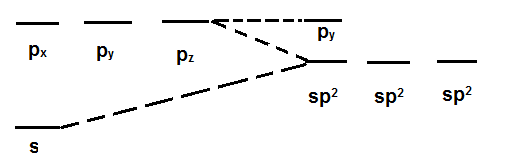
1 s combine with 2 p atomic orbitals to form 3 sp2 hybridized orbitals
1 p atomic orbital is left unhybridized → this can form pi bonds!
Using Hybdridization to Explain the Bonding in Methane
If we hybridize the s-orbital and all the p-orbitals of carbon to form four new hybrid orbitals we end up with the following picture. From this picture we can see that carbon can now form four bonds to hydrogen.

Valence Bond Diagram of Methane

0:00 / 0:00
Determining Hybridization
To determine the hybridization of an atom in a molecule, we need to first determine the number of electron groups that molecule has.
EGs are electron groups
Example: CH4

- C has4EGs
- We saw that C in CH4 was sp3 hybridized.
- If we add up the exponents in sp3 (s1p3 → 1+3) = 4 (which is the number of electron groups!)
Wize Tip
How to Determine the Hybridization of an Atom:
Step 1: Draw the Lewis Structure
Step 2: Count the number of electron groups (electron groups are bound atoms + lone pairs)
Step 3: Determine hybridization of the central atom → exponents of hybrid orbitals add up to the number of electron groups around the central atom
Step 4: Once you know the hybridization, you can predict the geometry (as shown below)
To determine a molecule's hybridization we can use the following table:

The shapes listed above are "parent shapes" (aka electron geometries) that we get from knowing the number of electron groups.
What is the Hybridization of C in CO2?
1) Draw the BEST Lewis Structure
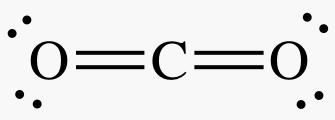
2) Find the Number of EGs that C has
EGs= # of lone pairs of electrons + # of bound atoms
=
0 + 2
=
2
3) Determine the Hybdridization Based on the Number of EGs
Since there were
2
EGs, that means the hybridization must be sp
. What is the Hybridization for Se in SeBr2?
1) Draw the BEST Lewis Structure
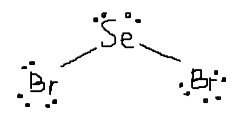
2) Find the Number of EGs that Se has
EGs= # of lone pairs of electrons + # of bound atoms
=
2+ 2
=
4
3) Determine the Hybridization Based on the Number of EGs
Since there were
4
EGs, that means the hybridization must be sp3
. 
0:00 / 0:00
Example: Hybridization
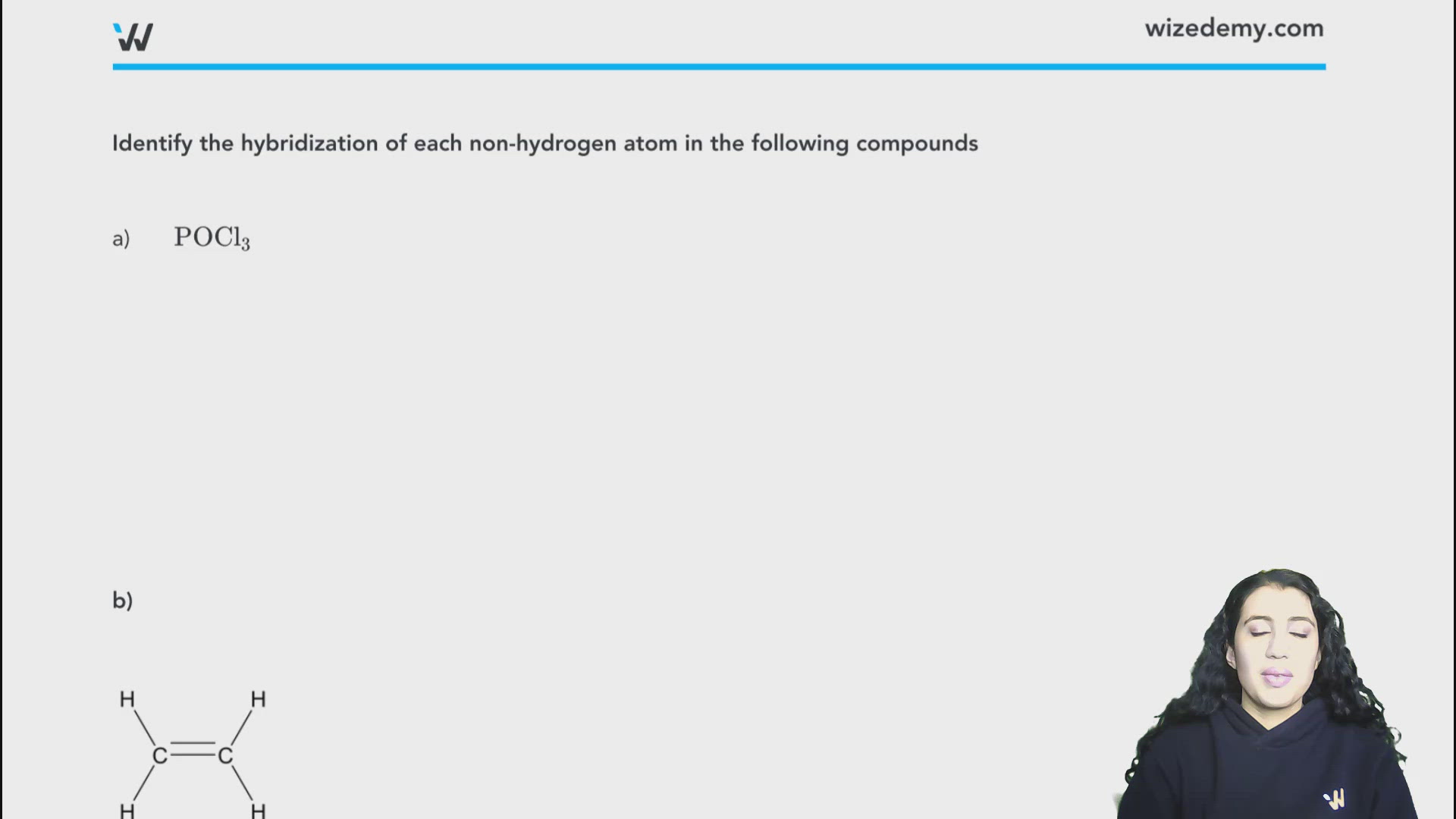
Identify the hybridization of each non-hydrogen atom in the following compounds:
a)
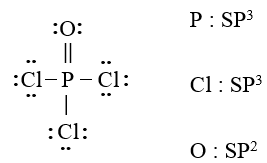
Identify the hybridization of each non-hydrogen atom in the following compounds:
b)
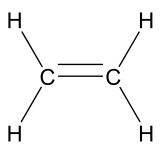
C has sp2 hybridization (3 electron groups attached)
0:00 / 0:00
Example: Hybridization of Atoms in a Line Diagram
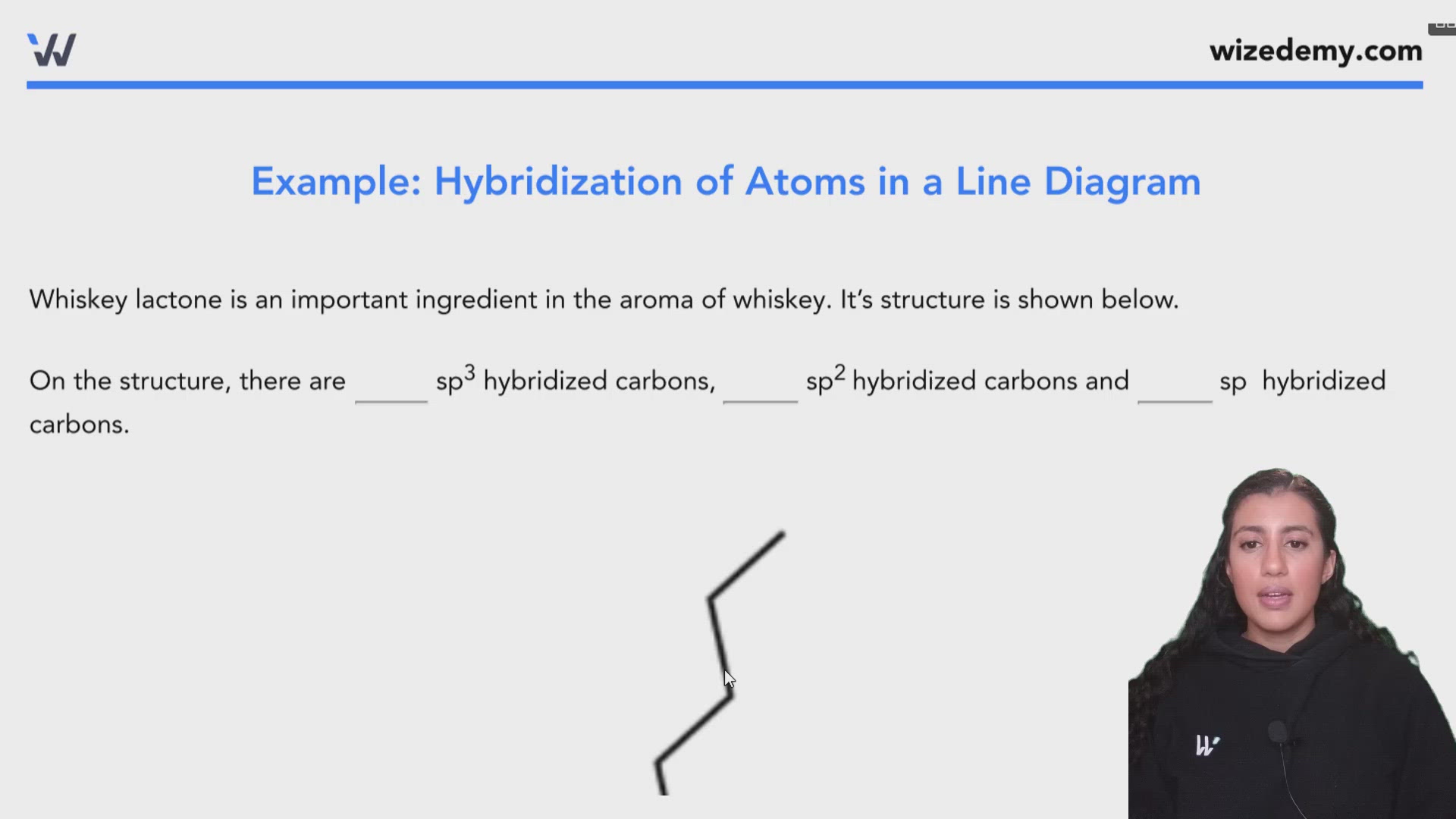
Whiskey lactone is an important ingredient in the aroma of whiskey. It’s structure is shown below.
On the structure, there are
8
sp3 hybridized carbons, 1
sp2 hybridized carbons and 0
sp hybridized carbons.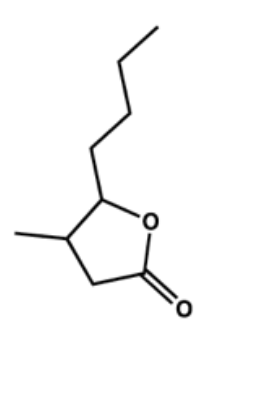
0:00 / 0:00
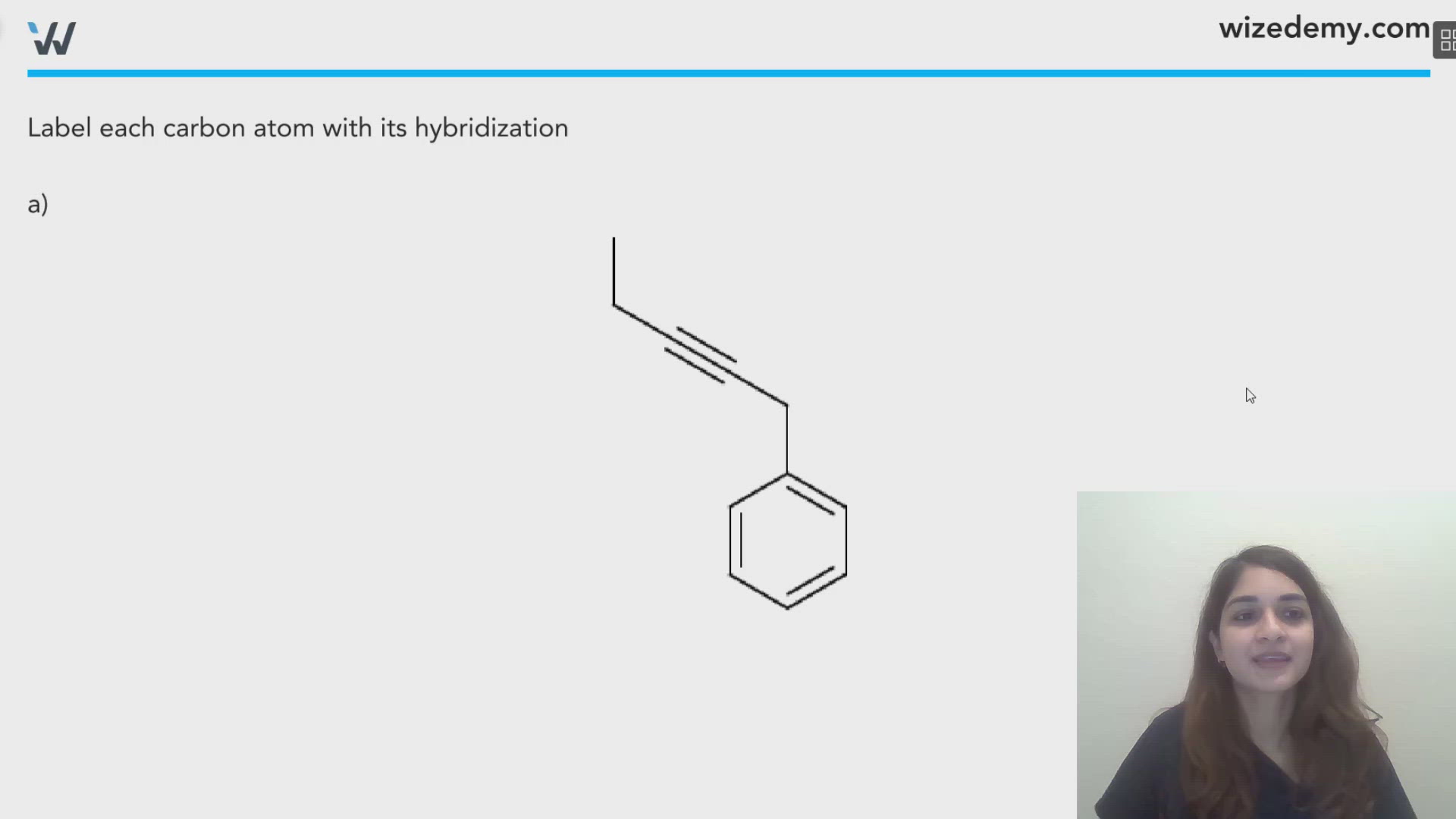
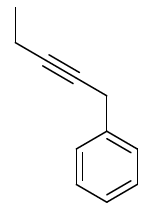
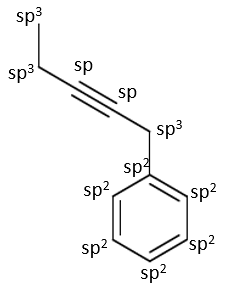
Label each carbon atom with its hybridization
a)
b)
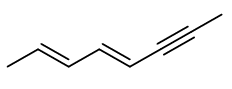
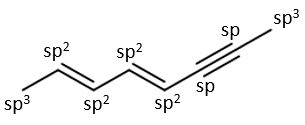
Practice: Hybridization in Organic Compounds
Answer the following questions for the compound shown below.
