
0:00 / 0:00
Redox Reactions
OIL RIG! Oxidation Is Loss of electrons, Reduction Is Gain of electrons
OR
LEO GER! Loss of Electrons is Oxidation, Gain of Electrons is Reduction
OXIDATION (lose e-) REDUCTION (gain e−)
_____________
Reducing agent reduces others and is itself Oxidizing agent oxidizes others and is itself
oxidized. reduced.
Oxidation number increases. Oxidation number is reduced.
Keep in mind that in organic chemistry the definitions of oxidation and reduction are different:
- For reduction, we would look for more bonds to H and less bonds to O
- For oxidation, we would look for less bonds to H and more bonds to O!
How can you recognize if a redox reaction is occuring?
1. Can check oxidation #s of each element to see if they change from reactants to products (most important for now!)
2. Familiarize yourself with common oxidizing and reducing agents (you'll learn more about this in orgo!)
- Oxidizing agents: O2, halogens, HNO3, Cr2O72-, MnO4-
- Reducing agents: H2, metals, C
0:00 / 0:00
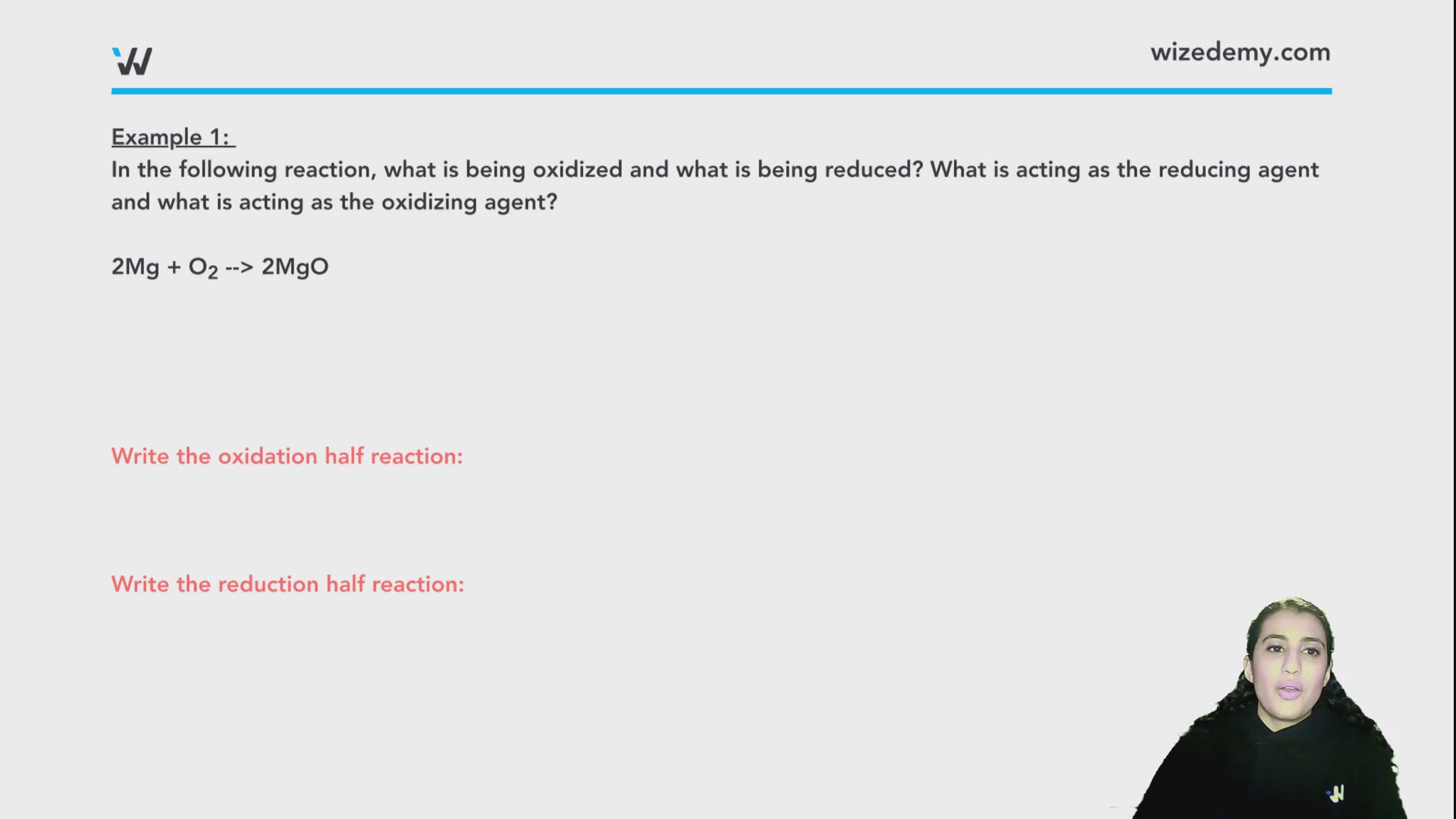
Example 1:
In the following reaction, what is being oxidized and what is being reduced? What is acting as the reducing agent and what is acting as the oxidizing agent?
2Mg + O2 --> 2MgO
Mg: 0 -> 2+ lost electrons, is oxidized, is the reducing agent
O: 0 -> -2 gained electrons, is reduced, is the oxidizing agent
Write the oxidation half reaction:
Mg --> Mg2+ + 2e-
Write the reduction half reaction:
O2 + 4e- --> 2O2-
Example 2:
In the following reaction, what is being oxidized and what is being reduced? What is acting as the reducing agent and what is acting as the oxidizing agent?
Chemical Equation: Zn + CuSO4 --> ZnSO4 + Cu
Net ionic equation: Zn + Cu2+ --> Zn2+ + Cu
Zn: 0 -> 2+ lost electrons, is oxidized, is the reducing agent
Cu: 2+ -> 0 gains electrons, is reduced, is the oxidizing agent
Write the oxidation half reaction:
Zn -> Zn2+ + 2e-
Write the reduction half reaction:
Cu2+ + 2e- -> Cu
Consider the following balanced redox equation:
Which species is being oxidized?
Consider the following balanced redox equation:
Which species is the reducing agent?
0:00 / 0:00
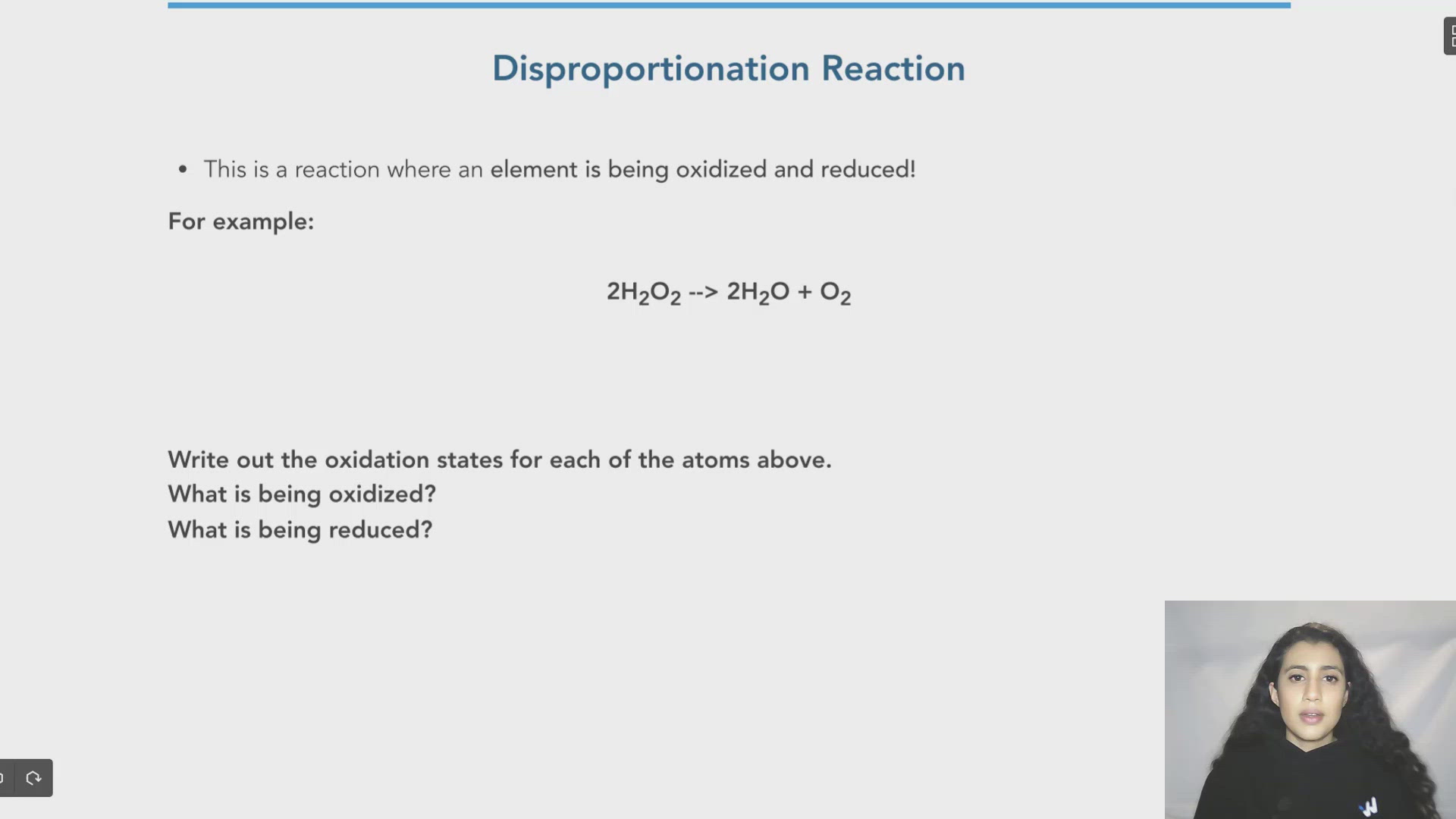
Disproportionation Reaction
- This is a reaction where an element is being oxidized and reduced!
For example:
2H2O2 --> 2H2O + O2
Write out the oxidation states for each of the atoms above.
What is being oxidized?
What is being reduced?

Mark Yourself Question
- Grab a piece of paper and try this problem yourself.
- When you're done, check the "I have answered this question" box below.
- View the solution and report whether you got it right or wrong.
Decide if the following reactions are redox reactions or not. Hint: To do this you'll need to assign oxidation numbers to each element. If the reaction is a redox reaction, identify the oxidizing agent and reducing agent.
1. Zn(s) + 2HCl(aq) --> ZnCl2(aq) + H2(g)
2. H2SO4(aq) + 2NaOH(aq) -> Na2SO4(aq) + 2H2O(l)
Practice: Oxidizing vs Reducing Agents
What is the reducing agent in the following chemical reaction?
NO + Au+ → NO3- + Au