Popular Courses
English (Senior)
US High School
Grade 12 English
Canada High School
AP English Language and Composition Exam Prep Course
AP Exam Prep
AP English Literature and Composition Exam Prep Course
AP Exam Prep
English (Junior)
US High School
Grade 11 English
Canada High School
Intro to English
University Study Guides
English & Composition
University Study Guides
0:00 / 0:00
Overview of Sentences
- Every sentence must have a subject and a verb.
- From there it can be expanded to ever more complicated contexts and concepts, but the core building block is a sentence.
Examples:
I run.
I run fast.
I run really fast.
I run really fast away from dogs.
I run really fast away from frightening dogs.
I run really fast away from frightening dogs and some cats.
You and I run really fast away from frightening dogs and some cats.
You and I run really fast away from frightening dogs and some cats, which is cowardly.
You and I run really fast away from frightening dogs and some cats, which is cowardly, because we should stand.
You and I run really fast away from frightening dogs and some cats, which is cowardly, because we should stand still.
You and I run really fast away from frightening dogs and some cats, which is cowardly, because we should stand still and be calm.
You and I run really fast away from frightening dogs and some cats, which is cowardly, because we should stand and be calm; then the animals will be calm.
0:00 / 0:00
Declarative Sentences
Declarative sentences are statements.
0:00 / 0:00
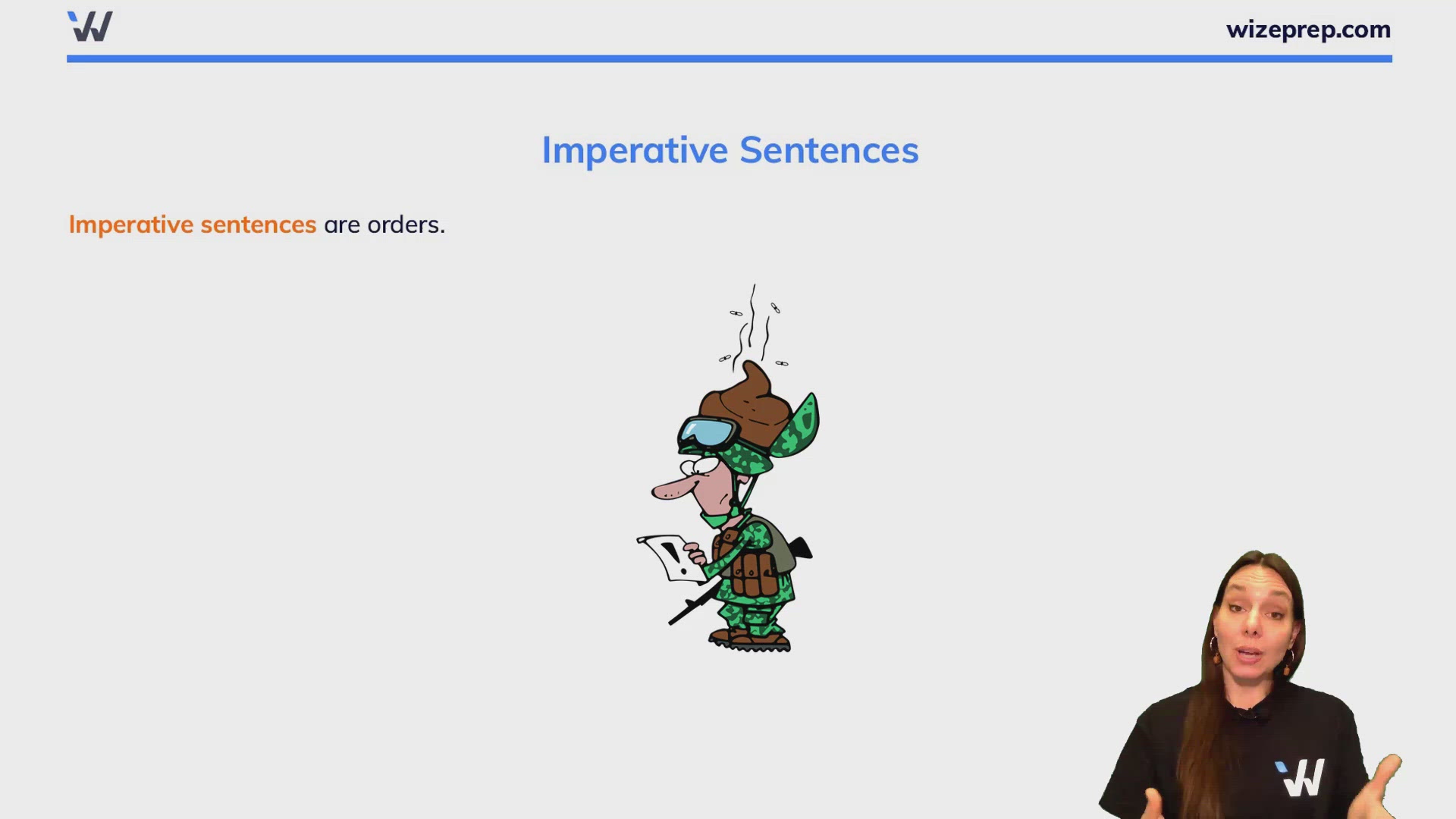
Imperative Sentences
Imperative sentences are orders.
0:00 / 0:00
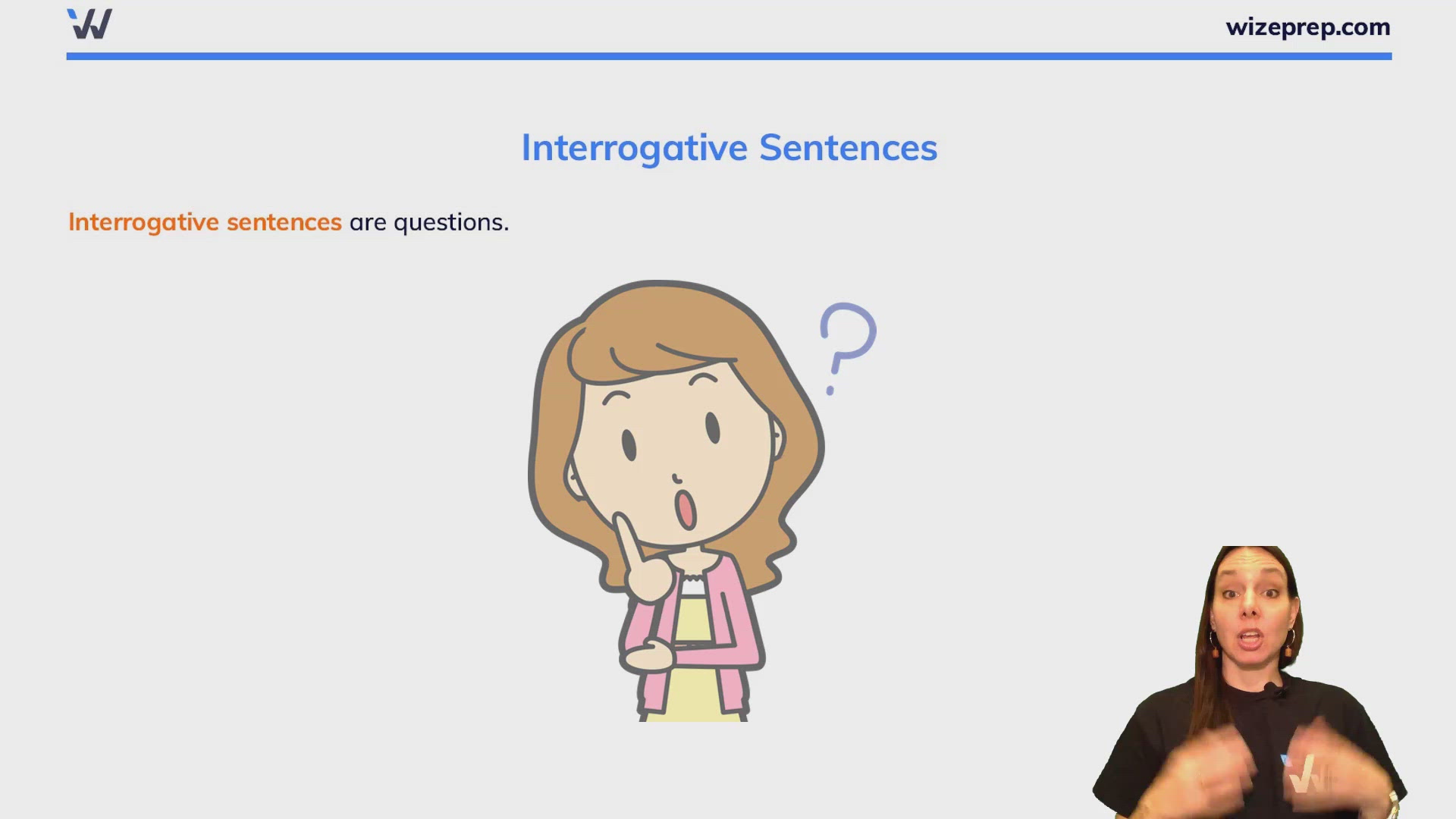
Interrogative Sentences
Interrogative sentences are questions.
0:00 / 0:00
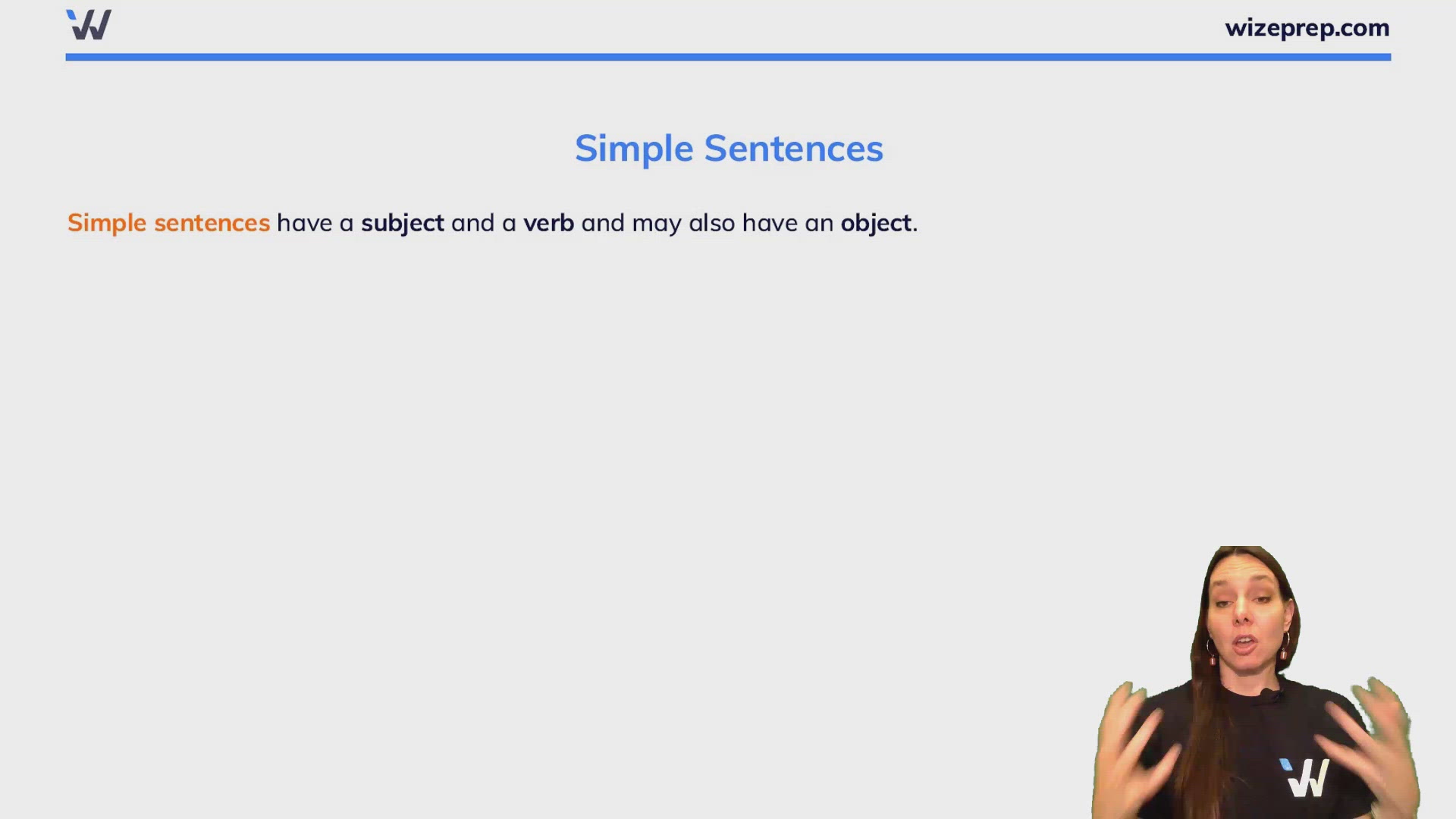
Simple Sentences
Simple sentences have a subject and a verb and may also have an object.
0:00 / 0:00
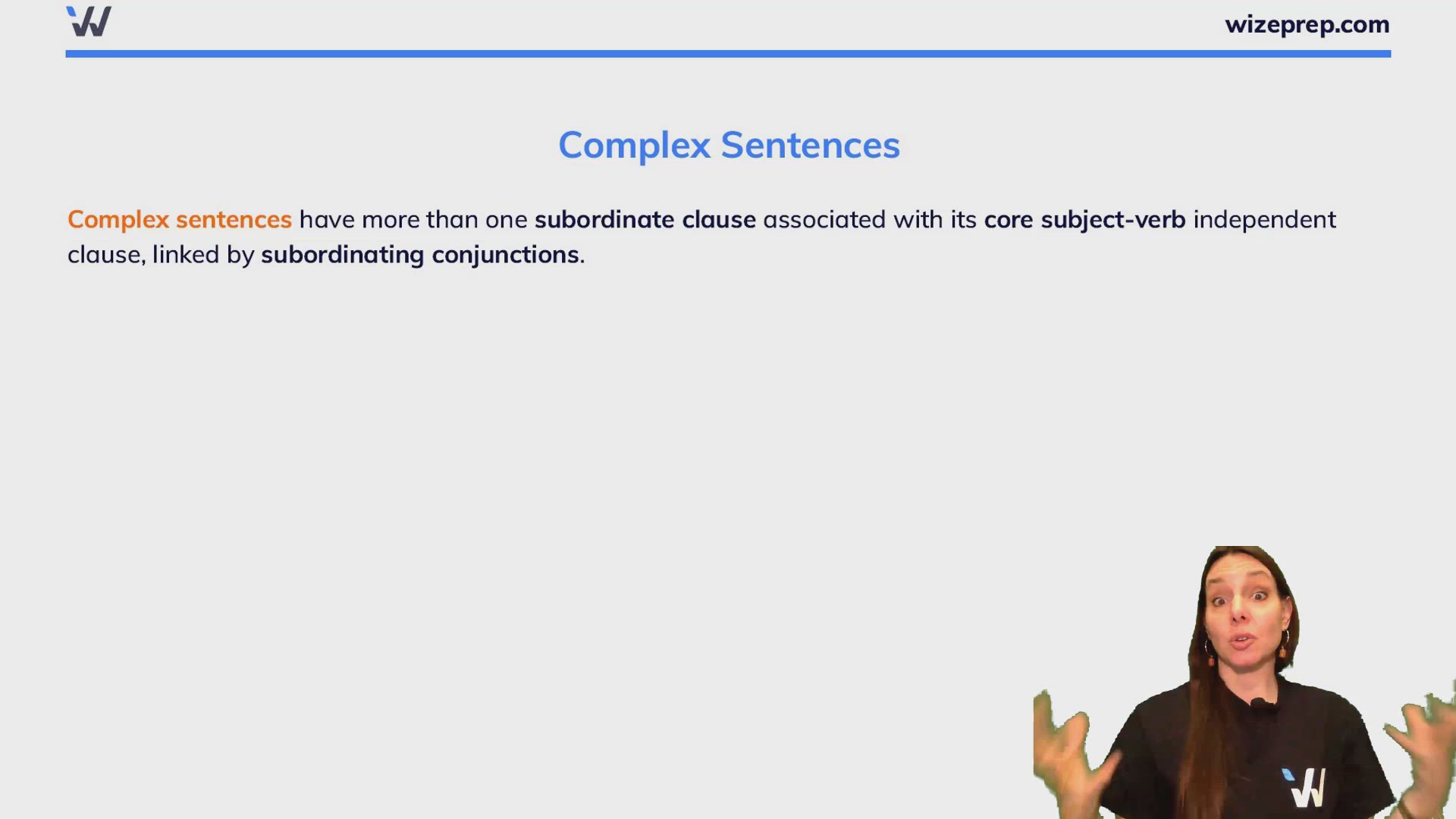
Complex Sentences
Complex sentences have more than one subordinate clause associated with its core subject-verb independent clause, linked by subordinating conjunctions.
0:00 / 0:00
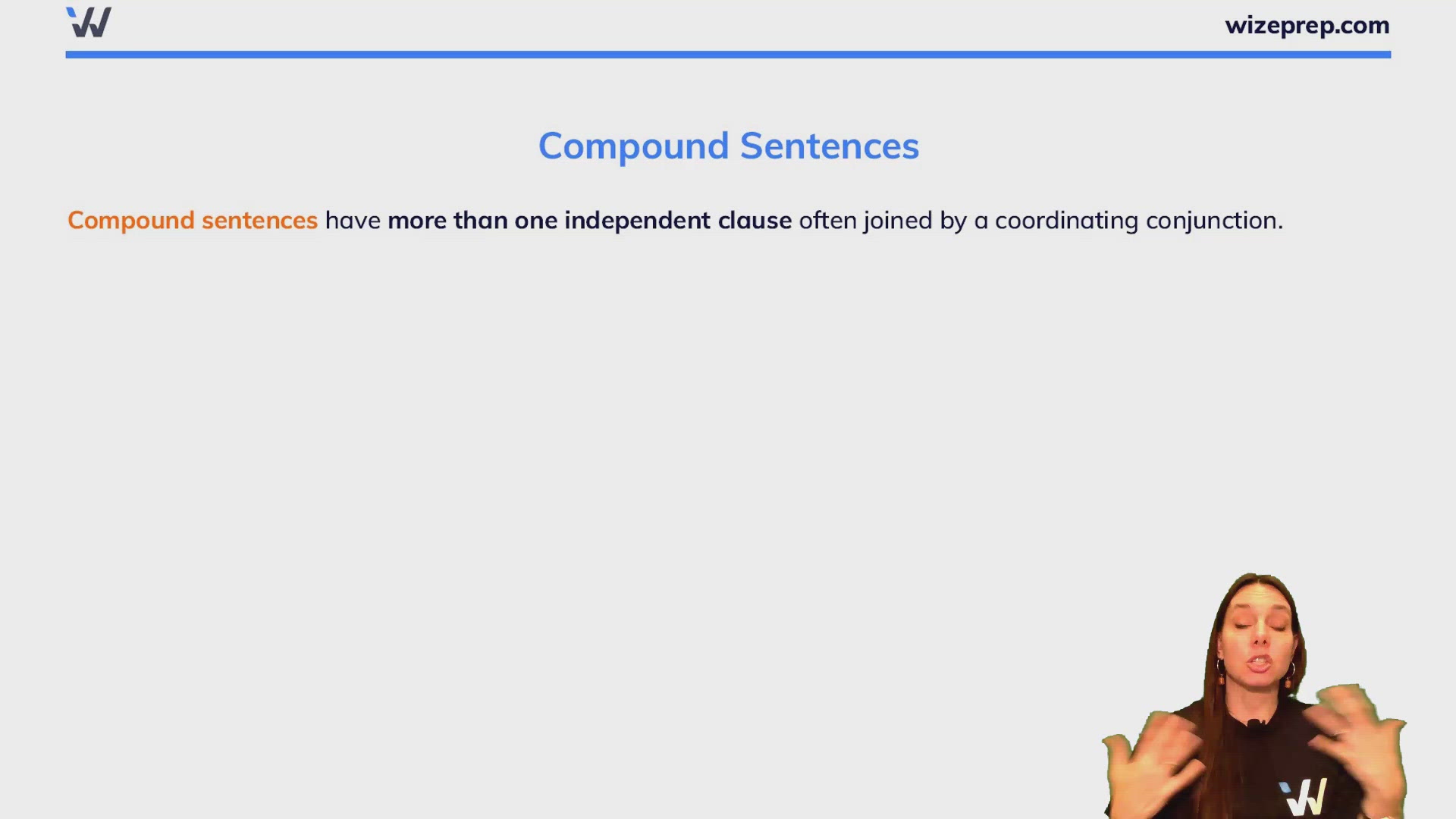
Compound Sentences
Compound sentences have more than one independent clause often joined by a coordinating conjunction.
0:00 / 0:00
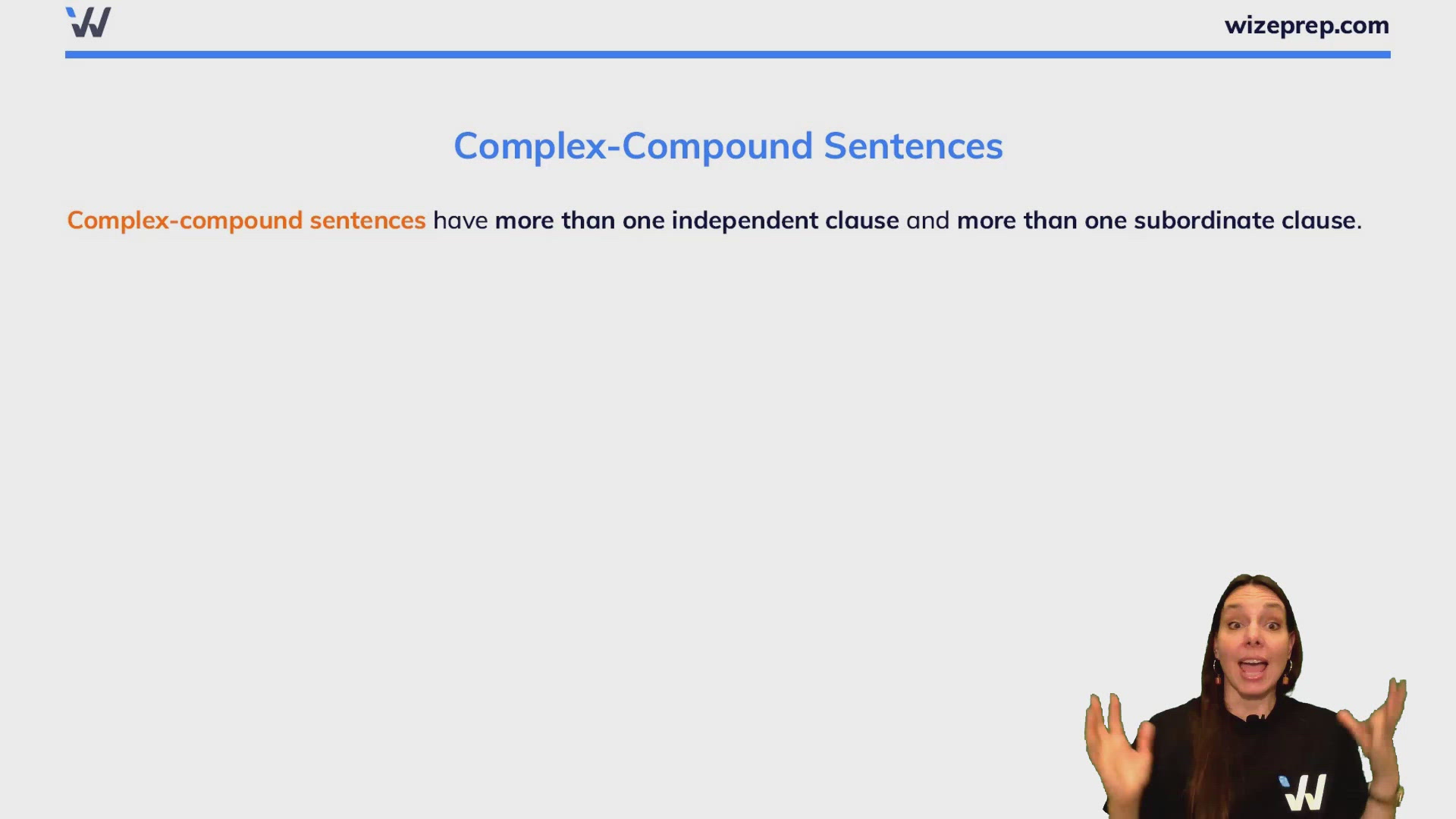
Complex-Compound Sentences
Complex-compound sentences have more than one independent clause and more than one subordinate clause.