Popular Courses
English (Senior)
US High School
Grade 12 English
Canada High School
AP English Language and Composition Exam Prep Course
AP Exam Prep
AP English Literature and Composition Exam Prep Course
AP Exam Prep
English (Junior)
US High School
Grade 11 English
Canada High School
Intro to English
University Study Guides
English & Composition
University Study Guides
0:00 / 0:00
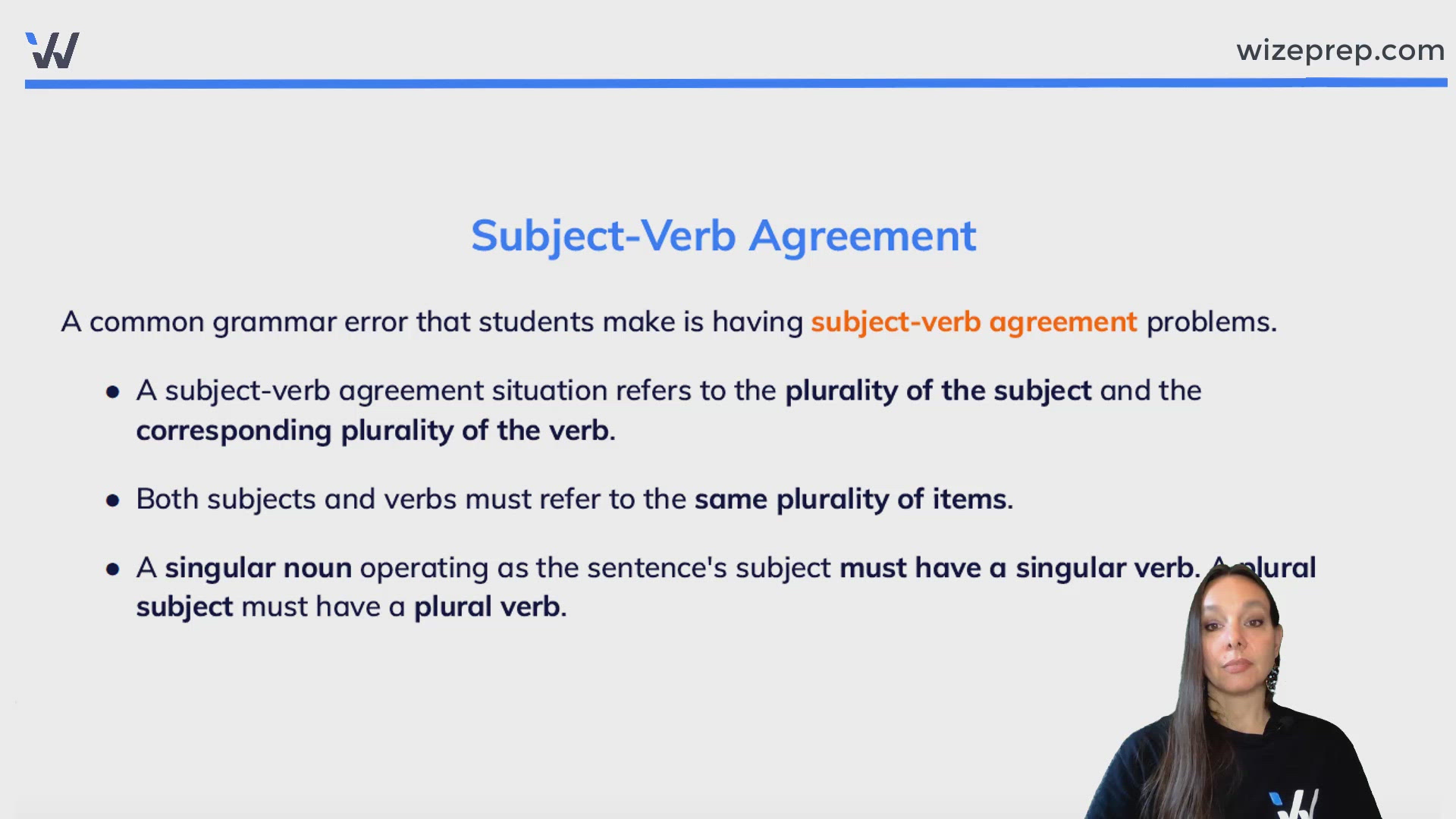
Subject-Verb Agreement
A common grammar error that students make is having subject-verb agreement problems.
- A subject-verb agreement situation refers to the plurality of the subject and the corresponding plurality of the verb.
- Both subjects and verbs must refer to the same plurality of items.
- A singular noun operating as the sentence's subject must have a singular verb. A plural subject must have a plural verb.
0:00 / 0:00
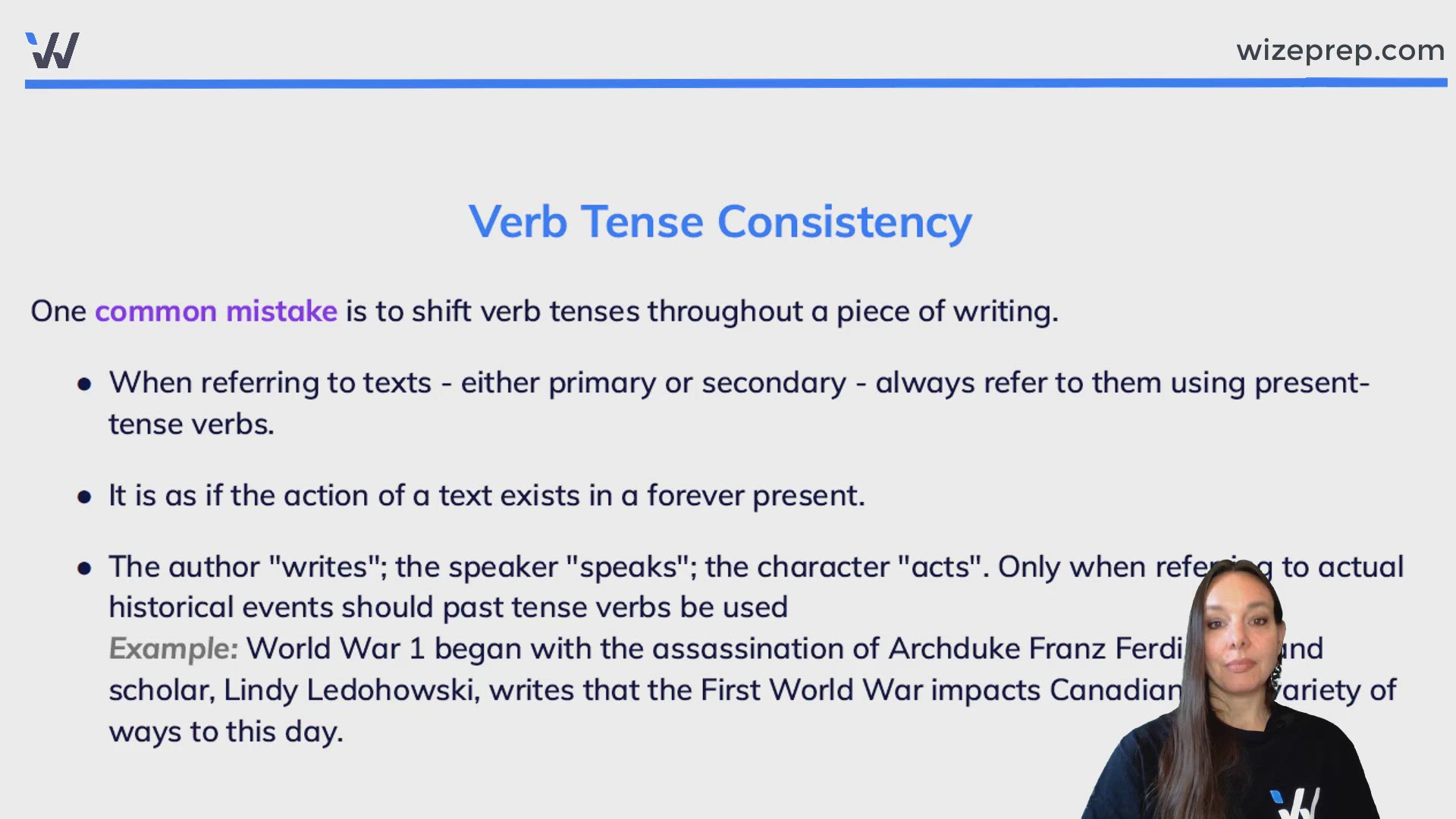
Verb Tense Consistency
One common mistake is to shift verb tenses throughout a piece of writing.
- When referring to texts - either primary or secondary - always refer to them using present-tense verbs.
- It is as if the action of a text exists in a forever present.
- The author "writes"; the speaker "speaks"; the character "acts". Only when referring to actual historical events should past tense verbs be used Example: World War 1 began with the assassination of Archduke Franz Ferdinand, and scholar, Lindy Ledohowski, writes that the First World War impacts Canadians in a variety of ways to this day.
0:00 / 0:00
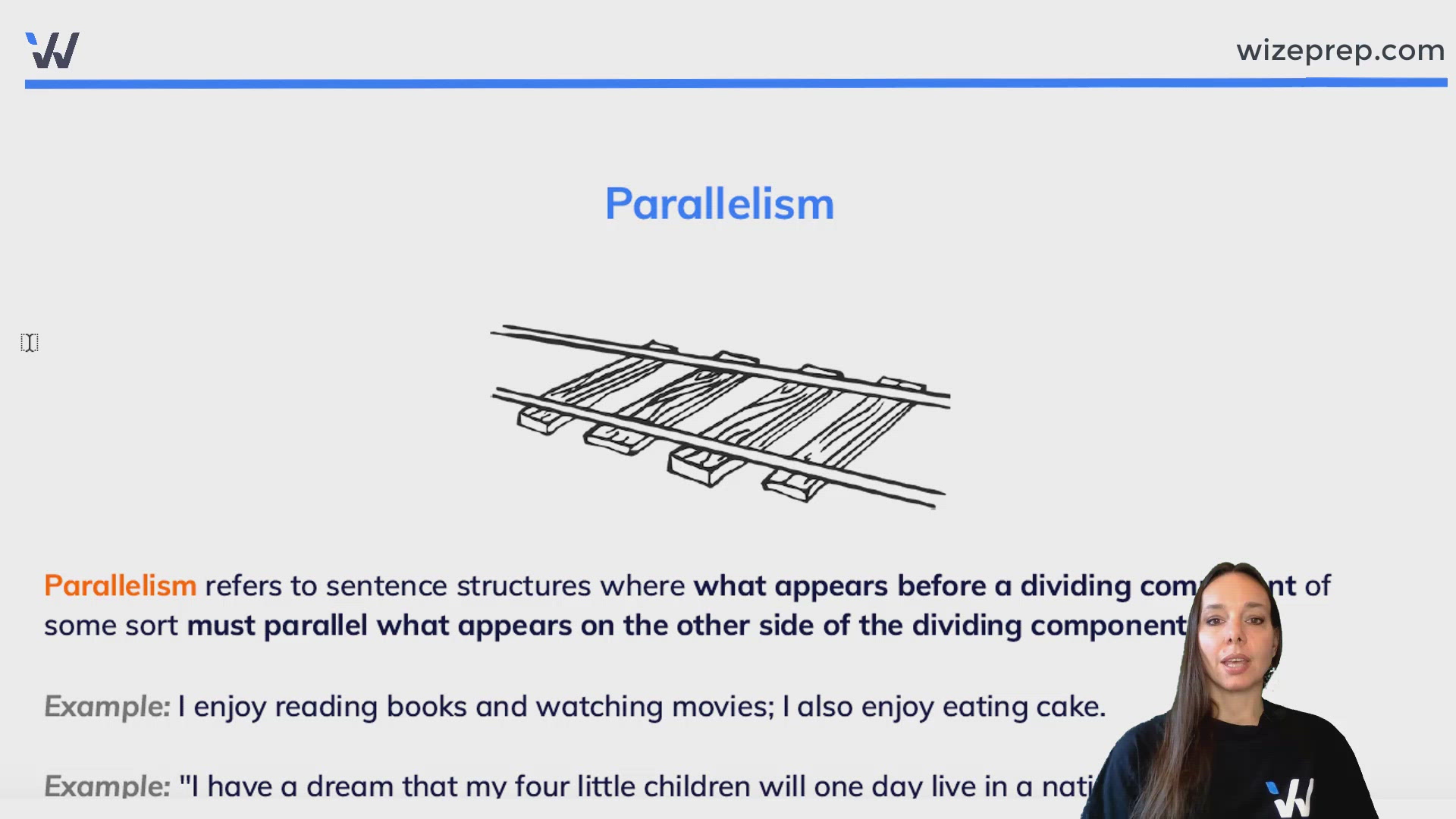
Parallelism

Parallelism refers to sentence structures where what appears before a dividing component of some sort must parallel what appears on the other side of the dividing component.
Example: I enjoy reading books and watching movies; I also enjoy eating cake.
Example: "I have a dream that my four little children will one day live in a nation where they will not be judged by the color of their skin but by the content of their character."