Wize High School Geometry Textbook (Common Core) > Reasoning and Proofs
Theorems and Proofs
Popular Courses
Find My Course
0:00 / 0:00
Theorems and Proofs

Now its time to dig into why things work the way they do in Geometry. For this we'll be making poofs and constructions to build theorems.
Theorem
A theorem is a statement that, using a series of logical steps, we can show to be true. In Geometry we might start with postulates, which are assumed to be true, or previously proven theorems in our steps.
Hypothesis and Conclusion
Often statements that need to be proven will have two parts and follow an If/Then structure. The given information is called the hypothesis and the result is called the conclusion. It is our job to fill in the logical pieces in between.
Proofs
One useful way to keep track of the information we know, and the reasons that connect them is using a two column proof. In this structure the information we know is keep on the left side, and the reasoning is written out on the right. Note that proofs are not always written in this way, but this method does provide an organized why to get started.
Example
Prove the following statement using a two column proof.
Given that is congruent to , prove that and are supplementary.
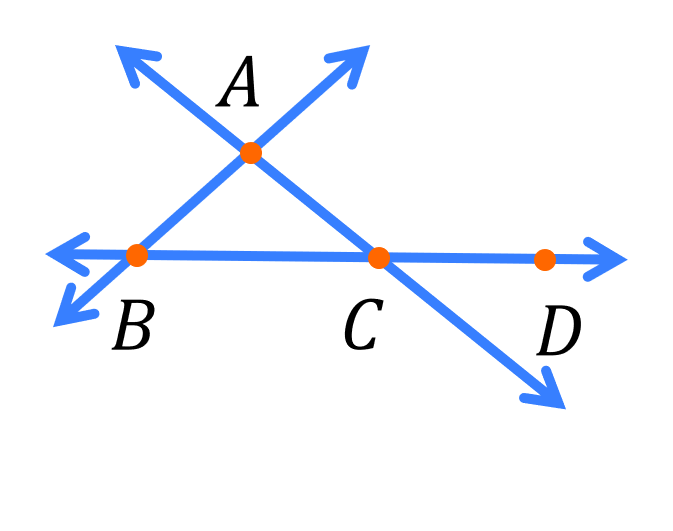
ANSWER:
Theorems about Segments and Angles
- Every segment is congruent to itself.
- If then
- If and then
- Every angle is congruent to itself.
- If then
- If and then
Useful Postulates and Theorems
- Linear pair postulate - If two angles form a linear pair, then the are supplementary.
- Right Angles Congruent Theorem - All right angles are congruent.
- Congruent Supplements Theorem - If two angles are supplementary to a third angle, then they are congruent.
- Congruent Complements Theorem - If two angles are both complementary to a third angle, then they are congruent.
- Vertical Angles Congruence Theorem - Vertical angles are congruent
0:00 / 0:00
Writing a proof
The key for writing a good proof is understanding the connections among the statements, or reasoning.

Use the diagram to write a proof that angle .
It can be assumed that
- is a right angle.
- is a right angle.
ANSWER:
Matching

Match the name of each postulate or theorem to its statement.
A.
Right angles are congruent.
B.
If two angles form a linear pair, then they are supplementary.
C.
If two angles are both supplementary to a third angle, then they are congruent.
D.
Vertical angles are congruent.
Linear pair postulate
Vertical angle congruent theorem
Right angles congruence theorem
Congruent supplements theorem
Complete the proof
One important theorem is that pairs of vertical angles are congruent. Complete the proof of this theorem by filling in the missing reasoning.

A.
Linear pair postulate
B.
Congruent supplements theorem
C.
Definition of a linear pair
D.
Given

Mark Yourself Question
- Grab a piece of paper and try this problem yourself.
- When you're done, check the "I have answered this question" box below.
- View the solution and report whether you got it right or wrong.
Proof about congruent angles

Write a proof that argues that two angles that are complementary to the same angle, are congruent to each other.
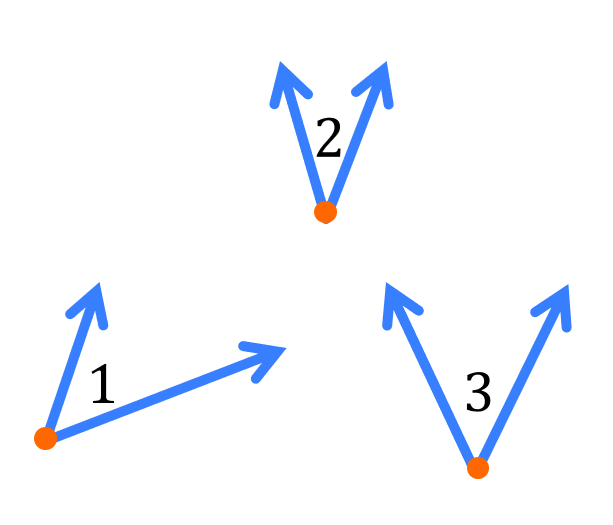
Specifically the proof should start with the given information:
- and are complementary
- and are complementary
and conclude that
Don't forget to use definitions, postulates, or known theorems in your reasoning.