Wize High School Grade 12 Pre-Calculus Textbook > Transformations
Vertical & Horizontal Translations
Popular Courses
Grade 12 Advanced Functions
Ontario High School
Grade 12 Pre-Calculus/Functions
Canada High School
Math 30-1
Alberta High School
Pre-Calculus 12
British Columbia High School
MATH 1LS3
McMaster University
MATH 206
Concordia University
MATH 201
Concordia University
MATH 21
Pennsylvania State University
MAC 1140
University of Florida
MAT 170
Arizona State University - Tempe
MAC 1105
Florida State University
MAT 012
University of California - Davis
MATH 1148
Ohio State University
MTH 103A
Michigan State University
MAC 1147
University of Florida
MATH 140
San Diego State University
MA 15300
Purdue University
MAC 1140C
University of Central Florida
MA 15800
Purdue University
MATH 102
California State University - Northridge
0:00 / 0:00
Vertical Translations
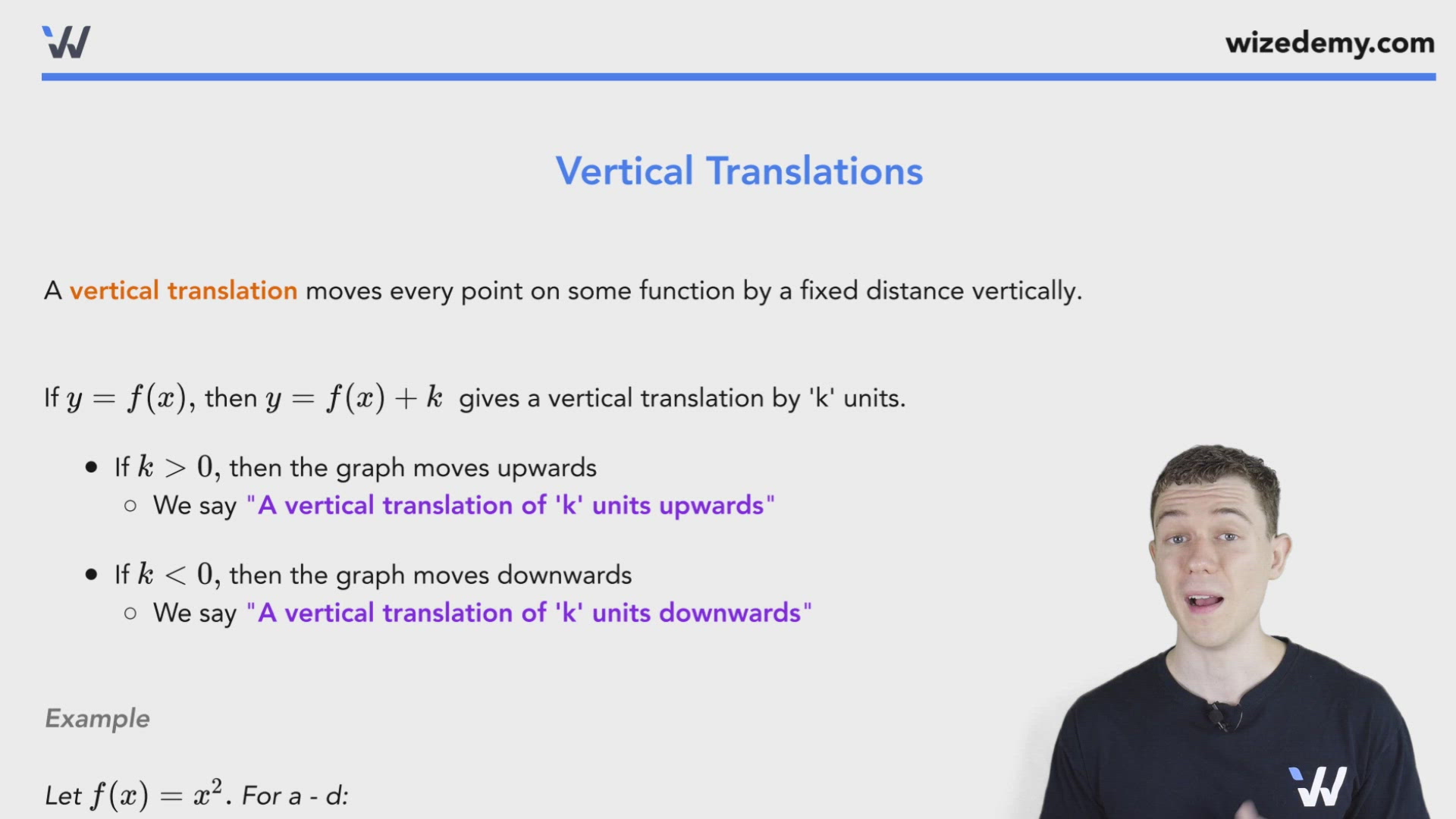
A vertical translation moves every point on some function by a fixed distance vertically.
If then gives a vertical translation by 'k' units.
- If then the graph moves upwards
- We say "A vertical translation of 'k' units upwards"
- If then the graph moves downwards
- We say "A vertical translation of 'k' units downwards"
Example
Let For a - d:
- Sketch the graphs all on the same grid
- Identify the value of 'k'
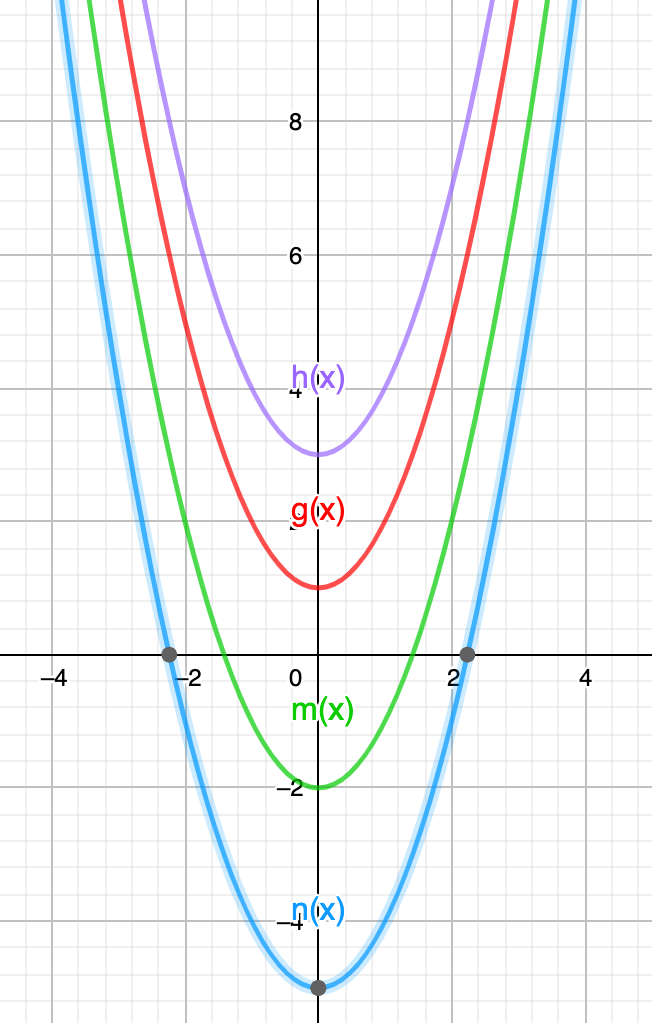
For a - d, the values of 'k' are:
- 1
- 3
- -2
- -5
0:00 / 0:00
Horizontal Translations
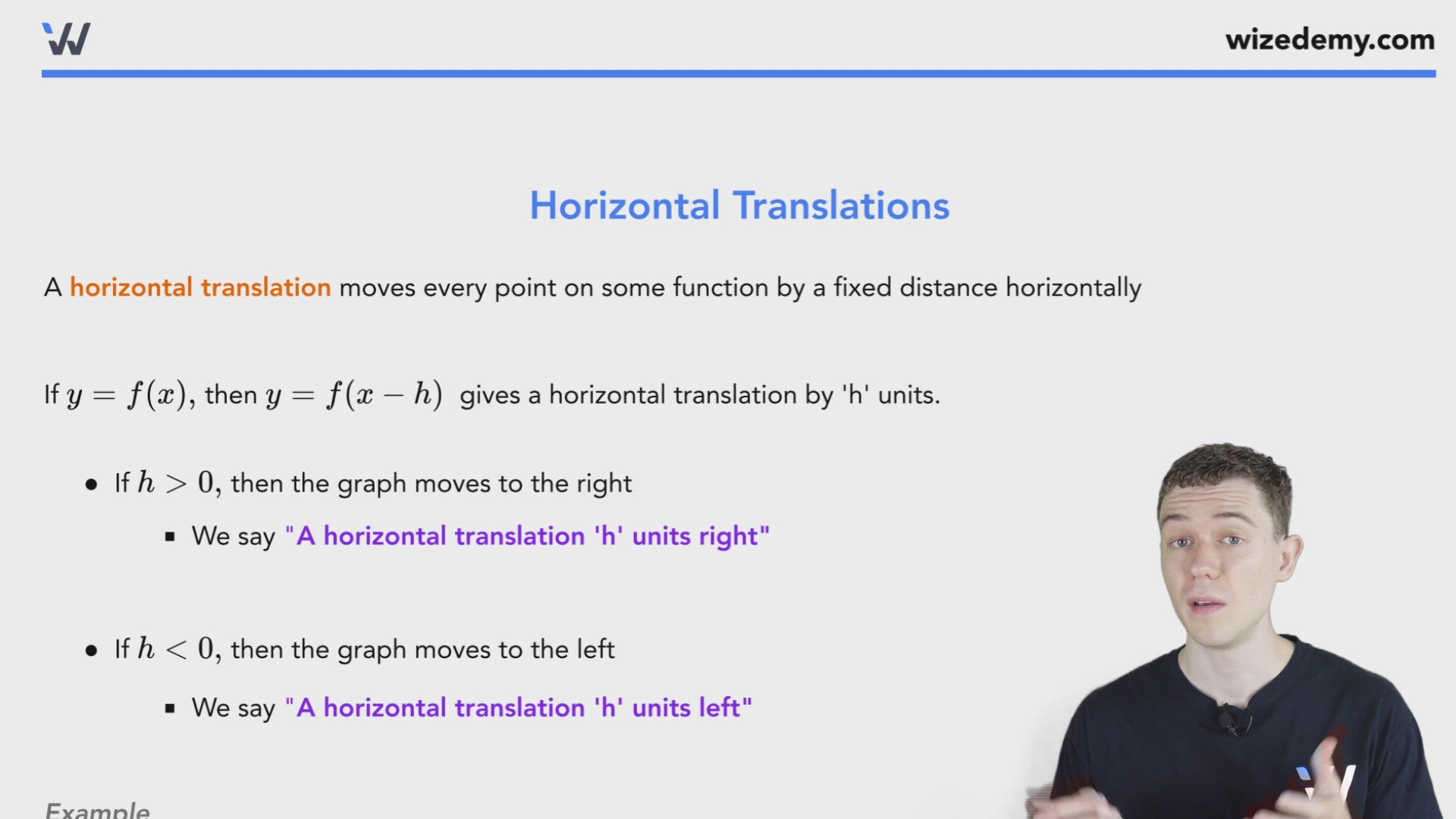
A horizontal translation moves every point on some function by a fixed distance horizontally
If then gives a horizontal translation by 'h' units.
- If then the graph moves to the right
- We say "A horizontal translation 'h' units right"
- If then the graph moves to the left
- We say "A horizontal translation 'h' units left"
Example
Let For a - d:
- Sketch the graphs all on the same grid
- Identify the value of 'h'
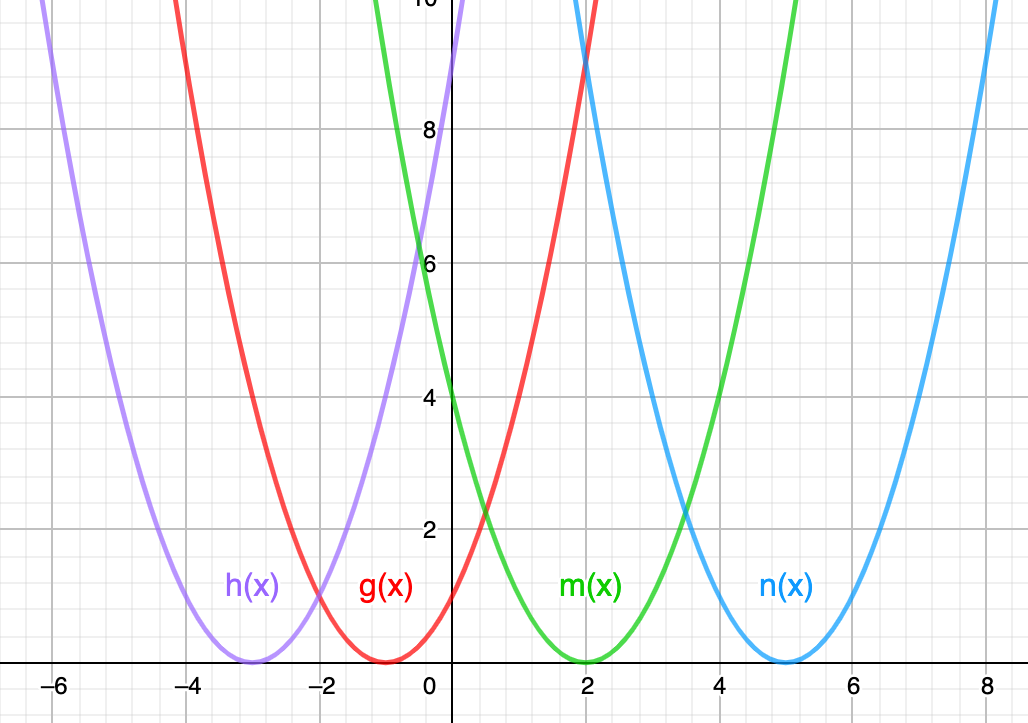
For a - d, the values of 'h' are:
- -1
- -3
- 2
- 5
0:00 / 0:00
Example: Vertical & Horizontal Translations
Sketch the transformed graph of the function, (graphed below), stating and identifying the values of 'h' and 'k':
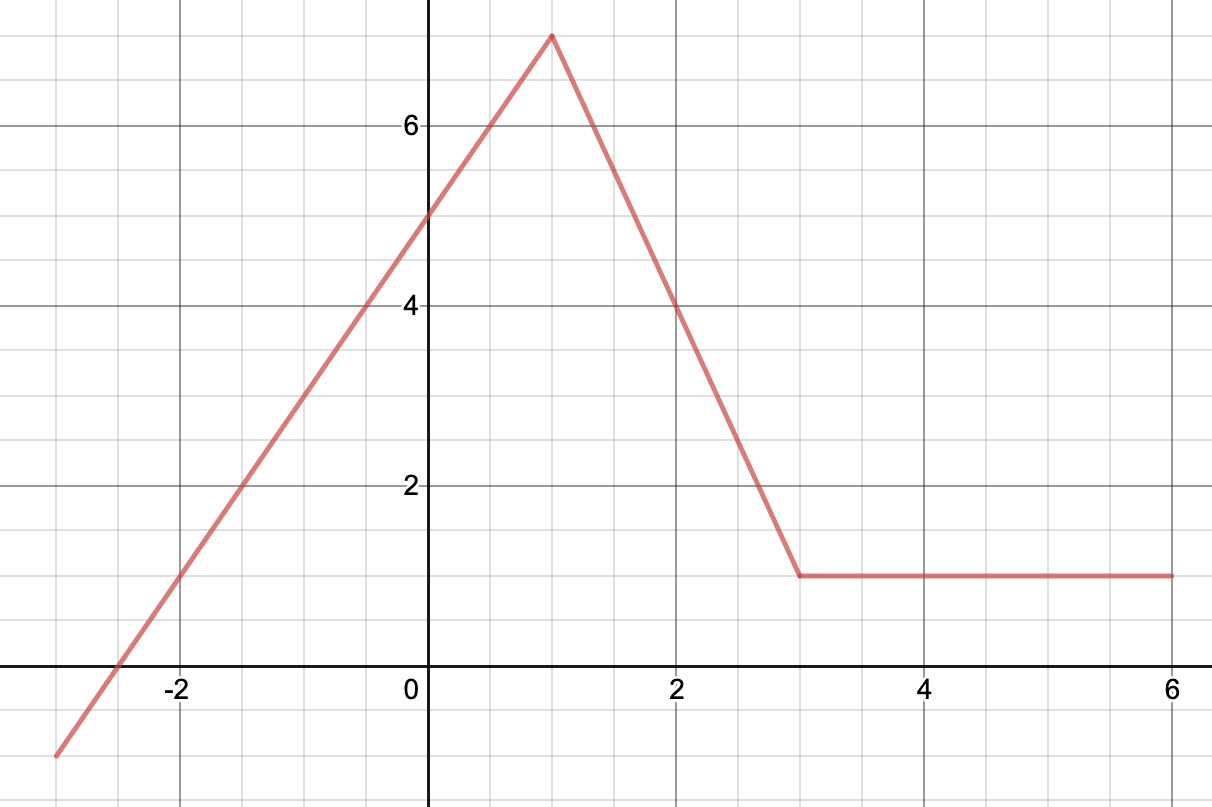
Part a)
Sketch:
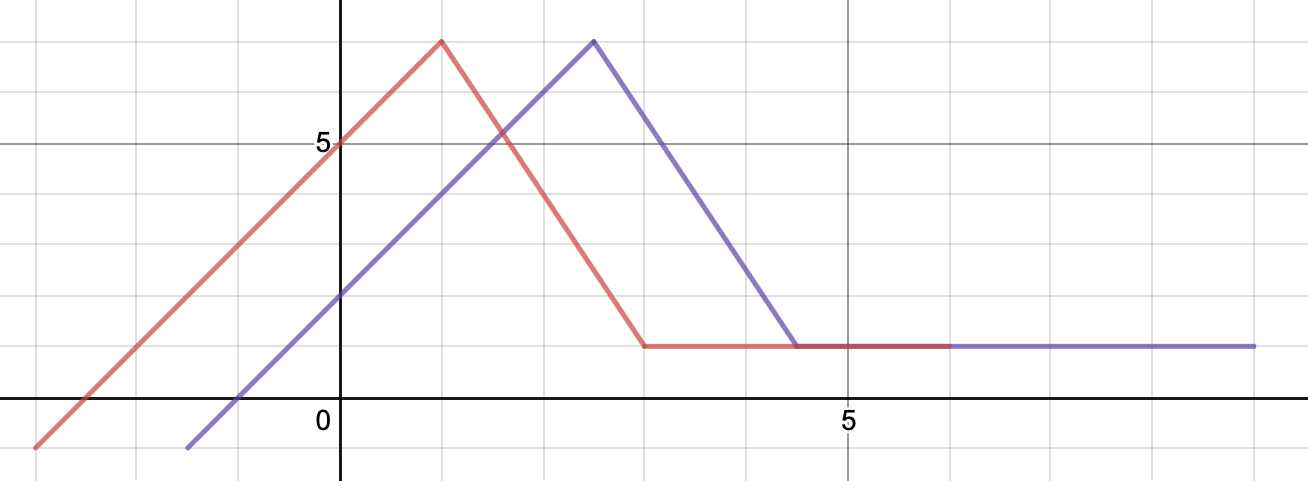
There is a horizontal translation 3 units right
Thus, h = 3
Part b)
Sketch:
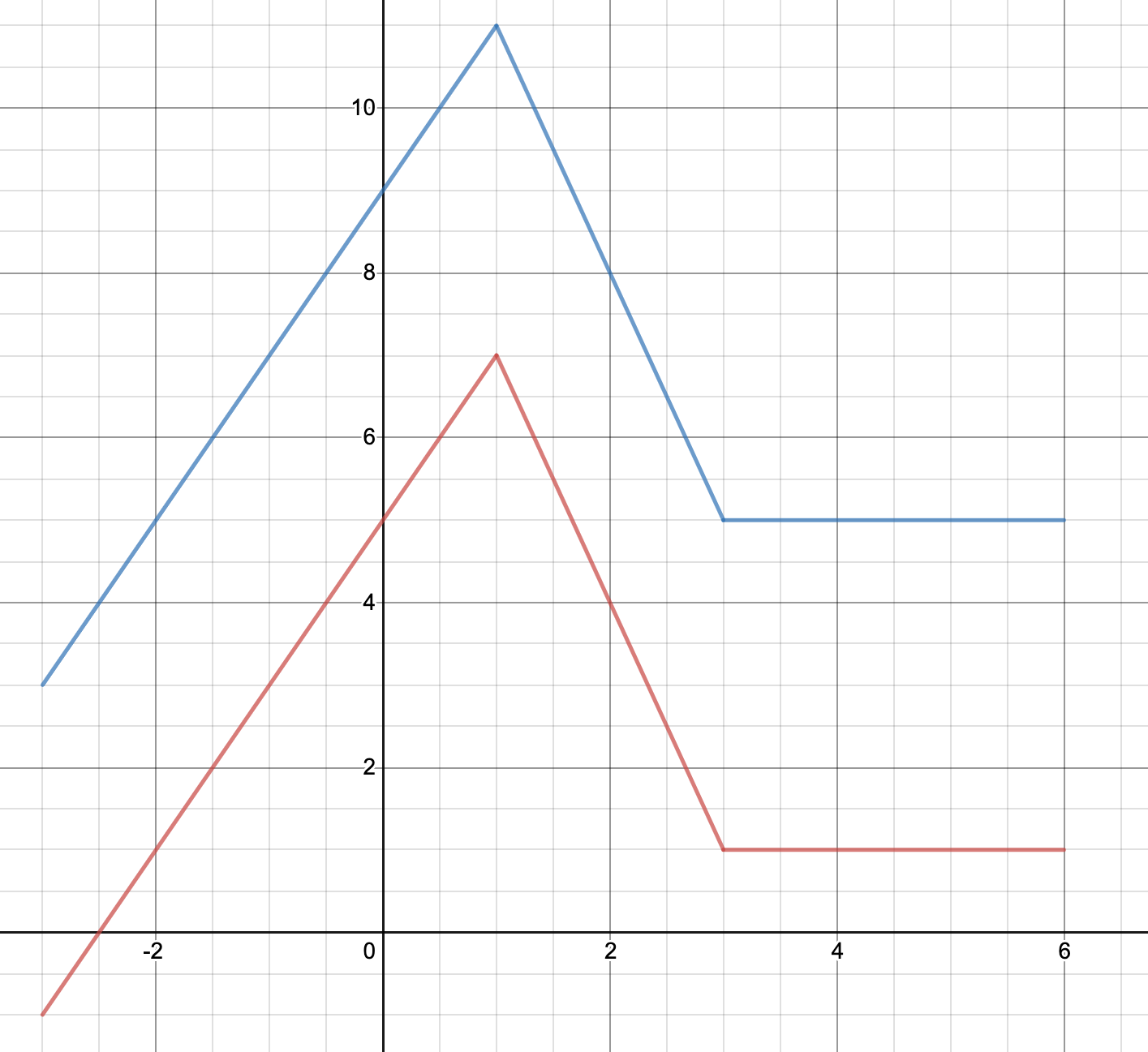
There is a vertical translation of 4 units up
Thus, k = 4
Part c)
Sketch:
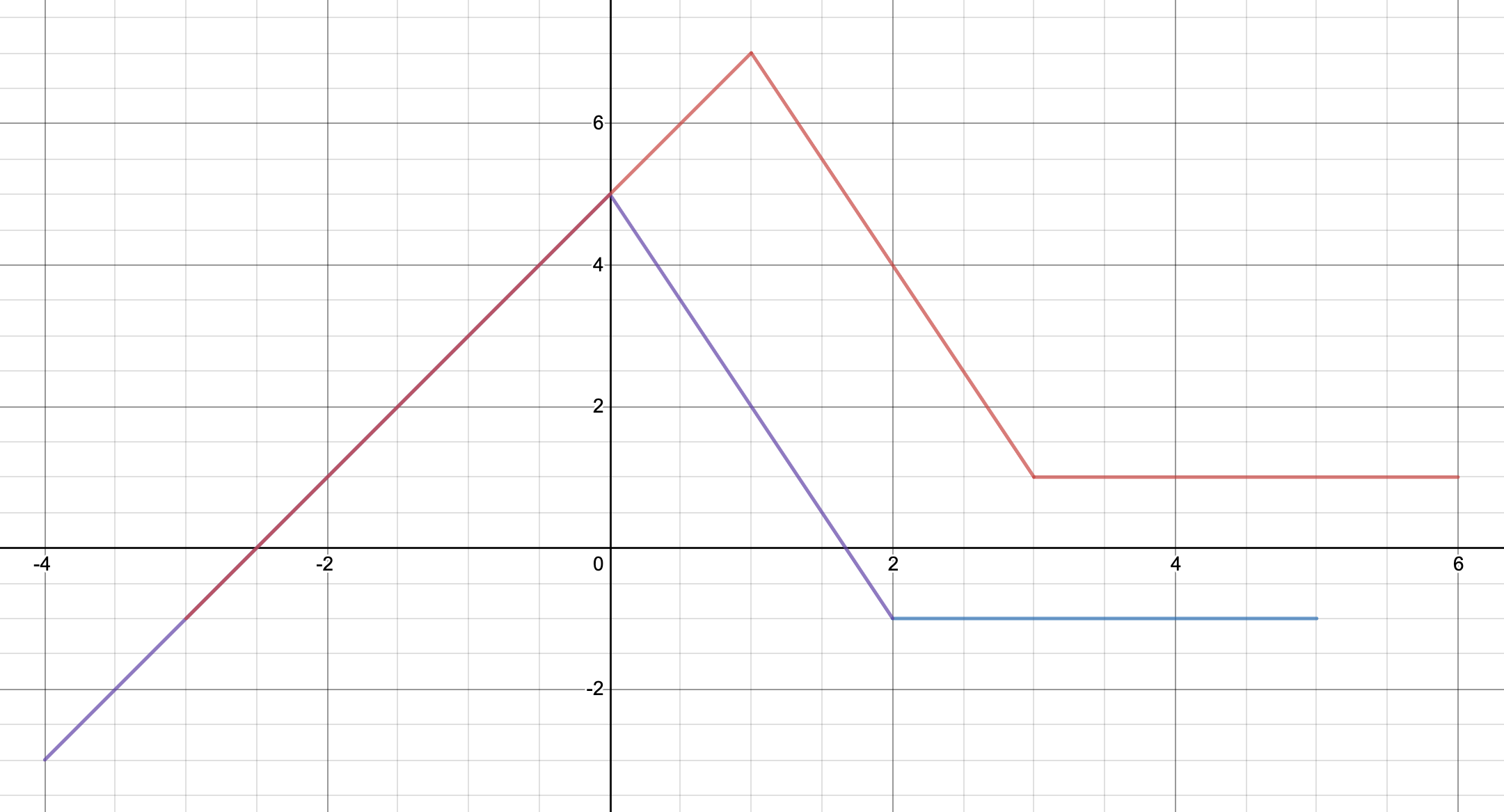
There is a vertical translation 2 units down and a horizontal translation 1 unit left.
Thus, h = -1 & k = -2

0:00 / 0:00
Example: Vertical & Horizontal Translations
Graph , then identifying the following:
- The parent function
- The table of values for parent function
- The table of Values for transformed function
- Domain
- Range
The graph of the transformed function is:
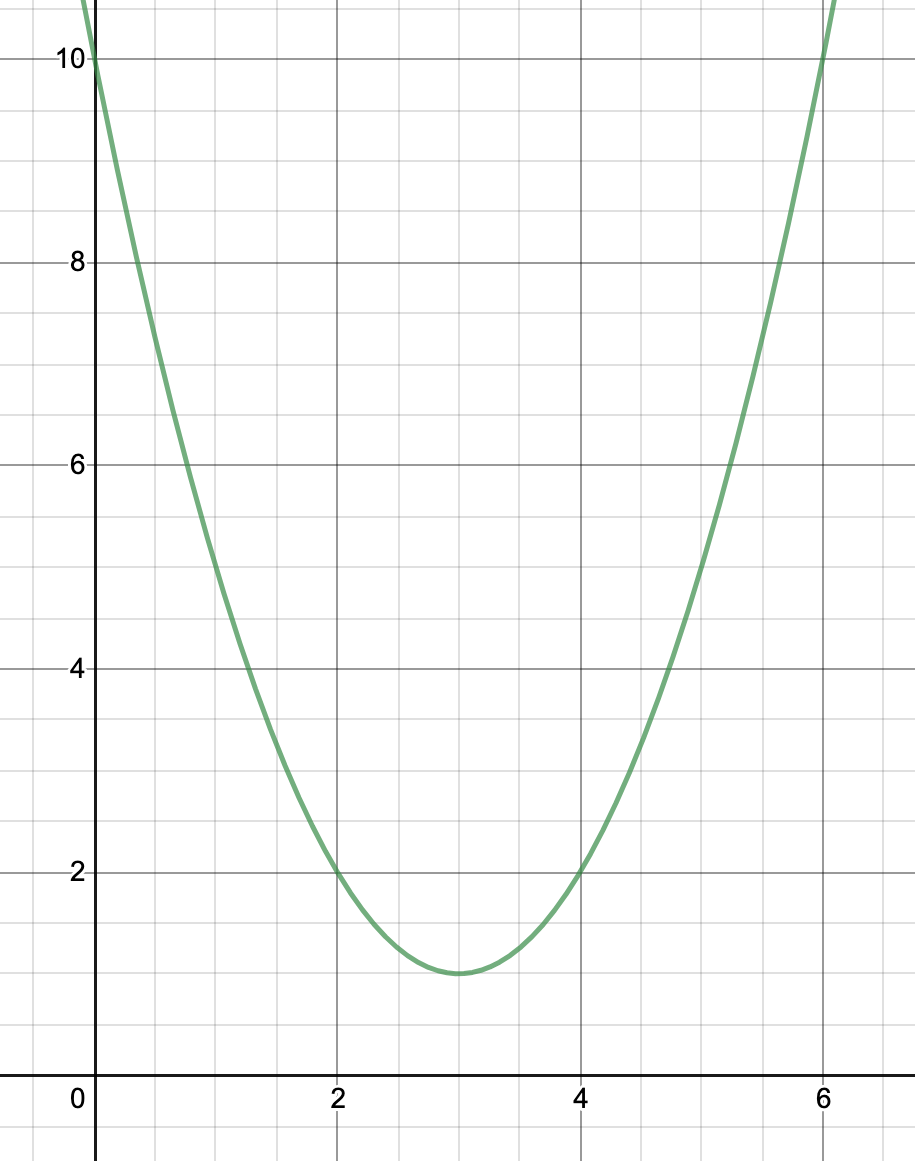
Parent Function:
Table of Values for Parent Function:
Table of Values for Transformed Function:
Domain:
Range:
0:00 / 0:00
Example: Vertical & Horizontal Translations
Graph , identifying the following:
- The parent function
- The table of values for parent function
- The table of Values for transformed function
- Domain
- Range
The graph of the transformed function is:
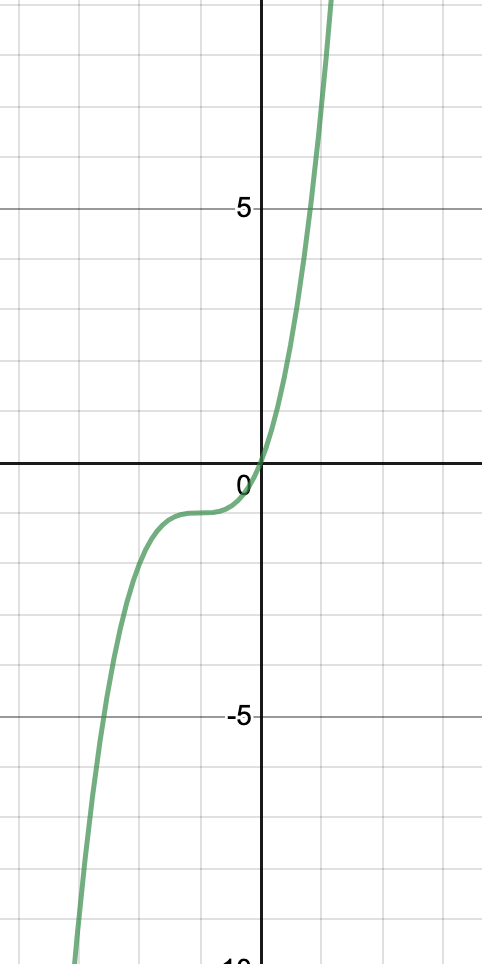
Parent Function:
Table of Values for Parent Function:
Table of Values for Transformed Function:
Domain:
Range:
Practice: Vertical & Horizontal Translations
The function has been transformed to . Determine the values of h and k for each of the following transformations:
A.
B.
C.
D.
6 units upward
6 units left
4 units downward and 7 units right
4 units left and 7 units upward
Practice: Vertical & Horizontal Translations
Let .
True or False:
The graph of the transformed function will affect the range of the function.
Practice: Vertical & Horizontal Translations
Let be some point on the function .