Wize High School Grade 9 Math Textbook > Financial Literacy
Simple & Compound Interest
0:00 / 0:00
Borrowing, Lending, and Investing Money
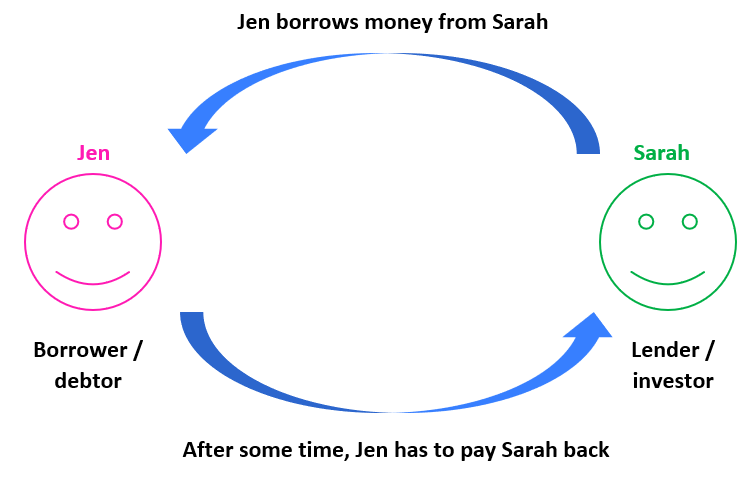
When you borrow money, you will eventually have to pay back the original amount of money you borrowed, this is called the principal. Most of the time, you will also have to pay an additional amount of money on top of what you borrowed, this is called the interest amount.
There are two common ways that the amount of interest is calculated -- simple interest and compound interest.
Example
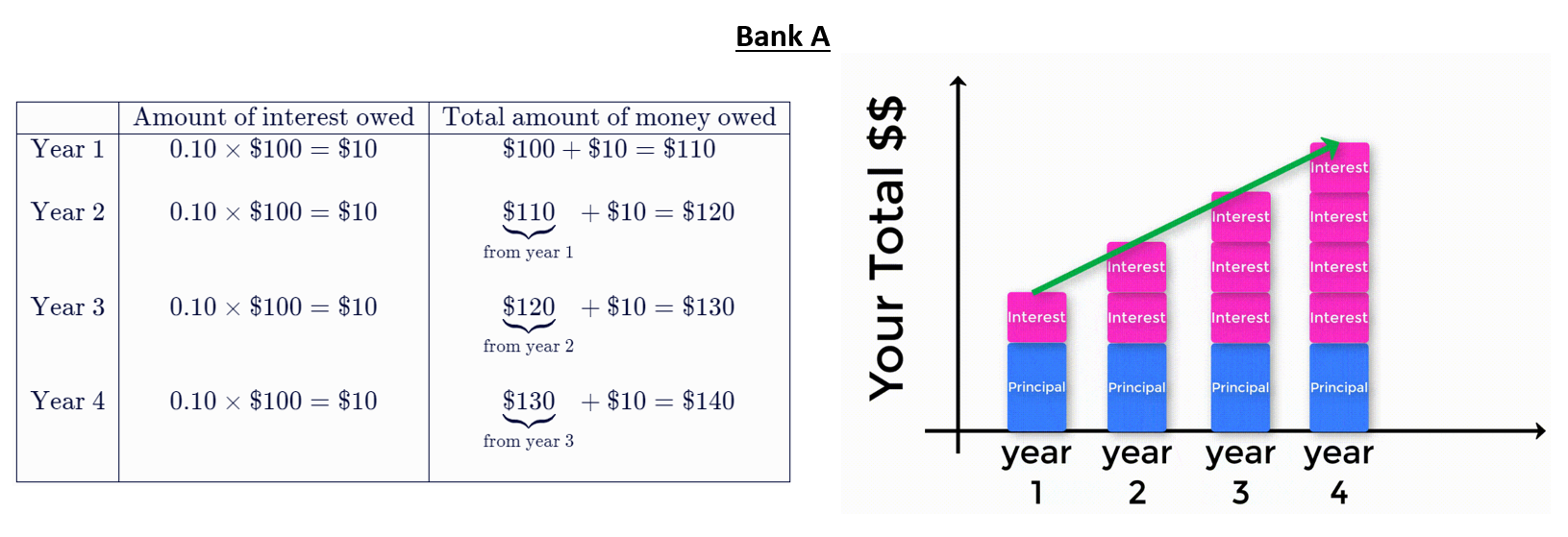
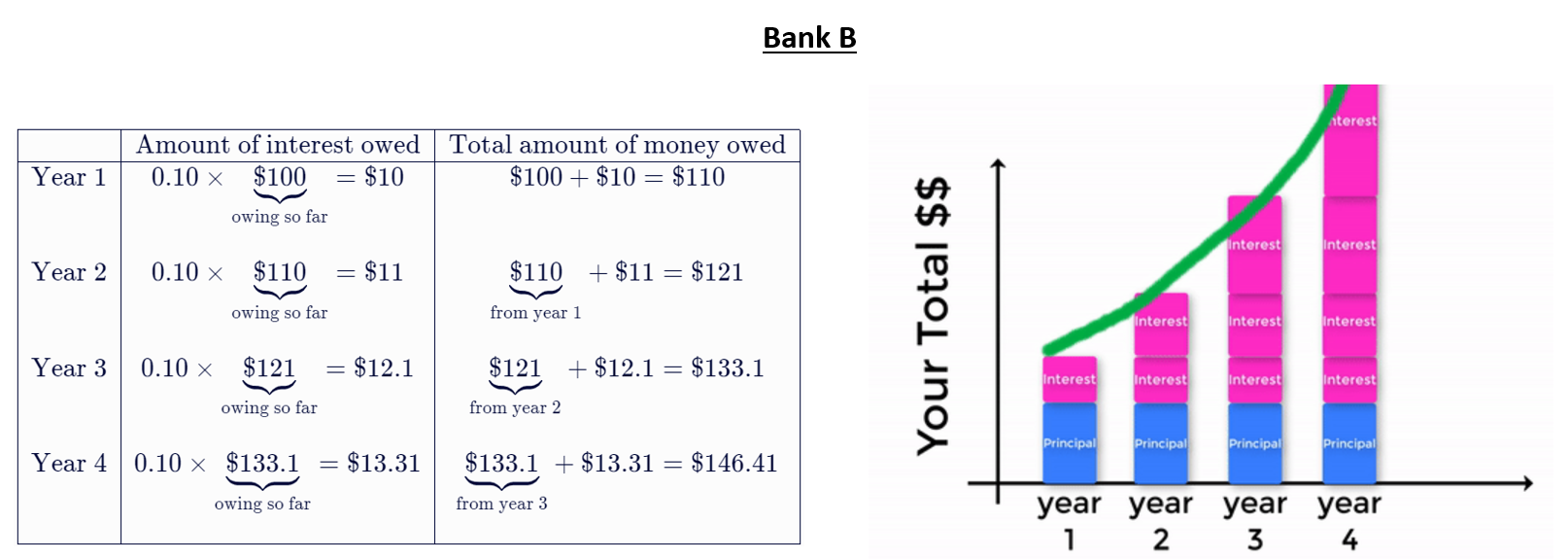
You want to borrow $100 from the bank and promise to pay it back after 4 years. Here's how two different banks calculate interest:
- Bank A: the interest amount is calculated once a year, as 10% of the $100 principal
- Bank B: the interest amount is calculated once a year, as 10% of the total amount of money owing so far
a) Create a table of values and graph to represent the total amount of money you will owe if borrowing from Bank A and Bank B.
b) State anything you notice about how Bank A and Bank B calculates their interest amounts.
There is no wrong answer here! Take a look at the video for some things that I noticed :)
c) As a borrower, which bank do you want to borrow this money from?
If you go with Bank A, you will end up owing less money after 4 years.
d) As lenders, which bank will make more money?
Bank B will make more money from this loan.
0:00 / 0:00
Simple Interest
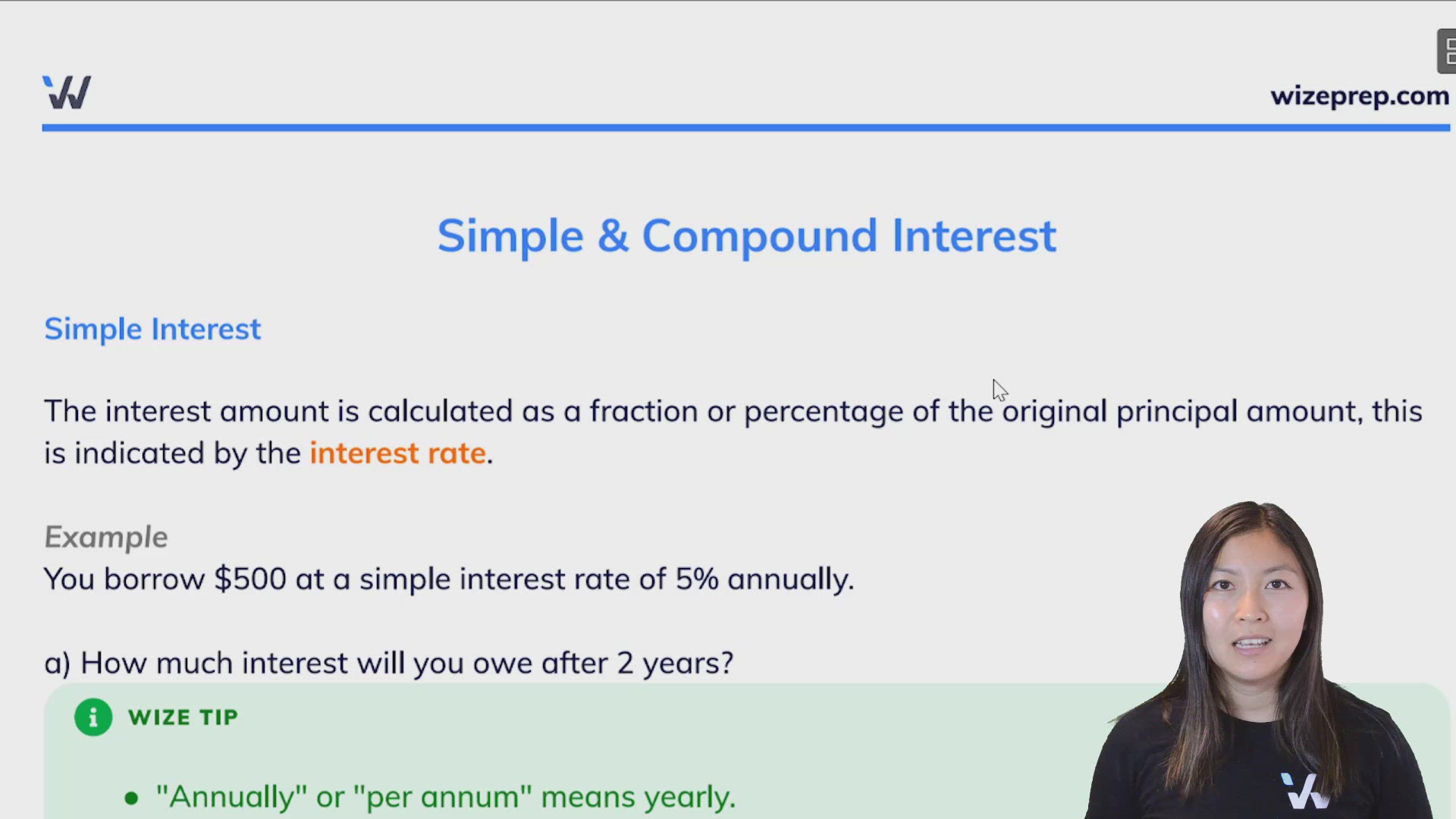
The interest amount is calculated as a fraction or percentage of the original principal amount, this is indicated by the interest rate.
Example
You borrow $500 at a simple interest rate of 5% annually.
a) How much interest will you owe after 2 years?
Wize Tip
- "Annually" or "per annum" means yearly.
- When performing calculations, we must convert the percentage to a decimal by dividing the interest rate by 100 ➡
Interest in Year 1:
Interest in Year 2:
Therefore, you will owe in interest after 2 years.
b) How much money in total will you owe in total after 2 years?
Therefore, after 2 years, you will owe
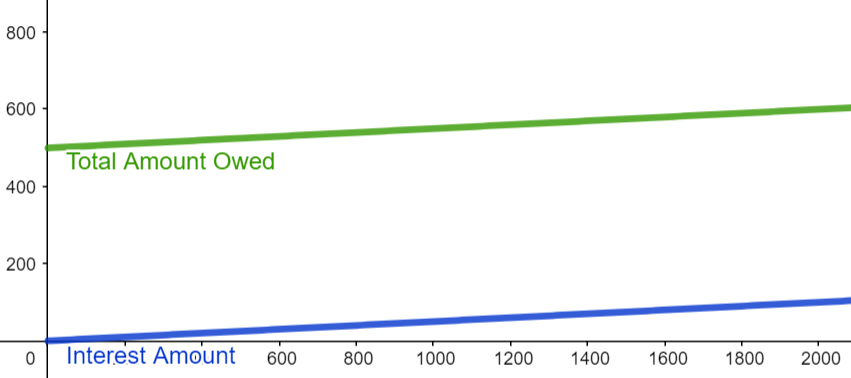
- The amount of interest that's added each period isconstant
- If we increase the interest rate, the total interest willincrease, and the total amount owed willincrease
- If we increase the borrowing period, the total interest willincrease, and the total amount owed willincrease
- The amount of money owed () and the borrowing time () have alinearrelation
0:00 / 0:00
Compound Interest
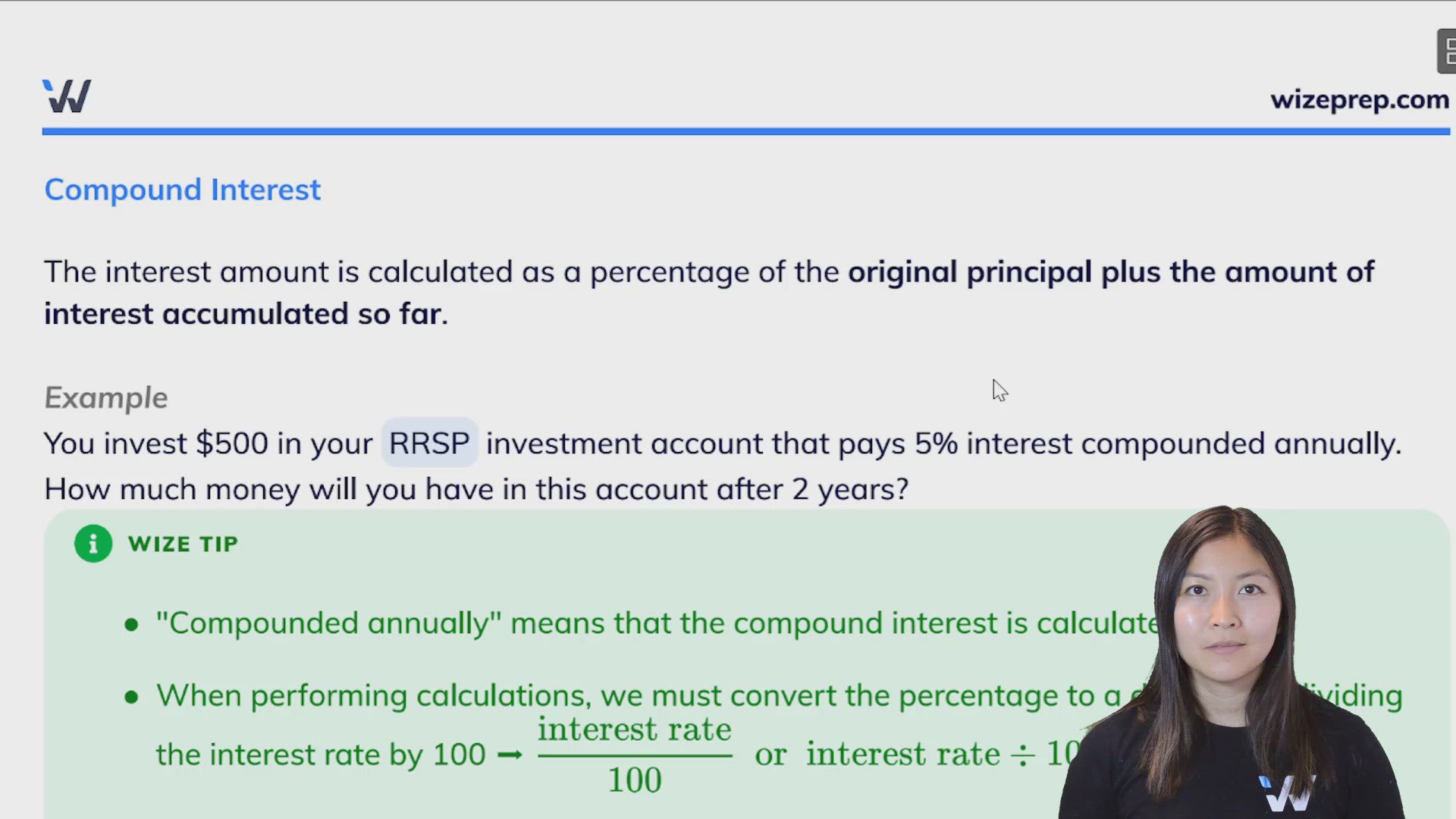
The interest amount is calculated as a percentage of the original principal plus the amount of interest accumulated so far.
Example
You invest $500 in your RRSP investment account that pays 5% interest compounded annually. How much money will you have in this account after 2 years?
Wize Tip
- "Compounded annually" means that the compound interest is calculated yearly.
- When performing calculations, we must convert the percentage to a decimal by dividing the interest rate by 100 ➡
Year 1:
So, you will have in your RRSP account after 1 year.
Year 2:
So, you will have in your RRSP account after 2 years.
- The amount of interest that's added each period isnot constant, it is growing
- If we increase the interest rate, the total amount of money we have willincrease
- If we increase the investment period, the total amount of money we have willincrease
- If we calculate the compound interest more frequently, then the total amount of money we have willincrease
- The amount of money owed () and the borrowing time () have anon-linearrelation
Practice: Simple VS Compound Interest
Suppose you decided to invest $200 in an account that pays 6% interest calculated once a year. Fill in the following table with the total investment value after 1, 2, 3, and 4 years using simple and compound interest calculations.
You may use a calculator for this question.
| Number of years | Total Investment Value (Simple Interest) | Total Investment Value (Compound Interest) |
| 1 | ||
| 2 | ||
| 3 | ||
| 4 |
Practice: Buying a House
Lily is a first time home owner and found her dream house that costs $265,000. She has saved up 20% as a down payment for the house and will have to borrow the rest from a mortgage lender. She researched 4 different mortgage lenders:
- Bank A: charges 10% simple interest, calculated once a year.
- Bank B: charges 10% interest, compounded annually.
- Bank C: charges 7% interest, compounded annually.
- Bank D: charges 7% interest, compounded monthly.
How much money does Lily have to borrow from her bank?