Wize High School Grade 12 Calculus Textbook > Derivatives of Exponential (& Logarithmic) Functions
Review of Exponential Functions
Popular Courses
Find My Course
0:00 / 0:00
Review of Exponential Functions y = ex
An exponential function has the form for any positive real number , .
Recall: The natural number
When the base we get a special exponential function .
Properties
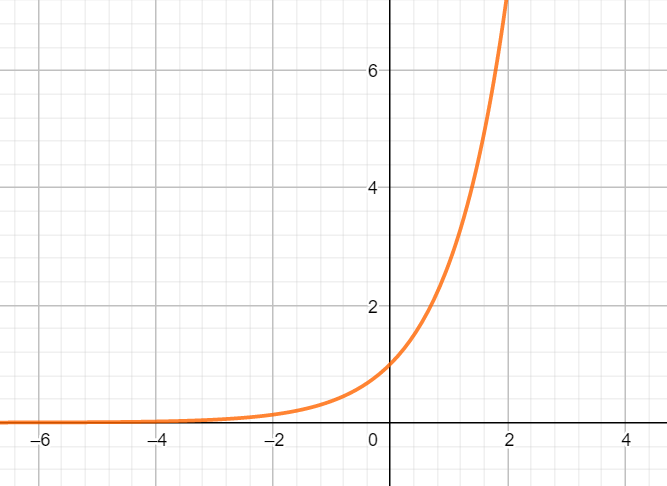
- has a horizontal asymptote at
- The y-intercept is
- Domain: ; Range:
Inverse Function --
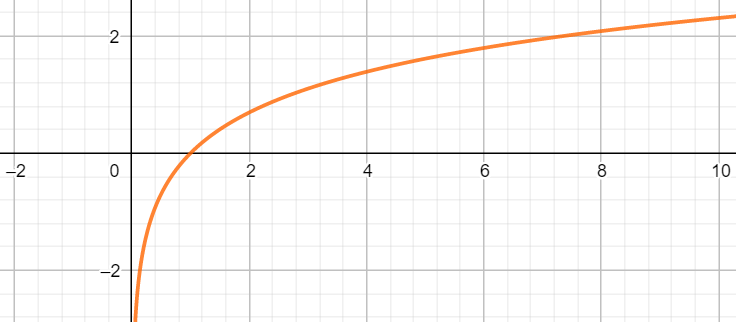
- and
- The x-intercept is
- Domain: ; Range:
- It has a vertical asymptote at
Note:
Practice: e & ex
The number is defined by
- and
Using these definitions, estimate the following.