Wize High School Grade 12 Calculus Textbook > Intersections of Lines & Planes
Intersection of 2 Lines
0:00 / 0:00
Intersection of 2 Lines in R2
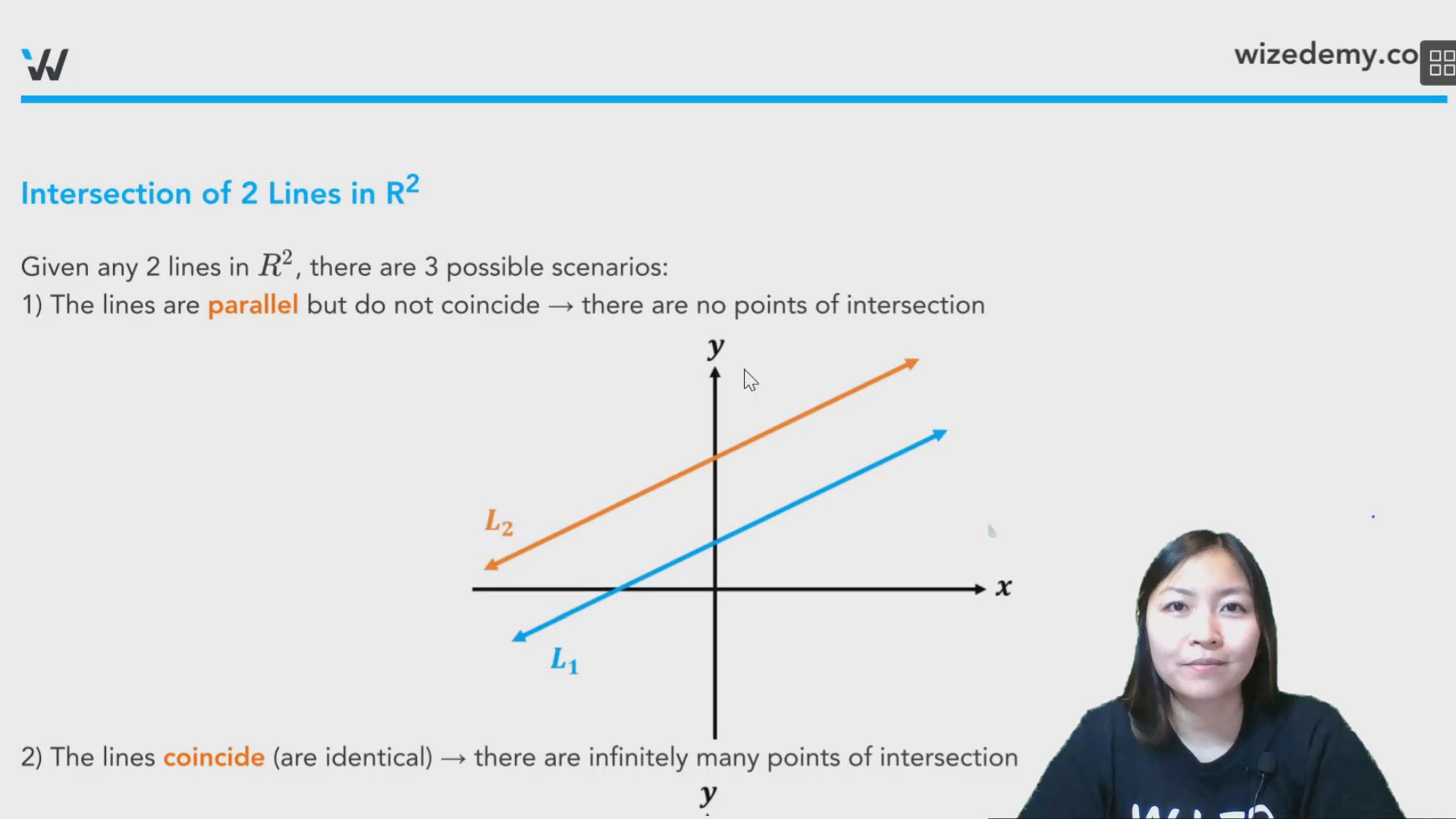
Given any 2 lines in , there are 3 possible scenarios:
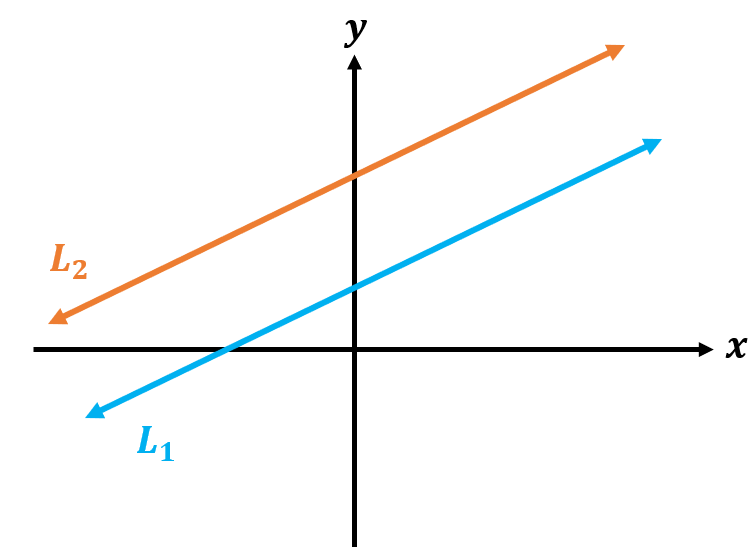
1) The lines are parallel but do not coincide → there are no points of intersection
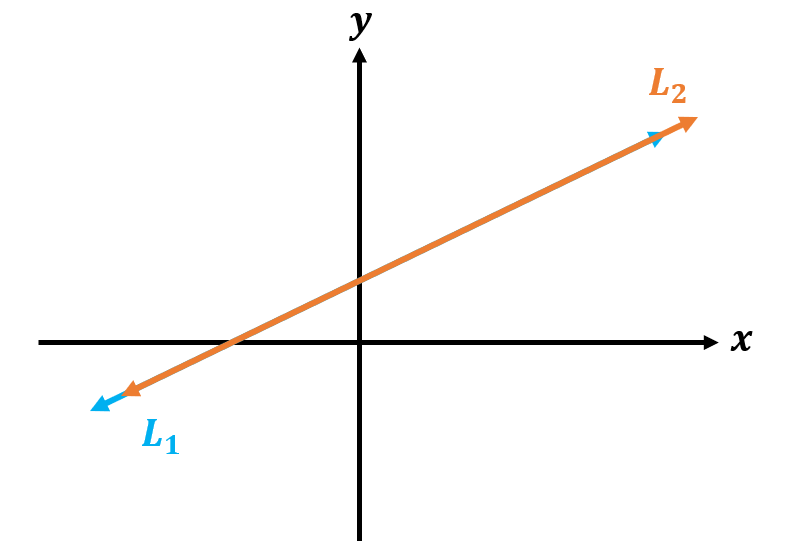
2) The lines coincide (are identical) → there are infinitely many points of intersection
3) The lines intersect → there is exactly one point of intersection (p.o.i.)

Intersection of 2 Lines in R3
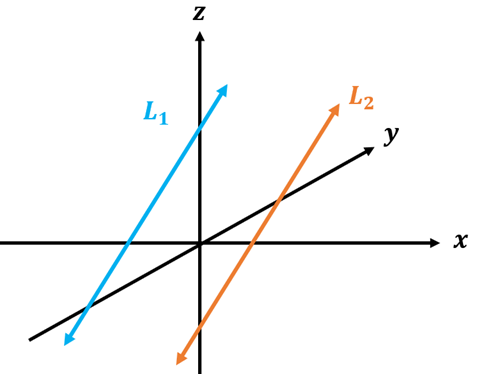
Given any 2 lines in , there are 4 possible scenarios:
1) The lines are parallel but do not coincide → there are no points of intersection
2) The lines coincide (are identical) → there are infinitely many points of intersection
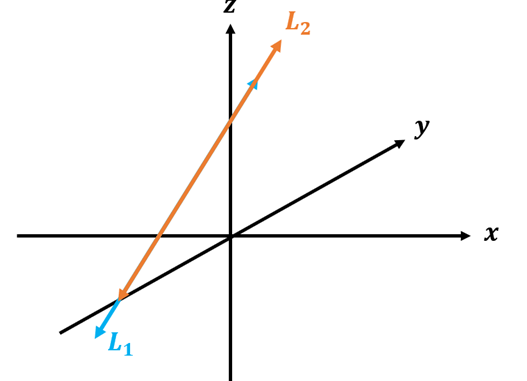
3) The lines intersect → there is exactly one point of intersection
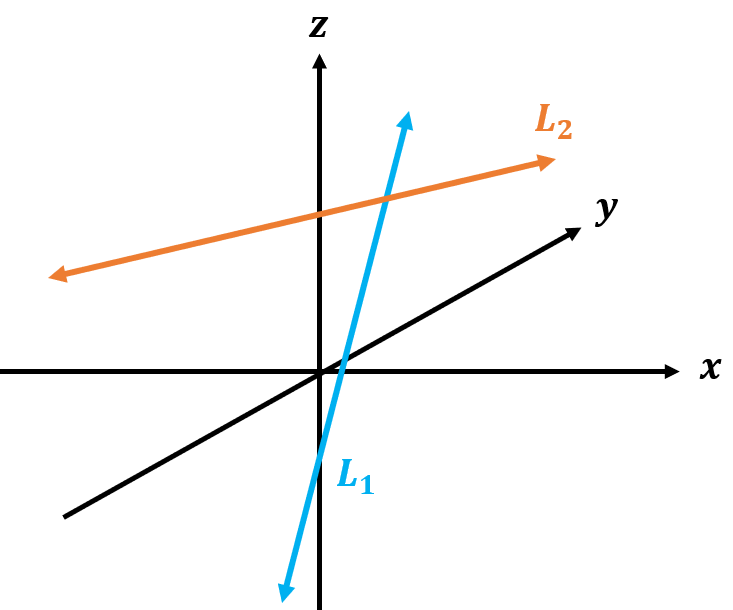
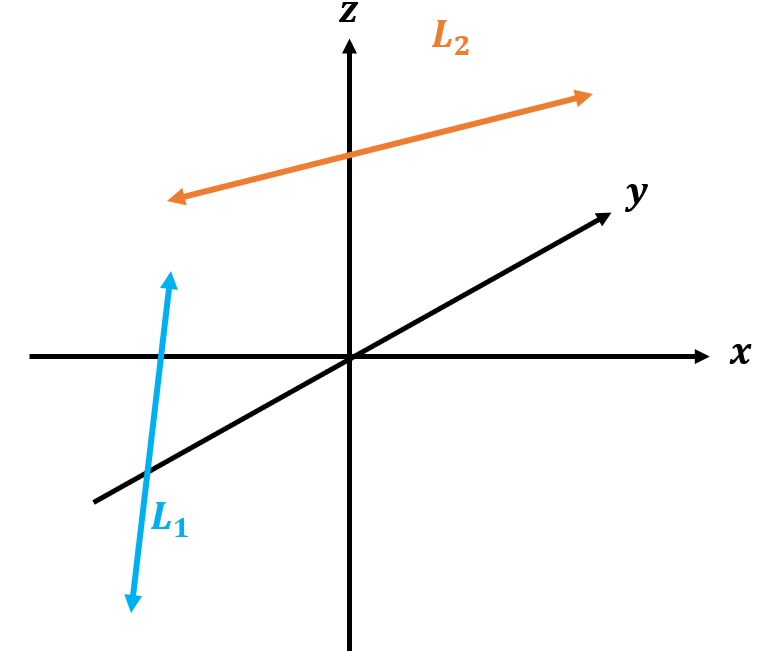
4) The lines are skewed → the lines are not parallel but do not intersect
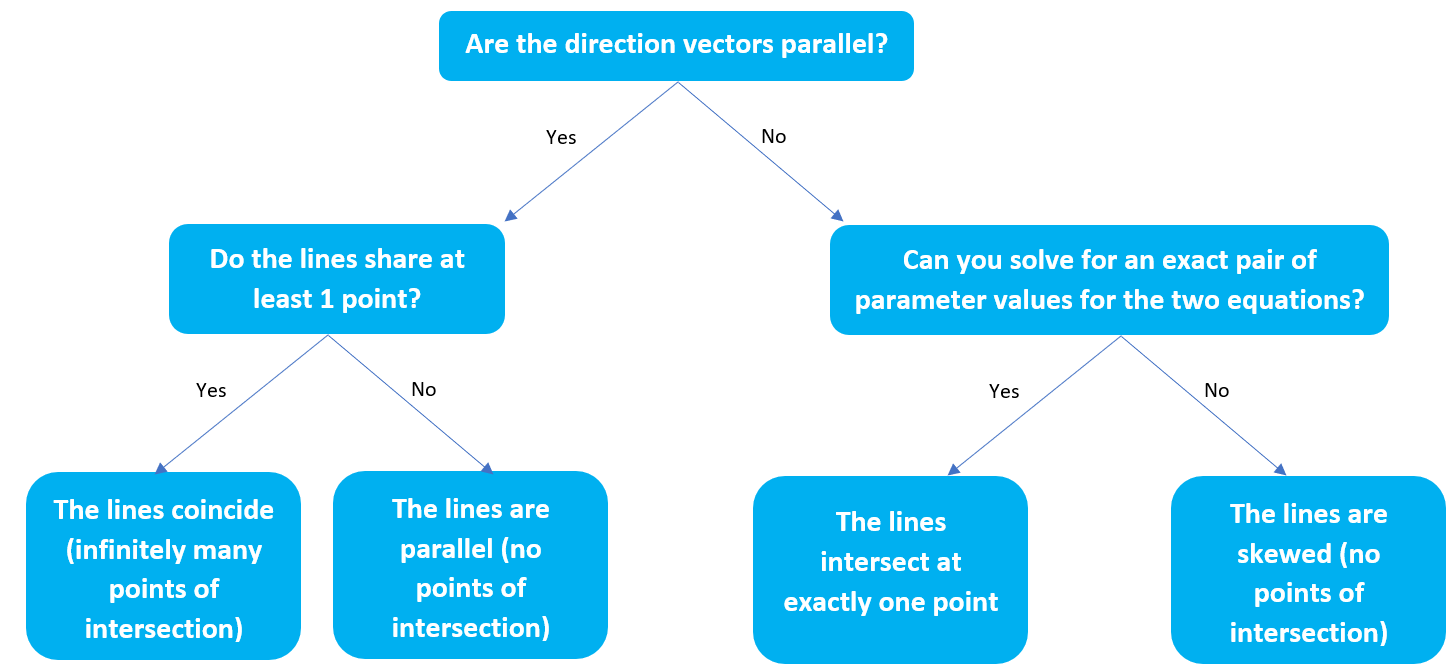
Finding Points of Intersection
0:00 / 0:00
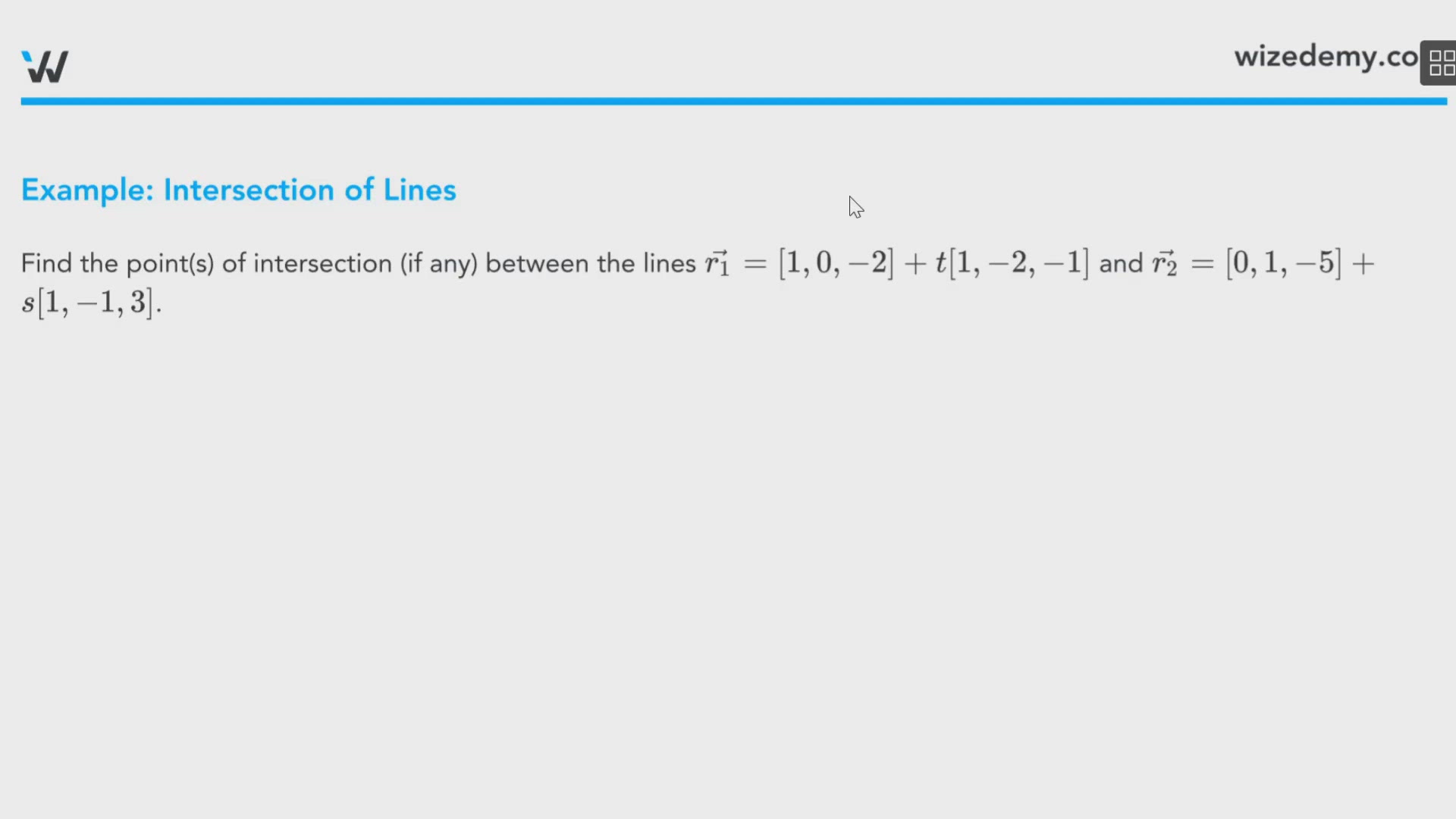
Example: Intersection of Lines
Find the point(s) of intersection (if any) between the lines and .
Check direction vectors
and .
The direction vectors are not scalar multiples of one another, the lines either intersect at a point or are skewed.
Find the parametric equations.
and
Set the component equations equal one another
Solve for the parameters
From equation 1:
Sub this into equation 2: → →
Sub this back into equation 1:
Now, sub into equation 3 to confirm this pair of parameter values: →
Since we get a single value pair for the parameters and , the lines intersect at exactly one point.
Sub into line 1: , , and
Therefore, the lines intersect at the point
Practice: Intersection of Lines
Find the point(s) of intersection (if any) between the lines and .
0:00 / 0:00
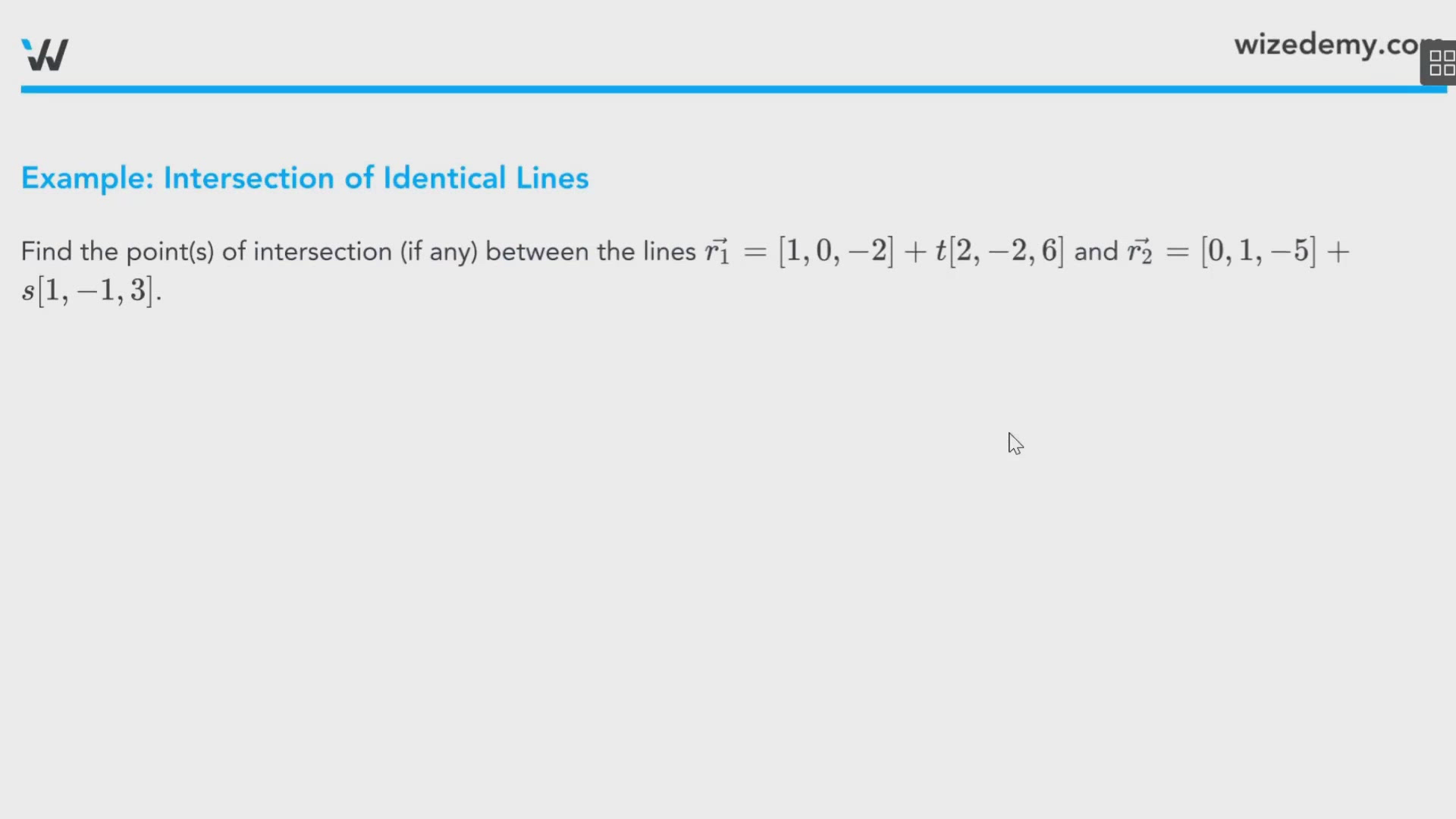
Example: Intersection of Identical Lines
Find the point(s) of intersection (if any) between the lines and .
Check direction vectors
and .
Since these are scalar multiples of one another, the lines are either parallel and don't intersect, or they coincide.
Do the lines share a point?
The point is on line 1, sub this into the parametric equations of line 2:
Solving these equations, we see that the parameter .
So, the point is also on line 2.
Therefore, the lines coincide and there are infinitely many points of intersection.
0:00 / 0:00
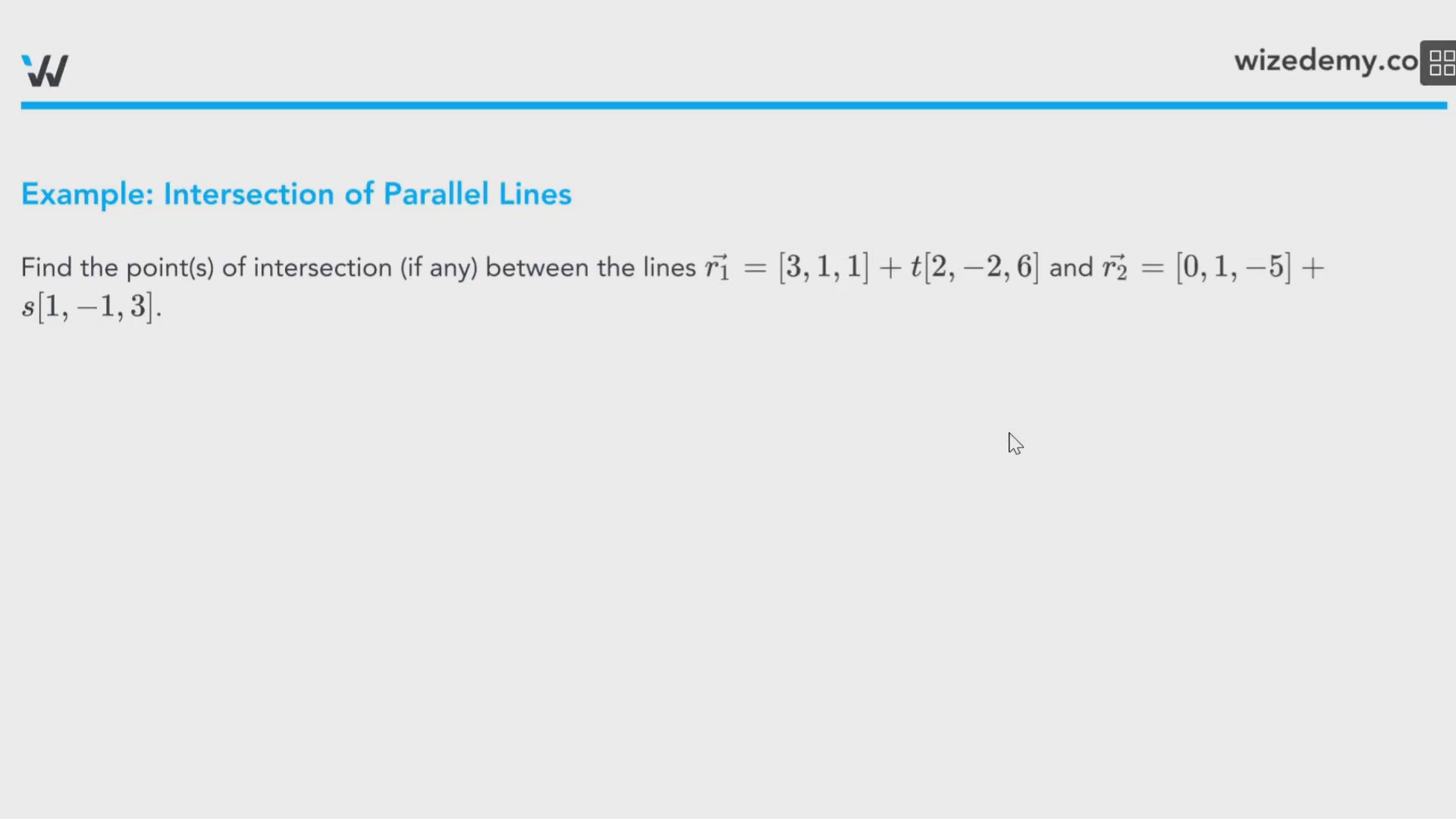
Example: Intersection of Parallel Lines
Find the point(s) of intersection (if any) between the lines and .
Check direction vectors
and .
Since these are scalar multiples of one another, the lines are either parallel and don't intersection, or the lines coincide.
Do the lines share a point?
The point is on line 1, sub this into the parametric equations of line 2:
Solving these equations, we get different values for the parameter for each equation.
Therefore, the lines are parallel and do not intersect.
0:00 / 0:00
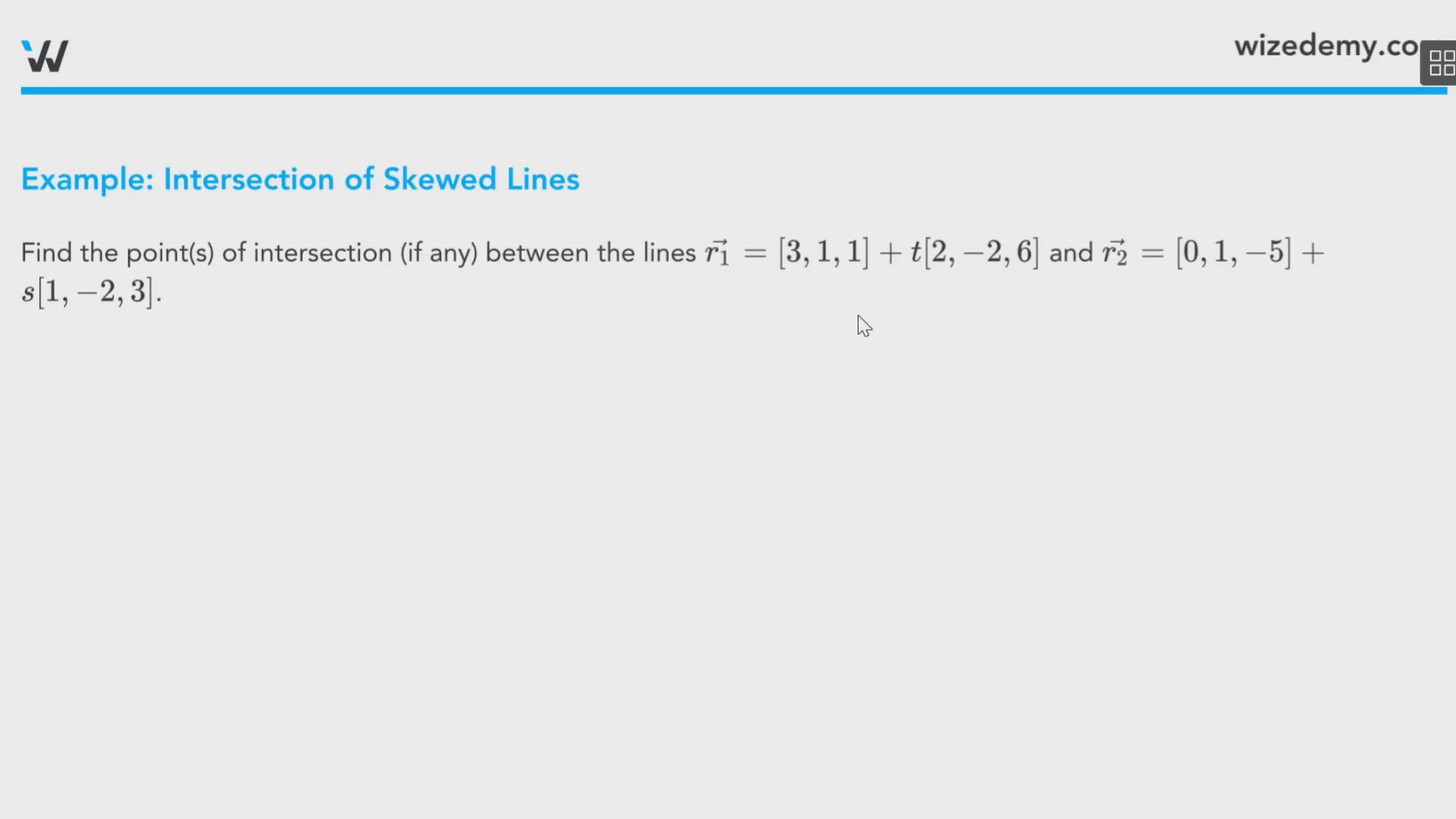
Example: Intersection of Skewed Lines
Find the point(s) of intersection (if any) between the lines and .
Check direction vectors
and .
The direction vectors are not scalar multiples of one another, the lines either intersect at a point or are skewed.
Find the parametric equations.
and
Set the component equations equal one another
Solve for the parameters
From equation 1:
Sub this into equation 2: → →
Sub this back into equation 1:
Sub this value of and into equation 3: →
Since we get an equation with no solutions, it means that our lines are skewed and do not intersect.
Practice: Intersection of lines
Which of the following statements is/are true about these lines?
i. and are parallel
ii. and coincide
iii. and are skew
iv. and intersect at exactly one point
Practice: Intersection of lines
Determine the point(s) of intersection, if any, of the followings lines, or state whether the lines are parallel or skewed.
a)