Wize High School Grade 12 Calculus Textbook > Intersections of Lines & Planes
Intersection of a Line & Plane
0:00 / 0:00
Intersection of a Line & Plane
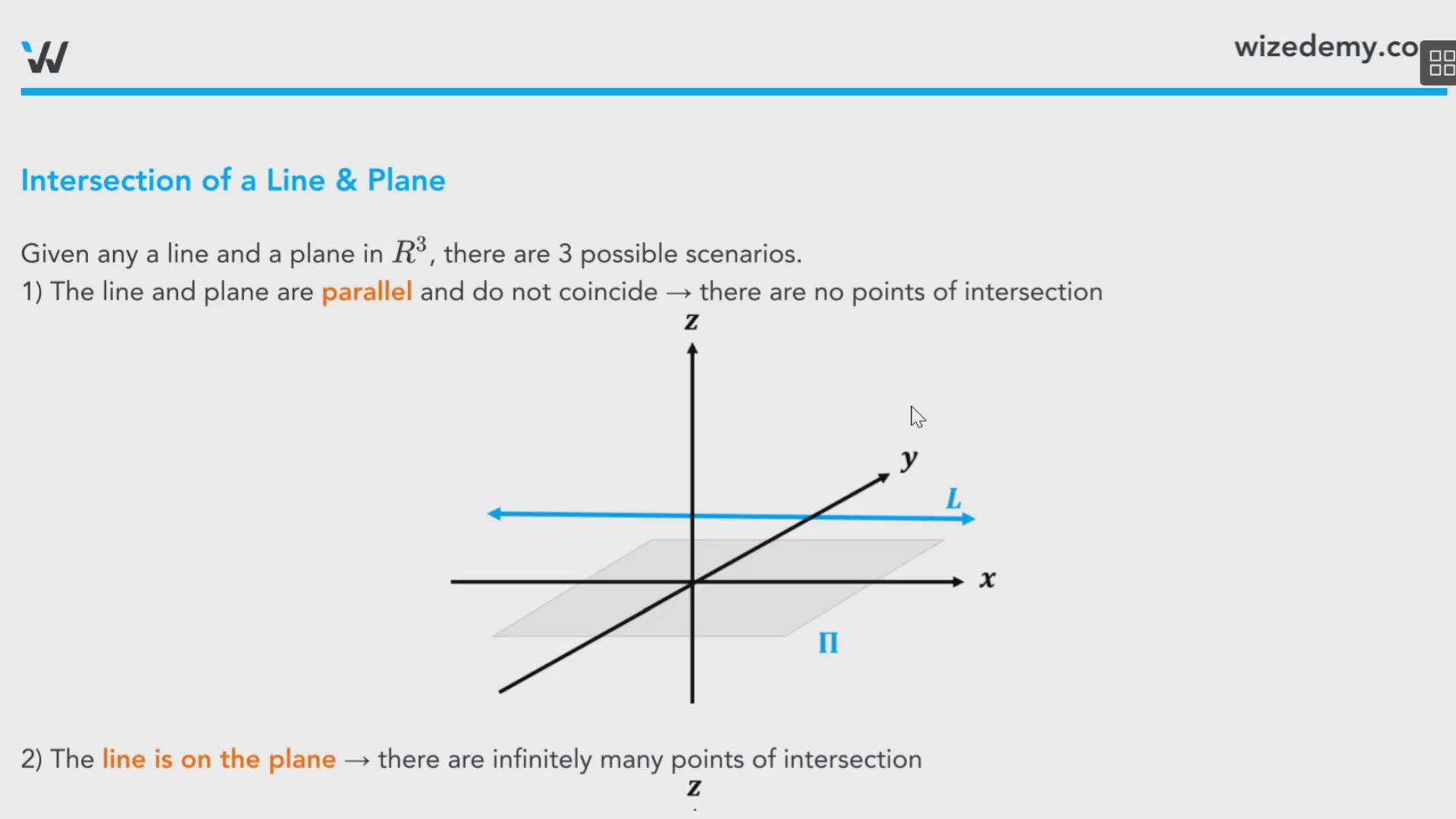
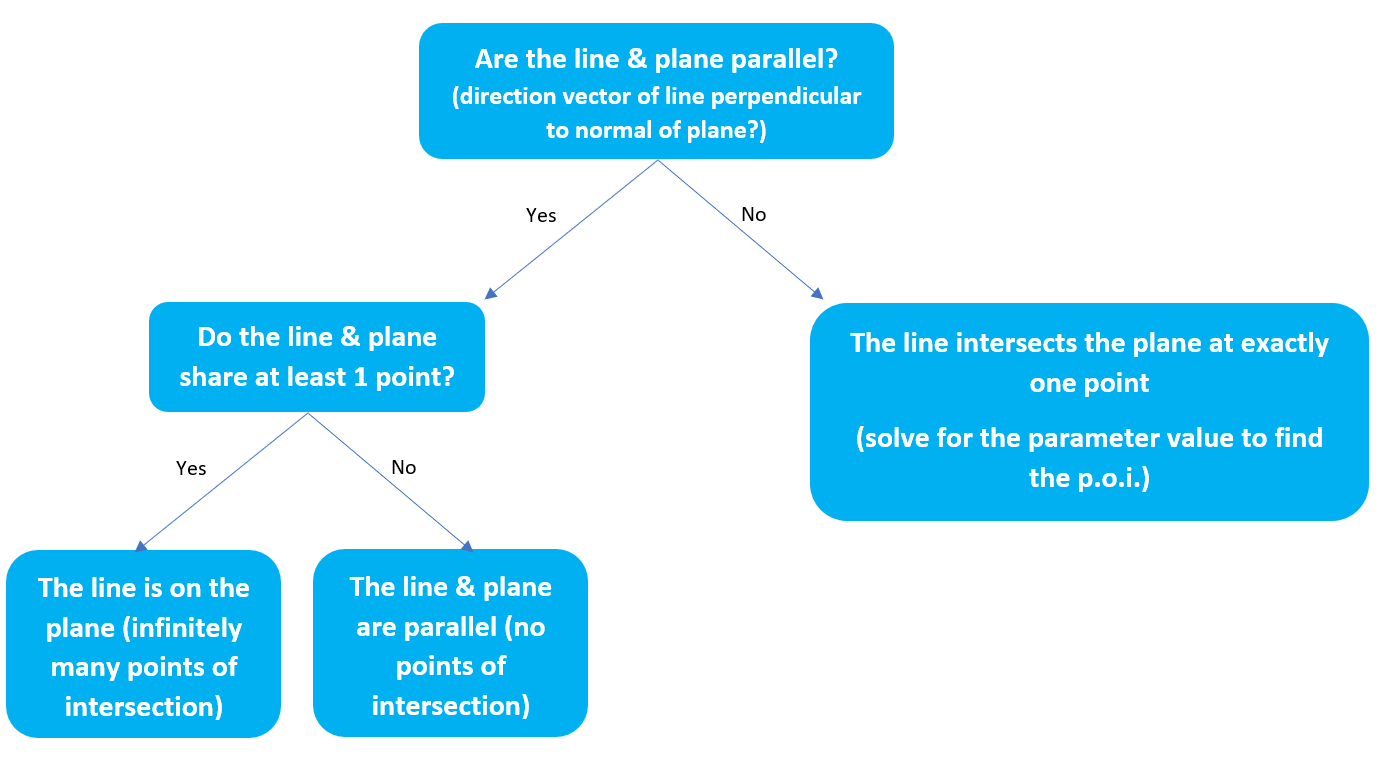
Given any a line and a plane in , there are 3 possible scenarios.
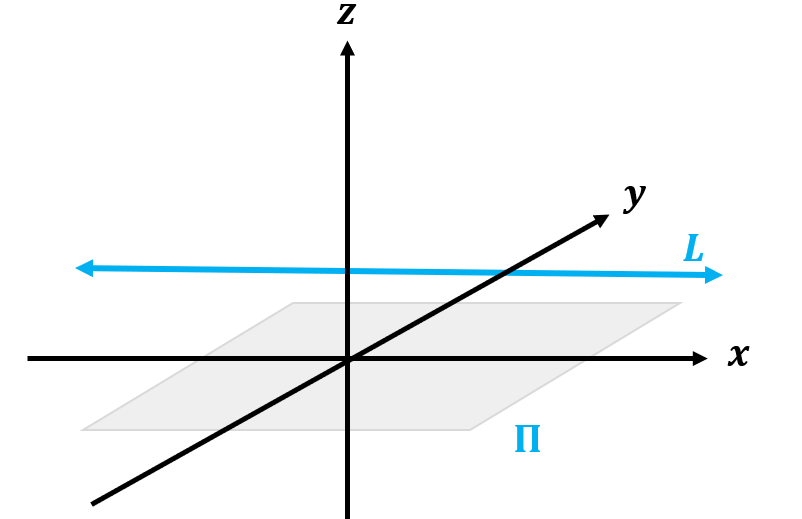
1) The line and plane are parallel and do not coincide → there are no points of intersection
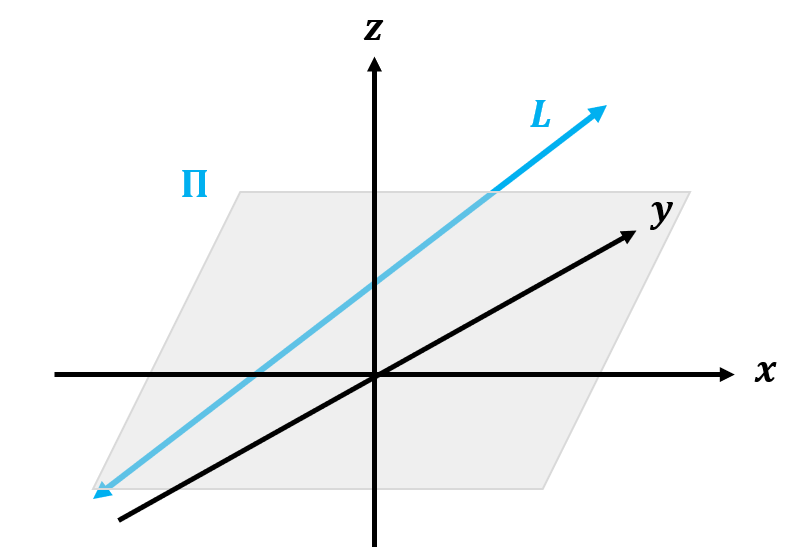
2) The line is on the plane → there are infinitely many points of intersection
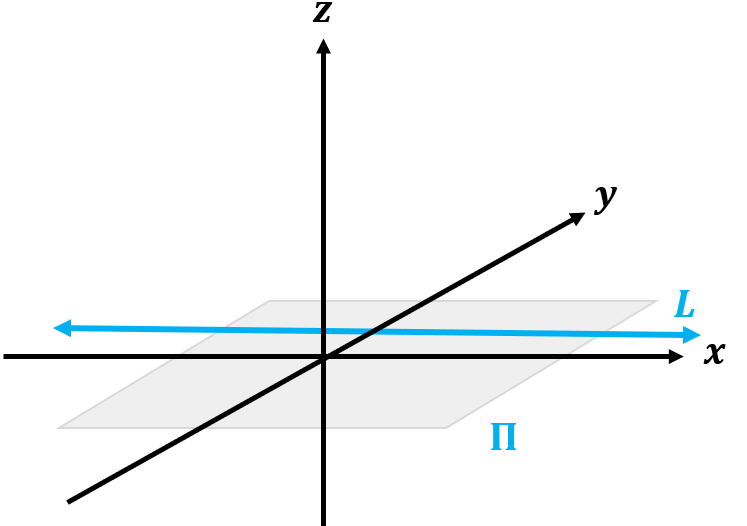
3) The lines intersect → there is exactly one point of intersection (p.o.i.)
Finding Points of Intersection
0:00 / 0:00
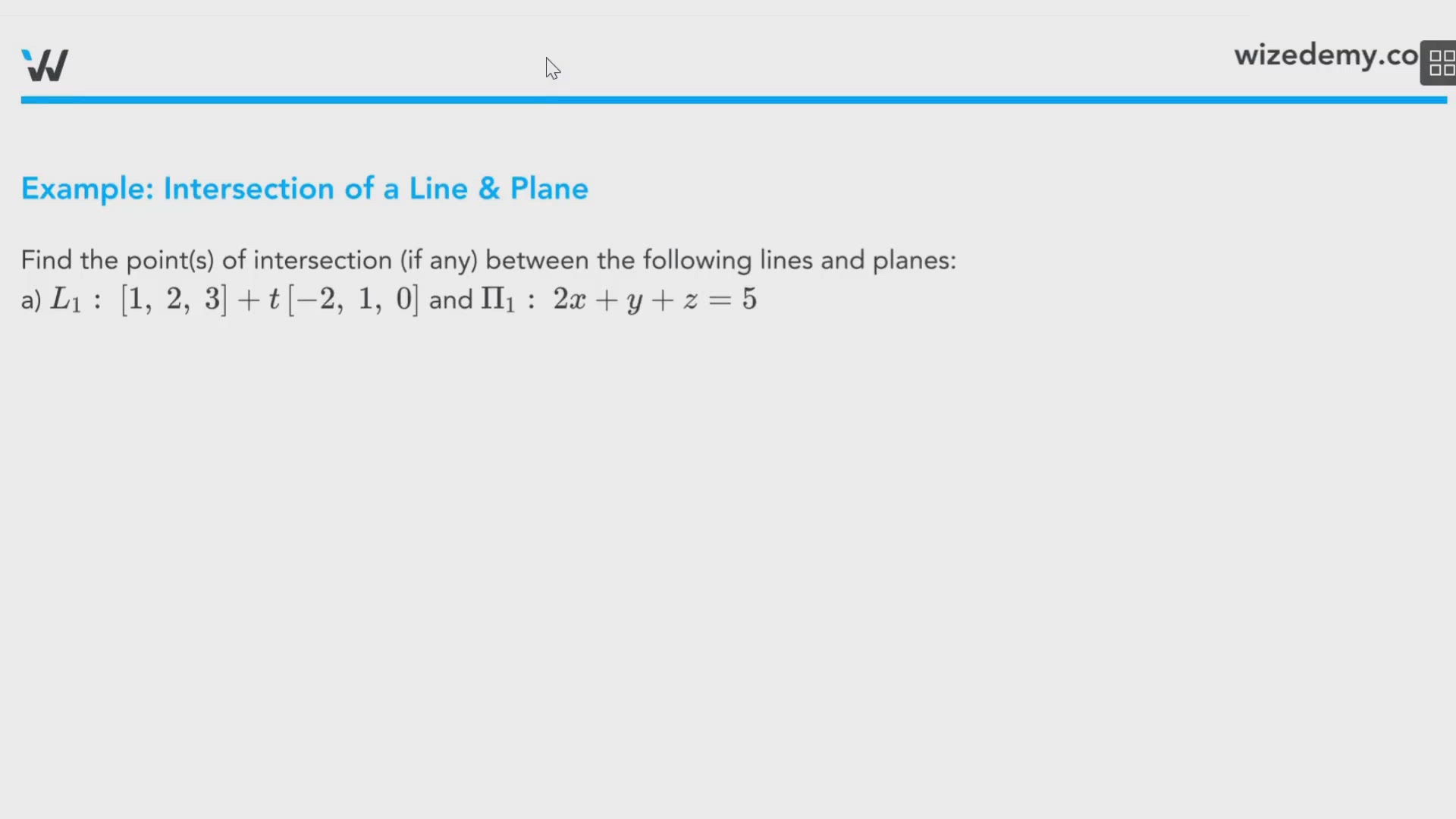
Example: Intersection of a Line & Plane
Find the point(s) of intersection (if any) between the following lines and planes:
a) and
Check if they are parallel
Direction vector of line is , normal of plane is .
Since the dot product of these vectors is not 0 , the line is not parallel to the plane.
So, the line and plane will intersect at exactly one point.
The parametric equations of the line are
The Cartesian equation of the line is
Substitute the component equations into the plane equation:
Since we get exactly one value for the parameter, the line intersects the plane at exactly one point.
Substitute this parameter value into the line equation to find the point of intersection:
, ,
Therefore the point of intersection is
b) and
Check if they are parallel
Direction vector of line is , normal of plane is .
Since the dot product of these vectors is 0 , the line and plane are either parallel and do not intersect, or they coincide.
The point is on the line.
Substituting this point into the plane, we get , so this point is not on the plane.
Since there's at least one point on the line that is not on the plane, the line and plane are parallel and do not intersect.
c) and
Check if they are parallel
Direction vector of line is , normal of plane is .
Since the dot product of these vectors is 0 , the line and plane are either parallel and do not intersect, or they coincide.
The point is on the line.
Substituting this point into the plane, we get , so this point is also on the plane.
Since there's at least one point that's on the line and the plane, they must coincide. Therefore, there are infinitely many points of intersection.
Practic: Intersection of lines and planes
Find the point(s) of intersection between the following line and plane:
and
Practice: Intersection of lines and planes
Find the point of intersection of the line and the plane