Wize Grade 11 Mathematics Textbook > Transformations on Functions
General Transformations

0:00 / 0:00
General Transformations

In this image we see a basic house shape, but it has been copied flipped and rotated to create a more interesting pattern.
Mathematically we can do the same with graphs of functions.
Transformations
A transformation is a change to a function that effects its shape. Common transformations include
- Translations
- Reflections
- Stretches and Compressions
Example 1
Describe how the original graph has been transformed or changed.
1.
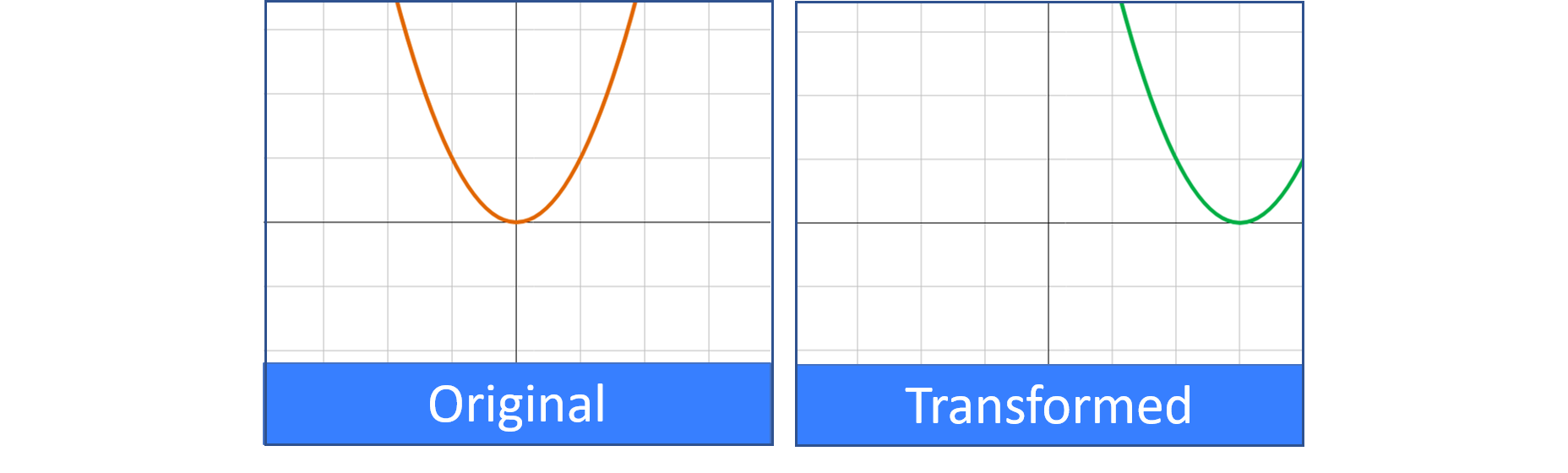
The original has been translated, or moved right by 3 units
2.
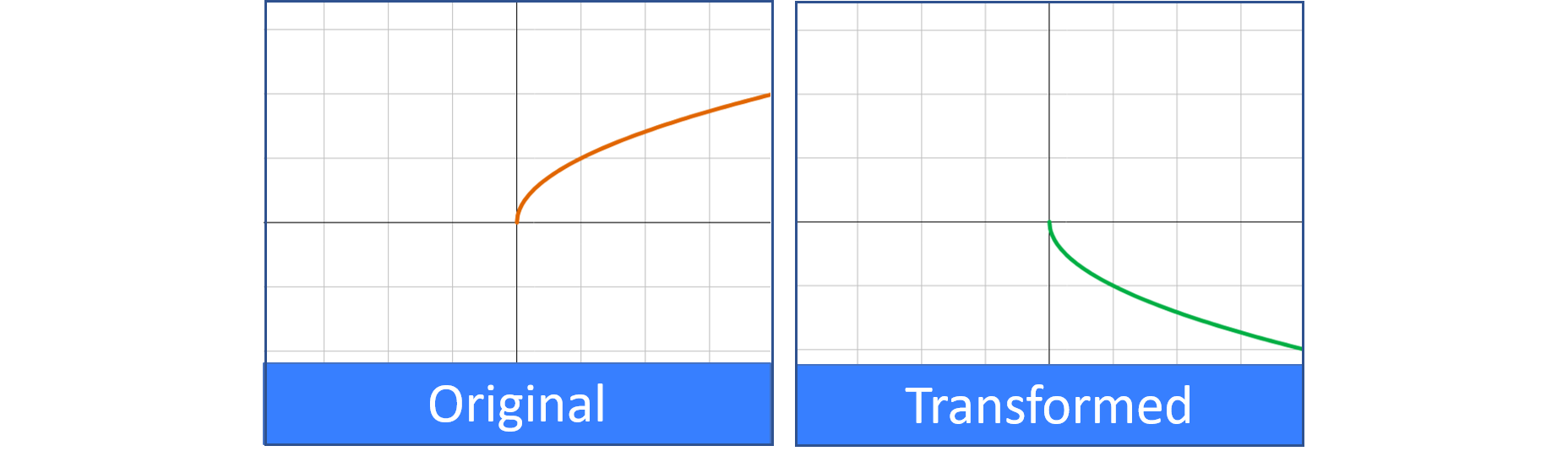
The original has been reflected, or flipped over the x-axis.
3.
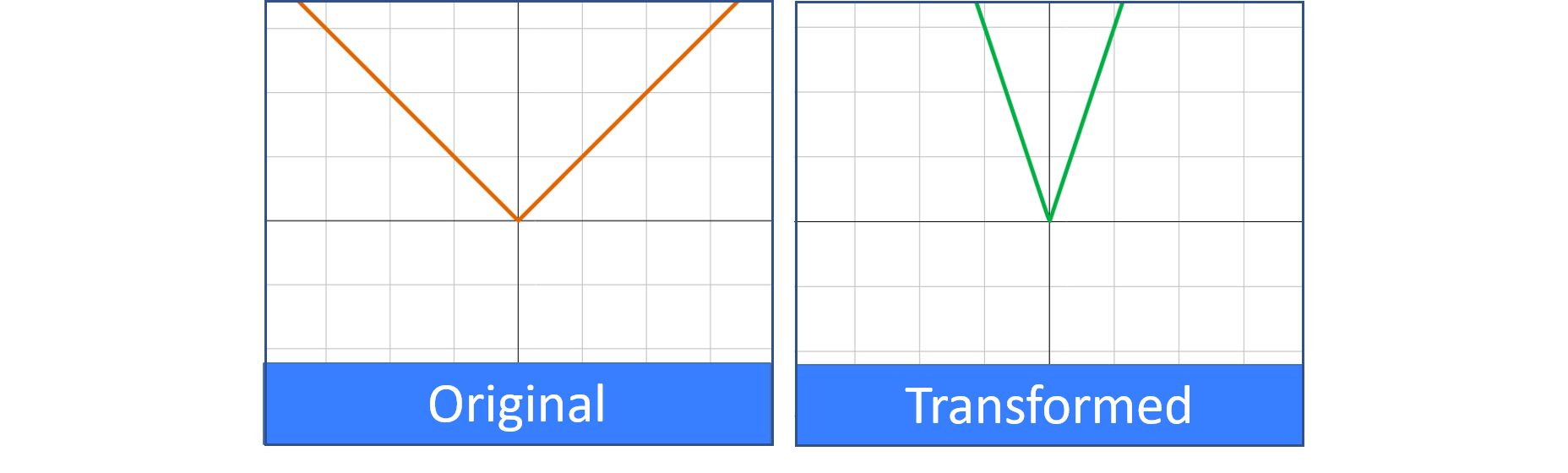
The original has been stretched vertically, or compressed horizontally.
Transformations from the equation
To perform transformations on a function we can make changes to its equation. If is our original or parent function then we can write the transformed equation as
Here is how the values effect the original:

Watch Out!
We can create different transformations depending on where we place the values, and how large or small those values are.
Example 2
For each equation, describe the original function, and the type of transformation being applied.
1.
- Function:
- Transformation: Horizontal translation right 1 unit
2.
- Function:
- Transformation: Vertical stretch by a factor of 5
3.
- Function:
- Transformation: Horizontal reflection over the y-axis
4.
- Function:
- Transformation: Horizontal stretch by a factor of 3
- Transformation: Vertical translation up 2 units
0:00 / 0:00
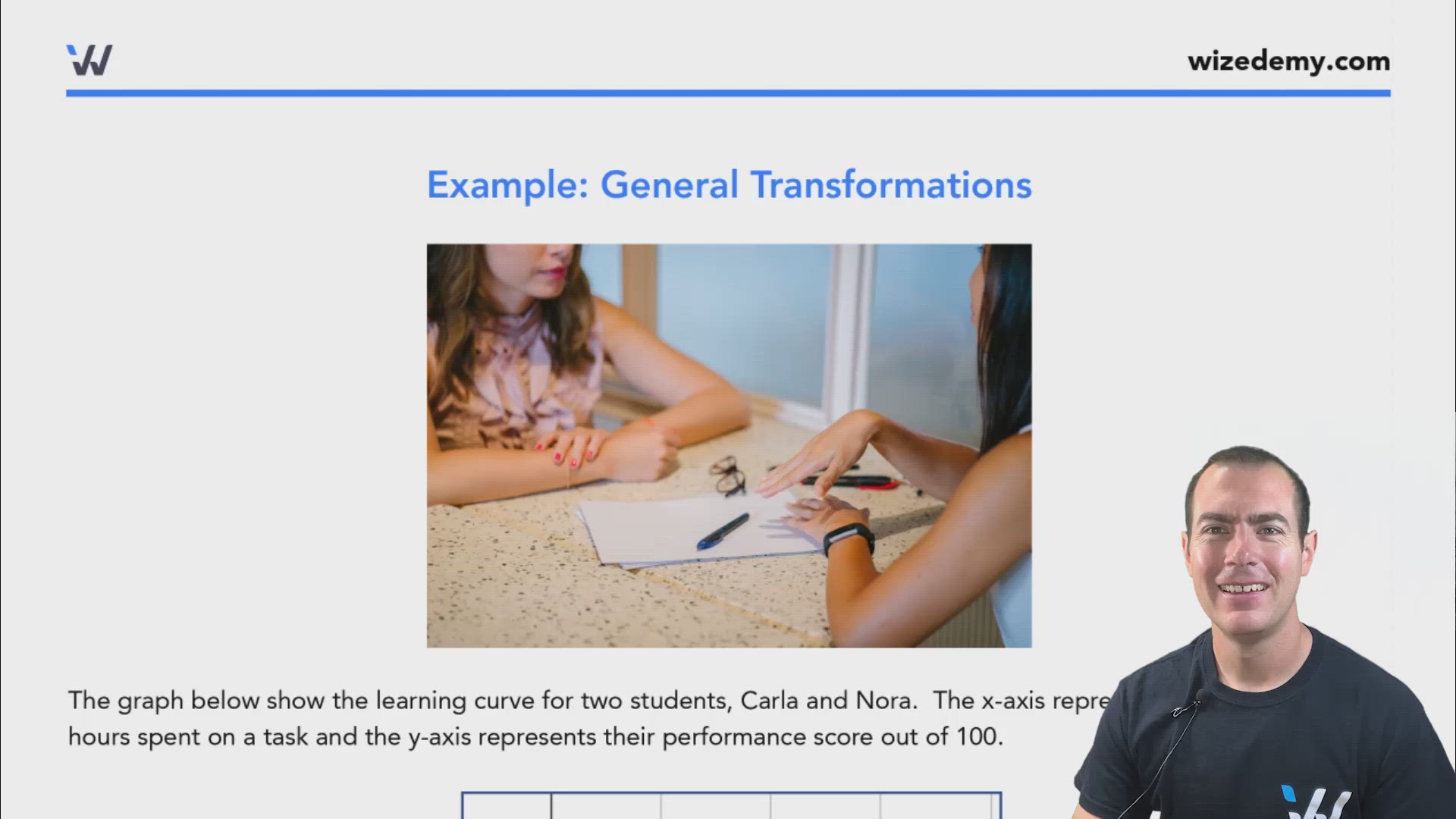
Example: General Transformations

The graph below show the learning curve for two students, Carla and Nora. The x-axis represents the number of hours spent on a task and the y-axis represents their performance score out of 100.
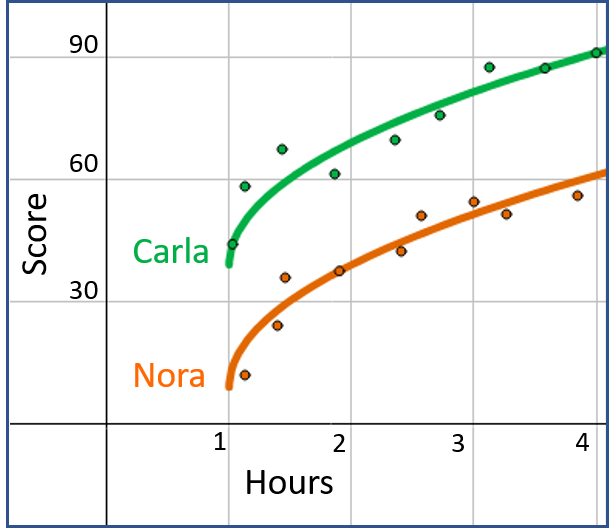
1. Describe how the functions are related to one another in terms of transformations.
Carla's learning curve is the same as Nora's but translated up by 30 percentage points.
We could also say that Nora's is the same as Carla's but translated down by 30 percentage points.
2. Why would this be the case?
The learning curves have the same same shape because both students are improving in the same way over time.
Carla's is translated up compared to Nora's. This might be because Carla was already familiar with the task, and so started with a higher score.
3. Let represent Carla's learning curve function and represent Nora's learning curve function. Use function notation to describe the transformation. Use Nora's curve as the original function.
Practice: General Transformations
What kind of transformation is being demonstrated in the picture?

Practice: General Transformations
The given table represents the inputs and outputs of a given function. If we translate this function down two units, what will be the new input and output values?
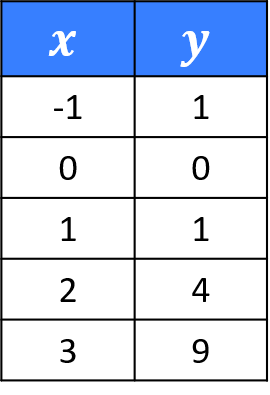
Complete the table with these new values transformed values.
| x | y |
| -1 | |
| 0 | |
| -1 | |
| 2 | |
Practice: General Transformations
For each of the equations below a transformation has been applied.
Identify if the original function has been stretched or compressed in the given direction.
1. In the equation the applies a transformation in the vertical direction. Does this stretch or compress the function ?
2. In the equation the applies a transformation in the horizontal direction. Does this stretch or compress the function ?
General Transformations
This reference sheet is super helpful for this course. Use it to help you better use transformations on functions.
Given an equation
The function of will be transformed

These should be applied in the following order:
- reflect horizontally, then stretch or compress
- translate left or right
- reflect vertically, then stretch or compress
- translate up or down