Dividing Polynomials
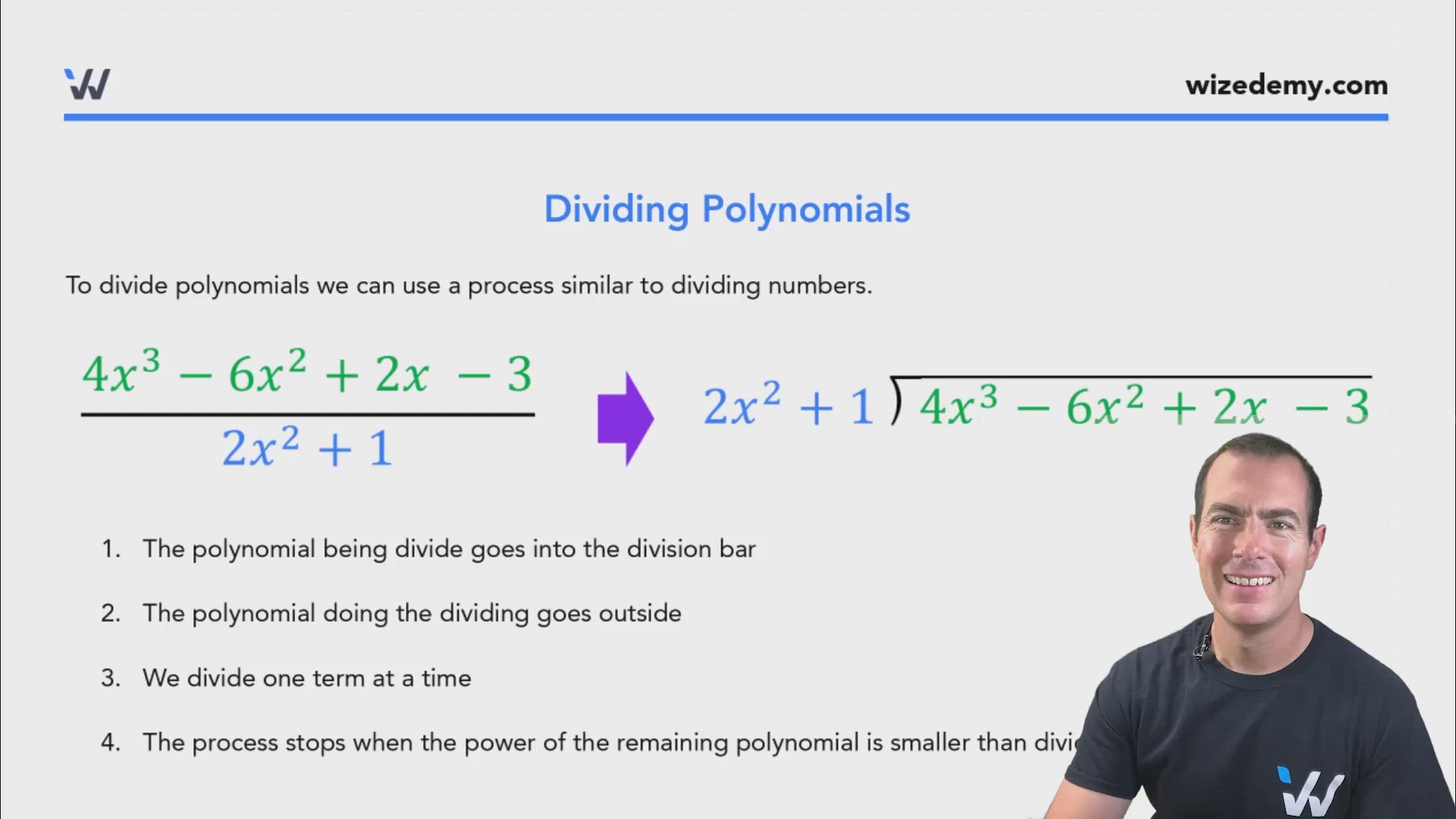
To divide polynomials we can use a process similar to dividing numbers.

- The polynomial being divide goes into the division bar
- The polynomial doing the dividing goes outside
- We divide one term at a time
- The process stops when the power of the remaining polynomial is smaller than dividing polynomial
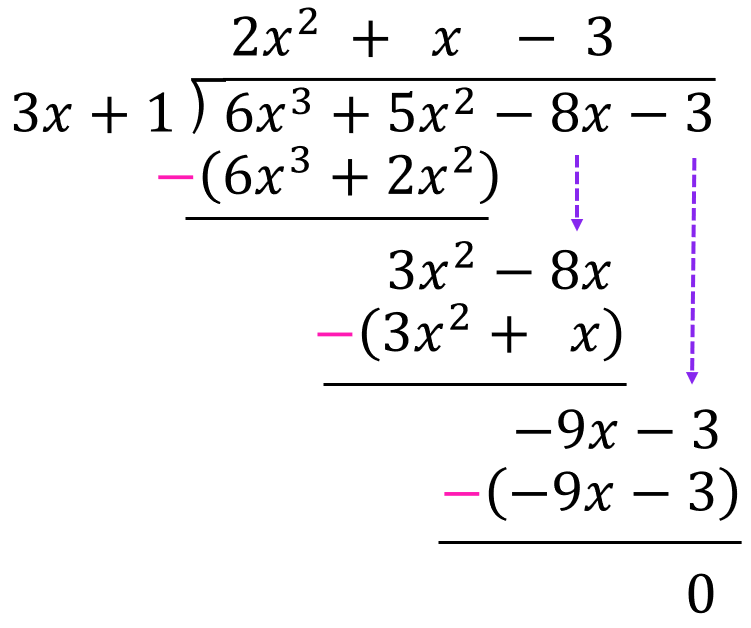
Example 1
Divide the following polynomials
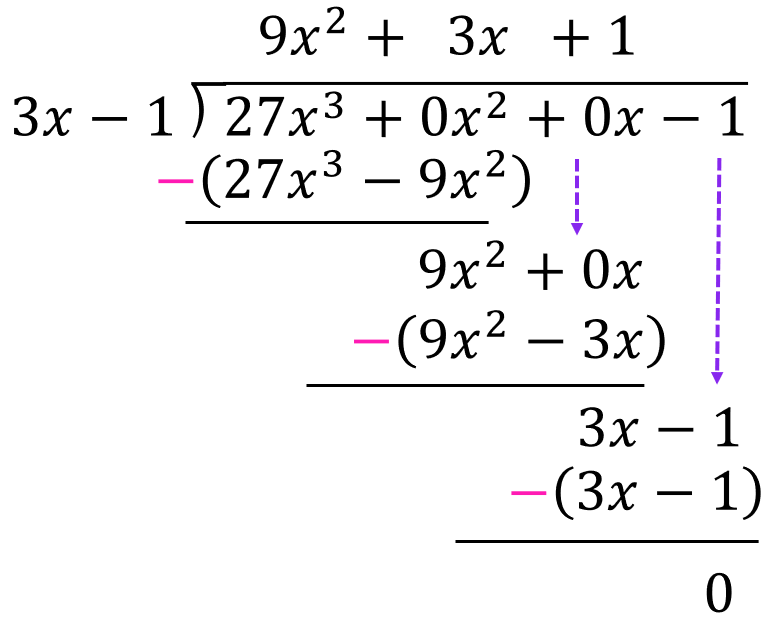
Missing terms
If one of the polynomials seems to be missing a power of x, you can put in a place holder.
This is done by putting a zero with the missing power of x.

Example 2
Divide the following polynomials
Synthetic Division
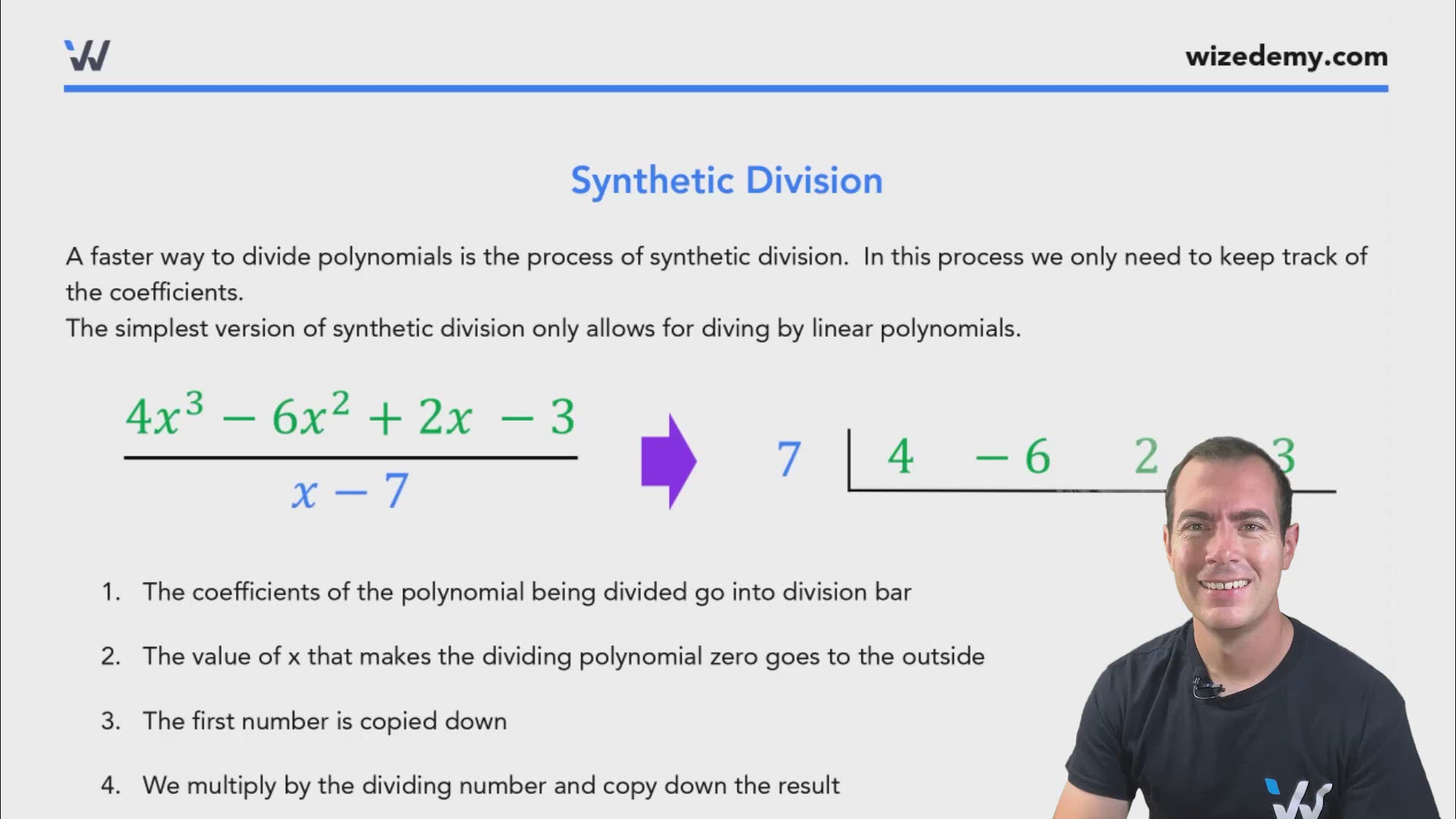
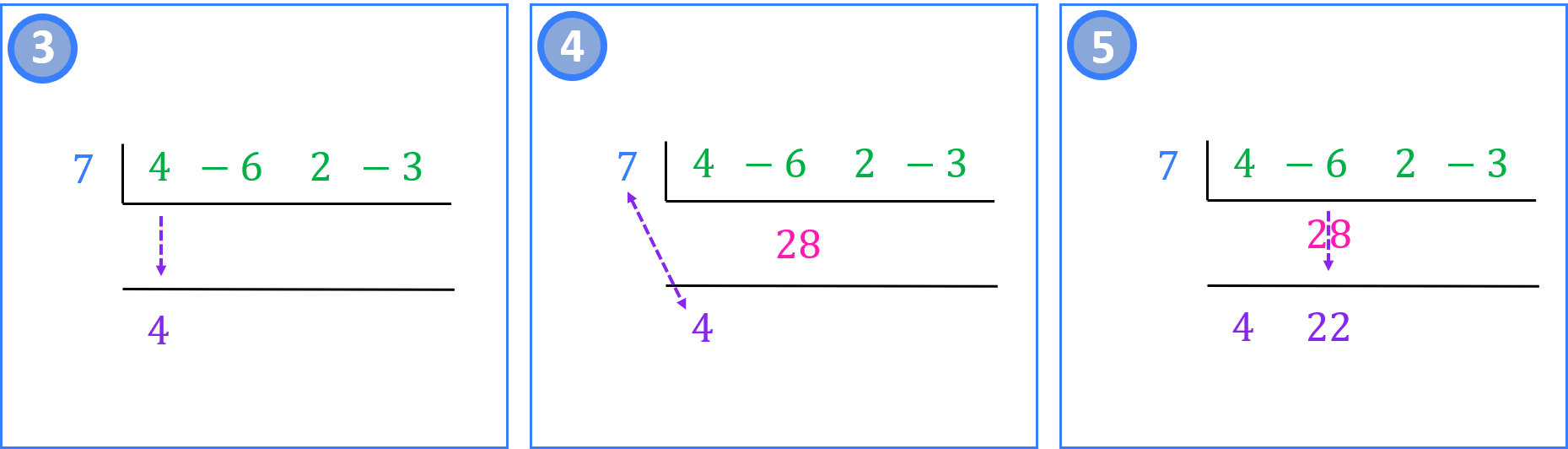
A faster way to divide polynomials is the process of synthetic division. In this process we only need to keep track of the coefficients.
The simplest version of synthetic division only allows for diving by linear polynomials.

- The coefficients of the polynomial being divided go into division bar
- The value of x that makes the dividing polynomial zero goes to the outside
- The first number is copied down
- We multiply by the dividing number and copy down the result
- Columns are added and we repeat step 4 for the next set of numbers
- The numbers along the bottom form the coefficients of the result
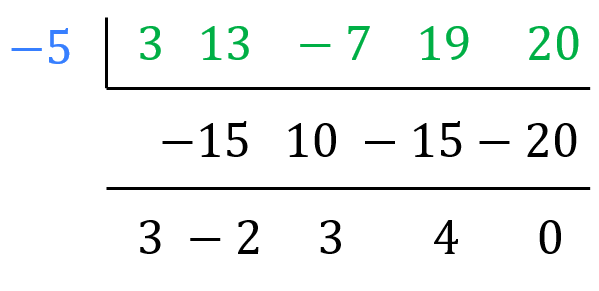
Example 1
Divide the following polynomials.
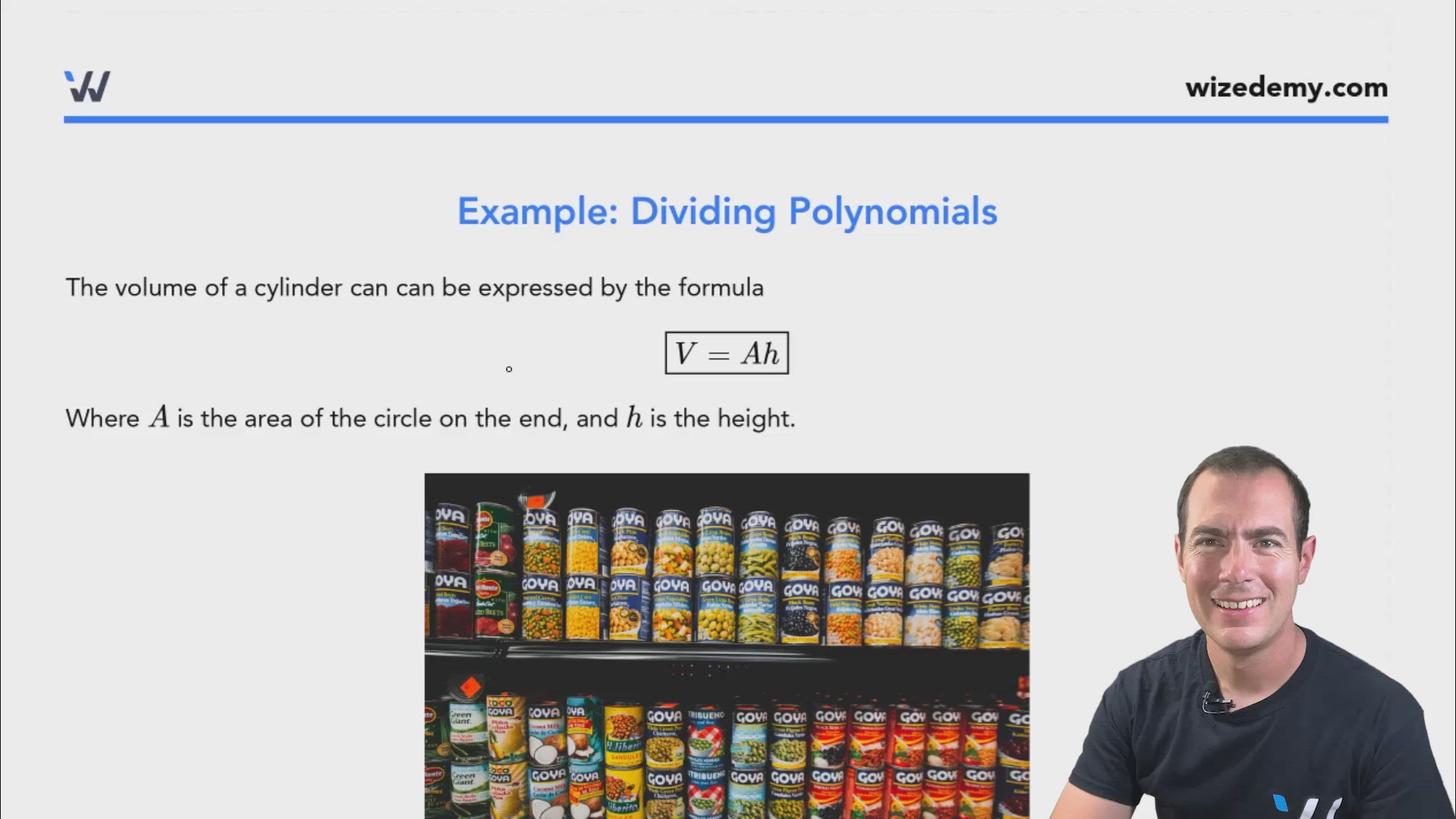
Example: Dividing Polynomials
The volume of a cylinder can can be expressed by the formula
Where is the area of the circle on the end, and is the height.

Suppose the volume of a given can of beans is given by
If the can is cm tall, what is the expression that represents the area of the lid?
Using the formula for a cylinder we can write this as
Factoring out the and dividing by this becomes
Dividing the two polynomials on the left this simplifies to
This represents the area of the lid.