Payroll Liabilities
Every business that has employees who earn a salary or wages must account for the liabilities that arise in relation to these expenses.
Three types of liabilities
- Salaries payable: This represents the portion that is directly owed to the employees that the company will disburse on the payday.
- Employee net pay = Gross pay less deductions
- Employee deductions payable: This is the portion earned by the employees but that is withheld from their net pay and transferred to the appropriate agencies.
- Mandatory deductions:
- Employment insurance (EI) premiums
- Canadian pension plan (CPP) contributions
- Income taxes
- Voluntary deductions:
- Health and pension plan contributions
- Union dues
- Charitable contributions
- Additional payroll obligations: These are the additional obligations that are imposed on businesses by the government and other agencies.
- Mandatory:
- Employment insurance (EI) premiums at 140% of employee deduction.
- Canadian pension plan (CPP) contributions at 100% of employee deduction.
- Voluntary:
- Any additional benefit given to the employees
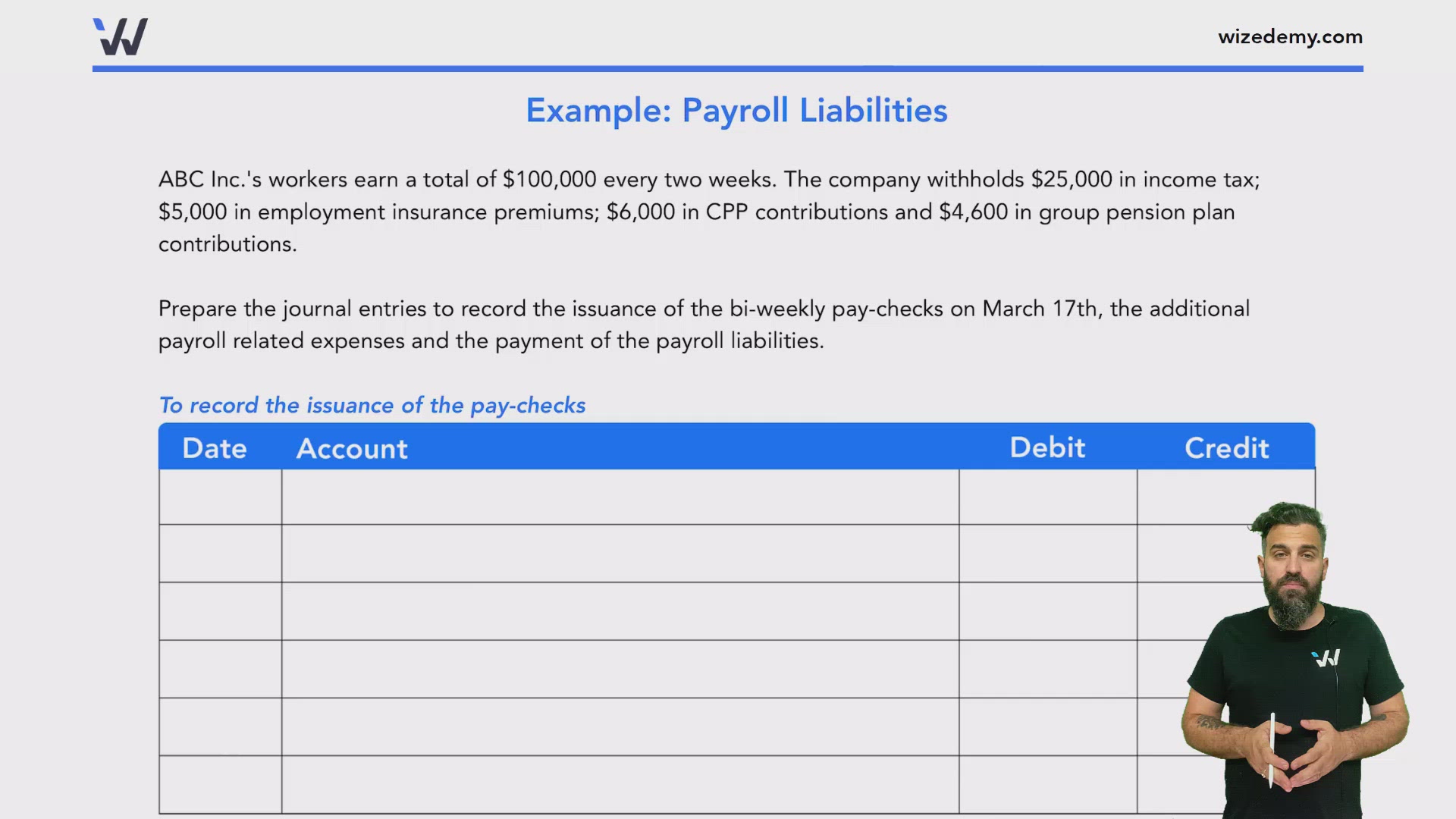
Example: Payroll Liabilities
ABC Inc.'s workers earn a total of $100,000 every two weeks. The company withholds $25,000 in income tax; $5,000 in employment insurance premiums; $6,000 in CPP contributions and $4,600 in group pension plan contributions.
Prepare the journal entries to record the issuance of the bi-weekly pay-checks on March 17th, the additional payroll related expenses and the payment of the payroll liabilities.
To record the issuance of the pay-checks
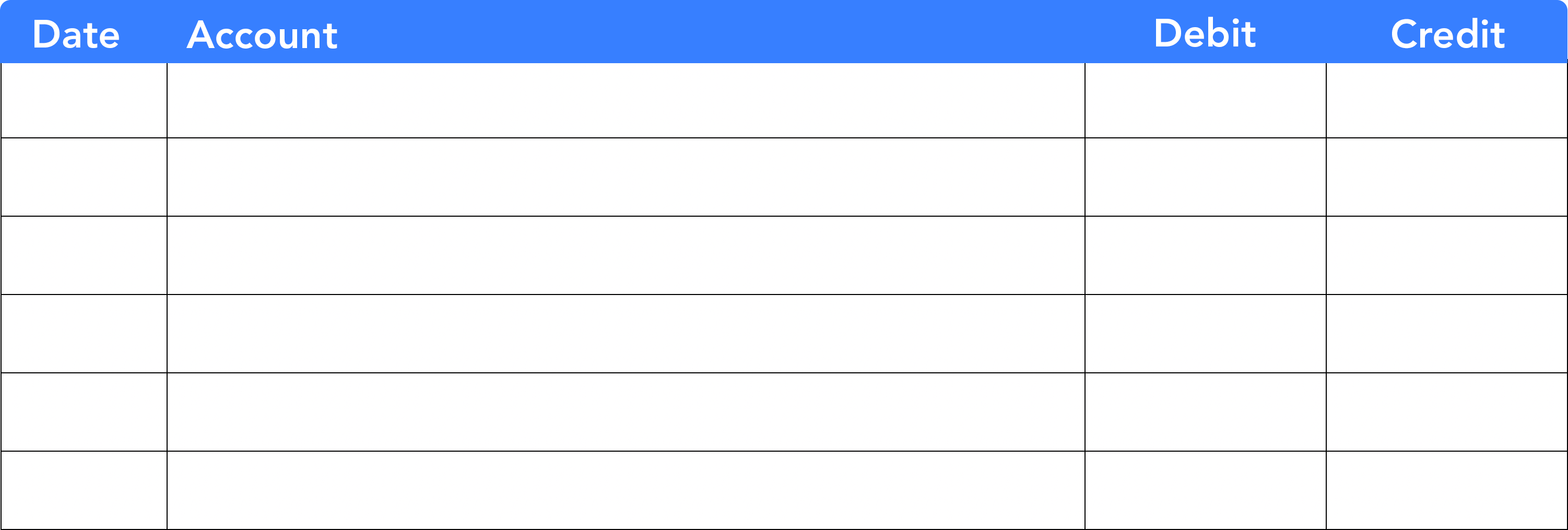
To record the additional payroll related expenses
