Wize University Biochemistry Textbook > Cancer Biology
Molecular Basis for Cancer
0:00 / 0:00
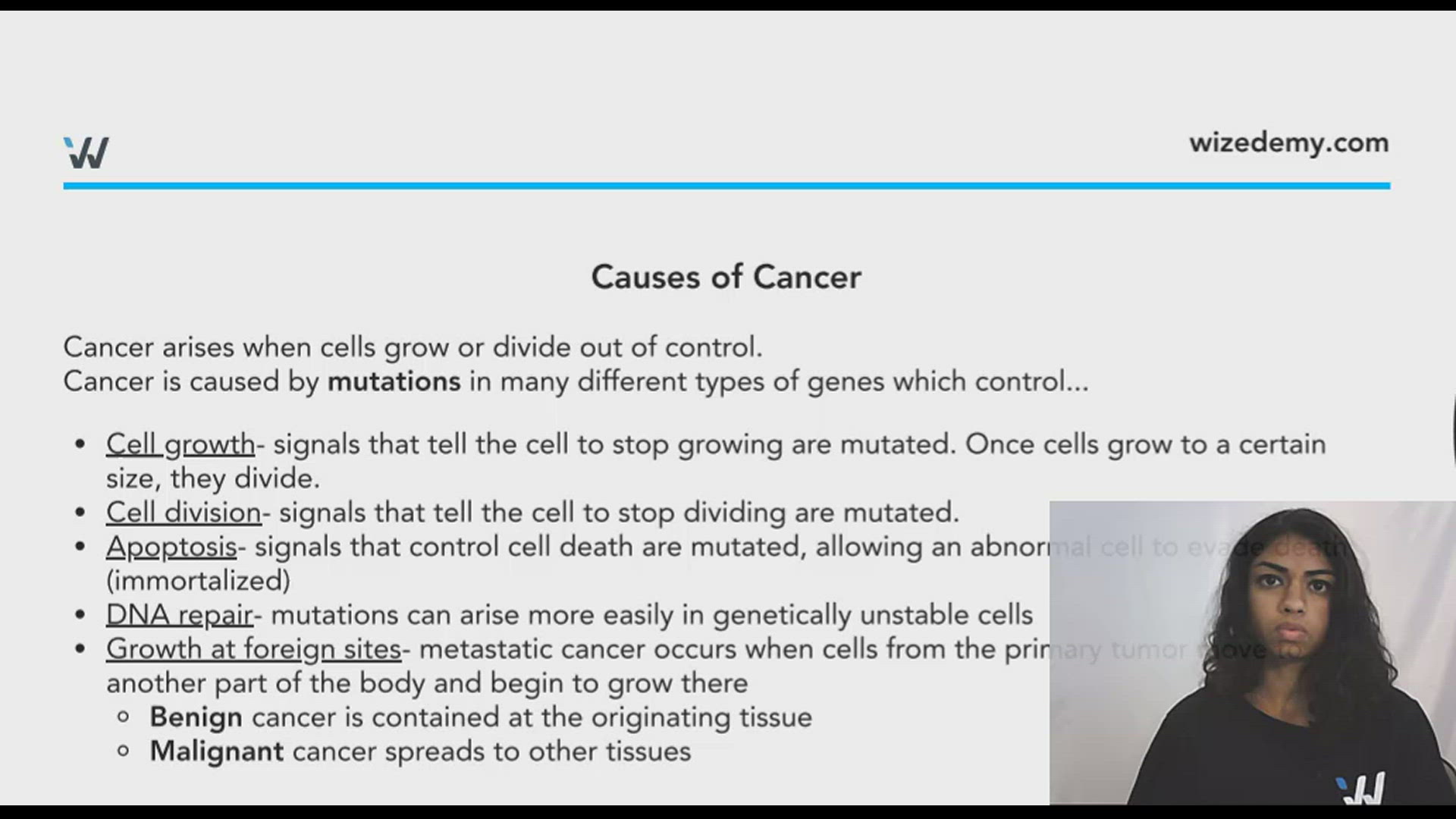
Causes of Cancer
Cancer arises when cells grow or divide out of control.
Cancer is caused by mutations in many different types of genes which control...
- Cell growth- signals that tell the cell to stop growing are mutated. Once cells grow to a certain size, they divide.
- Cell division- signals that tell the cell to stop dividing are mutated.
- Apoptosis- signals that control cell death are mutated, allowing an abnormal cell to evade death (immortalized)
- DNA repair- mutations can arise more easily in genetically unstable cells
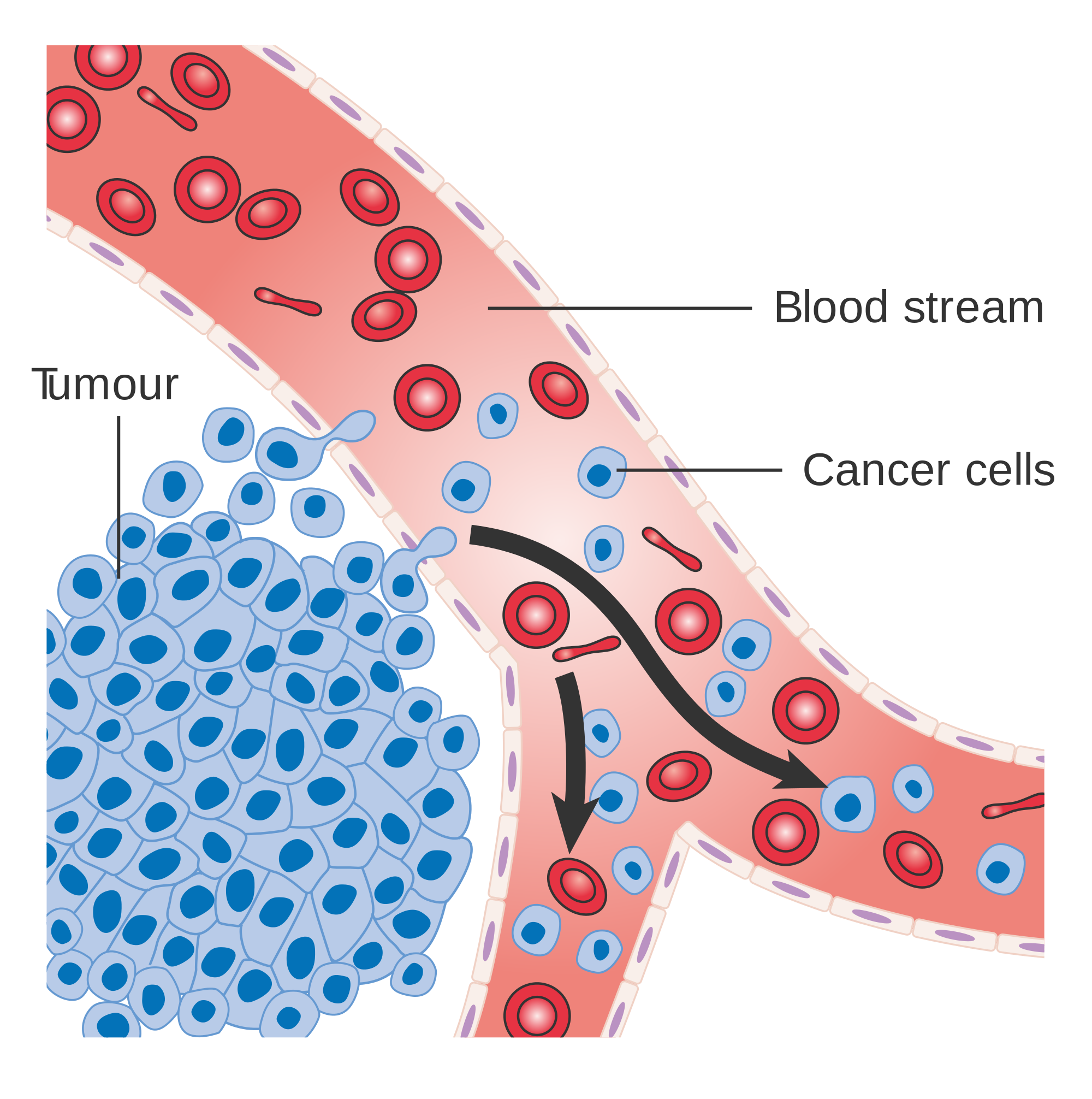
- Growth at foreign sites- metastatic cancer occurs when cells from the primary tumor move to another part of the body and begin to grow there
- Benign cancer is contained at the originating tissue
- Malignant cancer spreads to other tissues
Cancer can be inherited or arise through mutations due to exposure to DNA damaging agents (e.g. UV, chemical agents, radiation, etc.)
The more mutations that accumulate, the more likely a cell is to become cancerous.
- One mutation is usually not enough to cause cancer
- Cancer risk increases with age because mutations accumulate over time
Proto-oncogenes- genes that are likely to lead to cancer if mutated. Once mutated, genes correlated to cancer fall into two categories.
- Oncogenes- ACCELERATE cancer growth
- Ras is gene involved in cell signaling. These signals control cell growth, differentiation, and survival and mutations in Ras can disrupt these signals.
- Myc expression leads to cell proliferation. Over-expression (gain of function) results in cells proliferating out of control
- Tumor suppressors- STOP cancer growth
- p53 protects genomic stability and prevents mutations. Loss of p53 function means other cancer-causing mutations are likely to arise
- BRCA1 repairs DNA damage. Mutations in BRCA1 increase the risk of breast and ovarian cancer.
Mutations that result in cancer include
- Mutations in protein coding sequence- resulting in hyperactive protein
- Gene amplification- resulting in too many copies of a gene which is translated into too much protein
- Chromosomal rearrangement- a gene is placed under the control of the wrong transcription factors or is fused to an actively transcribed gene
Warburg Effect
In the 1920s, Otto Warburg observed:
- Cancer cells use A LOT of glucose compared to the surrounding, non-cancerous tissue cells
- Aerobic glycolysis- the glucose was metabolized into lactate even in the presence of oxygen
- Cancer cells survived in the absence of oxygen as well
Why is this weird? Normal cells convert glucose into ATP via two mechanisms:
- Oxidative phosphorylation: in the PRESENCE of oxygen, 1 glucose---> 36 ATP
- Anaerobic respiration: in the ABSENCE of oxygen, 1 glucose ---> 2 ATP
So why do cancer cells use a LESS efficient way of generating energy even in the presence of oxygen?
Speculation abounds:
- Perhaps the cancer cells need other by-products obtained from anaerobic respiration
- Perhaps cancer cells use anaerobic respiration because it is much faster than oxidative phosphorylation
- Perhaps the mitochondria is damaged and the cancer cells CAN'T use oxidative phosphoylation
- Ongoing research.....
0:00 / 0:00
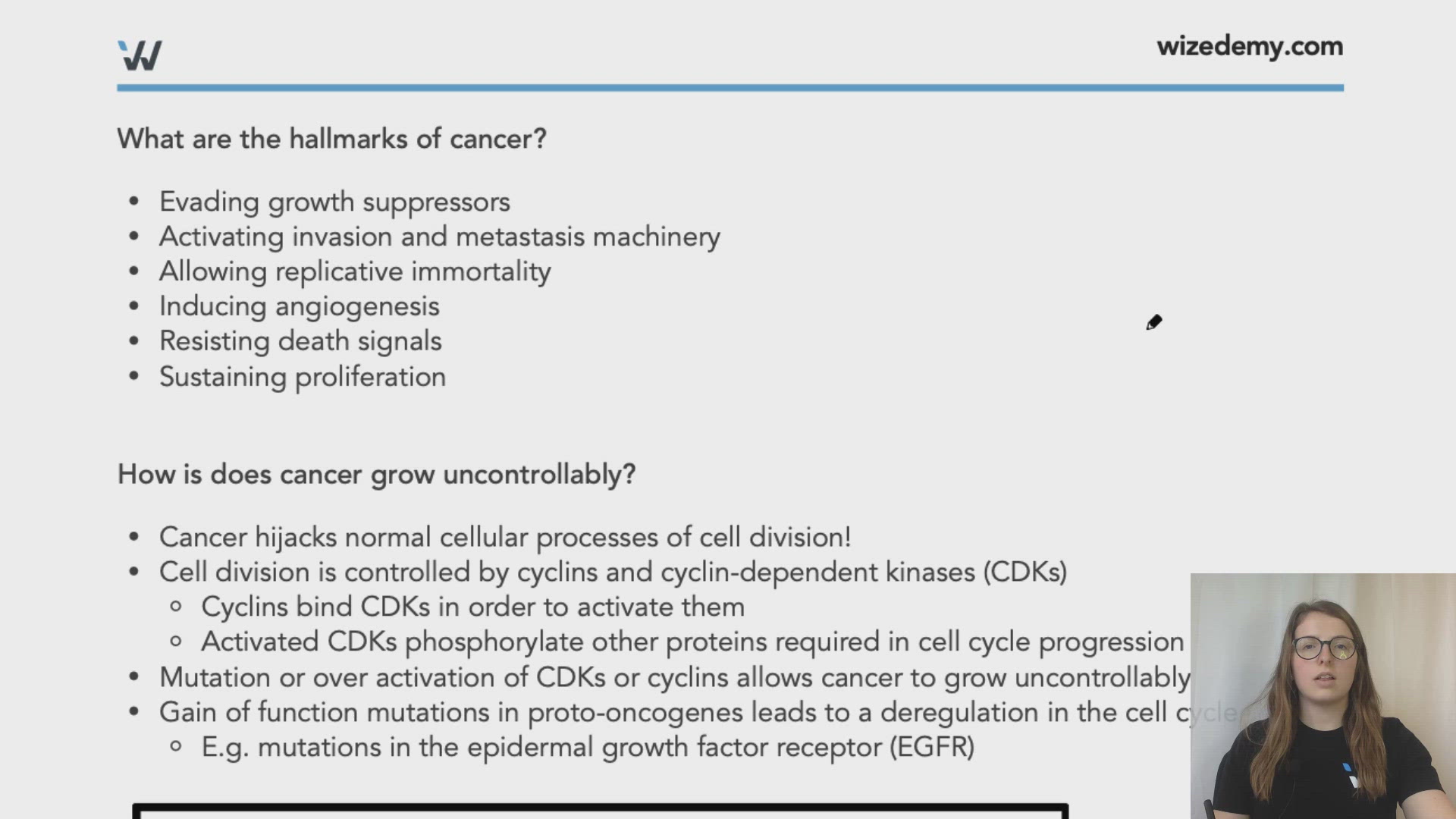
What are the hallmarks of cancer?
- Evading growth suppressors
- Activating invasion and metastasis machinery
- Allowing replicative immortality
- Inducing angiogenesis
- Resisting death signals
- Sustaining proliferation
How is does cancer grow uncontrollably?
- Cancer hijacks normal cellular processes of cell division!
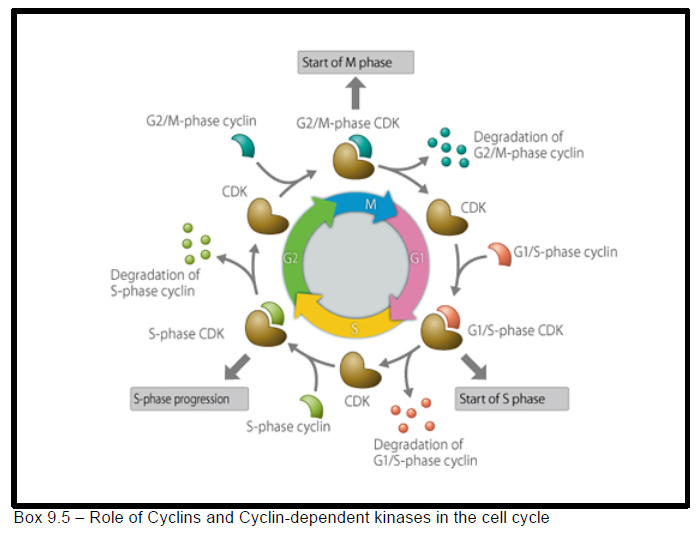
- Cell division is controlled by cyclins and cyclin-dependent kinases (CDKs)
- Cyclins bind CDKs in order to activate them
- Activated CDKs phosphorylate other proteins required in cell cycle progression
- Mutation or over activation of CDKs or cyclins allows cancer to grow uncontrollably
- Gain of function mutations in proto-oncogenes leads to a deregulation in the cell cycle
- E.g. mutations in the epidermal growth factor receptor (EGFR)
What is the role of tumor suppressors in cancer progression?
- Tumor suppressors are proteins that inhibit the cell cycle
- E.g. p53 detects DNA damage
- E.g. BRAC1 fixes double stranded breaks
- Loss of function in tumor suppressors leads to familial heredity of cancer = 2 hit hypothesis
- e.g. first mutation occurs randomly in the germline of the parent (= first hit) only 1 functioning gene in offspring... random second hit in a single cell = no functional copies cancer
What is the role of miRNAs in cancer?
- miRNAs can act to either promote or inhibit cancer progression depending on what gene mRNA they target
- Oncomirs = miRNAs with a role in cancer progression
0:00 / 0:00
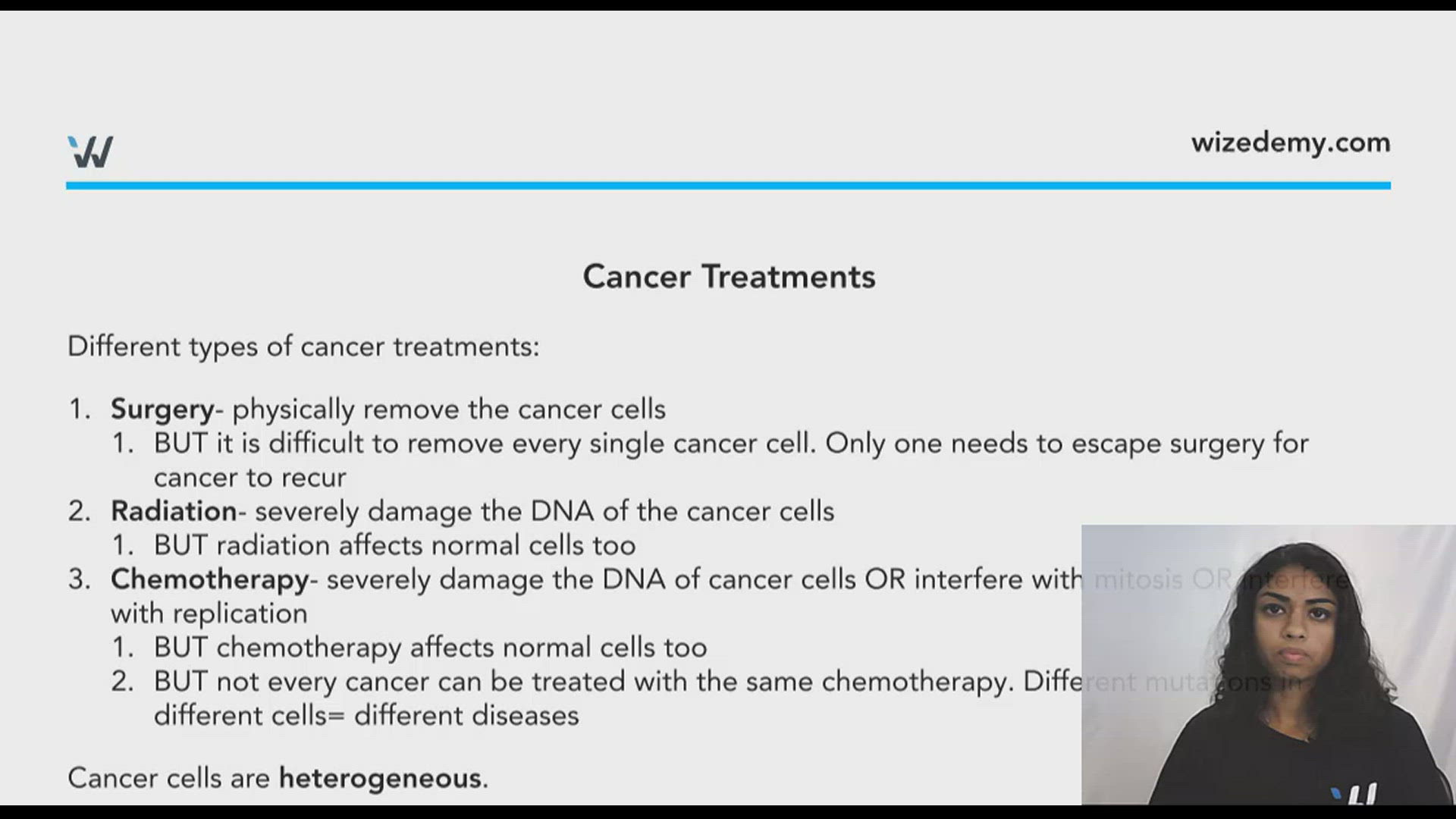
Cancer Treatments
Different types of cancer treatments:
- Surgery- physically remove the cancer cells
- BUT it is difficult to remove every single cancer cell. Only one needs to escape surgery for cancer to recur
- Radiation- severely damage the DNA of the cancer cells
- BUT radiation affects normal cells too
- Chemotherapy- severely damage the DNA of cancer cells OR interfere with mitosis OR interfere with replication
- BUT chemotherapy affects normal cells too
- BUT not every cancer can be treated with the same chemotherapy. Different mutations in different cells= different diseases
Cancer cells are heterogeneous.
- Cancer cells in the same tumor are not necessarily identical
- Cancer cells can evolve over time
Cancer cells can develop drug-resistance.
Cancer cells can be difficult to reach. (e.g. cancers in the brain can only be treated by therapies that can cross the blood-brain barrier)
Future cancer treatments:
- Increase specificity: Use antibody-drug conjugates or teach immune cells to target cancer cells
- Detect cancer early: It is easier to get rid of 10 cells than it is to get rid of 1,000,000,000 cells
- Combination therapies: two therapies working together to eliminate only cancer cells
- Understanding cancer genetics: if we understand which genetic mutations cause cancer, we can detect cancer risks earlier
- Prevention: learn what causes cancer so we can avoid it (e.g. smoking, UV rays from the sun, chemical additives in food, etc.)
0:00 / 0:00
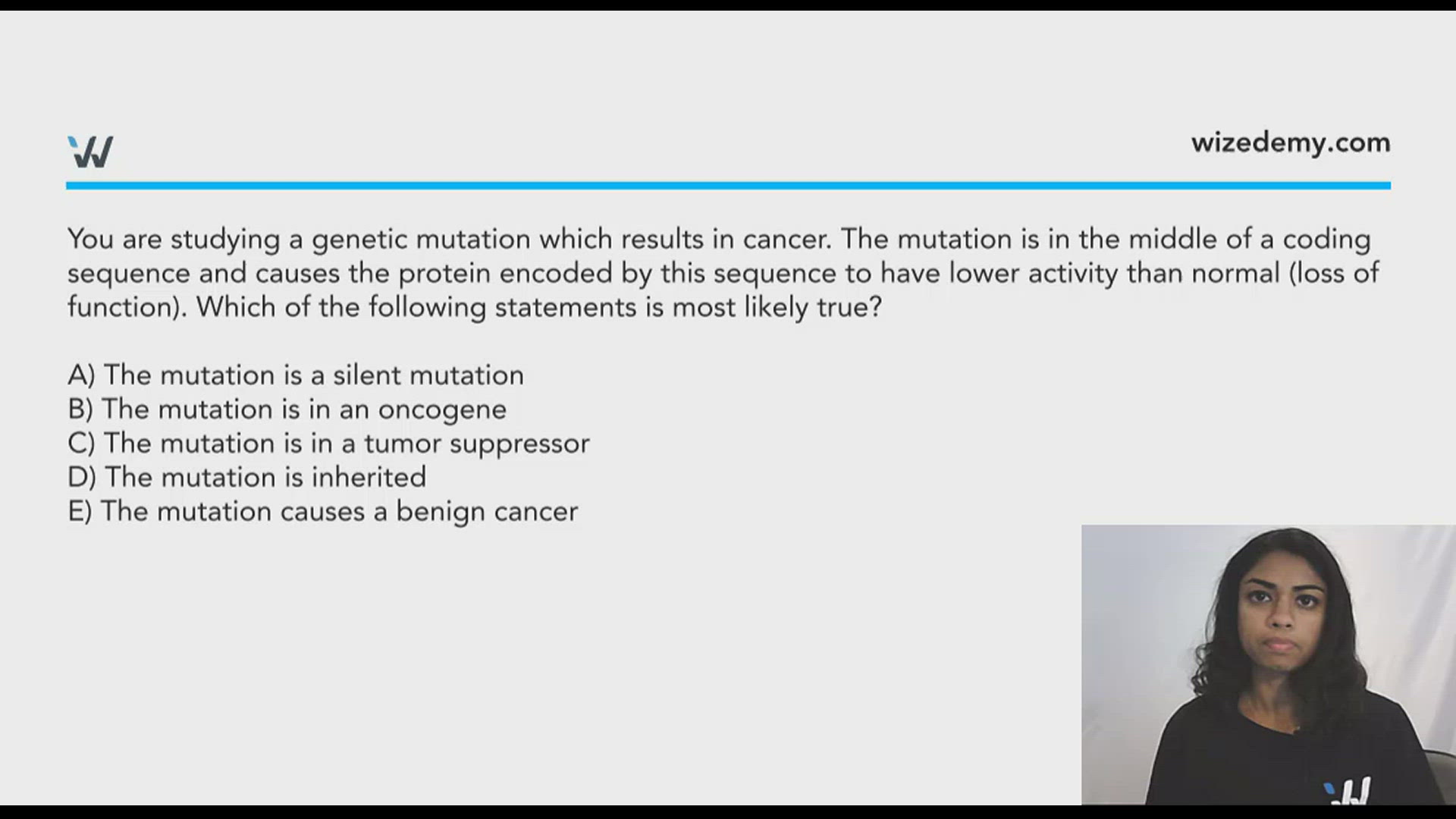
You are studying a genetic mutation that results in cancer. The mutation is in the middle of a coding sequence and causes the protein encoded by this sequence to have lower activity than normal (loss of function). Which of the following statements is most likely true?
A) The mutation is a silent mutation
B) The mutation is in an oncogene
C) The mutation is in a tumour suppressor
D) The mutation is inherited
E) The mutation causes a benign cancer
The correct answer is C.
The mutation is most likely a tumour suppressor. A loss of function mutation in a tumour suppressor would result in cancer because the tumour suppressor would no longer be as active. For example, p53 protects the genome from mutations. A loss of activity in p53 allows mutations to accumulate, increasing the risk of cancer. Therefore, p53 is categorized as a tumour suppressor.
A) False- a silent mutation would change the DNA sequence but not the amino acid sequence of the protein. Therefore, there would likely be no change in protein activity. This point aside, we can not determine what kind of mutation (silent, missense, nonsense, deletion, insertion, etc.) this problem deals with based on the information given.
B) False- Mutations in oncogenes are gain of function mutations (for example, the over-expression of Myc).
D) False- There is no information in the question that would allow us to determine whether the mutation was inherited or if it arose a different way
E) False- this mutation could easily result in malignant cancer. There is no way for us to determine whether the cancer is benign or malignant based on the information given.
0:00 / 0:00
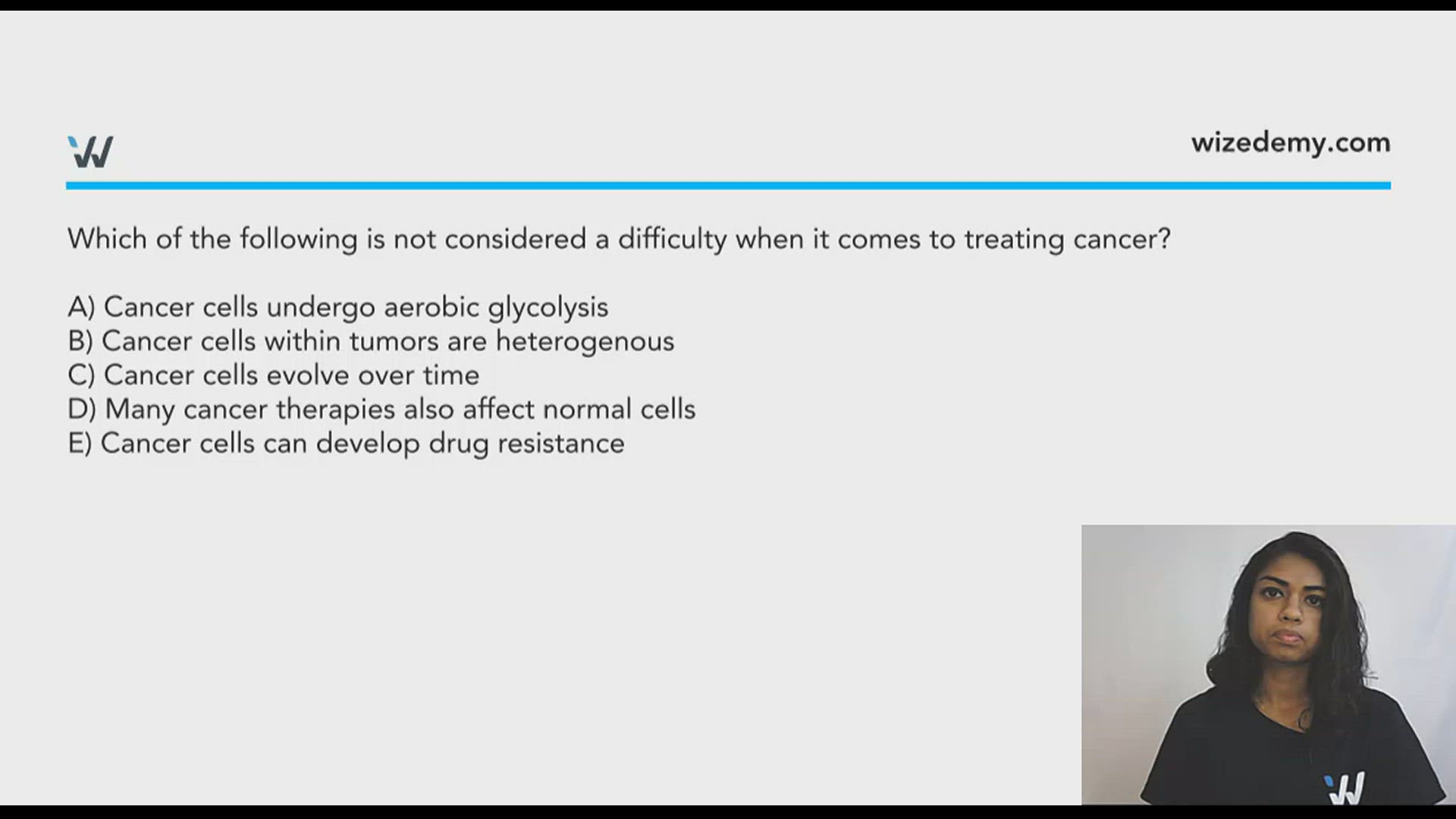
Which of the following is not considered a difficulty when it comes to treating cancer?
A) Cancer cells undergo aerobic glycolysis
B) Cancer cells within tumours are heterogenous
C) Cancer cells evolve over time
D) Many cancer therapies also affect normal cells
E) Cancer cells can develop drug resistance
The correct answer is A.
The fact that cancer cells undergo aerobic glycolysis is not a reason that prevents scientists and doctors from treating cancer. Understanding why cancer cells undergo aerobic glycolysis may provide insights into how cancer cells grow and proliferate and may ultimately allow researchers to develop new therapies against cancer. But for now, it is not considered a difficulty when it comes to targeting cancer cells for treatment.