Wize University Biochemistry Textbook > Structural Determination of Proteins
Structural Techniques
Chromatography
Chromatography: Part II
SDS-PAGE (Electrophoresis)
Mass Spectrometry
X-ray Crystallography
Electron Microscopy
Nuclear magnetic resonance (NMR)
Infrared spectroscopy (IR)
Circular Dichroism (CD)
Example: Affinity Tag Chromatography
Example: Gel Filtration Chromatography
Example: Determining Structure of Small Protein
Example: Methods for Determining Protein Structure
Example: Determining Structure of Small Protein
Practice: Match the Protein to the Technique
Popular Courses
Find My Course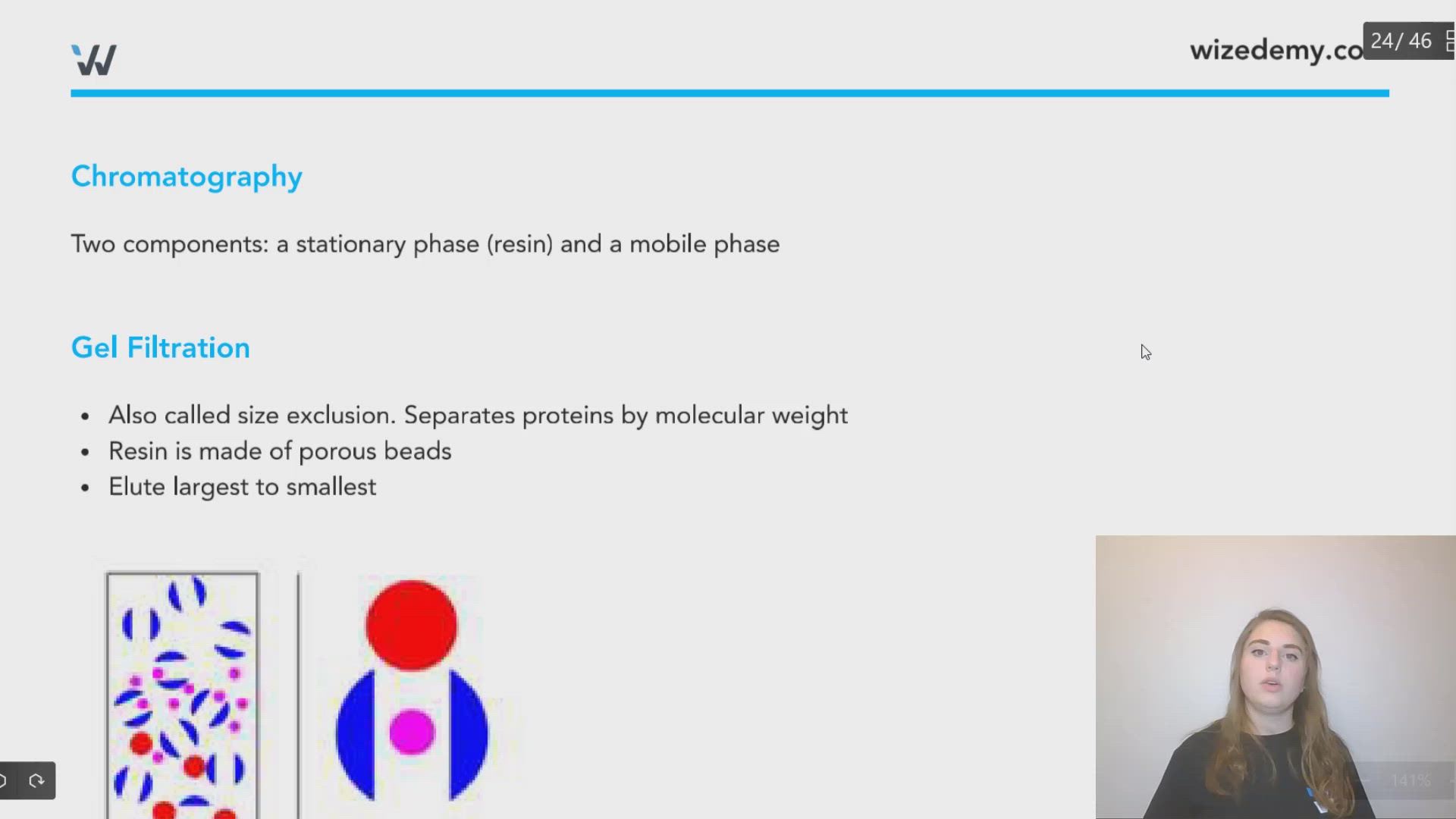
0:00 / 0:00
Chromatography
Two components: a stationary phase (resin) and a mobile phase
Gel Filtration
- Also called size exclusion. Separates proteins by molecular weight
- Resin is made of porous beads
- Elute largest to smallest
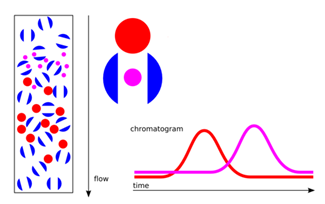
https://commons.wikimedia.org/wiki/File:SizeExChrom.png. Takometer. This file is licensed under the Creative Commons Attribution 2.5 Generic license.
Affinity Chromatography
- The resin contains a covalently bound ligand that binds selectively to the protein tag
- This only works if there is a tag on the protein
- Contaminating protein and cellular debris is washed off
- Protein is eluted with a high concentration of ligand which out competes resin, releasing the protein
Wize Tip
For your exam know:
His-tagged Proteins bind with affinity to Nickel resins and are eluted with high concentrations of Imidazole
GST-tagged Proteins (Glutathione S-transferases) bind with affinity to Glutathione resin and are eluted with high concentrations of Glutathione
Biotin (can be tagged onto a protein or a crosslinker that binds to protein) binds with affinity to Streptavidin resin.
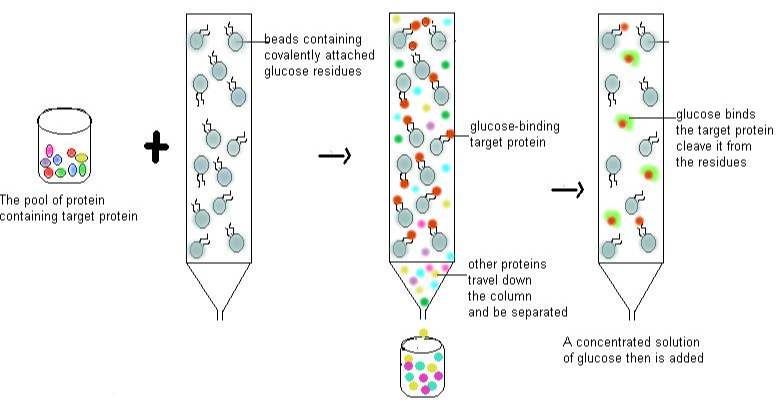
https://commons.wikimedia.org/wiki/File:Image-Chem_114A.jpg. Calibuon. This file is licensed under the Creative Commons Attribution-Share Alike 3.0 Unported, 2.5 Generic, 2.0 Generic and 1.0 Generic license.
0:00 / 0:00
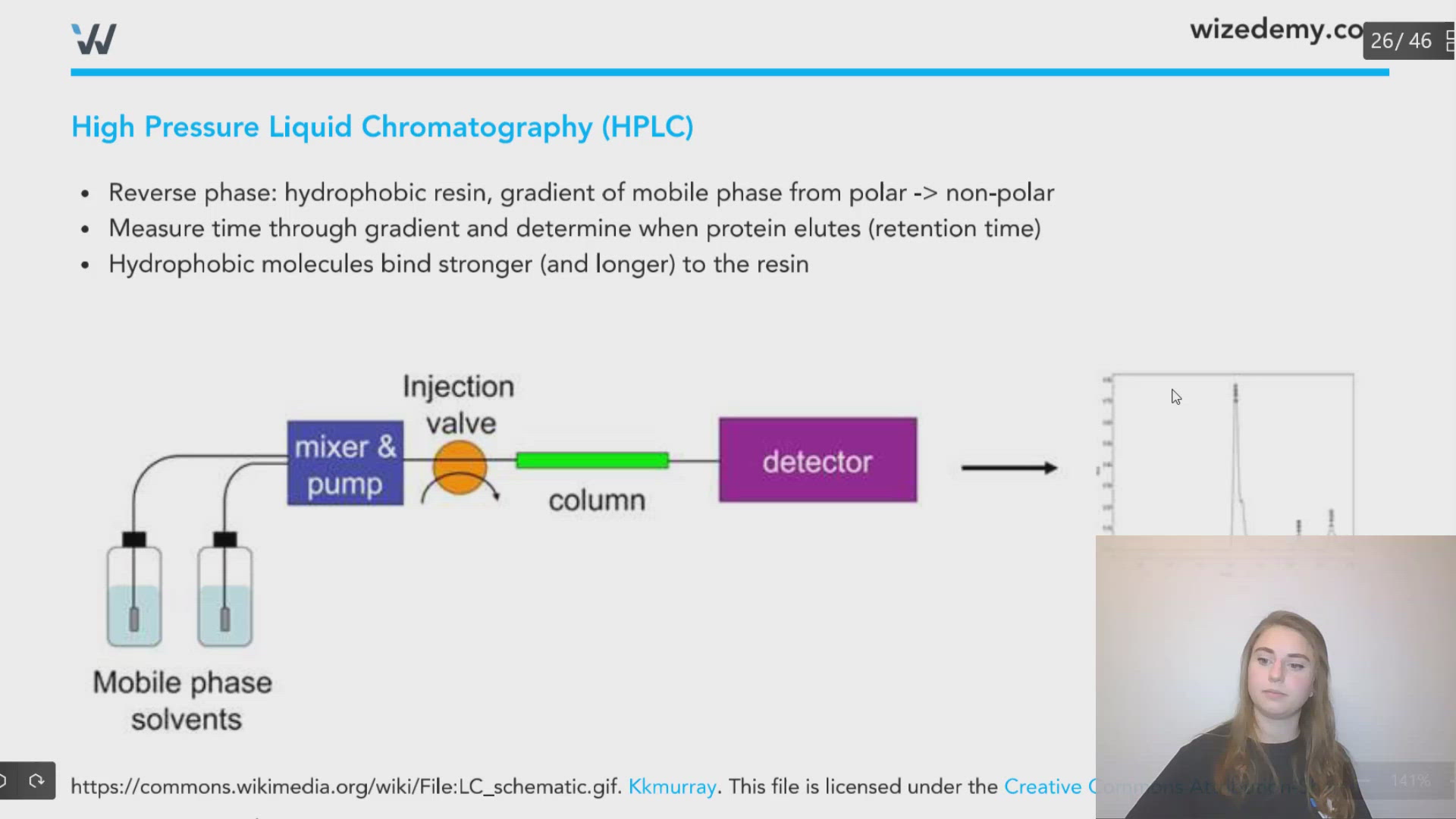
High Pressure Liquid Chromatography (HPLC)
- Reverse phase: hydrophobic resin, gradient of mobile phase from polar -> non-polar
- Measure time through gradient and determine when protein elutes (retention time)
- Hydrophobic molecules bind stronger (and longer) to the resin
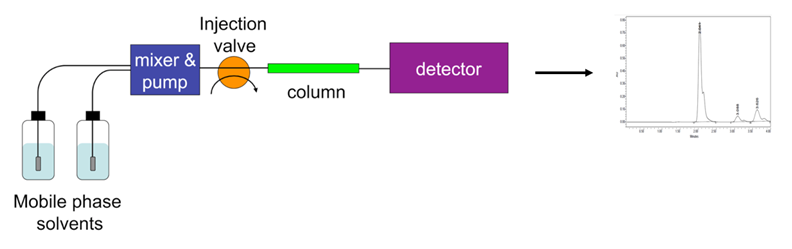
https://commons.wikimedia.org/wiki/File:LC_schematic.gif. Kkmurray. This file is licensed under the Creative Commons Attribution-Share Alike 3.0 Unported license.
https://commons.wikimedia.org/wiki/File:HPLC_readout_for_APAP,_ASA,_and_caffeine_mixture.png. Majora. This file is licensed under the Creative Commons Attribution-Share Alike 4.0 International license.
Ion Exchange
- Separates proteins by charge
- Anion exchange: binds negatively charges proteins to a positive resin
- Cation exchange: binds positively charges proteins to a negative resin
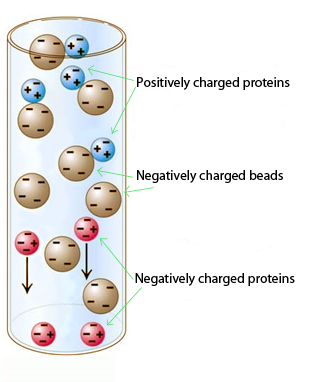
https://commons.wikimedia.org/wiki/File:Ionexachange.jpg. Jspiteri. This work has been released into the public domain.
Wize Tip
How to know what chromatography to use to isolate a protein from a known mixture?
Does it have an affinity tag? Use affinity chromatography.
Do the proteins have significantly different net charges? Use ion exchange.
Is the proteins of interest significantly more hydrophobic or less hydrophobic than the contaminating proteins? Use HPLC.
Is there a significant size difference in the protein of interest and the contaminating proteins? Use gel filtration.
0:00 / 0:00
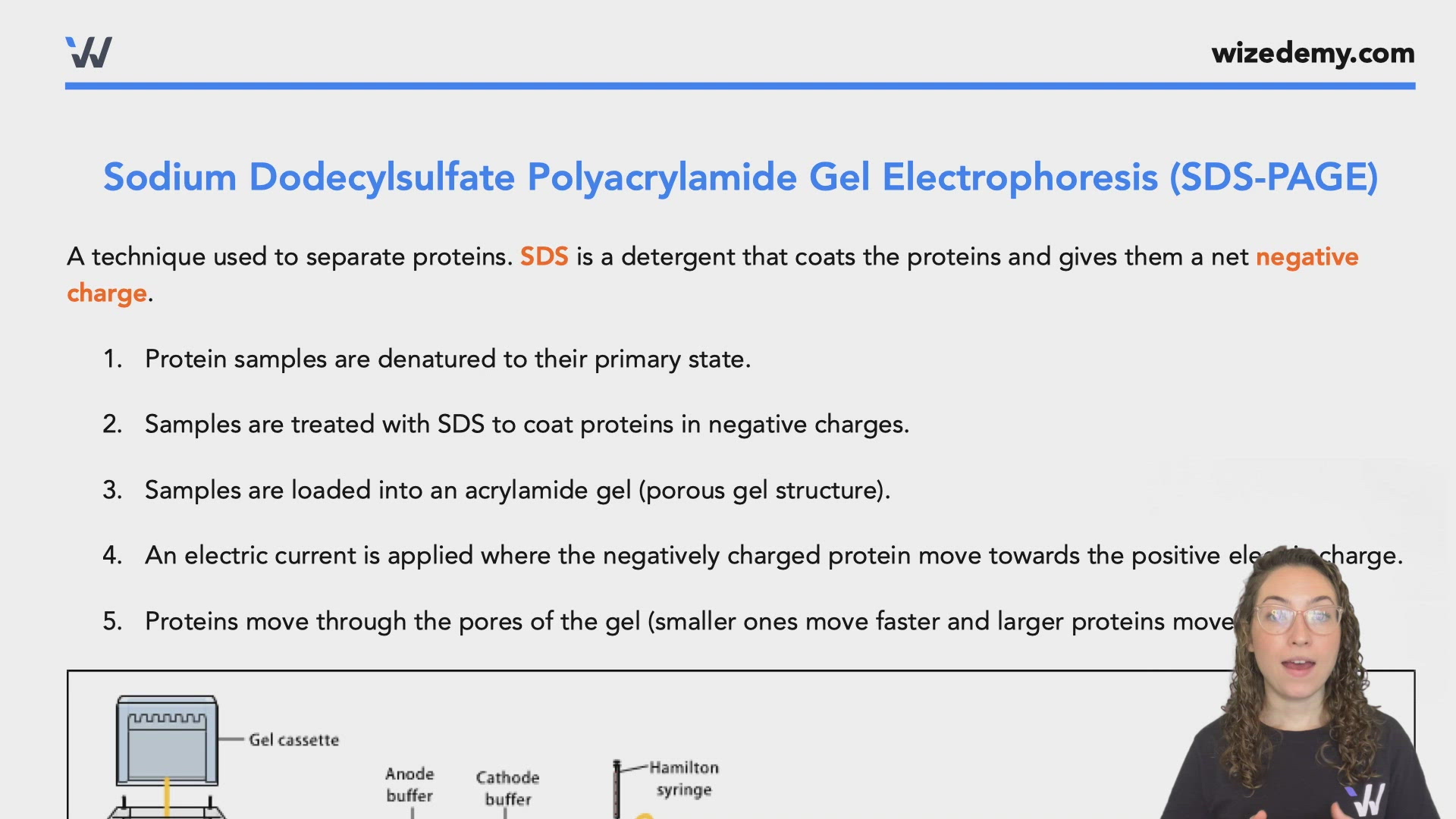
Sodium Dodecylsulfate Polyacrylamide Gel Electrophoresis (SDS-PAGE)
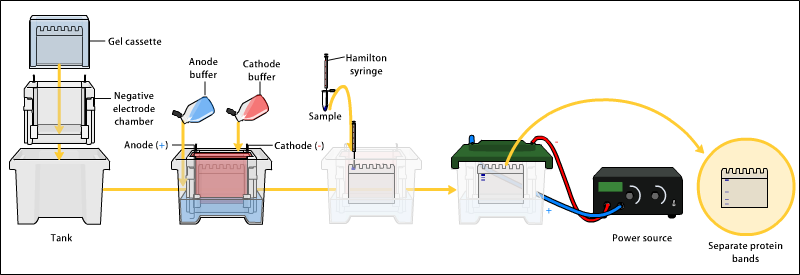
A technique used to separate proteins. SDS is a detergent that coats the proteins and gives them a net negative charge.
- Protein samples are denatured to their primary state.
- Samples are treated with SDS to coat proteins in negative charges.
- Samples are loaded into an acrylamide gel (porous gel structure).
- An electric current is applied where the negatively charged protein move towards the positive electric charge.
- Proteins move through the pores of the gel (smaller ones move faster and larger proteins move slower).
Results:
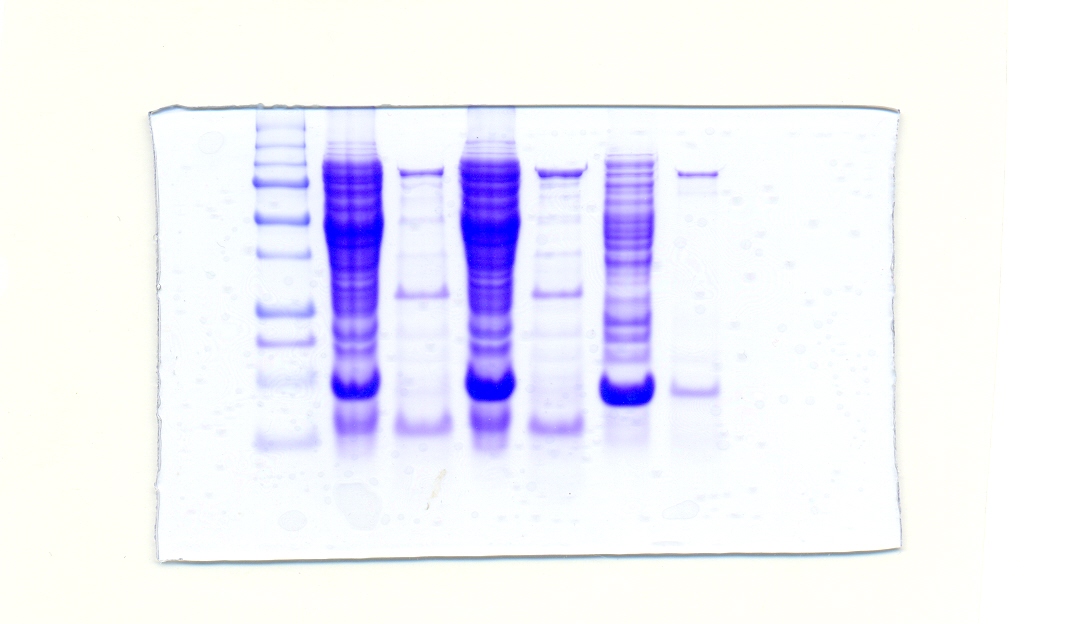
Can you tell which proteins are larger and which are more concentrated?
Bands closer to the bottom of the gel represent smaller proteins which migrated faster through the cell. Bands that are relatively thicker represented more concentrated proteins than light, thin bands.
Two-Dimensional Gel Electrophoresis
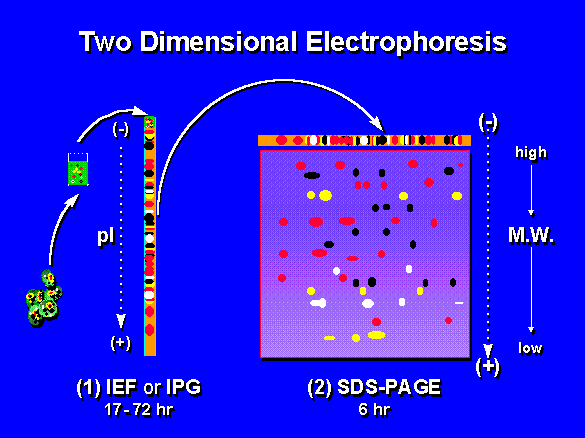
First separates proteins based on charge and then based on mass.
- Isoelectric Focusing (IEF): A protein placed in a pH gradient will migrate through an electric field based on its net electric charge until it reaches its isoelectric point (PI) (i.e. the point where the protein's net charge is zero).
- SDS-PAGE: The IEF gel is placed lengthwise across an SDS-PAGE gel to separate the proteins based on size.
0:00 / 0:00
Mass Spectrometry (MS)
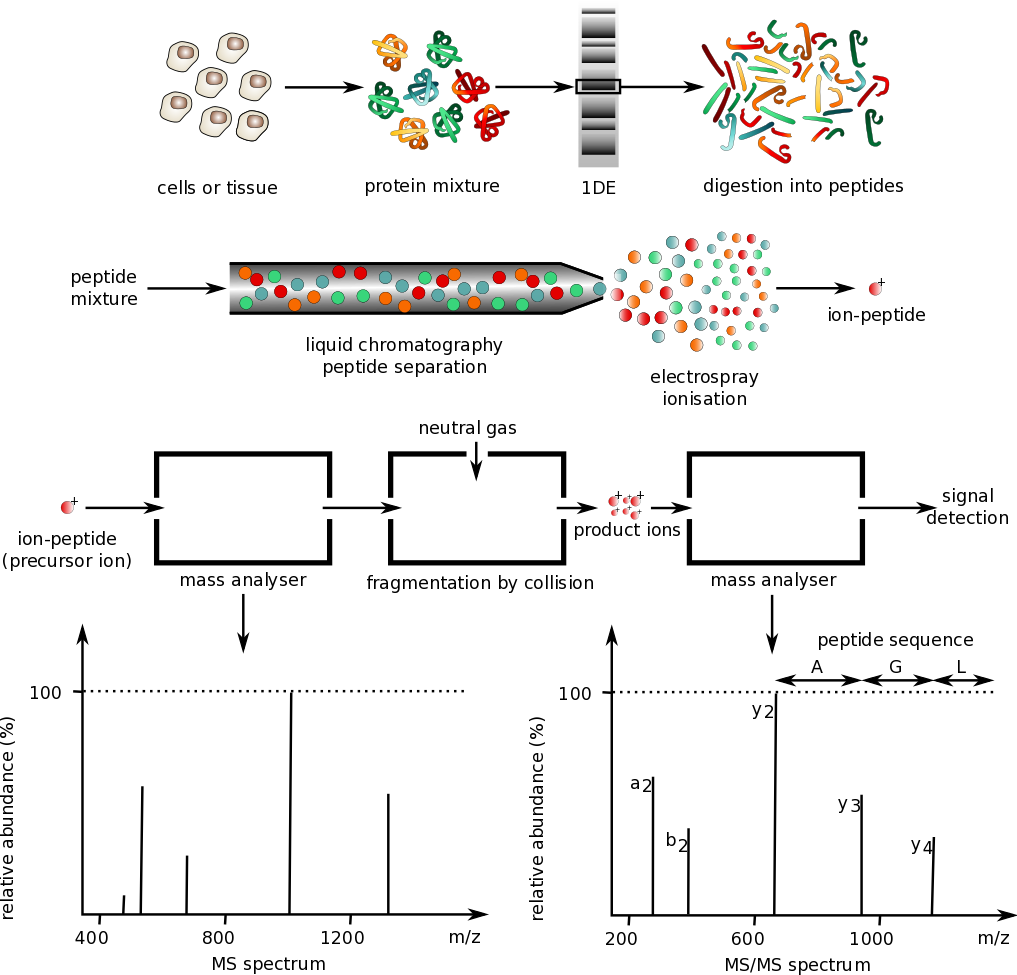
Allows you to detect the mass:charge (m/z) ratio of a protein.
- Mass spec analyzers contain:
- 1) An ion source to ionize proteins (MALDI or electrospray);
- 2) Mass analyzer which separates proteins based on their m/z ratio (TOF or ion traps);
- 3) Strike detector which tells the relative abundance of each ion;
- 4) Computerized data system to acquire, store and process data.
- Mass spec is highly sensitive (can detect down to 1x10-15 mol of certain proteins) and can easily distinguish between two very similar proteins.
- Mass spec gives researchers a RELATIVE amount of protein, not an absolute amount.
0:00 / 0:00
X-ray Crystallography
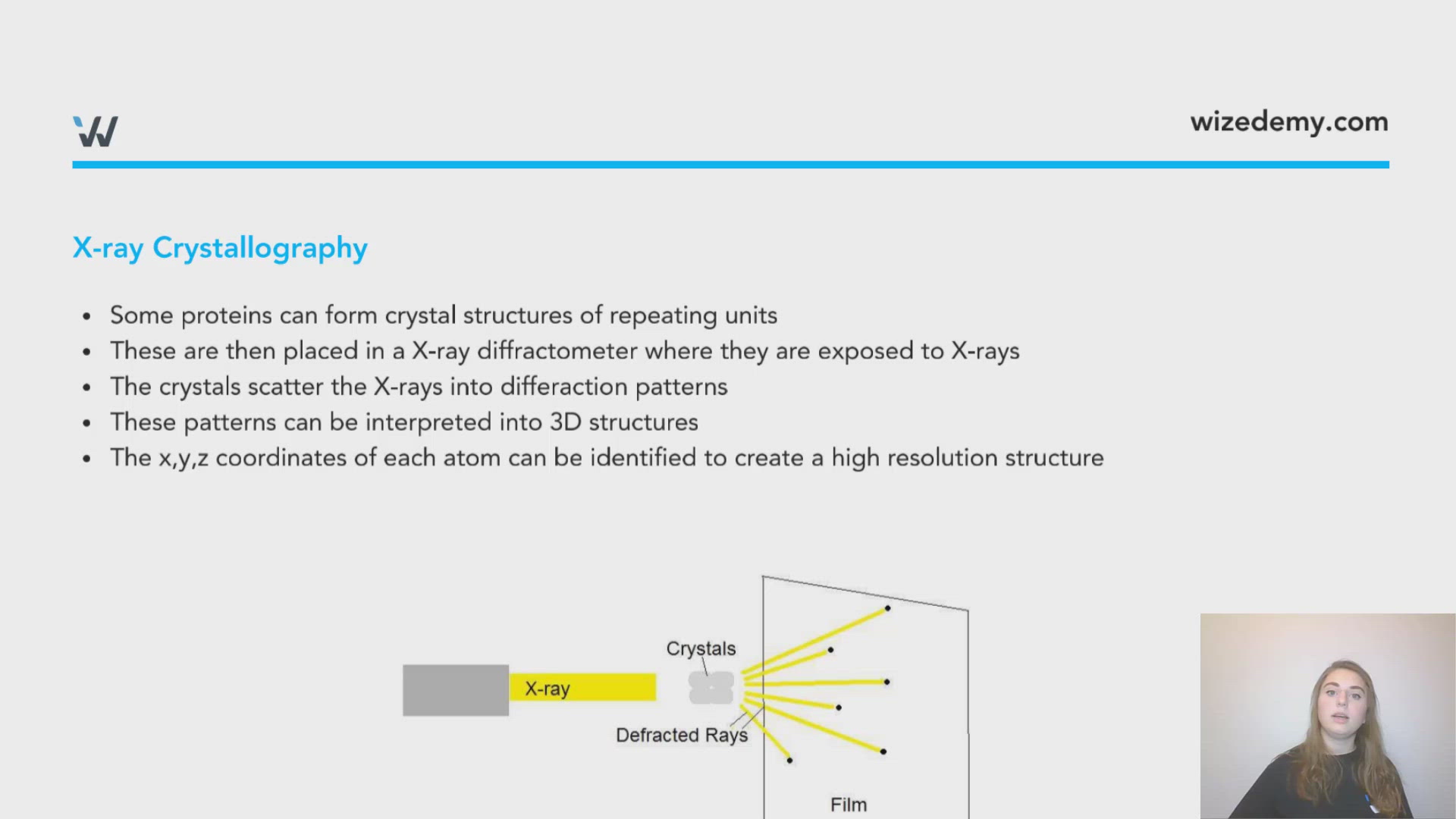
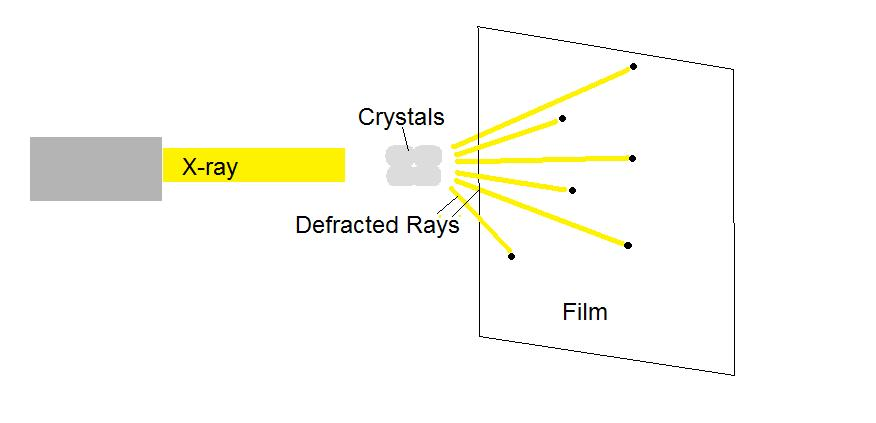
- Some proteins can form crystal structures of repeating units
- These are then placed in a X-ray diffractometer where they are exposed to X-rays
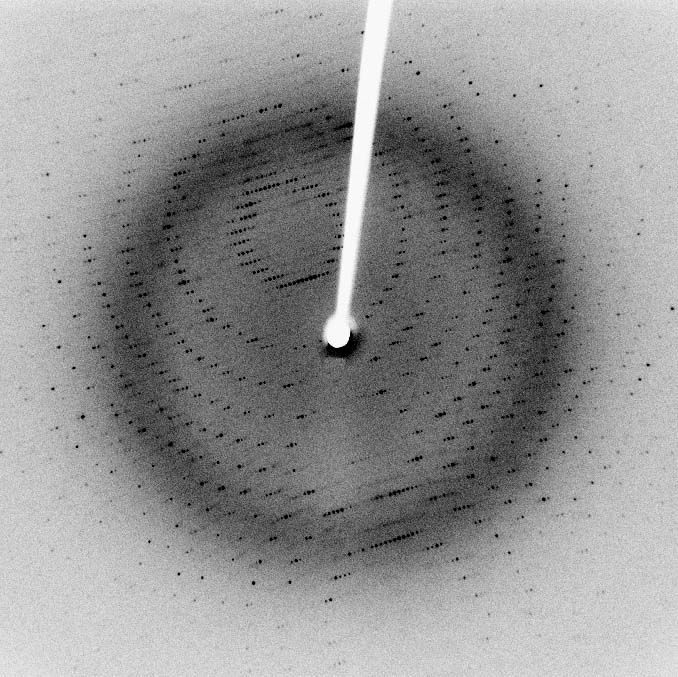
- The crystals scatter the X-rays into diffraction patterns
- These patterns can be interpreted into 3D structures
- The x,y,z coordinates of each atom can be identified to create a high resolution structure
https://commons.wikimedia.org/wiki/File:X-ray_Crystallography.jpg#/media/File:X-ray_Crystallography.jpg. This work has been released into the public domain by its author, JohnKim.
https://commons.wikimedia.org/wiki/File:X-ray_diffraction_pattern_3clpro.jpg. This file is licensed under the Creative Commons Attribution-Share Alike 3.0 Unported, 2.5 Generic, 2.0 Generic and 1.0 Generic license.
0:00 / 0:00
Electron Microscopy
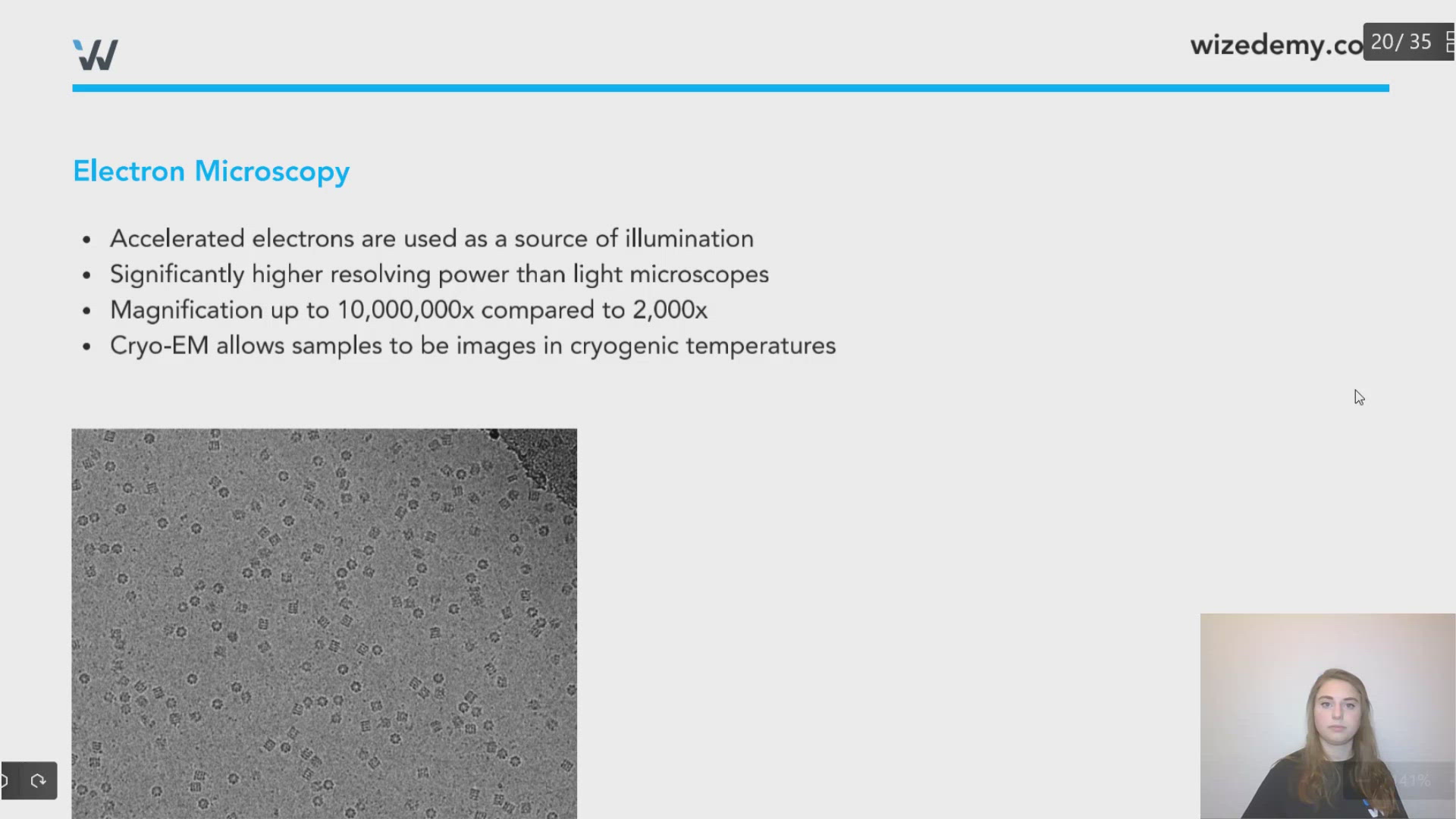
- Accelerated electrons are used as a source of illumination
- Significantly higher resolving power than light microscopes
- Magnification up to 10,000,000x compared to 2,000x
- Cryo-EM allows samples to be images in cryogenic temperatures
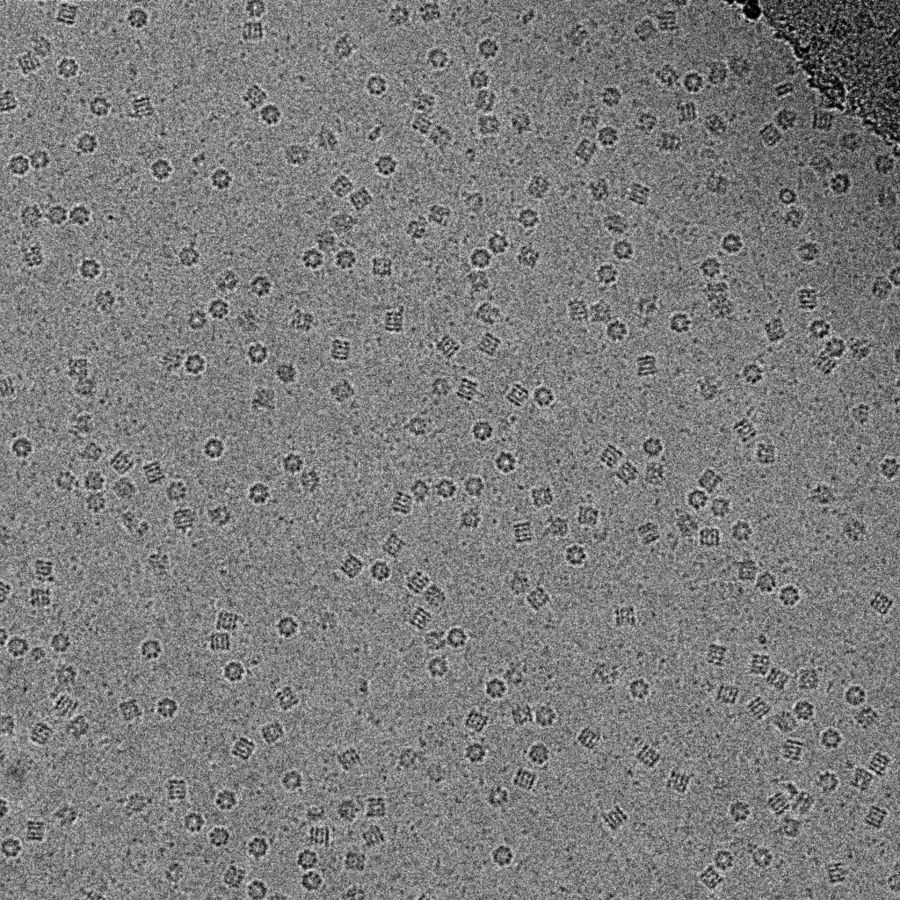
https://commons.wikimedia.org/wiki/File:Cryoem_groel.jpg. This file is licensed under the Creative Commons Attribution-Share Alike 4.0 International, 3.0 Unported, 2.5 Generic, 2.0 Generic and 1.0 Generic license.
0:00 / 0:00
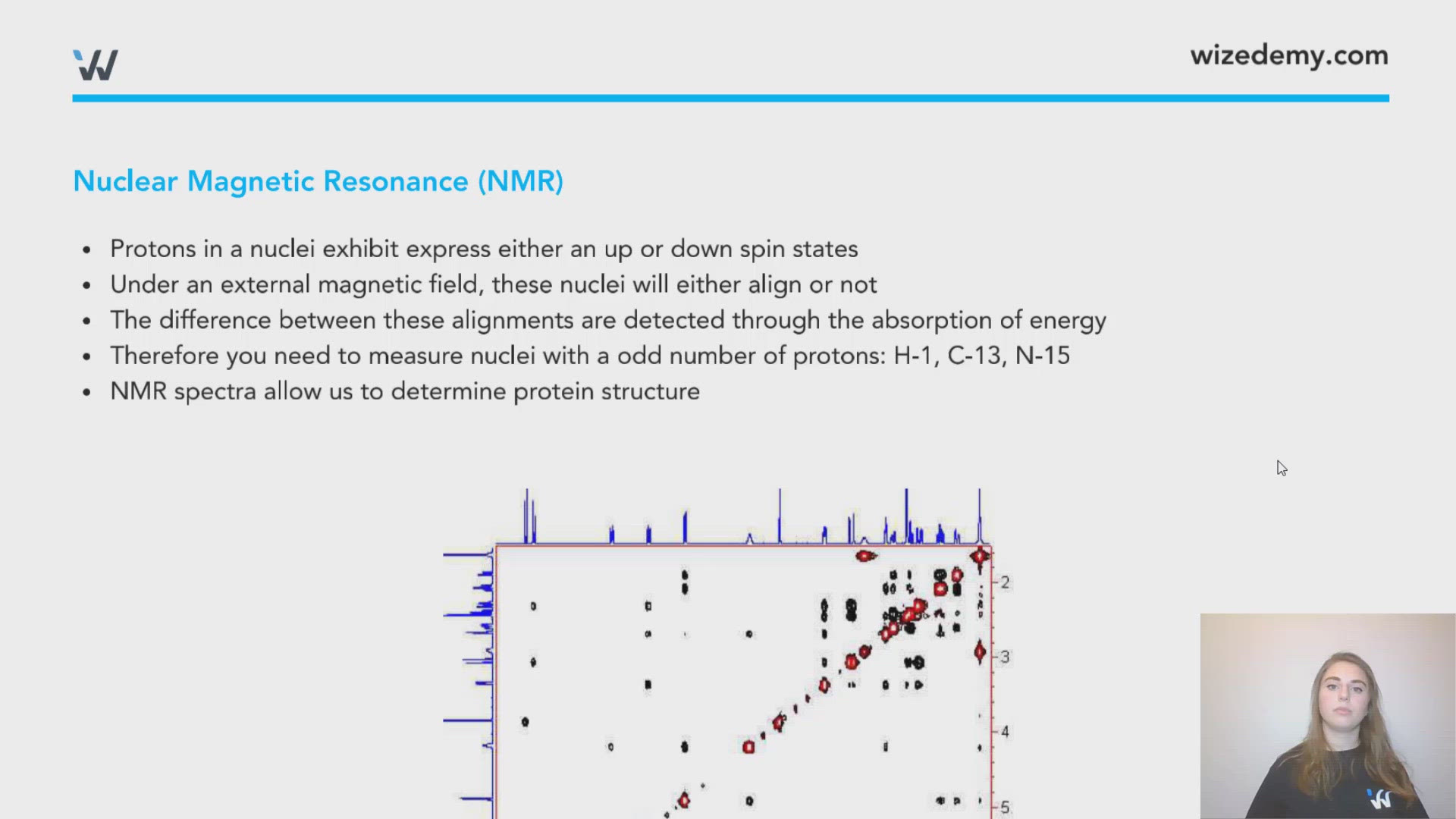
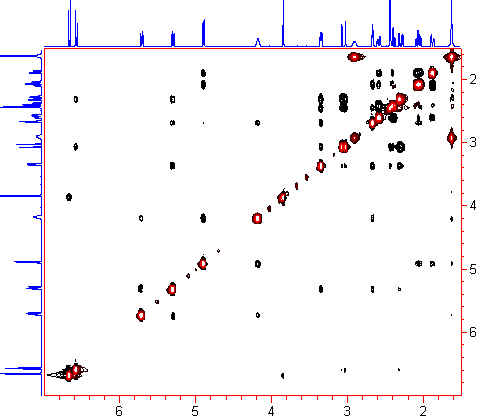
Nuclear Magnetic Resonance (NMR)
- Protons in a nuclei exhibit either up or down spin states
- Under an external magnetic field, these nuclei will either align or not
- The difference between these alignments are detected through the absorption of energy
- Therefore you need to measure nuclei with a odd number of protons: H-1, C-13, N-15
- NMR spectra allow us to determine protein structure
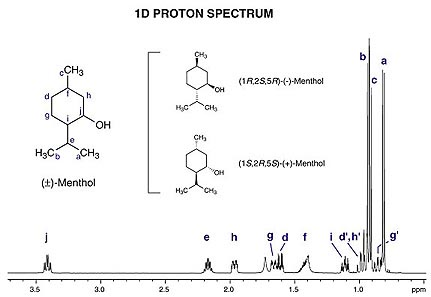
https://en.wikipedia.org/wiki/File:Menthol_Proton_Spectrum.jpg. As a work of the U.S. federal government, the image is in the public domain.
https://commons.wikimedia.org/wiki/File:Noesy.jpg. This file is licensed under the Creative Commons Attribution-Share Alike 3.0 Unported license.
0:00 / 0:00
Infrared Spectroscopy (IR)
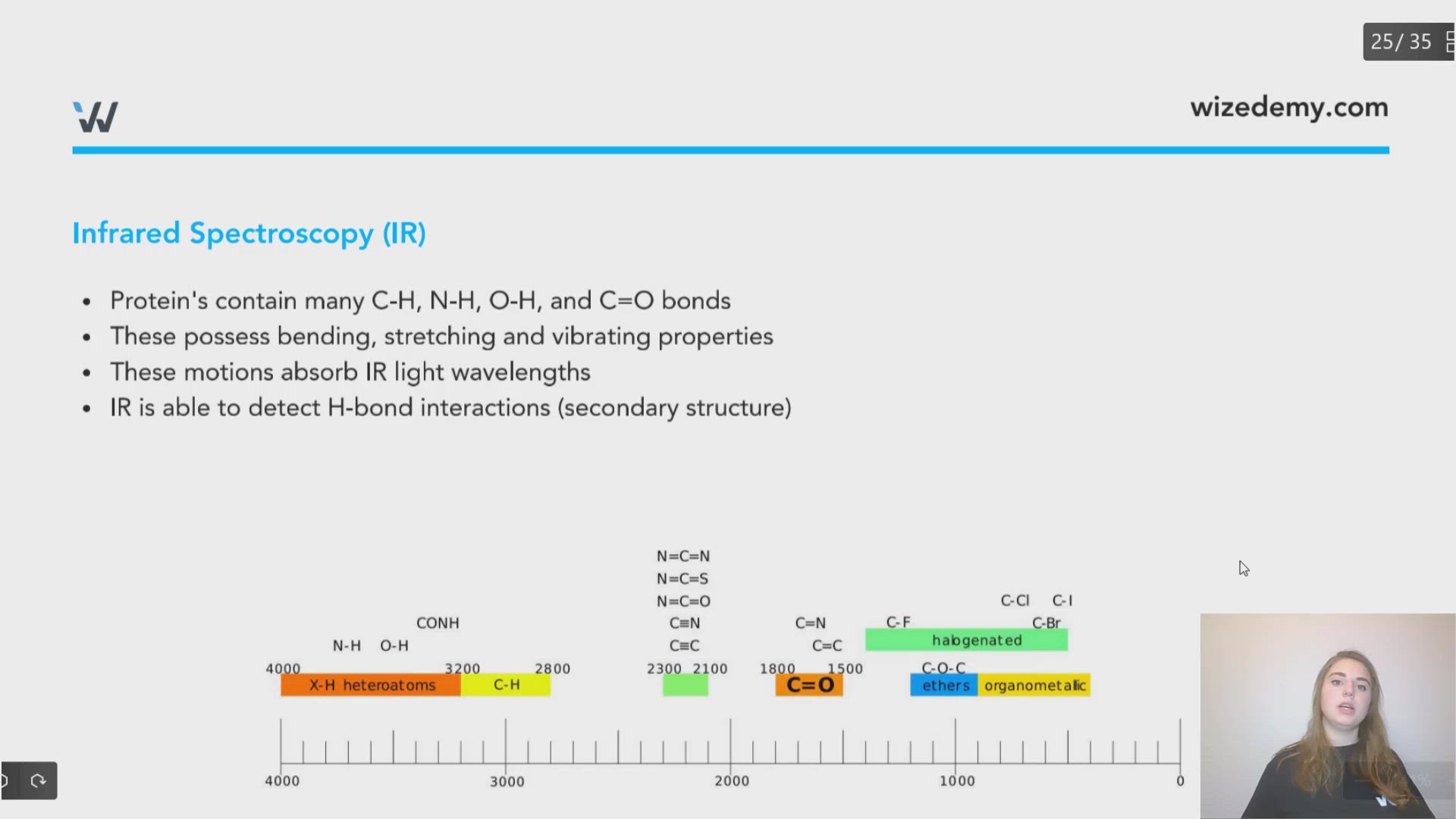
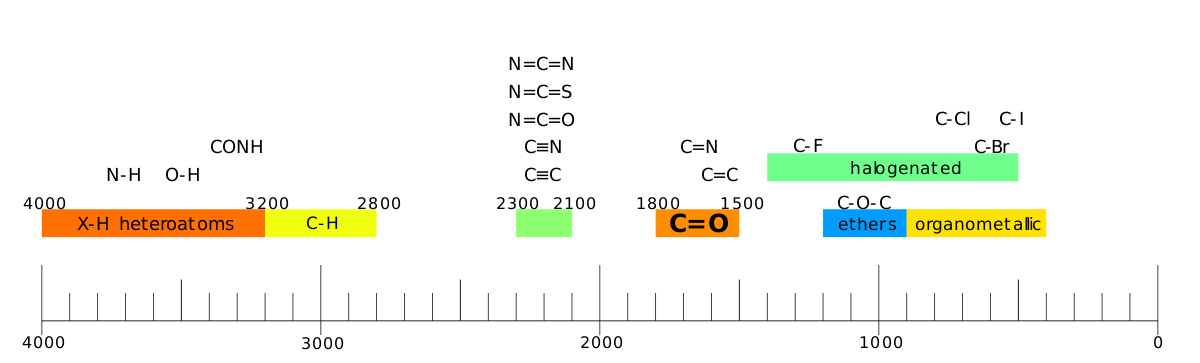
- Protein's contain many C-H, N-H, O-H, and C=O bonds
- These possess bending, stretching and vibrating properties
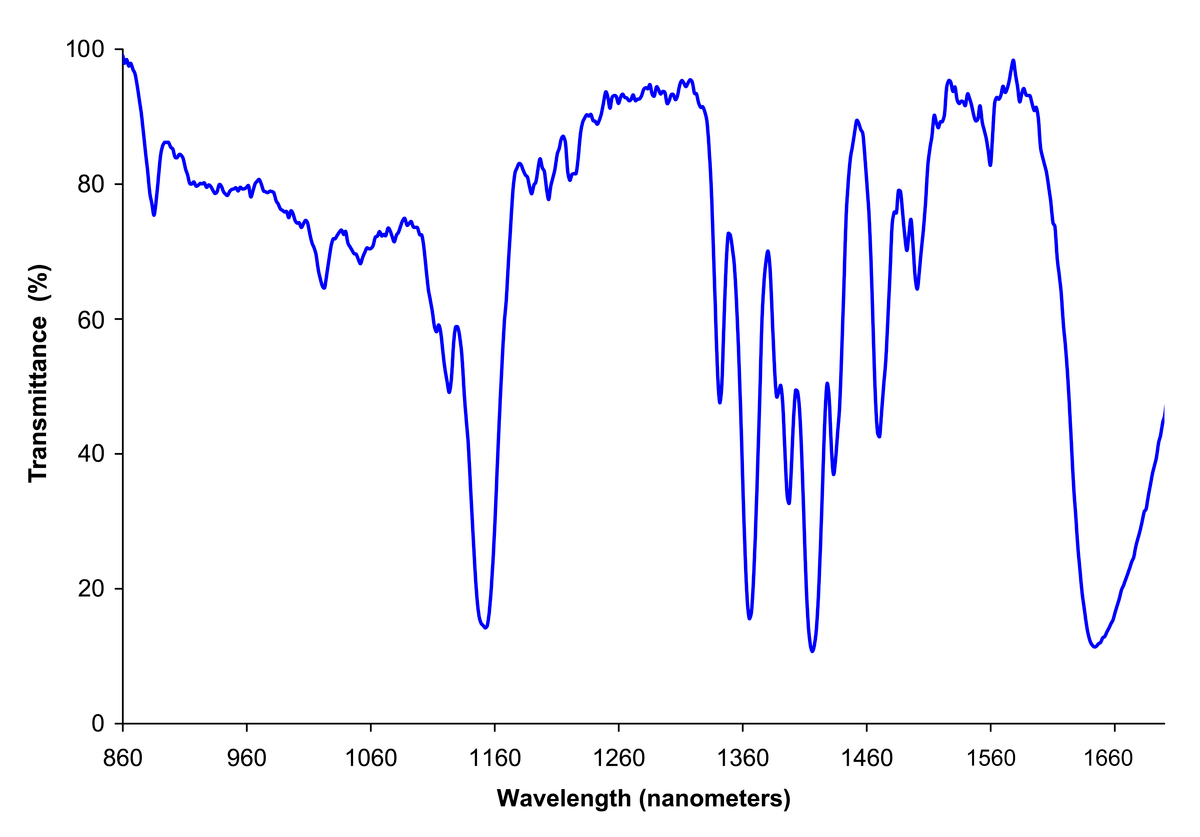
- These motions absorb IR light wavelengths
- IR is able to detect H-bond interactions (secondary structure)
https://commons.wikimedia.org/wiki/File:IR-spectroscopy-sample.svg. This file is licensed under the Creative Commons Attribution-Share Alike 4.0 International license.
https://commons.wikimedia.org/wiki/File:Dichloromethane_near_IR_spectrum.png. This file is licensed under the Creative Commons Attribution-Share Alike 3.0 Unported license. Subject to disclaimers.
0:00 / 0:00
Circular Dichroism
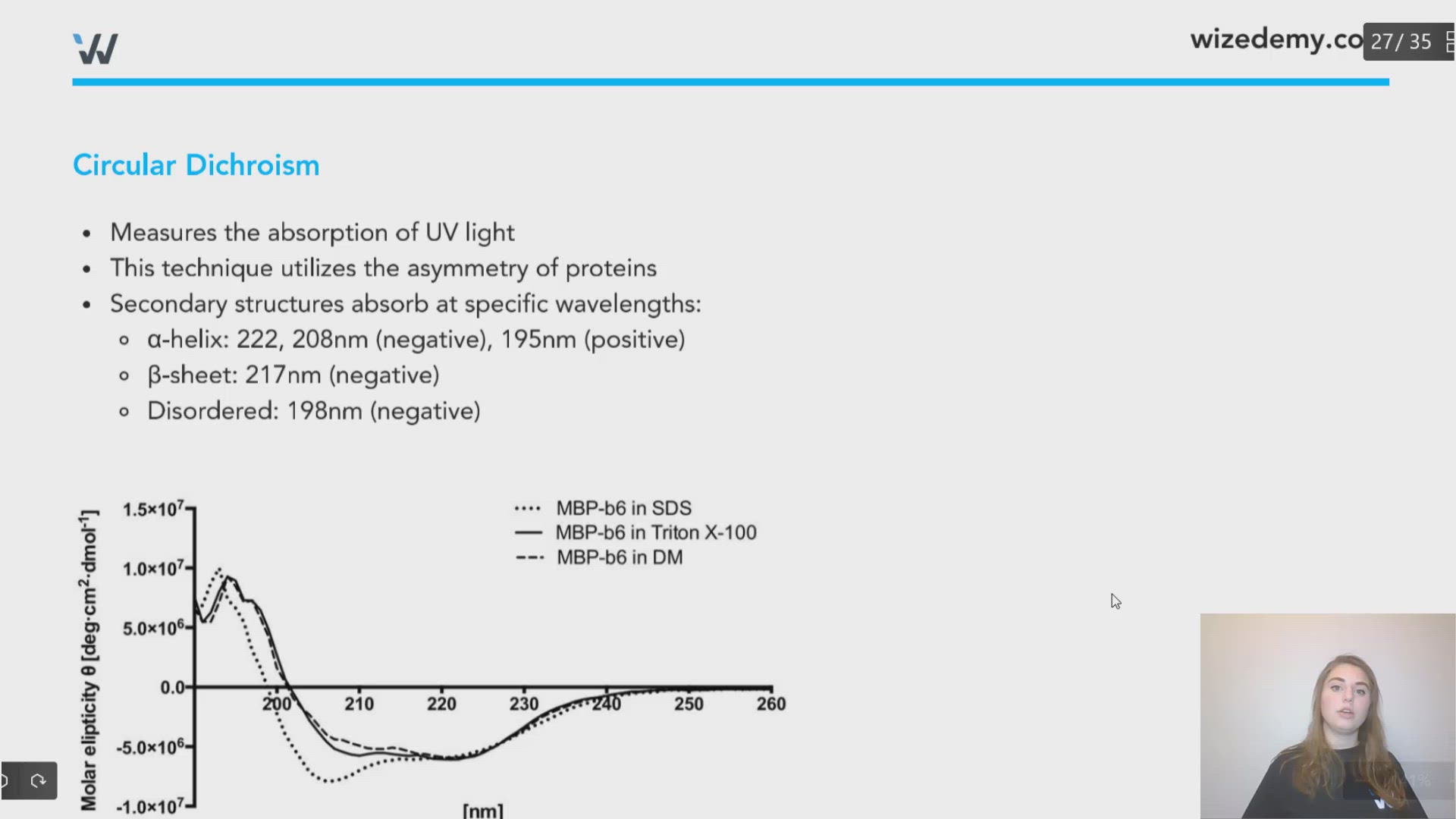
- Measures the absorption of UV light
- This technique utilizes the asymmetry of proteins
- Secondary structures absorb at specific wavelengths:
- α-helix: 222, 208nm (negative), 195nm (positive)
- β-sheet: 217nm (negative)
- Disordered: 198nm (negative)
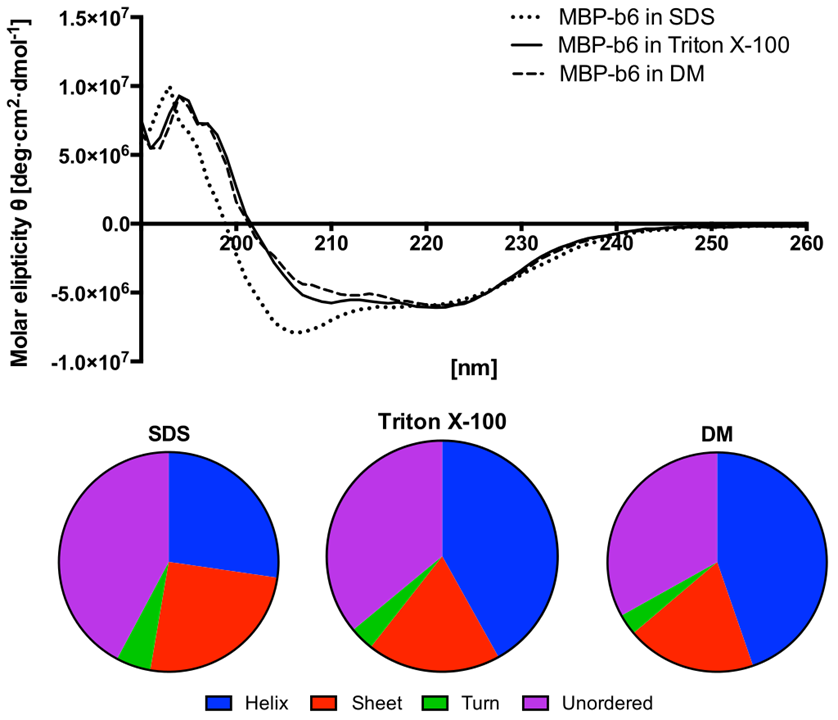
https://commons.wikimedia.org/wiki/File:Circular_dichroism_and_structures_calculation-protein_in_detergents.svg. This file is licensed under the Creative Commons Attribution 2.5 Generic license.
0:00 / 0:00
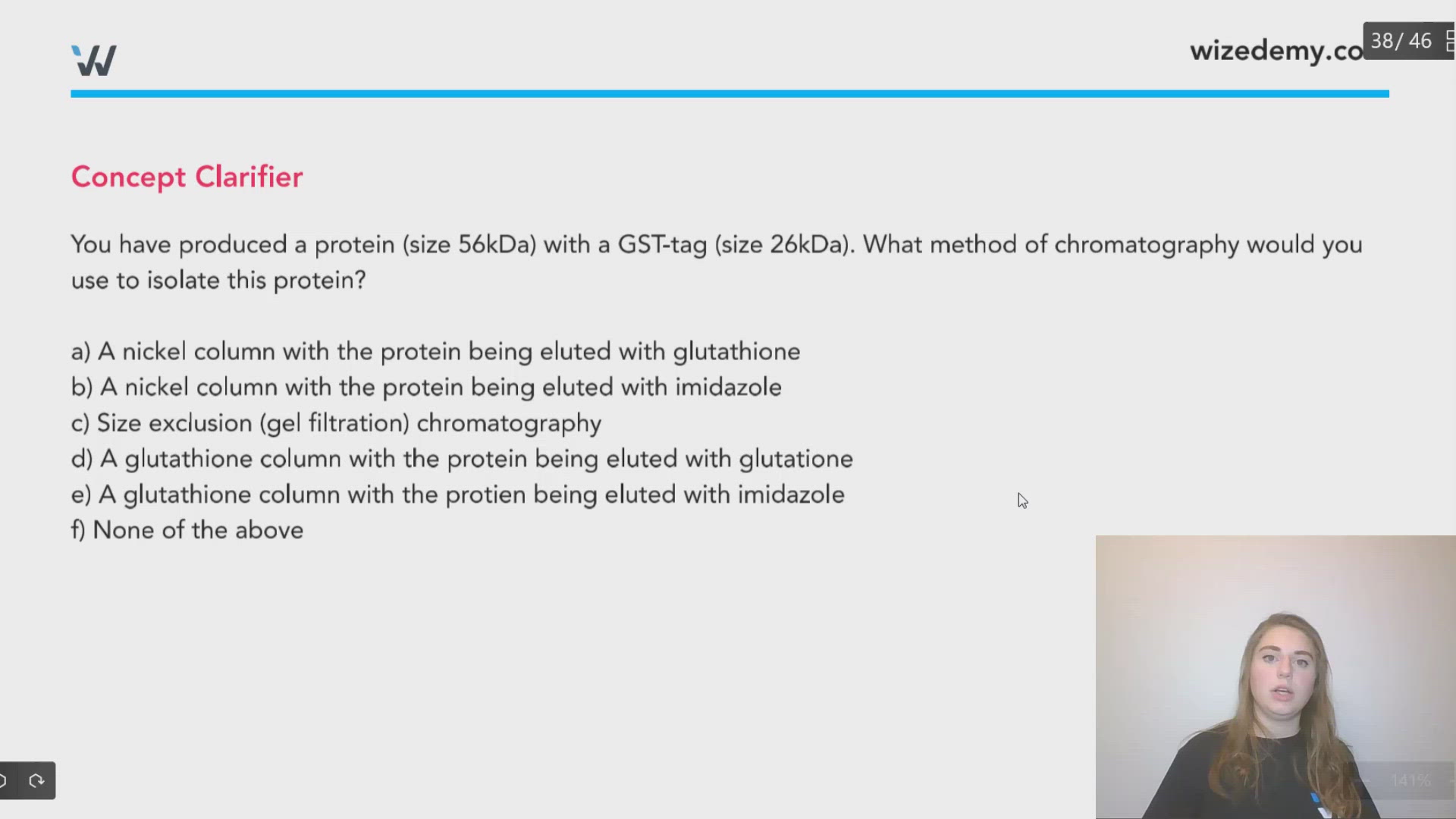
You have produced a protein (size 56kDa) with a GST-tag (size 26kDa). What method of chromatography would you use to isolate this protein?
a) A nickel column with the protein being eluted with glutathione
b) A nickel column with the protein being eluted with imidazole
c) Size exclusion (gel filtration) chromatography
d) A glutathione column with the protein being eluted with glutathione
e) A glutathione column with the protein being eluted with imidazole
f) None of the above
d) A glutathione column with the protein being eluted with glutathione
0:00 / 0:00
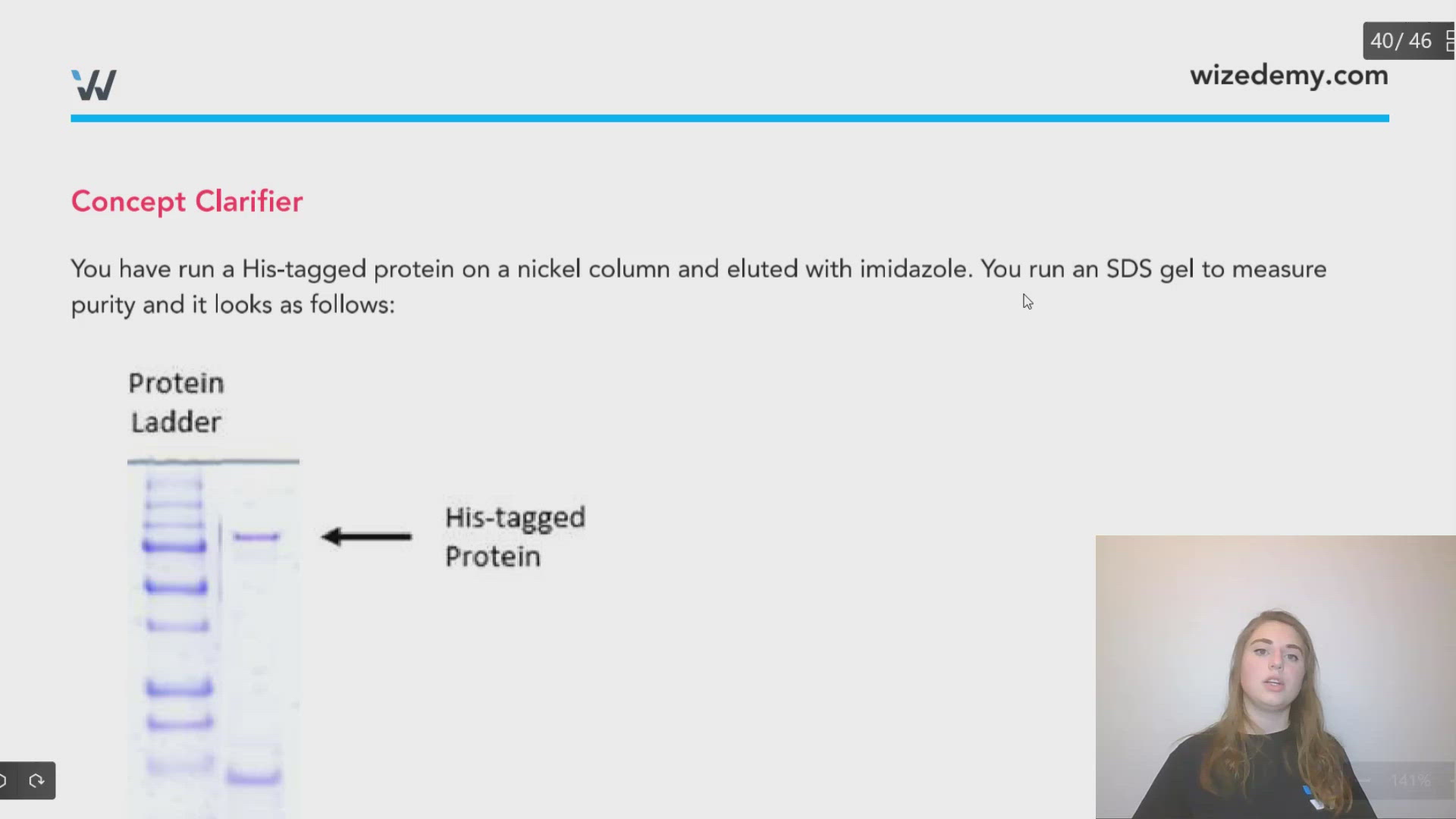
You have run a His-tagged protein on a nickel column and eluted with imidazole. You run an SDS gel to measure purity and it looks as follows:
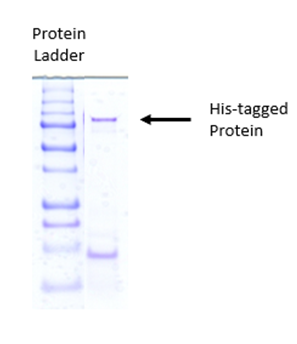
https://commons.wikimedia.org/wiki/File:SDS-PAGE_with_Taq_DNA_Polymerase.JPG. Marta Ferreira. This file is licensed under the Creative Commons Attribution-Share Alike 3.0 Unported license.
What would your next step be to isolate your His-tagged protein from the contaminating band?
a) Another nickel column
b) Ion exchange Chromatography
c) HPLC
d) Gel filtration chromatography
d) Gel filtration chromatography. The two proteins present are significantly different in size so gel filtration will separate them into two clean fractions.
0:00 / 0:00
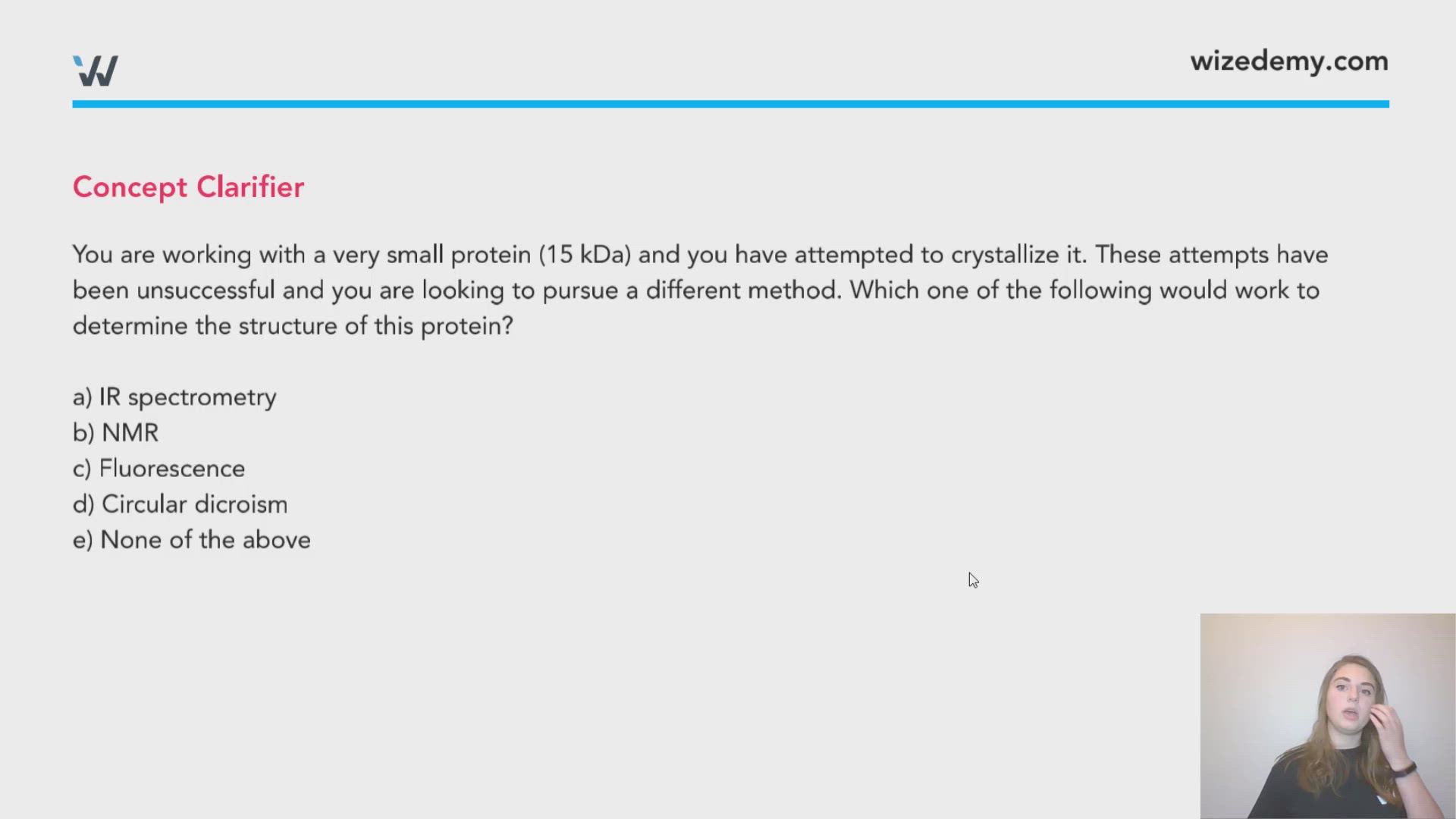
You are working with a very small protein (15 kDa) and you have attempted to crystallize it. These attempts have been unsuccessful and you are looking to pursue a different method. Which one of the following would work to determine the structure of this protein?
a) IR spectrometry
b) NMR
c) Fluorescence
d) Circular dichroism
e) None of the above
b) NMR, the other methods will not elucidate tertiary structure.
0:00 / 0:00
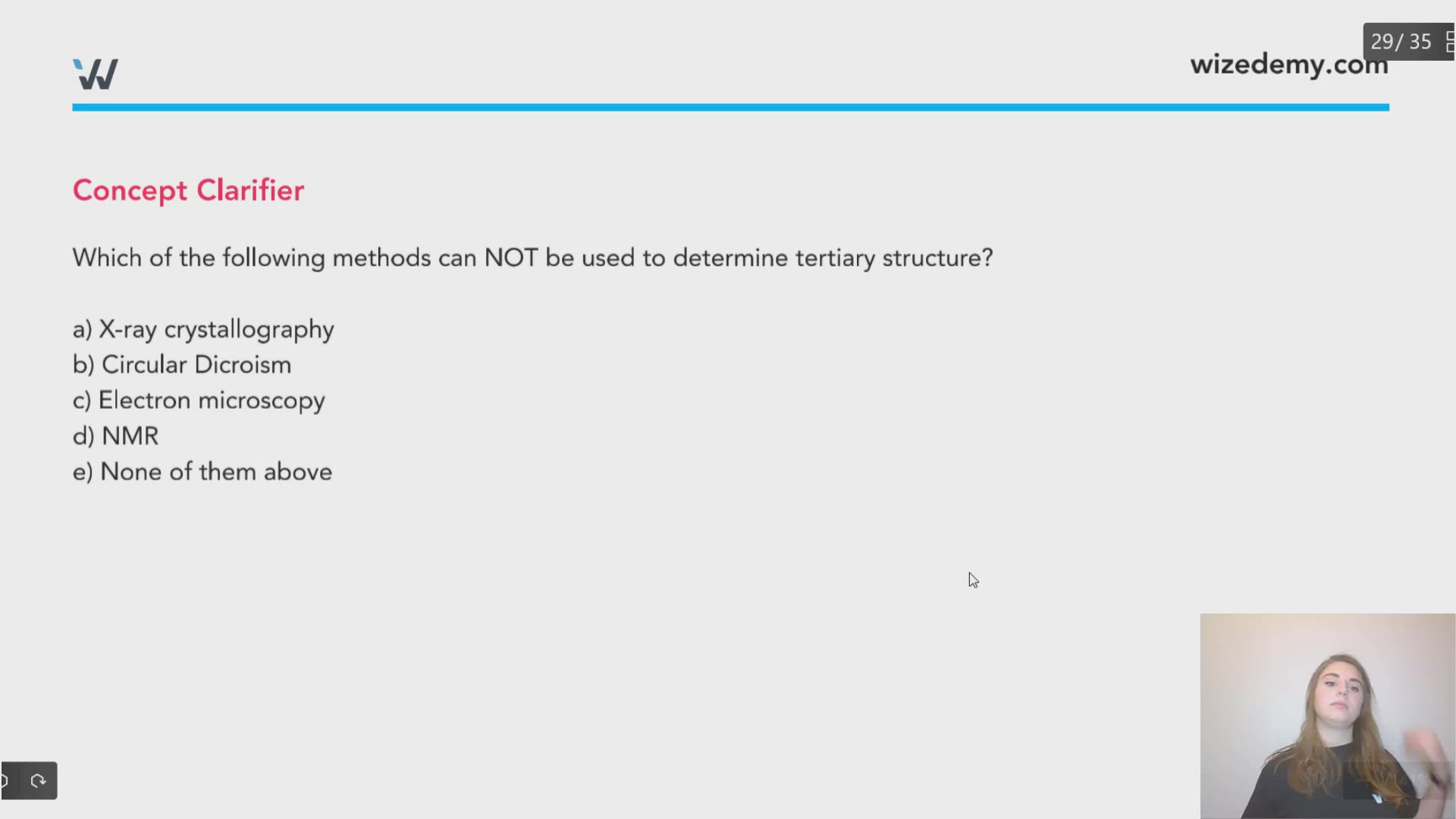
Which of the following methods can NOT be used to determine tertiary structure?
a) X-ray crystallography
b) Circular Dichroism
c) Electron microscopy
d) NMR
e) None of them above
b) Circular Dichroism
0:00 / 0:00
You are working with a very small protein (15 kDa) and you have attempted to crystallize it. These attempts have been unsuccessful and you are looking to pursue a different method. Which one of the following would work to determine the structure of this protein?
a) IR spectrometry
b) NMR
c) Fluorescence
d) Circular dichroism
e) None of the above
b) NMR, the other methods will not elucidate tertiary structure.
Match the protein the the appropriate technique to determine structure.
A.
IR spectroscopy
B.
NMR
C.
Electron microscopy
D.
X-ray crystallography
A 60 kDa protein that forms a well defined lattice structure of repeating units
A large multi-subunit protein with a combined mass of 100 kDa
A small 10 kDa protein which only forms crystals with 5 angstrom resolution
You want to determine the secondary structure characteristics of a protein