Popular Courses
Find My Course
0:00 / 0:00
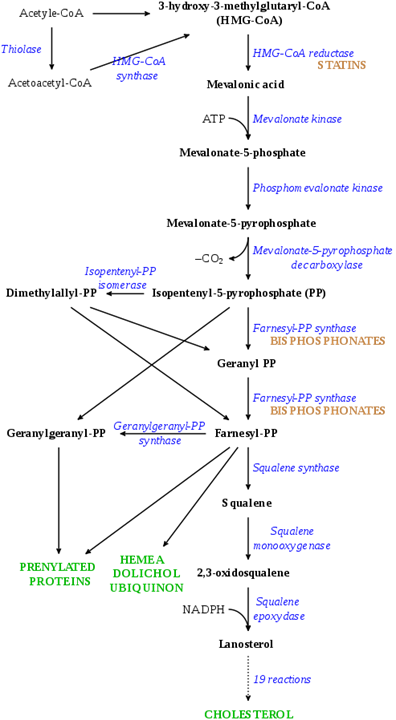
Cholesterol
- Important for membranes, hormones, bile acids, and vitamin D3
- Made from acetyl-CoA
- HMG-CoA reductase produces mevalonate (major point of regulation)
- Can be inhibited via phosphorylation
- Statins are competitive inhibitors
- Uses 2 NADPH to form mevalonate
- 3 ATPs are used to form isoprene units that join to form squalene (C30)
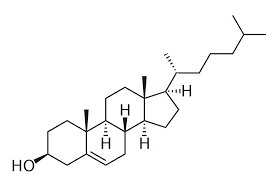
- In the ER squalene is cyclized to cholesterol (C27)
https://commons.wikimedia.org/wiki/File:Lovastatin.svg. Panoramix303. Creative Commons Attribution-Share Alike 3.0 Unported license.
- Cholesterol esters (CE) can be formed through modifications oh the hydroxyl group (acyl groups added)
- Transported through the bloodstream via lipoprotein complexes
Cardiovascular Disease
- Oxidized LDL is found in arterial plaques resulting in heart attack or stroke
- Exercise and Diet can raise HDL and lower LDL
0:00 / 0:00
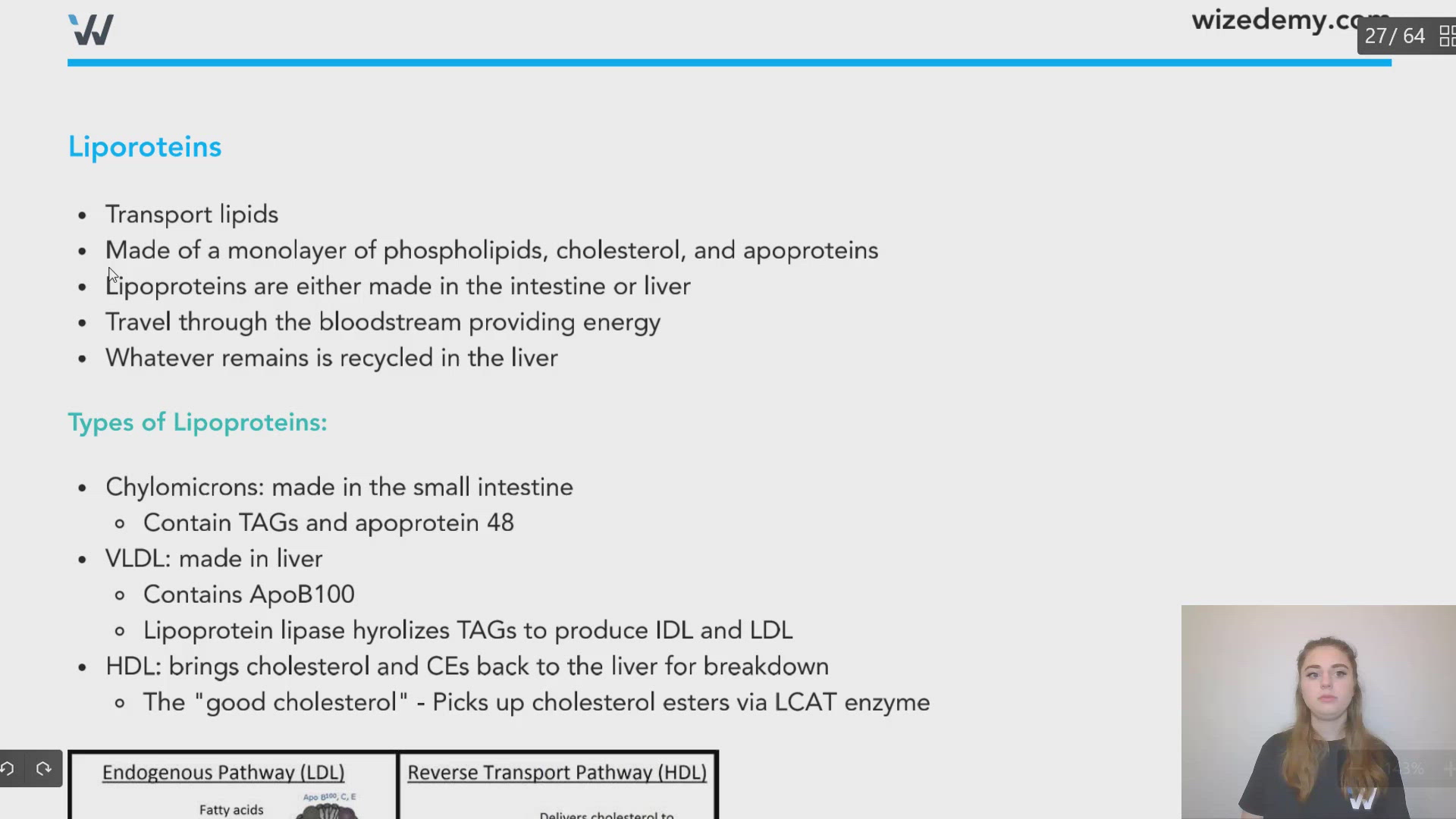
Liporoteins
- Transport lipids
- Made of a monolayer of phospholipids, cholesterol, and apoproteins
- Lipoproteins are either made in the intestine or liver
- Travel through the bloodstream providing energy
- Whatever remains is recycled in the liver
Types of Lipoproteins:
- Chylomicrons: made in the small intestine
- Contain TAGs and apoprotein 48
- VLDL: made in liver
- Contains ApoB100
- Lipoprotein lipase hyrolizes TAGs to produce IDL and LDL
- HDL: brings cholesterol and CEs back to the liver for breakdown
- The "good cholesterol" - Picks up cholesterol esters via LCAT enzyme
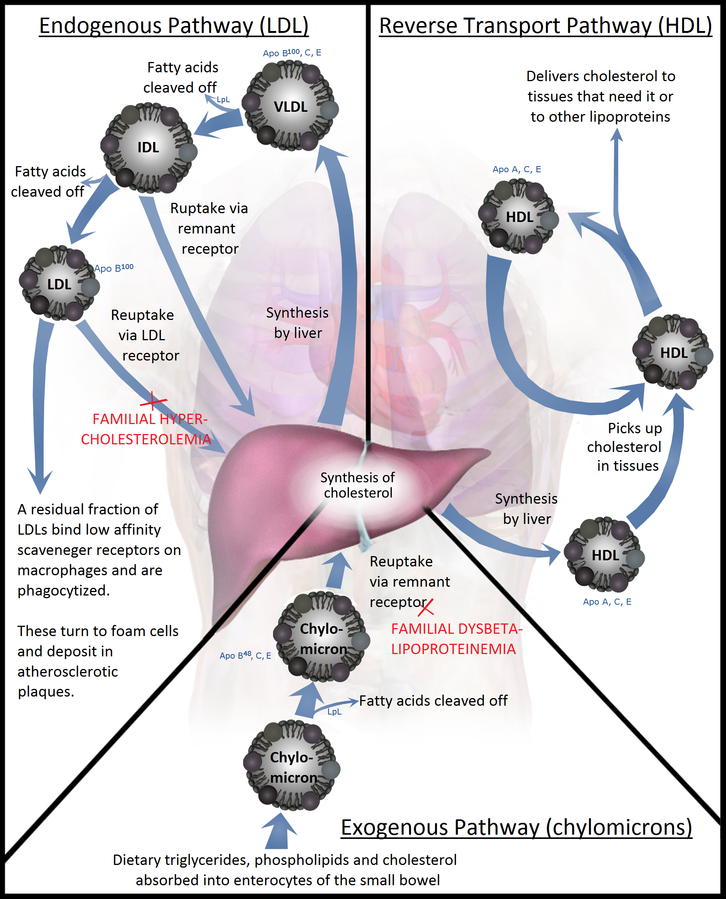
https://commons.wikimedia.org/wiki/File:Lipoprotein_metabolism.png. Npatchett. Creative Commons Attribution-Share Alike 3.0 Unported license.
LP uptake by Endocytosis
- LDL receptors on liver cells bind lipoproteins
- Receptor-mediated endocytosis occurs via clathrin-coated vesicles
- They then get fused with lysosomes and get broken down
- The receptors are then recycled
- Mutations in this process can increase cholesterol levels
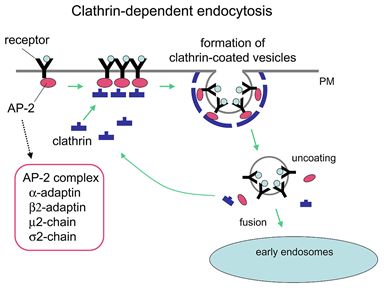
https://commons.wikimedia.org/wiki/File:Itrafig2.jpg. Grant, B. D. and Sato, M. Creative Commons Attribution 2.5 Generic license.
0:00 / 0:00
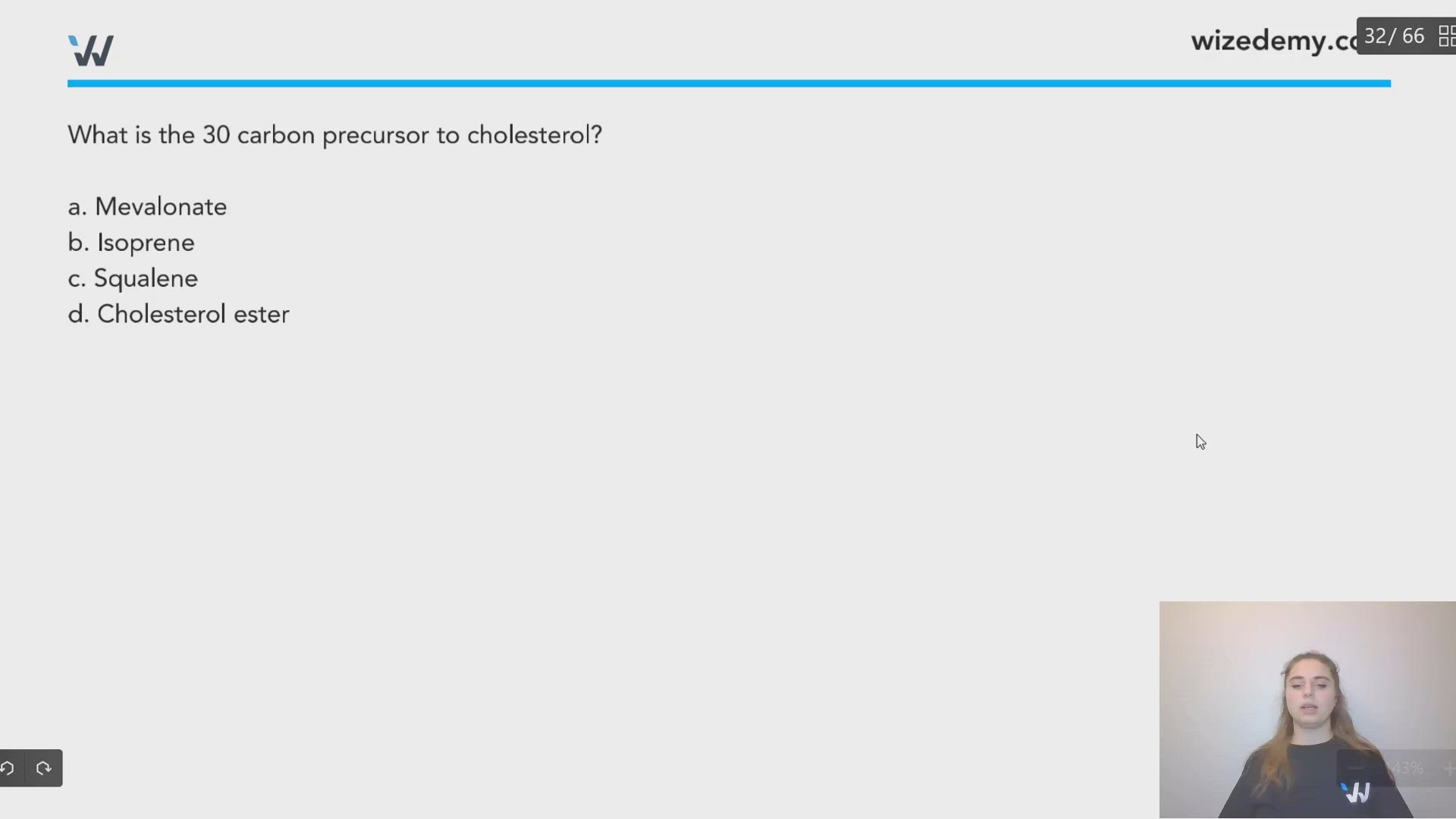
What is the 30 carbon precursor to cholesterol?
a. Mevalonate
b. Isoprene
c. Squalene
d. Cholesterol ester
c. Squalene, this is converted to cholesterol (27C) in the ER.
0:00 / 0:00
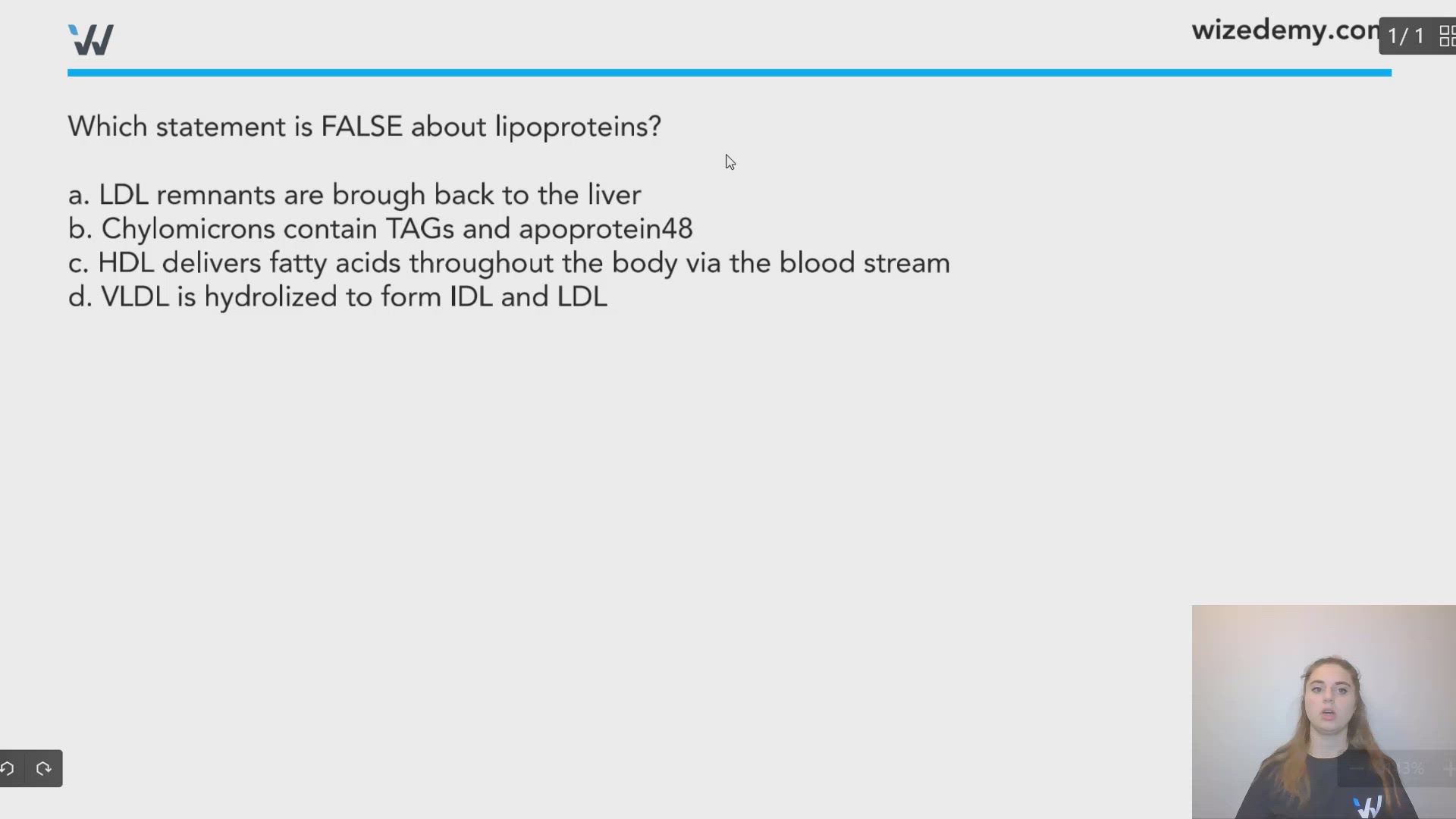
Which statement is FALSE about lipoproteins?
a. LDL remnants are brough back to the liver
b. Chylomicrons contain TAGs and apoprotein48
c. HDL delivers fatty acids throughout the body via the blood stream
d. VLDL is hydrolized to form IDL and LDL
c. HDL is responsible to taking up choesterol esters and brings them to the liver for degradation, VLDL delivers fatty acids throughout the body.
Which statement is TRUE about cholesterol?