Popular Courses
Find My Course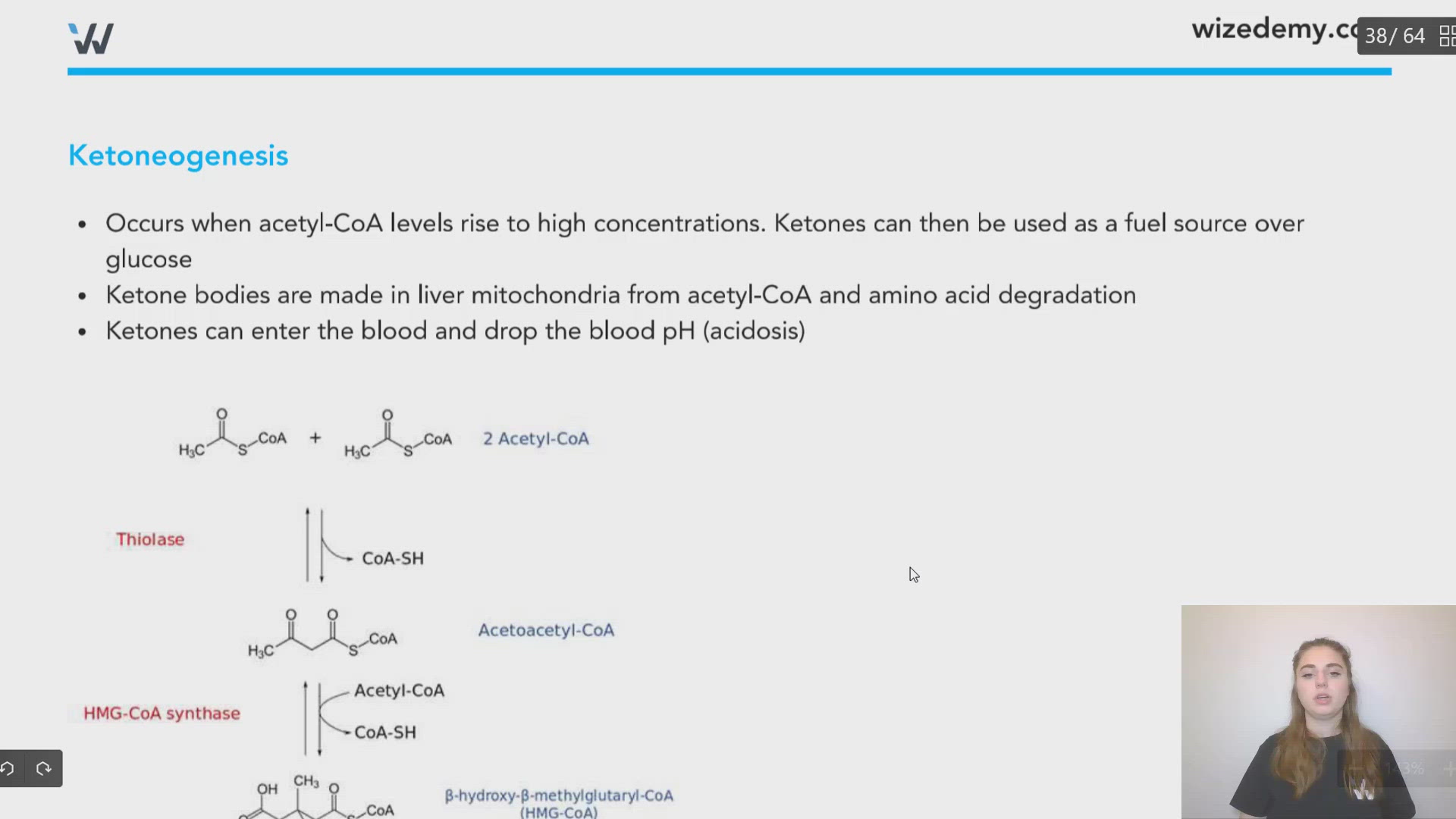
0:00 / 0:00
Ketoneogenesis
- Occurs when acetyl-CoA levels rise to high concentrations. Ketones can then be used as a fuel source over glucose
- Ketone bodies are made in liver mitochondria from acetyl-CoA and amino acid degradation
- Ketones can enter the blood and drop the blood pH (acidosis)
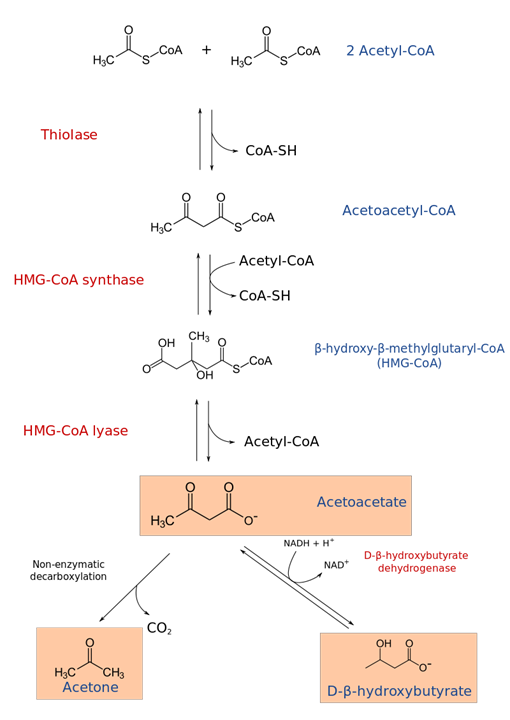
- Conversion back to acetyl-CoA can provide a lot of ATP
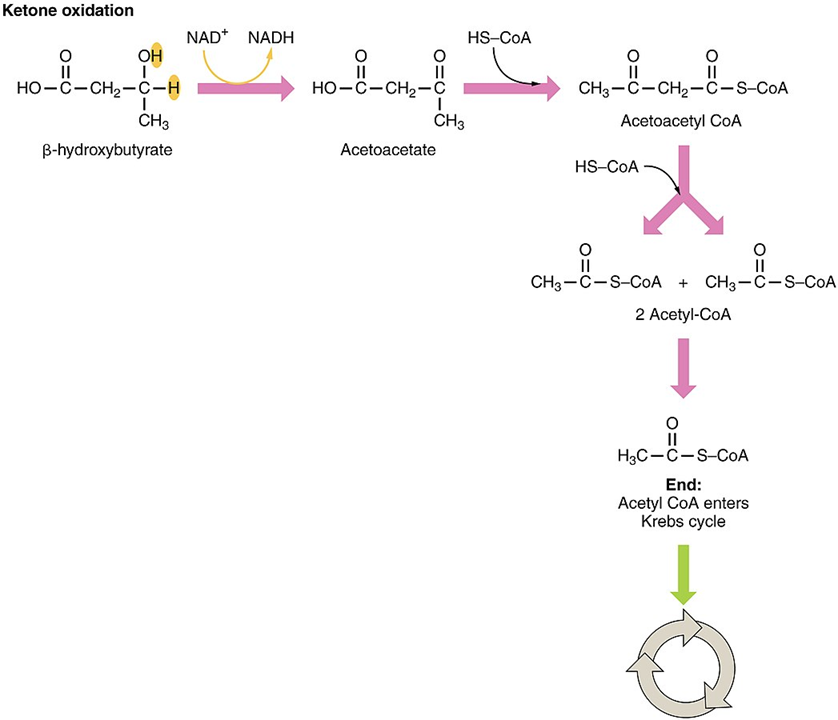
https://commons.wikimedia.org/wiki/File:2515_Ketone_Oxidation.jpg. Creative Commons Attribution 3.0 Unported license.
Ketoacidosis
- When ketone levels in the blood increase as a result of depleted glycogen stores
- Some buffering comes from blood buffering, but ketoacidosis occurs when pH drops below 7.35
- Occurs in starvation, low carb diets, and diabetes
0:00 / 0:00
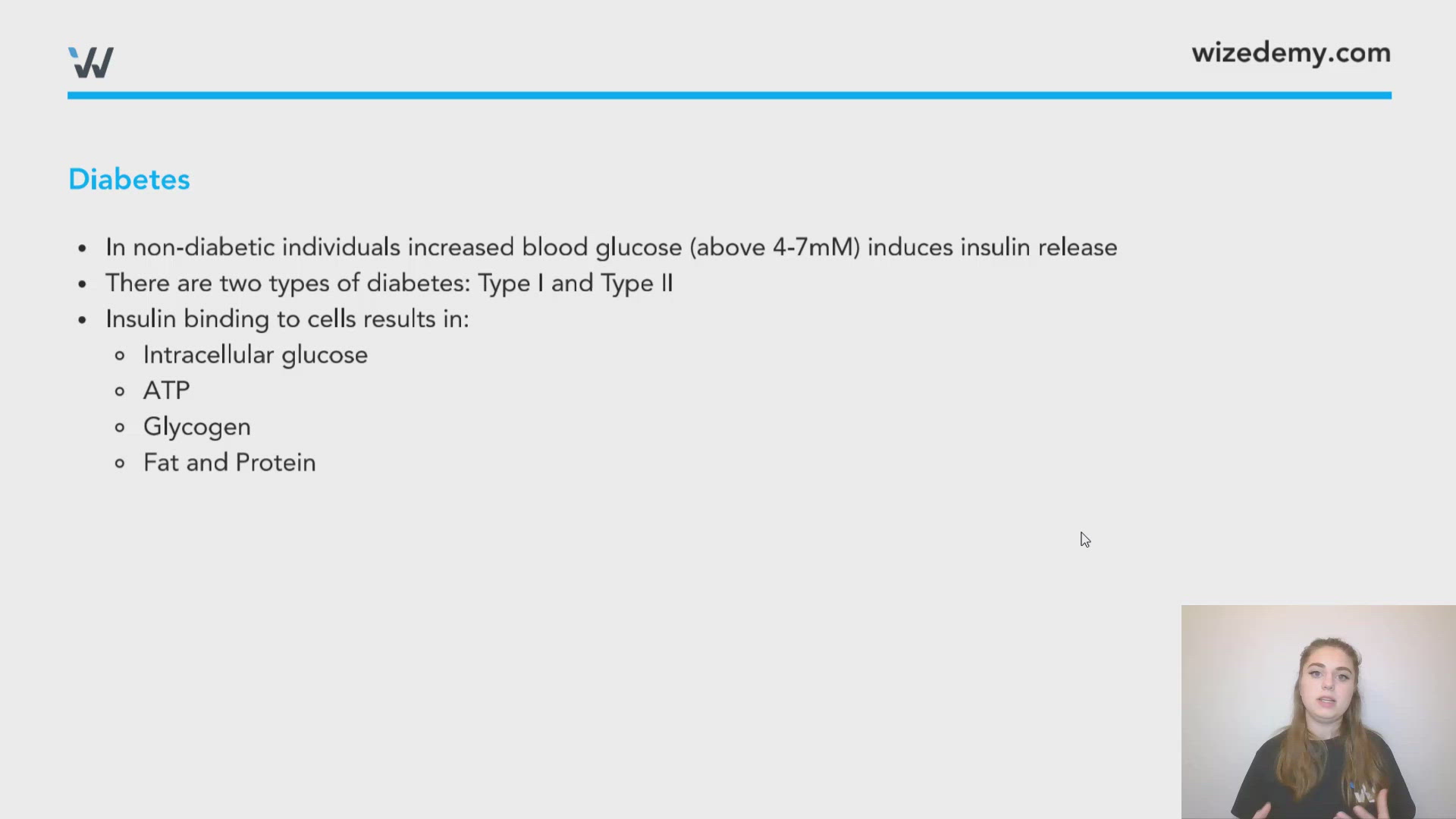
Diabetes
- In non-diabetic individuals increased blood glucose (above 4-7mM) induces insulin release
- There are two types of diabetes: Type I and Type II
- Insulin binding to cells results in:
- Intracellular glucose
- ATP
- Glycogen
- Fat and Protein
- Autoimmune damage to pancreatic beta cells leads to deficient insulin production
- High glucose (hyperglycemia) and low glucose (hypoglycemia) can be detrimental
- Insulin injections can increase glucose intake, but also lower glucagon secretion
- The insulin injections leave glycogenolysis and gluconeogenesis unable to maintain blood glucose levels
- Low glucose levels can lead to ketone body production and ketoacidosis
- Bicarbonate injections neutralize the acidity
- Insulin treatments lead to:
- Reduced hyperglycemia
- Drop in ketone body formation
- Blood tonicity normalizes and water balance returns
- Inhibition of glycogenolysis and beta oxidation
- Glycogen and fat synthesis rises
- Glycolysis increases
- Gluconeogenesis decreases

0:00 / 0:00
When does ketoneogenesis occur?
a. When blood glucose levels are low
b. When acetyl-CoA levels rise too high
c. When insulin is over acitve
d. As a result of glucagon signalling
b. When acetly-CoA levels rise too high
0:00 / 0:00
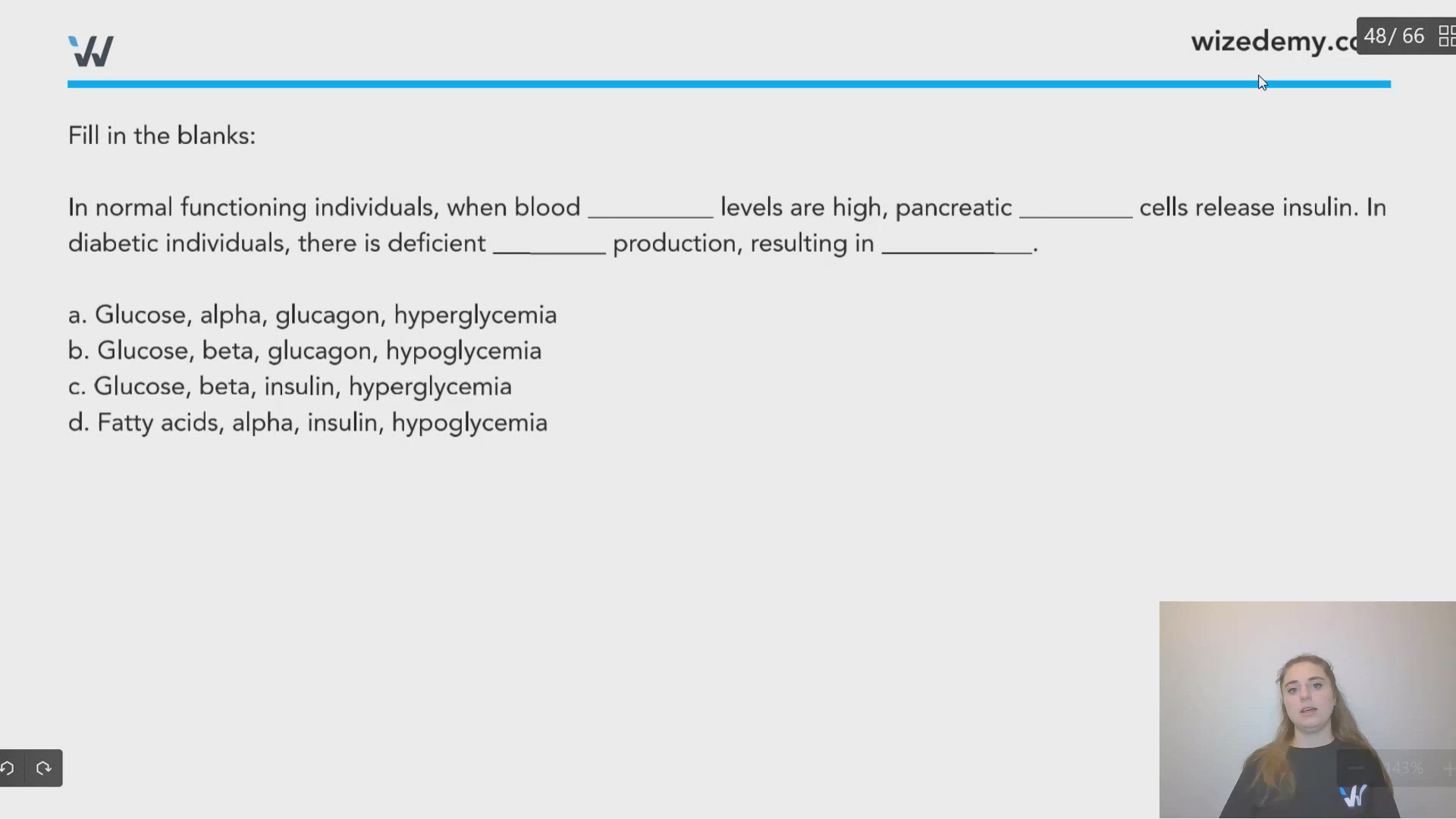
Fill in the blanks:
In normal functioning individuals, when blood __________ levels are high, pancreatic _________ cells release insulin. In diabetic individuals, there is deficient _________ production, resulting in ____________.
a. Glucose, alpha, glucagon, hyperglycemia
b. Glucose, beta, glucagon, hypoglycemia
c. Glucose, beta, insulin, hyperglycemia
d. Fatty acids, alpha, insulin, hypoglycemia
c. Glucose, beta, insulin, hyperglycemia
Which Statement is FALSE about ketoacidosis?