
0:00 / 0:00
Hydrogen Bonds
- Also called Permanent dipole - Permanent dipole (PD-PD) bonds
- Require an H-bond donor (hydrogen bound to an electronegative atom – O, N, or S) and an H-bond acceptor (an electronegative atom – O, N, or S)
- Plays an important role in protein structure
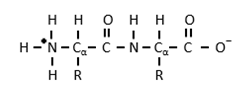
Amino acid backbone:
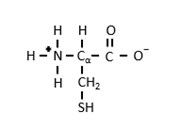
Cysteine:
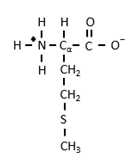
Methionine:
0:00 / 0:00
Hydrophobic Interactions
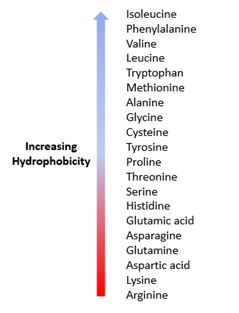
- Hydrophobic: Non-polar. Will repel polar solvents and functional groups.
- Hydrophilic: Polar/charged. Will interact with and attract polar solvents and functional groups.
- Hydrophobic amino acids will be arranged in the interior of proteins where they do not interact with the external aqueous environment.
- Hydrophilic amino acids will be arranged on the external surface of proteins where they interact with the external aqueous environment.
- Ambivalent amino acids are equally happy in a hydrophobic environment and a hydrophilic environment
- This arrangement works because water binds strongly to itself!
0:00 / 0:00
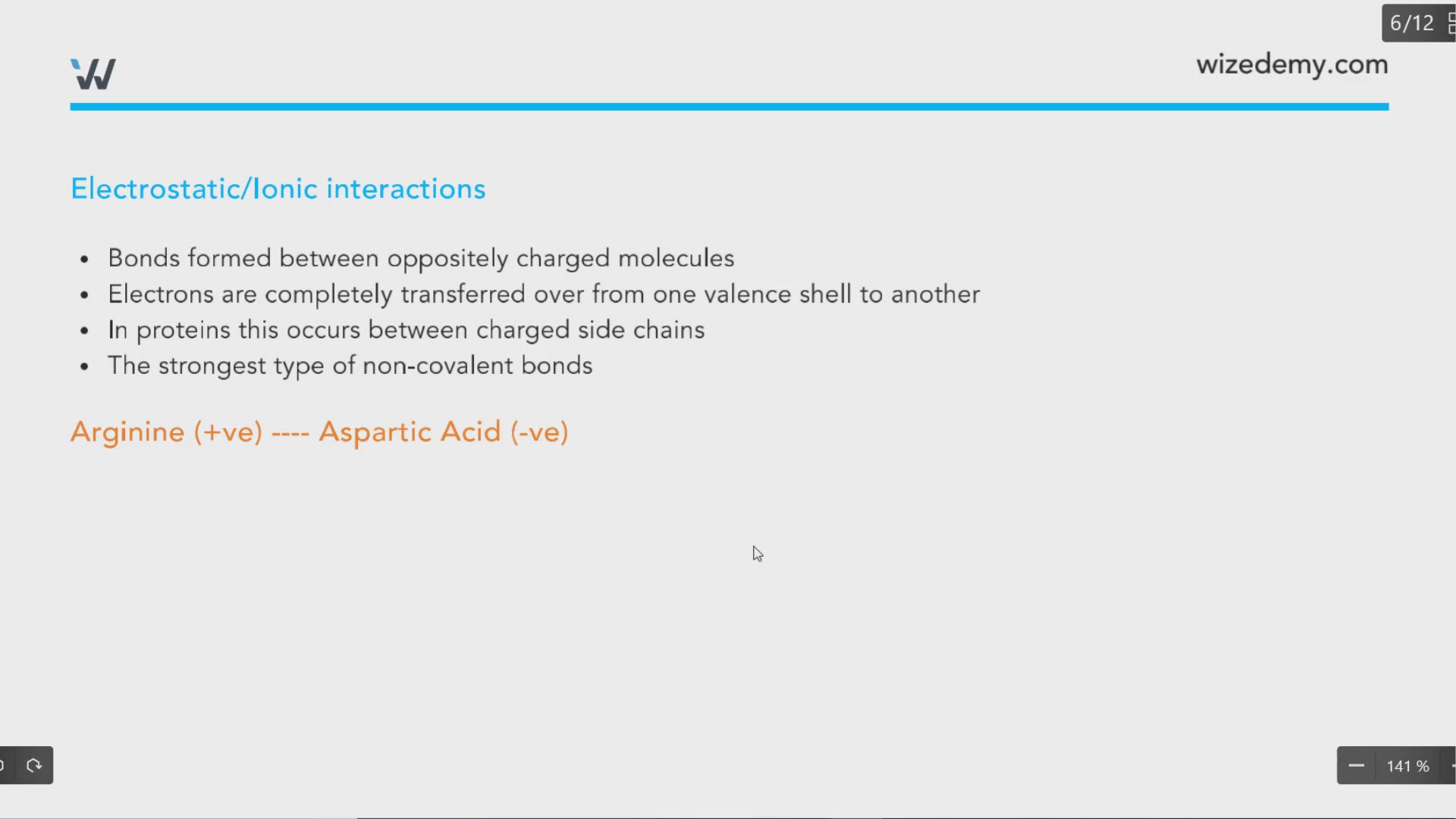
Electrostatic/Ionic interactions
- Bonds formed between oppositely charged molecules
- Electrons are completely transferred over from one valence shell to another
- In proteins this occurs between charged side chains
- The strongest type of non-covalent bonds
Arginine (+ve) ---- Aspartic Acid (-ve)
0:00 / 0:00
Van der Waals Forces
- Also referred to as Induced-Dipole – Induced-Dipole (ID – ID) bonds
- These types of interactions are weak on their own and require tight packing, but when many interactions are present in one area it can be quite strong.
- Can be found within folded proteins

0:00 / 0:00
Disulfide Bonds
- A covalent bond: electrons are shared between the two involved atoms.
- Two cysteine amino acids can form a disulfide bond
- The strongest type of bond found in proteins
- They aid in protein folding and maintaining structure
Cystine:
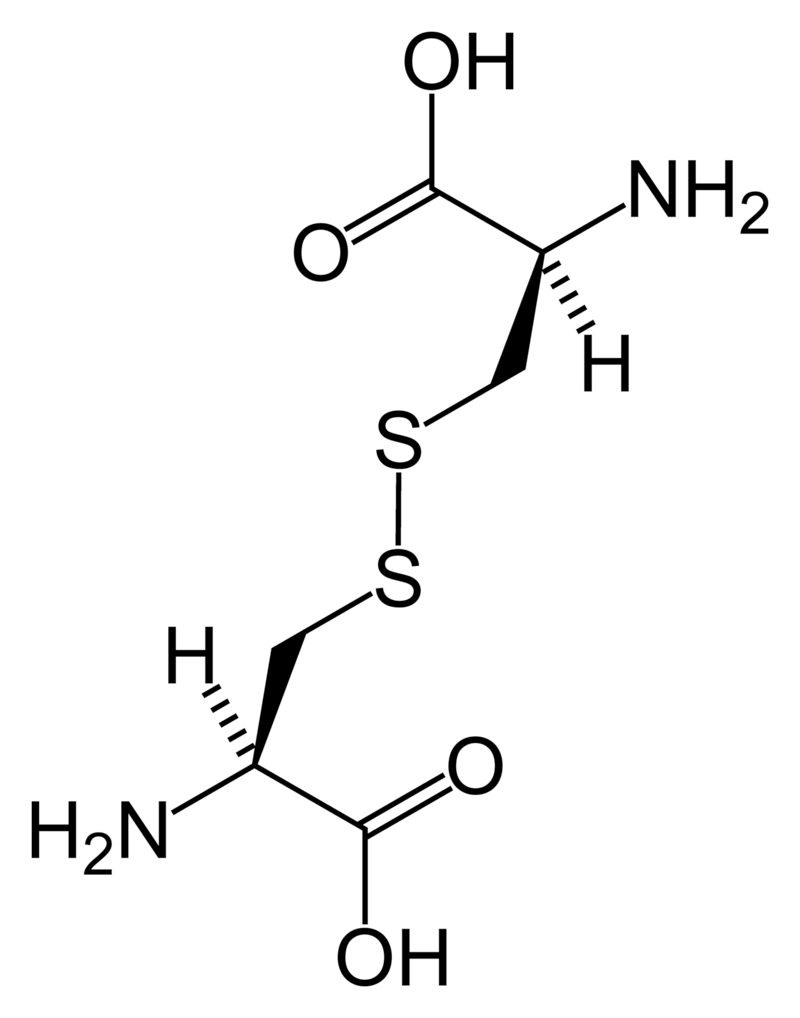
https://fr.wikipedia.org/wiki/Fichier:Cystine-skeletal.png#/media/Fichier:Cystine-skeletal.png. Author Benjah-bmm27 released this image into public domain.
0:00 / 0:00
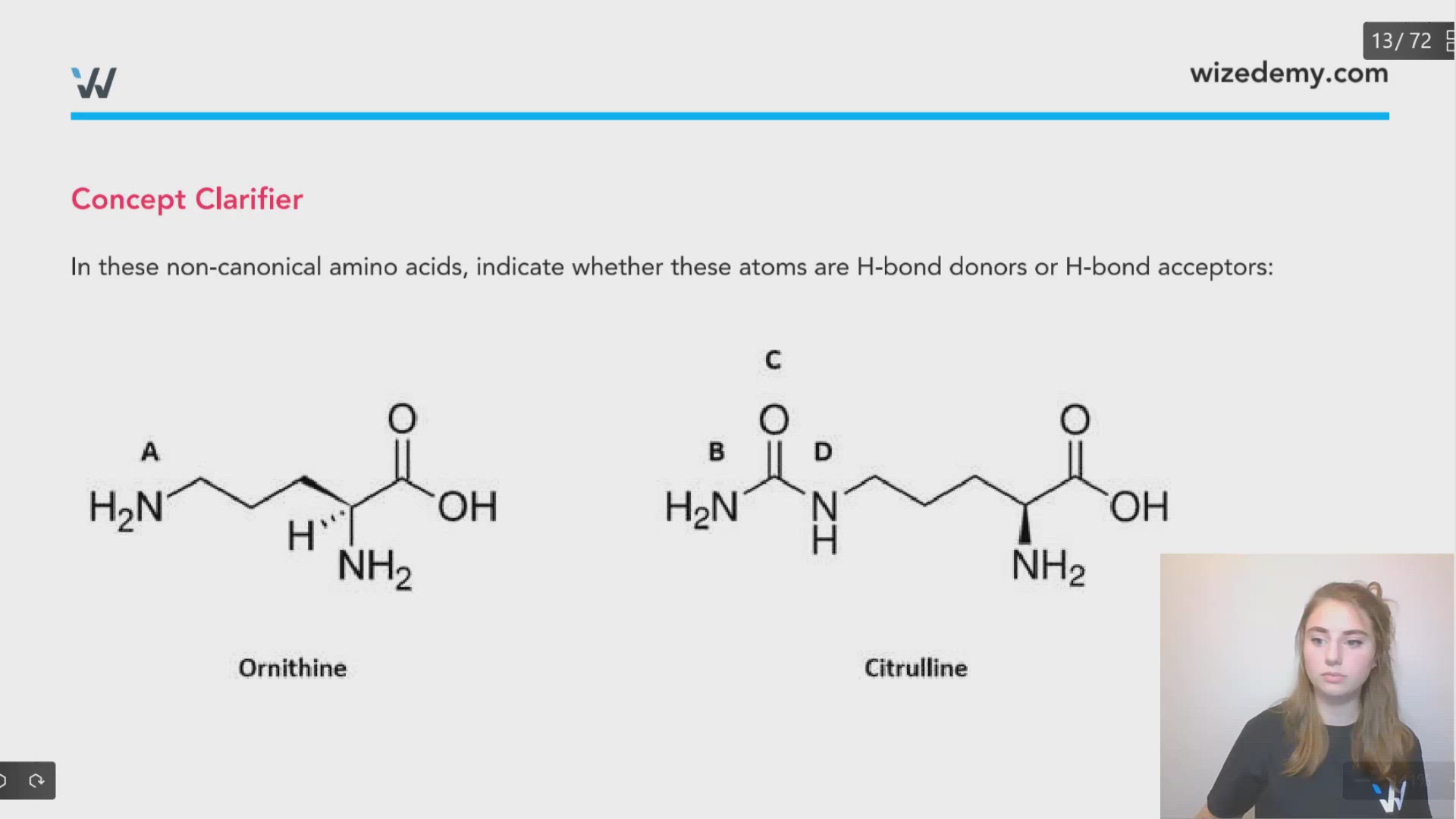
In these non-canonical amino acids, indicate whether these labelled atoms are H-bond donors or H-bond acceptors:
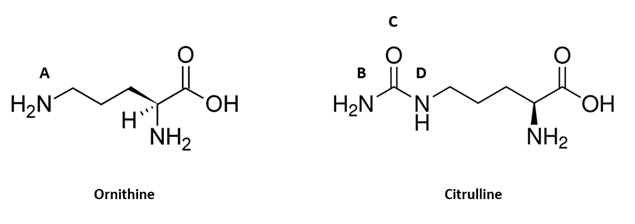
A: Donor. If in the protonated form it would not form H-bonds, but rather ionic bonds
B & D: Donors but not acceptors
C: acceptor
0:00 / 0:00
List the non-covalent bonds from weakest to strongest and indicate what role they play in protein structure.
Van der Waals forces: tight packing in the interior of the protein
Hydrogen bonds: secondary structure and bonding between amino acids
Ionic interactions: bonding between charged residues
Which of the following represents the proper order of amino acids from most to least hydrophobic?