Wize University Biochemistry Textbook > Protein Function & Enzymes
Post-translational Modifications
0:00 / 0:00
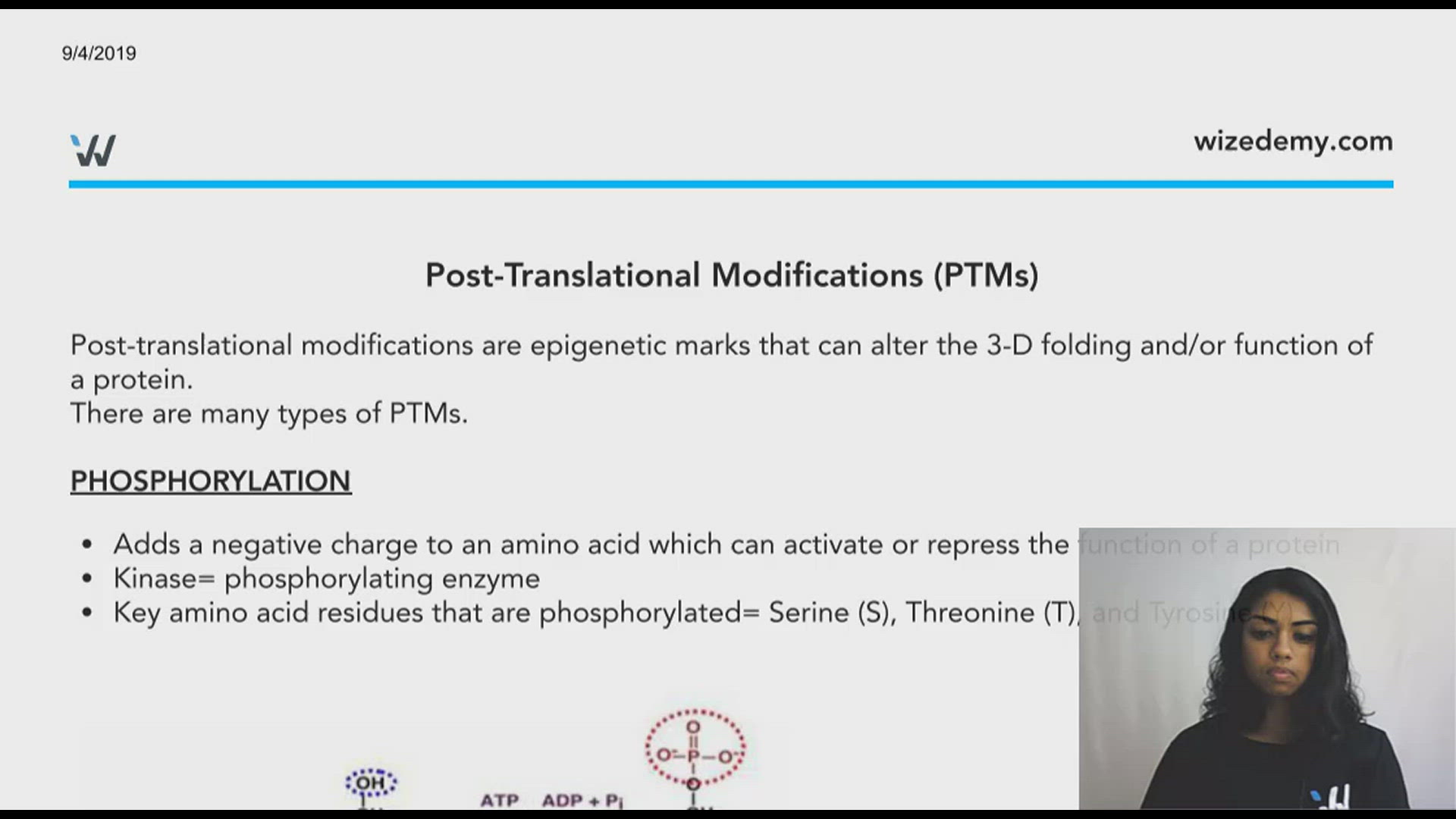
Post-Translational Modifications (PTMs)
Post-translational modifications are epigenetic marks that can alter the 3-D folding and/or function of a protein.
There are many types of PTMs.
PHOSPHORYLATION
- Adds a negative charge to an amino acid which can activate or repress the function of a protein
- Kinase= phosphorylating enzyme
- Key amino acid residues that are phosphorylated= Serine (S), Threonine (T), and Tyrosine (Y)

UBIQUITINATION
- Addition of the protein ubiquitin to an amino acid
- Marks proteins for degradation (i.e. alters protein stability), alters the cellular location or alters the protein's activity
ACETYLATION
- Addition of an acetyl group to an amino acid
- Can alter sub-cellular localization and protein-protein interactions
SUMOYLATION
- Addition of Small Ubiquitin-like Modifiers (SUMO proteins) to amino acids
- Can alter protein stability and solubility
GLYCOSYLATION
- Addition of a carbohydrate group to an amino acid
- Affects solubility of a protein (i.e. can make it membrane permeable to allow protein to leave/ enter organelles
MYRISTOYLATION
- Addition of myristoyl group to N-terminal glycine
- Alters cellular localization and protein-protein interactions
FARNESYLATION
- Addition of an isoprenyl group to a cysteine
- Alters cellular localization and protein-protein interactions