Wize University Biochemistry Textbook > Photosynthesis
Light-Dependent Reactions & Calvin Cycle
0:00 / 0:00
Light-Dependent Reactions of Photosynthesis
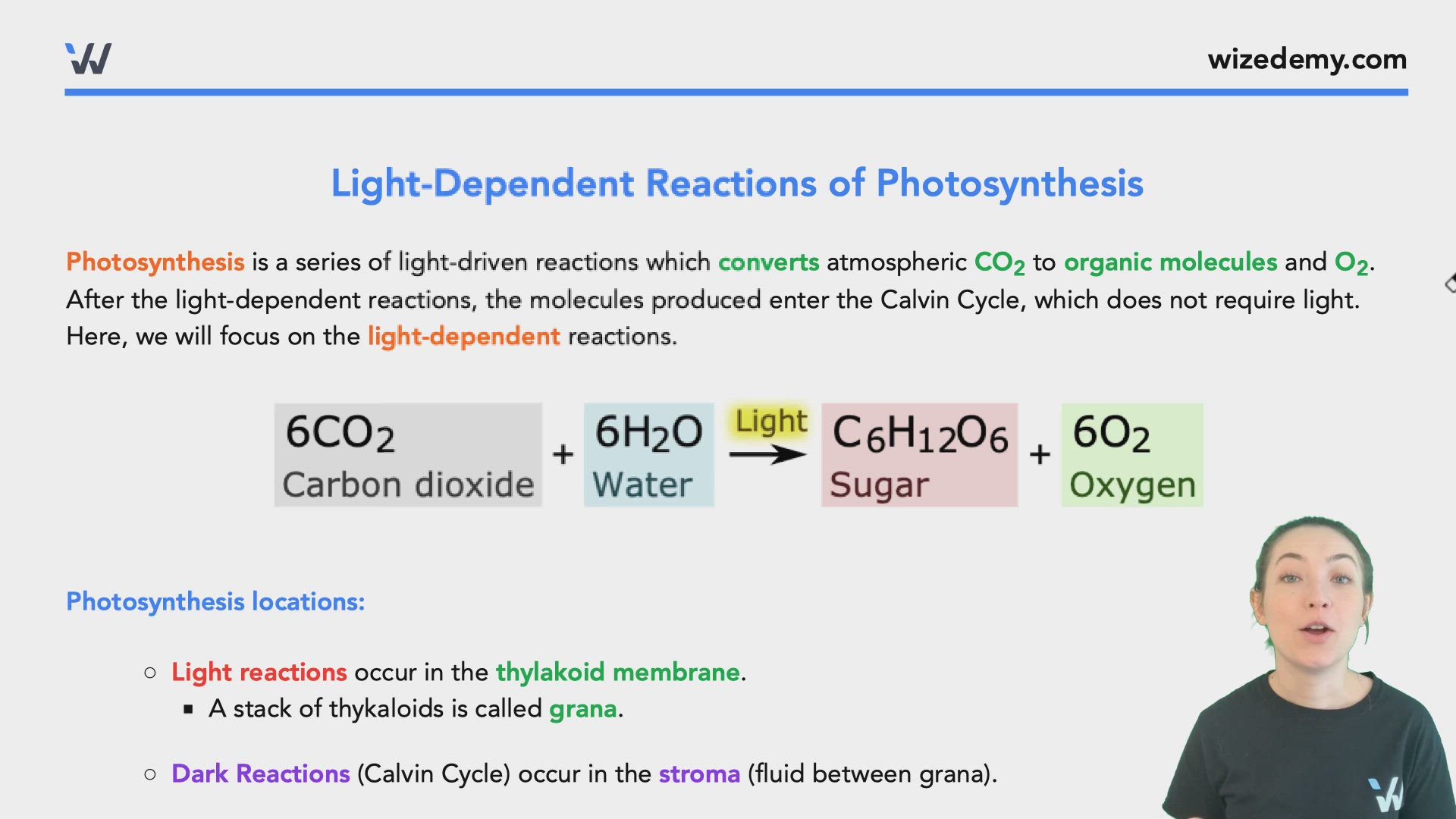
Photosynthesis is a series of light-driven reactions which converts atmospheric CO2 to organic molecules and O2. After the light-dependent reactions, the molecules produced enter the Calvin Cycle, which does not require light. Here, we will focus on the light-dependent reactions.

Photosynthesis locations:
- Light reactions occur in the thylakoid membrane.
- A stack of thykaloids is called grana.
- Dark Reactions (Calvin Cycle) occur in the stroma (fluid between grana).
Light absorbing pigments
Pigments absorb as certain visible light wavelength.
- Chlorophylls a and b
- Absorb 70% of red and blue wavelength; highest O2 production at these wavelengths.
- Only present in green plants and green algae.
- Carotenoids
- Absorb violet and blue-green light.
- Phycobilins – present in algae.
Photochemistry Components
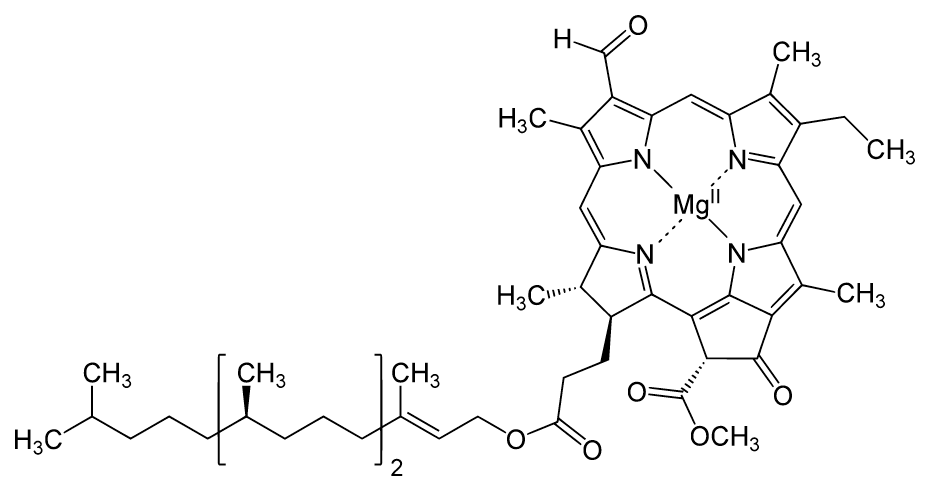
- Chlorophyll contains a porphyrin ring
- Light absorbing head containing magnesium and many double bonds that can be excited.
- Light harvesting complexes (aka antenna complex) – link pigments together and are connected to reaction centers.
- Electrons transferred to primary electron acceptor.
- Photosystem (PS) = light harvesting complexes + reaction center embedded in thylakoid membrane.
Photosynthesis Steps
Photosynthesis starts with light photons striking the pigments. Follow the steps below:

Remember that the combination of a light harvesting complex with the reaction center makes up a photosystem. There are two relevant photosystems that differ in (1) which molecules they split (i.e. what they oxidize) and (2) where they deliver their electrons (i.e. what they reduce).
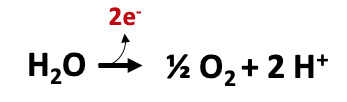
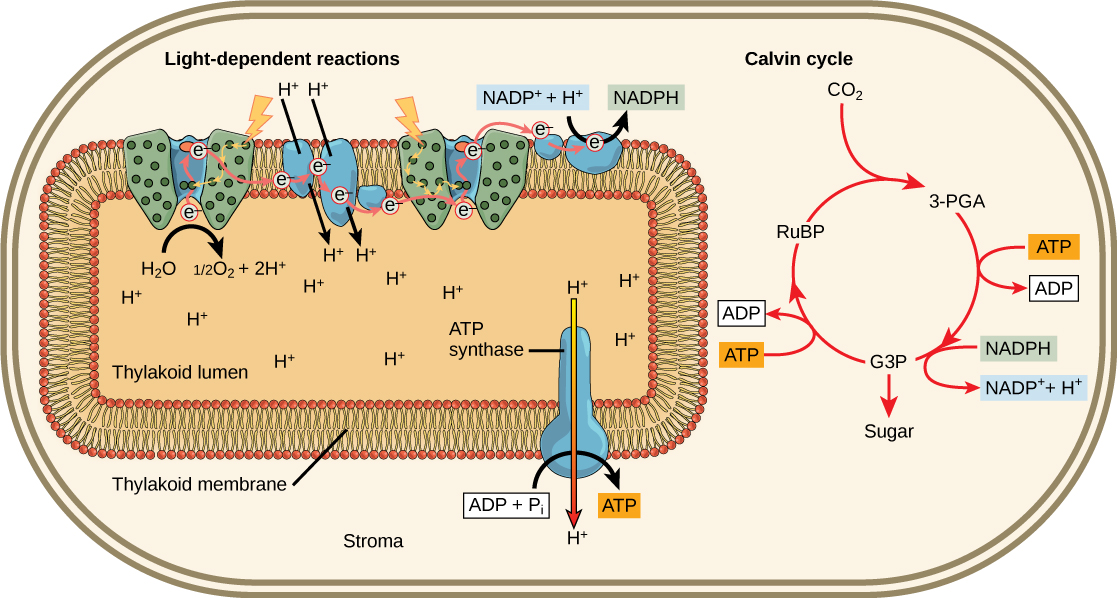
- Photosystem II (P680): Obtains an electron by splitting water (H2O) and releasing oxygen (O2) as a waste product.
- Note that electron energy is also used to pump H+ from the stromal side to the lumen of the thykaloid.
- These hydrogen atoms will be used to produce ATP later.
- Since the traveling electrons loose energy, they must be "reenergized" by photosystem I.
- Electron Transport Chain (ETC): Passing of electrons between PS II and PS I.


- Photosystem I (P700): Similar to PS II, it absorbs a photon from light, which passes through pigments, to chlorophyll a and then the reaction center.
- In this case, an electron came from PS II to replace that one given away by chlorophyll a.
- PS I becomes oxidized and sends an electron to NADP+, reducing it to NADPH.
- ATP Synthase:
- The buildup of H+ in the thykaloid lumen creates a gradient that drives the production of ATP as the ions rush through ATP synthase.
- This is called chemiosmosis.
Wize Tip
This process of using light energy to produce ATP is called photophosphorylation.

0:00 / 0:00
Non-Cyclic and Cyclic Versions of Light-Dependent Reactions
- Non-Cyclic Photophosphorylation
- What was discussed so far was the non-cyclic version of the light-dependent reactions, also known as Z-scheme. It is called that because the energy of the electrons involved goes up and down, in a pattern that resembles a "Z".

Wize Concept
Note that in this scheme 1 ATP is formed for every 1 NADPH. Therefore, their ratio is 1:1 ATP:NADPH.
- Cyclic Photophosphorylation
- If ATP and NADPH are needed at different ratios, electrons can be cycled through photosystem I only.
- Instead of going to reduce NADP+, the electron goes through the ETC, driving H+ into the lumen.
- This gradient is used to produce ATP from ADP.

0:00 / 0:00
Calvin Cycle
A series of reactions occurring in the stroma of plant cells which results in the production of sugar (glyceraldehyde-3-phosphate) from atmospheric CO2.

Watch Out!
To start off, we should note that for every one molecule of G3P that leaves the Calvin cycle, 5 remain in the cycle. Therefore, in order to get 6 molecules of G3P, 3 turns of the cycle are required. This is why you will see the reactions multiplied by 3!
ANALOGY: Imagine you take a revolving door that will only allow you to exit if you go through it 3 times.
Phase 1: Carbon Fixation
- The central enzyme of the Calvin cycle is Ribulose Bisphosphate Carboxylase (RuBisCo).
- Catalyzes the reaction between atmospheric CO2 and Ribulose 1,5-bisphosphate.
- Ribulose 1,5-Bisphosphate is replenished by using the energy and reductive power of ATP.

Phase 2: Reduction
- Energy from ATP and NADPH are used to convert six 3PGA into six glyceraldehyde 3-phosphate (G3P).
- ATP becomes ADP and NADPH becomes NADP+ (can return to light-dependent reactions!).
- Note that 6 ATP and 6 NADPH are used in total.

Phase 3: Regeneration
- Only one G3P leaves the cycle to take part in other compounds.
- Five continue in the cycle and regenerate other compounds within.
- Another 3 molecules of ATP (3 turns of the cycle) are used in this process.

Wize Tip
NET USAGE: 9 ATP and 6 NADPH
The fate of the sugar produced from the Calvin cycle depends on the current conditions:
- Day (excess photosynthetic activity) G3P is stored as starch or fat in the stroma.
- Night (No photosynthetic activity) Stored starch and fat are broken down to sugars and fatty acids and exported to the cytosol to be metabolized.
Photosynthesis Reactions Summary
Watch Out!
G3P is a three carbon molecule, so in order to make glucose, two G3P must leave the cycle. That means that the cycle must proceed SIX TIMES to make 12 molecules of G3P such that 2 can leave and make one glucose.
ANALOGY: Turns out you had a friend with you when you went through that revolving door. Even though you got through it after 3 turns, you still have to wait for your friend to go through his 3 turns for both of you to leave.
0:00 / 0:00
Example: Why Plants Need Light
Explain why plants need light in terms of the Calvin cycle and photosynthesis?
- Light drives photosynthesis to generate ATP
- Light also drives photosynthesis to NADPH
- is required for fixation
- allow the plant to generate glucose
0:00 / 0:00
What are two of the main products of the light reactions of photosynthesis used during the Calvin cycle?
ATP & NADPH
0:00 / 0:00
Example: Turns Required for Glucose
How many turns of the Calvin cycle does it take to make one molecule of glucose?
One way to think about this is to look at the overall balanced chemical reaction for photosynthesis:
6 H2O + 6 CO2 -> C6H12O6 + 6 O2
This reaction tells you that six molecules of CO2 are required to make one glucose. Typically, one carbon dioxide enters the cycle at a time, so six turns are required for 6 CO2 to be used.
Another way to think about it:
Note that in the Calvin cycle, every one molecule of CO2 combines with one molecule of RuBP to make two molecules of 3-PGA and then two molecules of G3P (3-carbon sugar). However, at least 6 molecules of G3P must be made in order for one to leave (5 stay to regenerate the cycle). Since one turn of the cycle makes two G3P molecules, naturally three turns are required to make six G3P's. If G3P was the final molecule we were looking for, the answer would be 3! However, two molecules of G3P are required for one glucose, so we need to double that number. Again, we reach the answer of 6 turns.
0:00 / 0:00
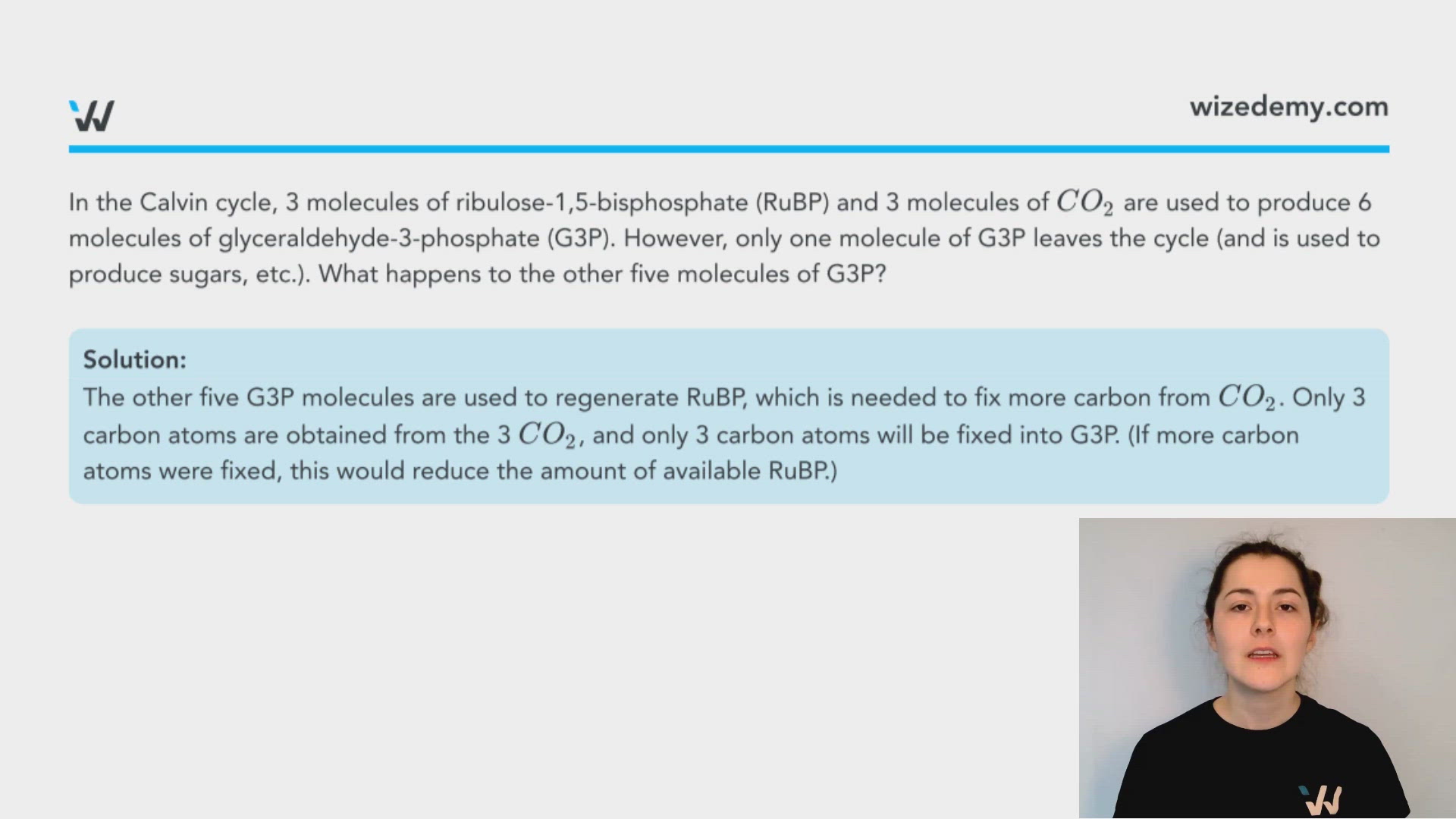
In the Calvin cycle, 3 molecules of ribulose-1,5-bisphosphate (RuBP) and 3 molecules of are used to produce 6 molecules of glyceraldehyde-3-phosphate (G3P). However, only one molecule of G3P leaves the cycle (and is used to produce sugars, etc.). What happens to the other five molecules of G3P?
Solution:
The other five G3P molecules are used to regenerate RuBP, which is needed to fix more carbon from . Only 3 carbon atoms are obtained from the 3 , and only 3 carbon atoms will be fixed into G3P. (If more carbon atoms were fixed, this would reduce the amount of available RuBP.)