0:00 / 0:00
Photorespiration
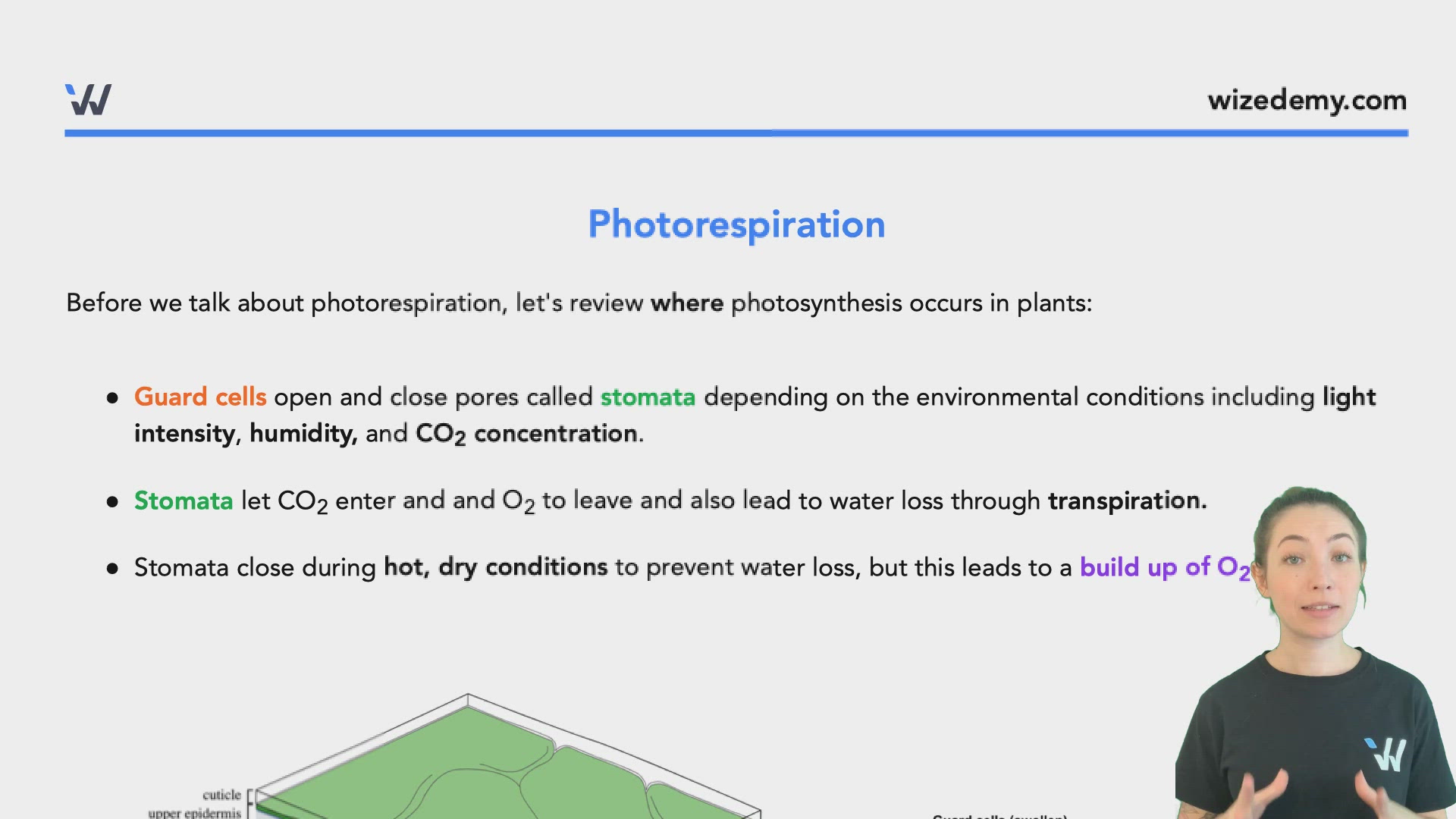
Before we talk about photorespiration, let's review where photosynthesis occurs in plants:
- Guard cells open and close pores called stomata depending on the environmental conditions including light intensity, humidity, and CO2 concentration.
- Stomata let CO2 enter and and O2 to leave and also lead to water loss through transpiration.
- Stomata close during hot, dry conditions to prevent water loss, but this leads to a build up of O2.

Why is build up of O2 a problem?
- Rubisco, the enzyme that usually fixes CO2 can also use O2 as a substrate.
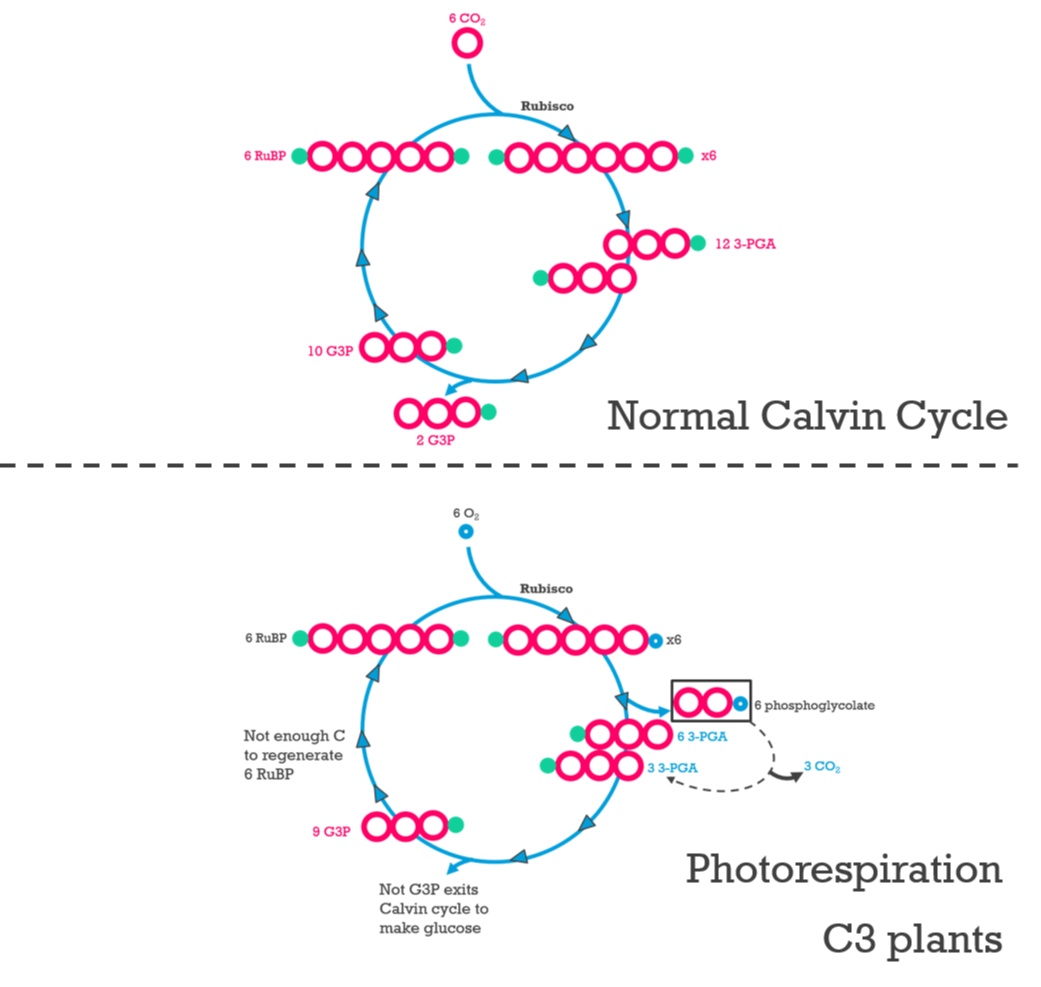
- Photorespiration, also known as oxidative photosynthetic carbon cycle or C2 photosynthesis, is the process in which Rubisco adds an O2 to RuBP, rather than a CO2 as in the Calvin Cycle.
- This wastes energy and decreases sugar production.
- Under hot, dry conditions, photorespiration increases.


Watch Out!
Don't be alarmed that this cycle is showing the required amount of CO2 (6) to make a full molecule of glucose instead of 3 which is required amount to allow one molecule of G3P to leave.
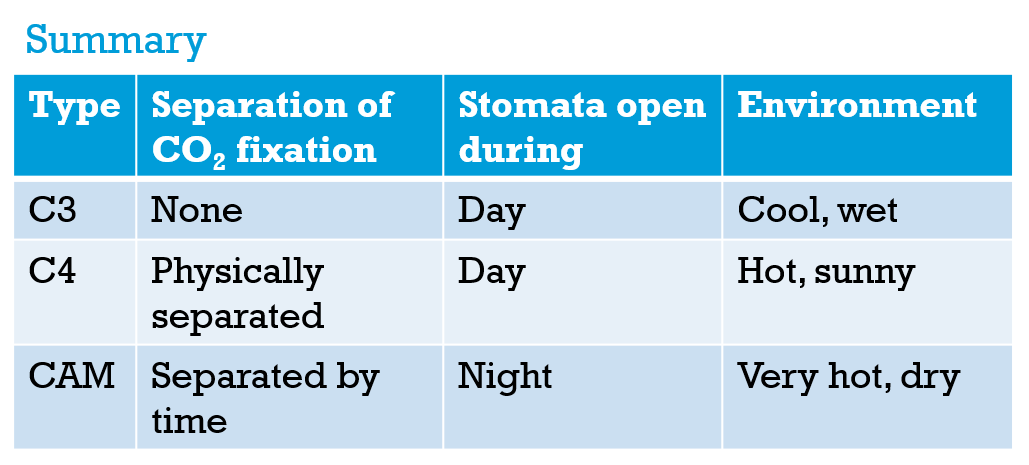
- Some plants - C4 plants and CAM plants - have strategies to minimize this problem
- In C3 plants, 6 molecules of phosphoglycolate are produced in photorespiration.
- Three of these go through a salvage pathway, recovering half of the 3-PGA. The other 3 are lost to CO2.

0:00 / 0:00
C4 Plants
C4 plants have a mechanism to deal with photorespiration: they physically separate the light and dark reactions.
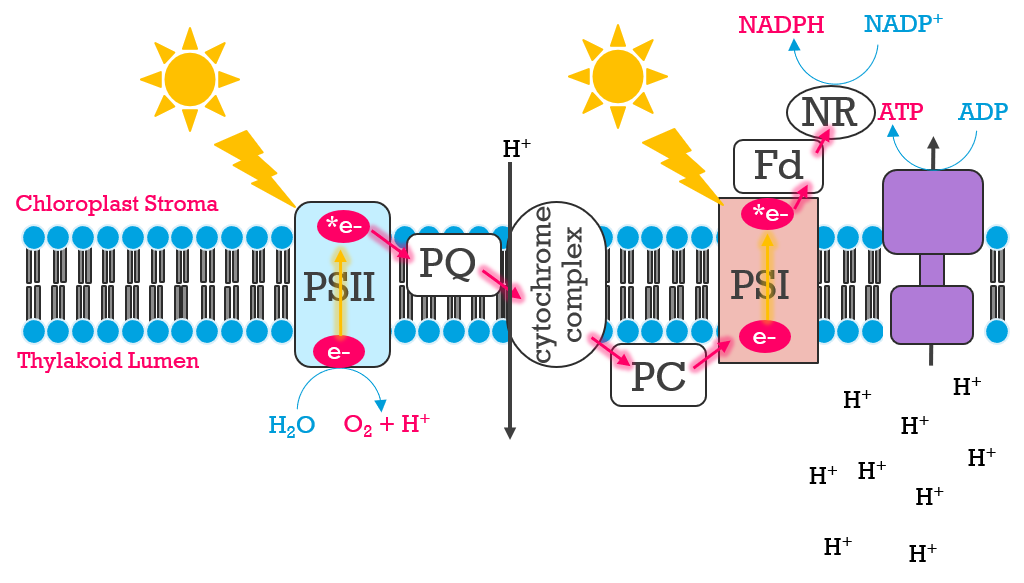
- The light-dependent reactions occur in the mesophyll.
- The Calvin cycle occurs in the bundle sheath cells.
- The result is no build up of O2 near Rubisco.

Reminder of Light-Dependent Reactions
The Strategy of C4 Plants
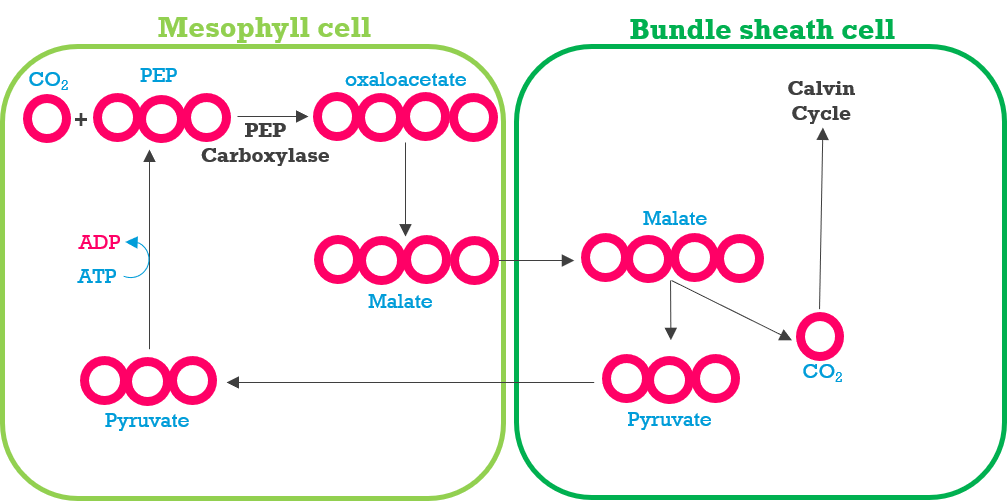
- CO2 fixation occurs in the mesophyll by PEP carboxylase to produce oxaloacetate.
- Oxaloacetate is converted to malate and transported to the bundle sheath cells.
- Malate is broken down to release CO2 which then feeds into the Calvin cycle.
- A 3-carbon molecule called pyruvate is returned to the mesophyll and converted back to PEP.
Examples of C4 Plants:
Usually found in hot, dry climates: sugar cane, certain types of grass, maize (corn).

0:00 / 0:00
CAM Plants
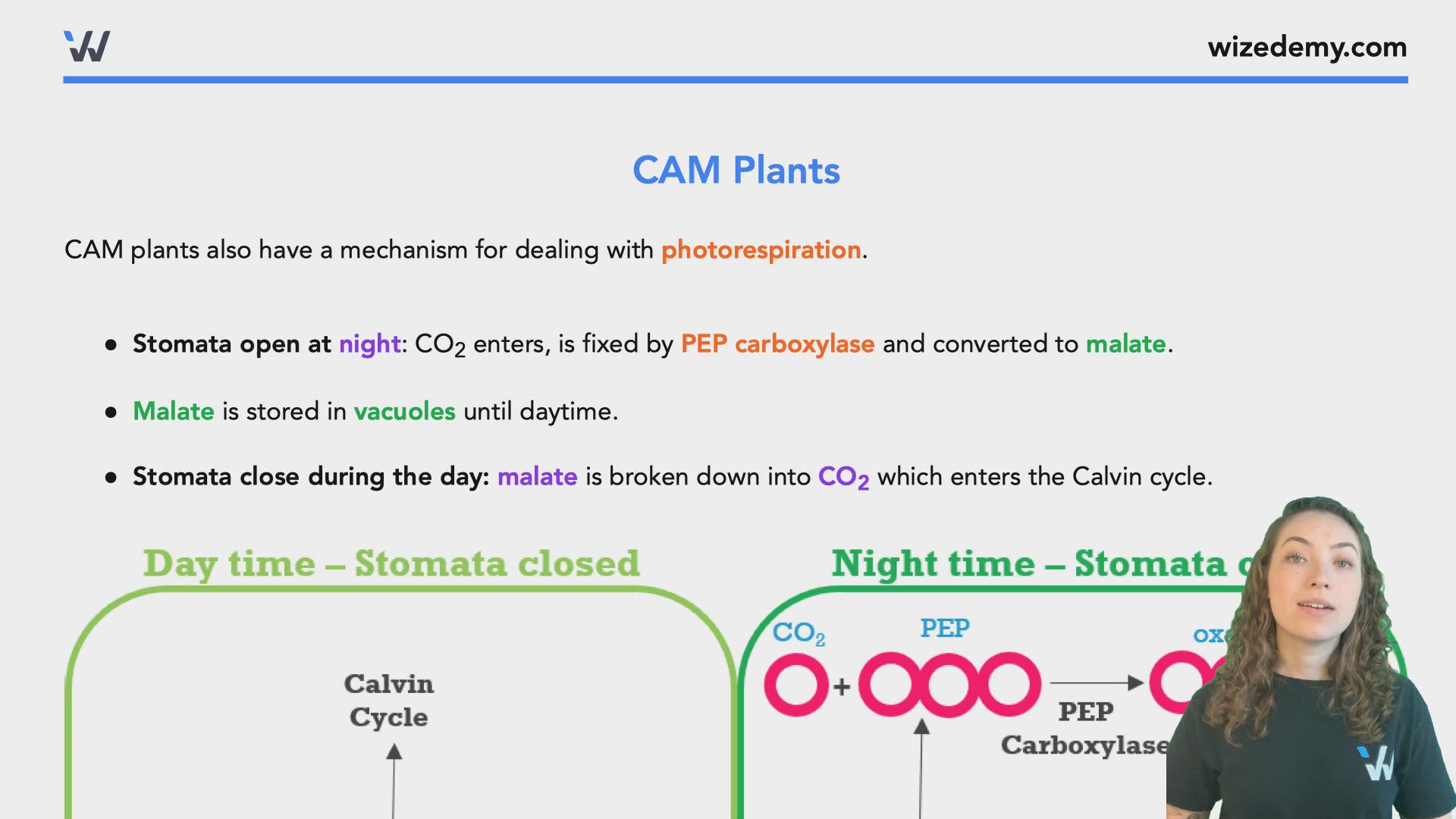
CAM plants also have a mechanism for dealing with photorespiration.
- Stomata open at night: CO2 enters, is fixed by PEP carboxylase and converted to malate.
- Malate is stored in vacuoles until daytime.
- Stomata close during the day: malate is broken down into CO2 which enters the Calvin cycle.

Examples of CAM Plants
Pineapple, cacti, succulents.