0:00 / 0:00
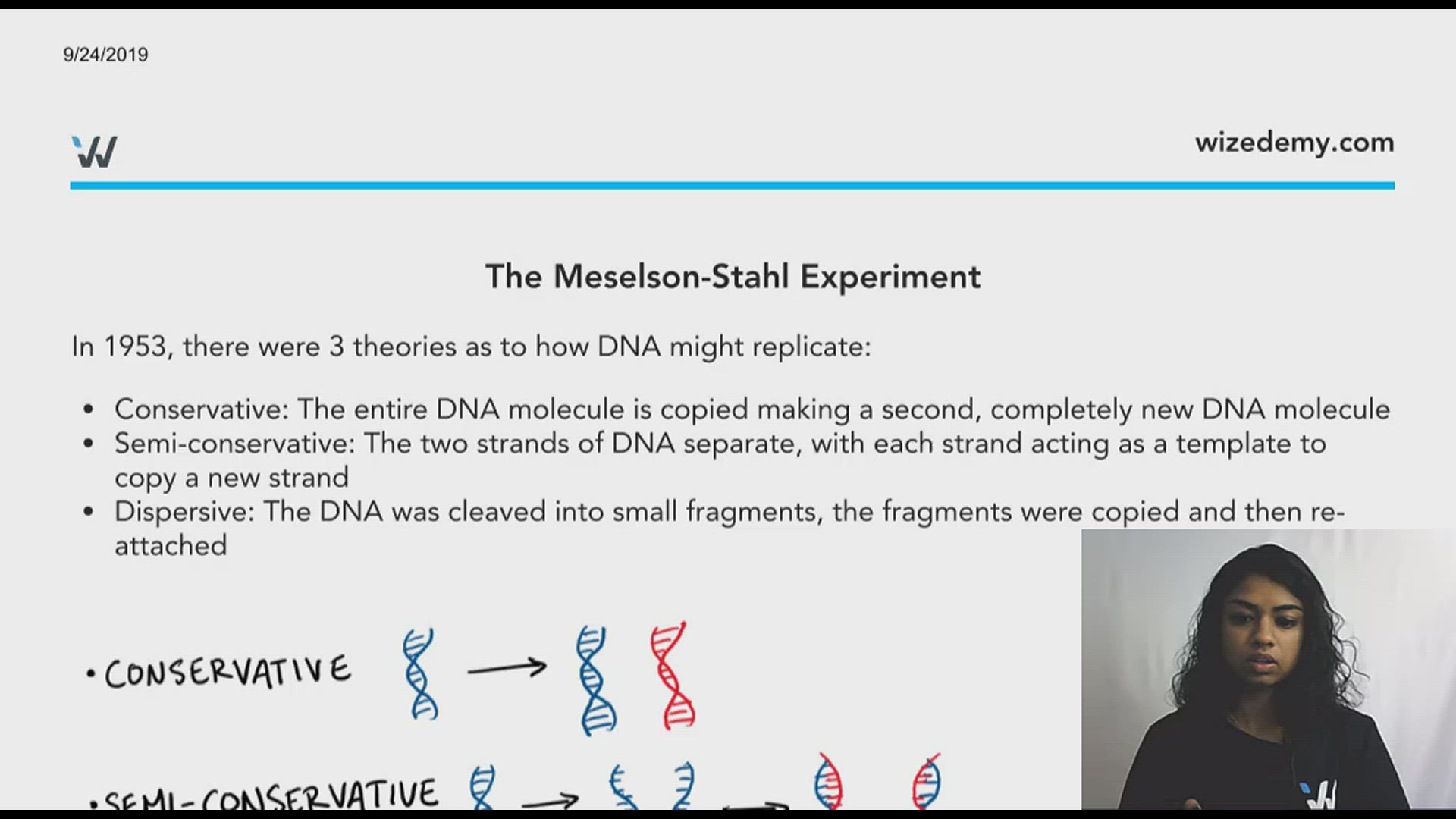
The Meselson-Stahl Experiment
In 1953, there were 3 theories as to how DNA might replicate:
- Conservative: The entire DNA molecule is copied making a second, completely new DNA molecule
- Semi-conservative: The two strands of DNA separate, with each strand acting as a template to copy a new strand
- Dispersive: The DNA was cleaved into small fragments, the fragments were copied and then re-attached

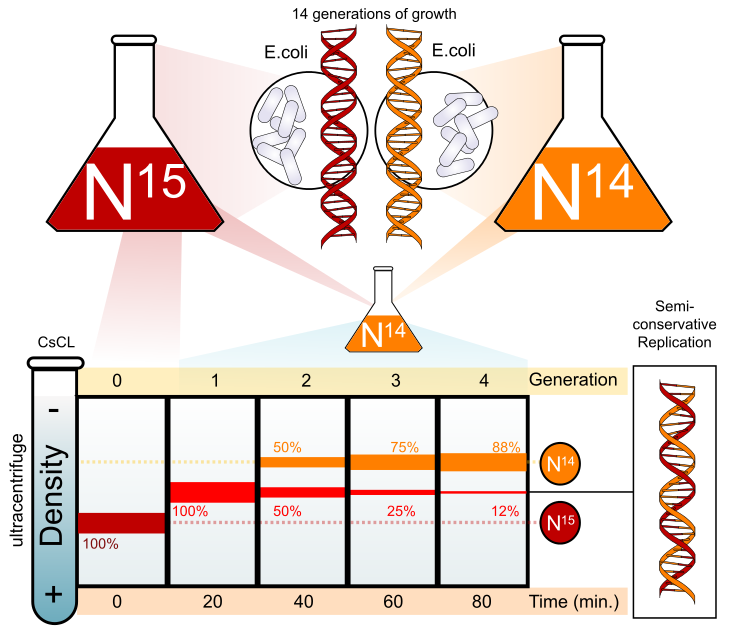
Matthew Meselson and Franklin Stahl designed an experiment in Escherichia Coli (E. coli) bacteria
1. Grow E. coli in "heavy" nitrogen (15N) so that all the DNA in the bacterial was labelled with 15N
- When DNA was centrifuged, all DNA= "heavy"
2. Transfer cells to "light" nitrogen (14N) and let DNA replicate once
- When DNA was centrifuged, all DNA= 50% "heavy"/ 50% "light"
- This rules out the Conservative theory which predicted that template DNA molecule would be all "heavy" and the new DNA would be all "light"
3. Let DNA replicate in "light" nitrogen (14N) one more time
- When DNA was centrifuged, DNA was either 50% "heavy"/ 50% "light" OR all "light"
- This rules out the Disperive theory which predicts that all the DNA would continue to be 50% "heavy"/ 50% "light"
Wize Concept
The Meselson-Stahl Experiment showed that DNA replicated using the Semi-conservative mechanism.

0:00 / 0:00
DNA Replication in Cells
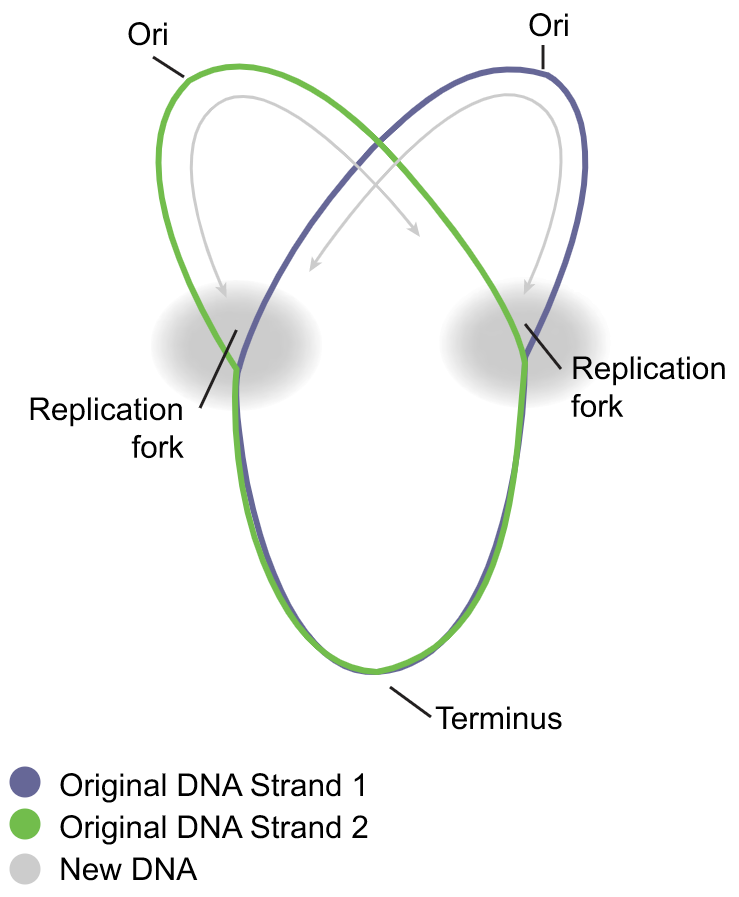
Because DNA within eukaryotic cells is very large, the two strands are not completely separated prior to replication. Instead, replication begins at specific locations designated origins of replication.
- The replication bubbles extend out and eventually the multiple new strands of DNA meet one another and come together to form a brand new strand.
- Prokaryotic chromosomes have one origin of replication and eukaryotic chromosomes have multiple.
- DNA replication is semi-conservative: the newly double stranded DNA contains one strand from the original DNA and one newly synthesized strand.

- The origin of replication in prokaryotes has a special name and is called Ori.
Synthesis of New DNA: Prokaryotic Cells Example
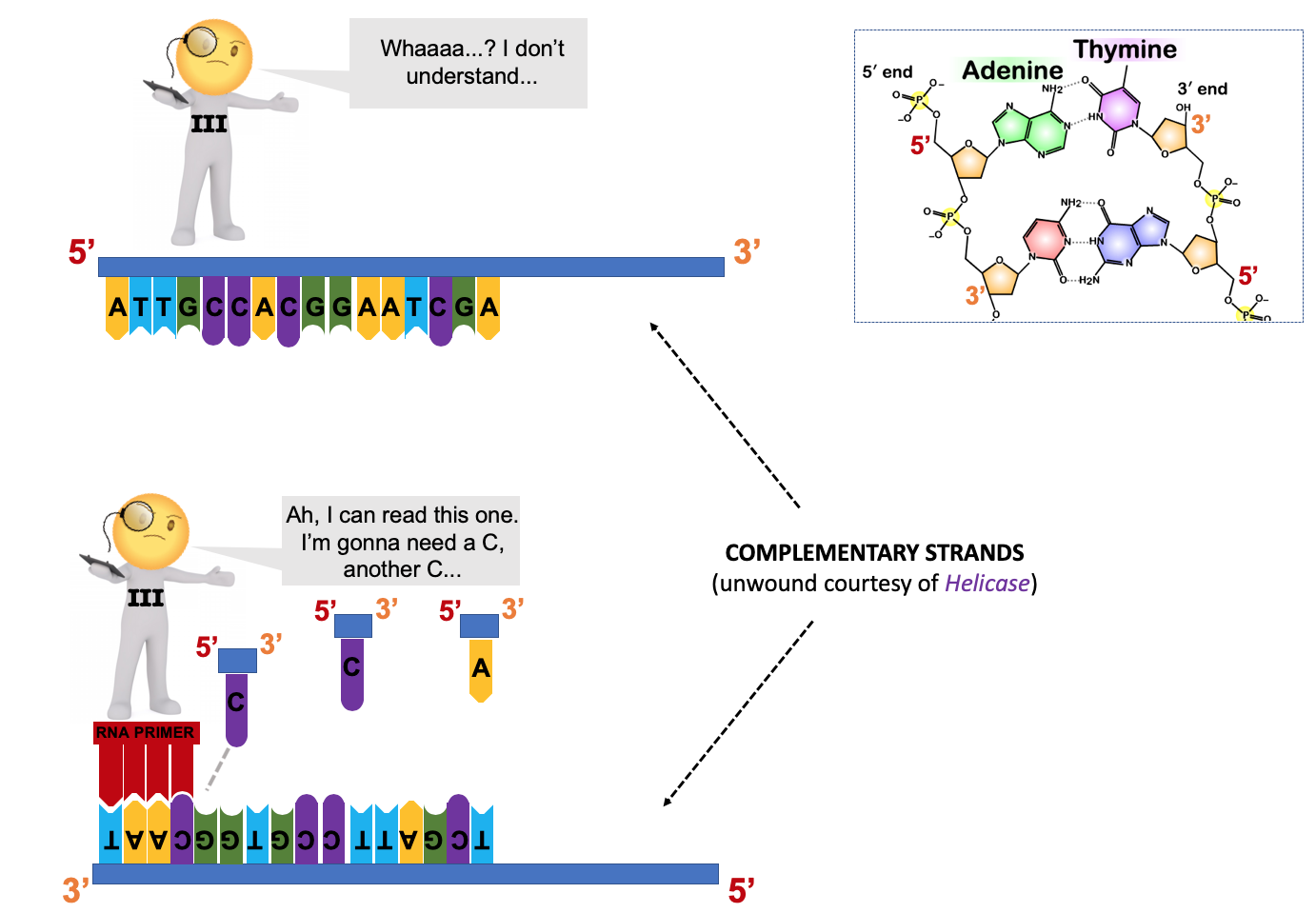
- At the origin of replication, the enzyme helicase begins to unwind the DNA, leaving two anti-parallel strands and creating a replication fork. There are single stranded binding proteins (ssb) that keep the strands apart.
- Topoisomerase is responsible for "relaxing" the supercoiling of DNA.
- The enzyme responsible for grabbing new nucleotides and matching them to the original DNA to create a new strand is DNA polymerase III.
- It can only bind to the parental DNA and start creating a new strand if there is an RNA primer (short RNA sequence) bound to the original strand. This primer is created by an enzyme called primase.
- It can only read DNA in the 3' to 5' direction and creates a new strand in the 5' → 3' direction)
- However, DNA goes both ways (3' to 5' is matched with 5' to 3'); therefore, for one strand the polymerase will move towards the replication fork (leading strand), and for the other strand the polymerase will be moving away from the replication fork (lagging strand).
- Sliding clamp protein tethers DNA polymerase to the strand and replication continues until the adjacent replication bubble is met.
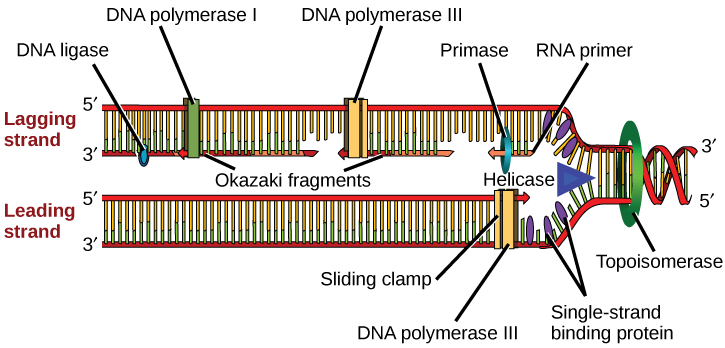
- Leading strand: As the helicase unwinds the DNA at the replication fork, the DNA polymerase III for the leading strand will continue adding more nucleotides to the newly forming strand.
- Lagging strand: The newly exposed parental DNA at the replication fork will require a new primer and DNA polymerase III in order for that region to be replicated. The lagging strand, thus, has multiple primers and polymerases that are added as the DNA unwinds, creating Okazaki Fragments.
- DNA polymerase I removes the primer and replaces it with deoxyribonucleotides and a DNA Ligase moves along the lagging strand and ties the Okazaki fragments together.
Watch Out!
The process of DNA replication is understood super well in prokaryotes, which is why it is typically taught in detail. This process in eukaryotes is very similar, the main difference is that some enzymes are called different names. See the chart below for the comparisons.

0:00 / 0:00
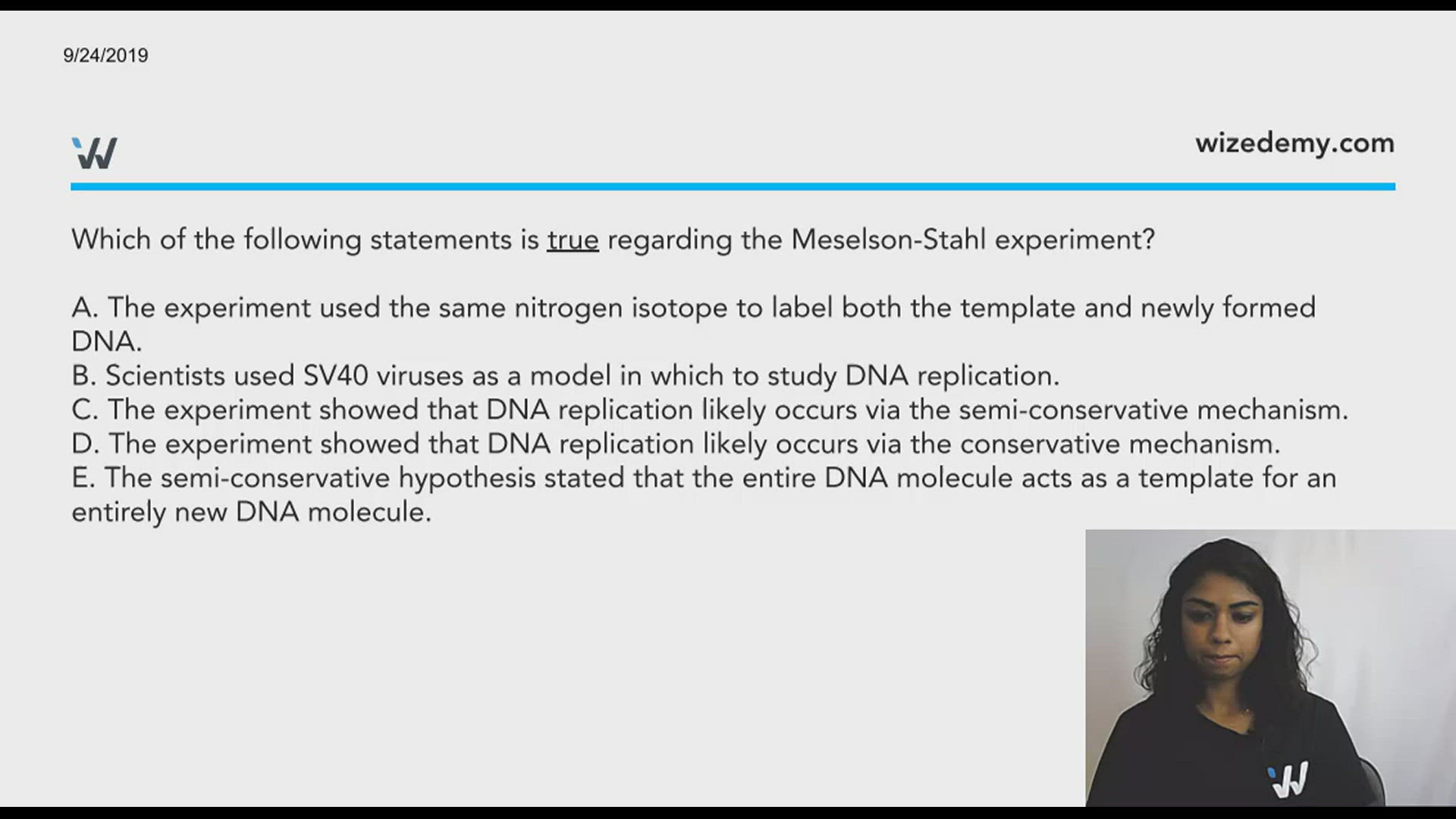
Which of the following statements is true regarding the Meselson-Stahl experiment?
A. The experiment used the same nitrogen isotope to label both the template and newly formed DNA.
B. Scientists used SV40 viruses as a model in which to study DNA replication.
C. The experiment showed that DNA replication likely occurs via the semi-conservative mechanism.
D. The experiment showed that DNA replication likely occurs via the conservative mechanism.
E. The semi-conservative hypothesis stated that the entire DNA molecule acts as a template for an entirely new DNA molecule.
The correct answer is C.
A. False- the experiment used two nitrogen isotopes: 15N (heavy) to label the template DNA and 14N (light) to label newly replicated DNA
B. False- The experiment was conducted in E. coli bacteria
C. True.
D. False- The Meselson-Stahl experiment ruled out the conservative mechanism hypothesis for DNA replication.
E. False. The semi-conservative hypothesis stated that the DNA molecule was pulled apart into single strands with each strand acting as a template for a complementary DNA strand.
0:00 / 0:00
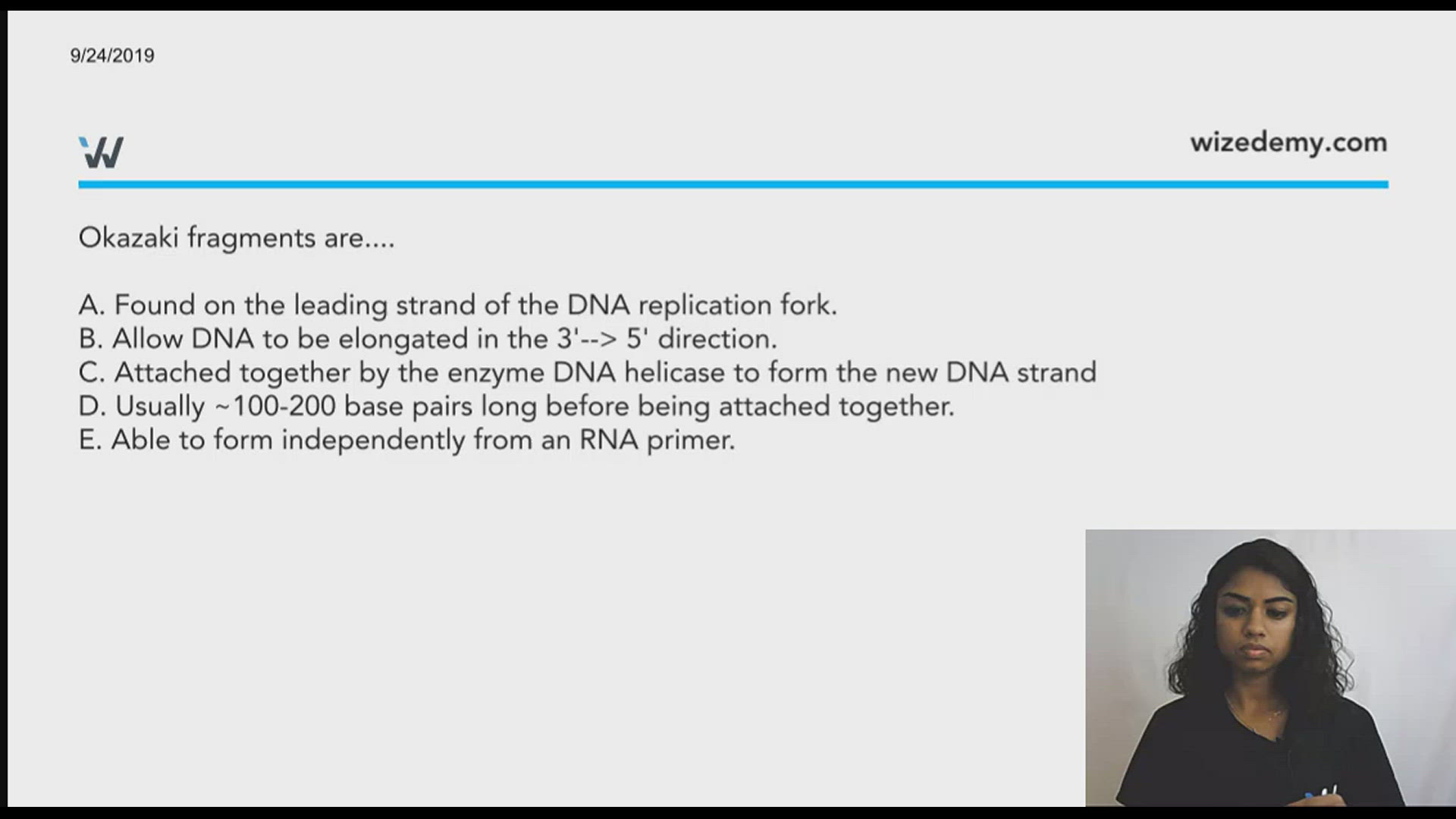
Okazaki fragments are:
A. Found on the leading strand of the DNA replication fork.
B. Allow DNA to be elongated in the 3'--> 5' direction.
C. Attached together by the enzyme DNA helicase to form the new DNA strand
D. Usually ~100-200 base pairs long before being attached together.
E. Able to form independently from an RNA primer.
D is the correct answer.
A. Incorrect. Okazaki fragments are found on the lagging strand of the replication fork
B. Incorrect. DNA is ALWAYS synthesized in the 5'--> 3' direction.
C. Incorrect. DNA ligase is the enzyme that attaches Okazaki fragments into one continuous strand.
D. Correct. Primers are formed every ~100-200 base pairs apart so the Okazaki fragments are approximately this long.
E. Incorrect. Every Okazaki fragment starts from an RNA primer.
On the leading strand of the replication fork, new DNA synthesis occurs: