Wize University Biochemistry Textbook > Membrane Protein & Transporters
Membrane Protein Function Overview
0:00 / 0:00
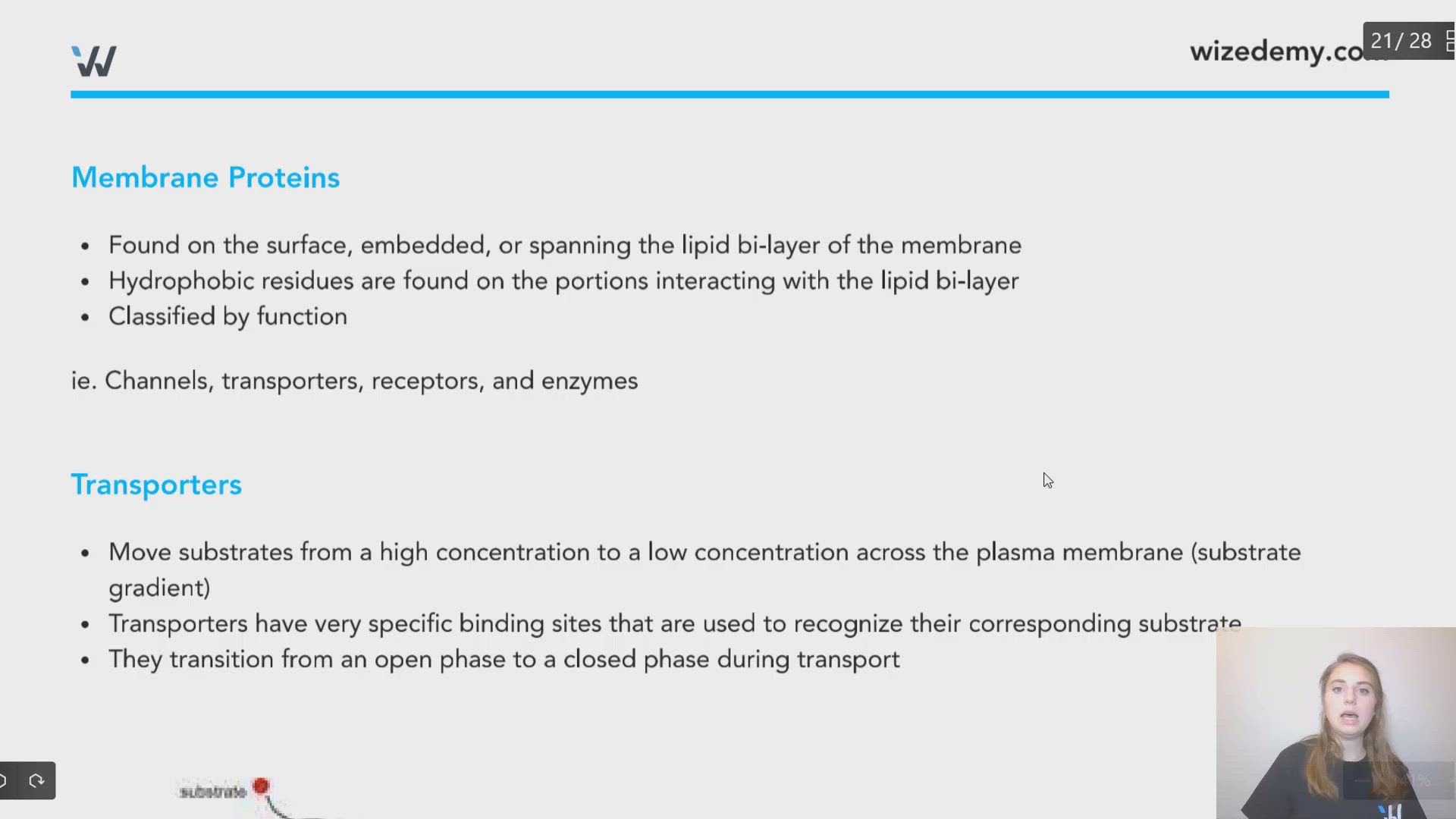
Membrane Proteins
- Found on the surface, embedded, or spanning the lipid bi-layer of the membrane
- Hydrophobic residues are found on the portions interacting with the lipid bi-layer
- Classified by function
ie. Channels, transporters, receptors, and enzymes
Transporters
- Move substrates from a high concentration to a low concentration across the plasma membrane (substrate gradient)
- Transporters have very specific binding sites that are used to recognize their corresponding substrate
- They transition from an open phase to a closed phase during transport
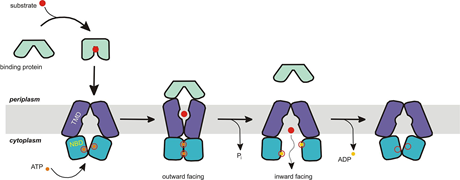
https://commons.wikimedia.org/wiki/File:Abc_importer.jpg. Author alexanderaloy and stargonzales have released this image into public domain.
Pumps/Active transport
- Moves substrates against their concentration gradient
- Requires external energy (ATP)
- Result in a conformational change of the protein
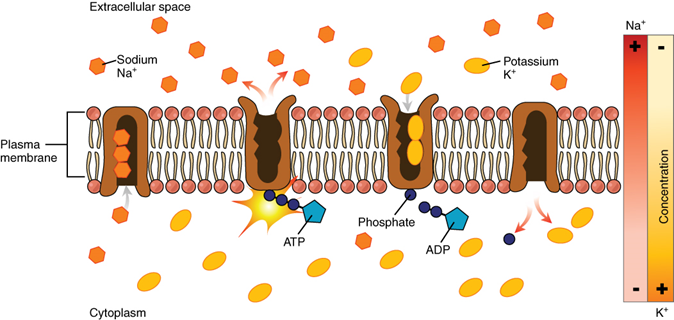
https://commons.wikimedia.org/wiki/File:0308_Sodium_Potassium_Pump.jpg. Author OpenStax has this image licensed under the Creative Commons Attribution 4.0 International license.
Receptor Proteins
- Nothing is transported across the plasma membrane, rather the ligand binding to the receptor on the outside of the membrane results in a signal to be generated on the internal side of the membrane
- Receptor proteins can span the membrane once or multiple times
- Many classes of receptors exist based on structure and method of signal transmission
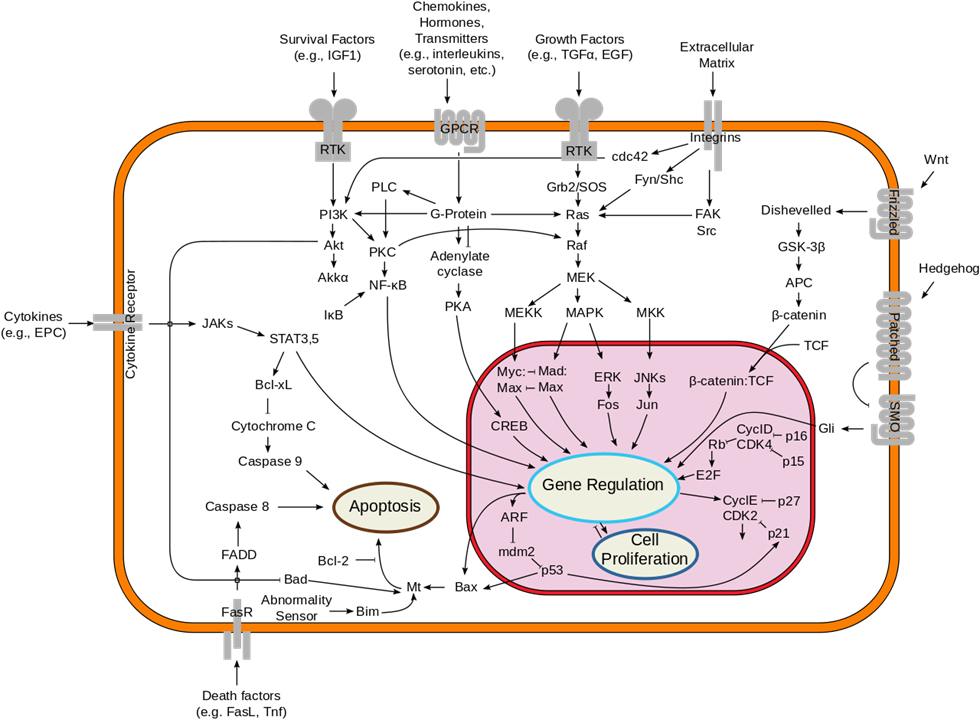
https://commons.wikimedia.org/wiki/File:Signal_transduction_pathways.svg. Author cybertory has this image licensed under the Creative Commons Attribution-Share Alike 3.0 Unported license.
What is TRUE about membrane proteins?