Wize University Biology Textbook > Cell Communication
Second Messengers [comprehensive]
Popular Courses
MCAT
General Course
Biology
General Course
General Biology
University Study Guides
BIOL 102
Queen's University
Grade 12 Biology
Canada High School
DAT
General Course
General Biology
University Study Guides
BIOL 130
University of Waterloo
SC/BIOL 1000 3.00
York University
BIO 1141
University of Ottawa
BLG 143
Toronto Metropolitan University
BIOL 1010
Dalhousie University
BIO230H1
University of Toronto
BIOL 1201
Western University
BIOL 1P91
Brock University
BIOL 1020
University of Manitoba
BIOL 331
University of Calgary
BIOA01H3
University of Toronto
MCB*2050
University of Guelph
BISC 102
Simon Fraser University
0:00 / 0:00
Second Messengers
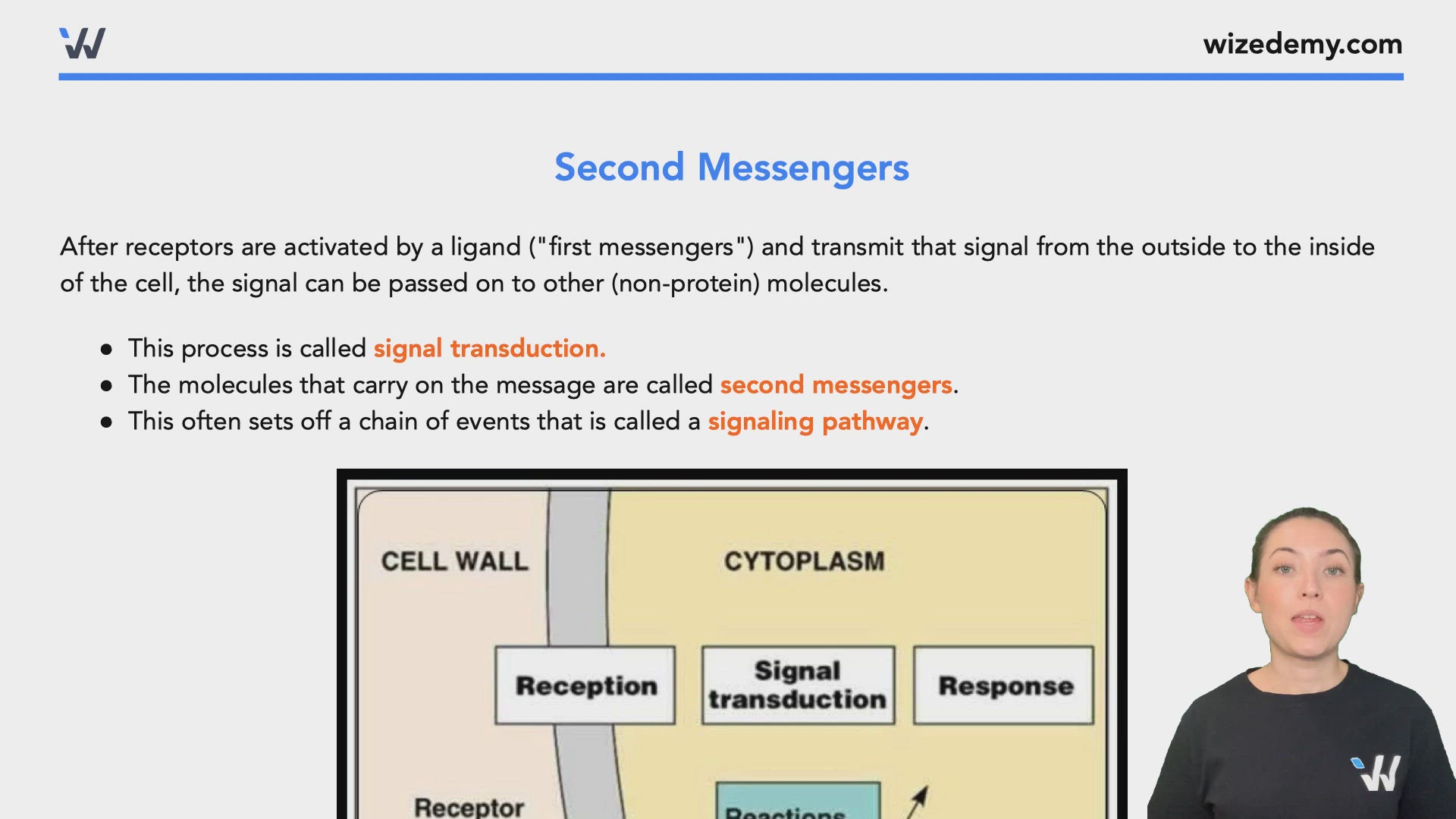
After receptors are activated by a ligand ("first messengers") and transmit that signal from the outside to the inside of the cell, the signal can be passed on to other (non-protein) molecules.
- This process is called signal transduction.
- The molecules that carry on the message are called second messengers.
- This often sets off a chain of events that is called a signaling pathway.

Common types of second messengers are:
- Calcium
- Cyclic AMP (cAMP)
- Inositol Triphosphate (IP3)
Calcium
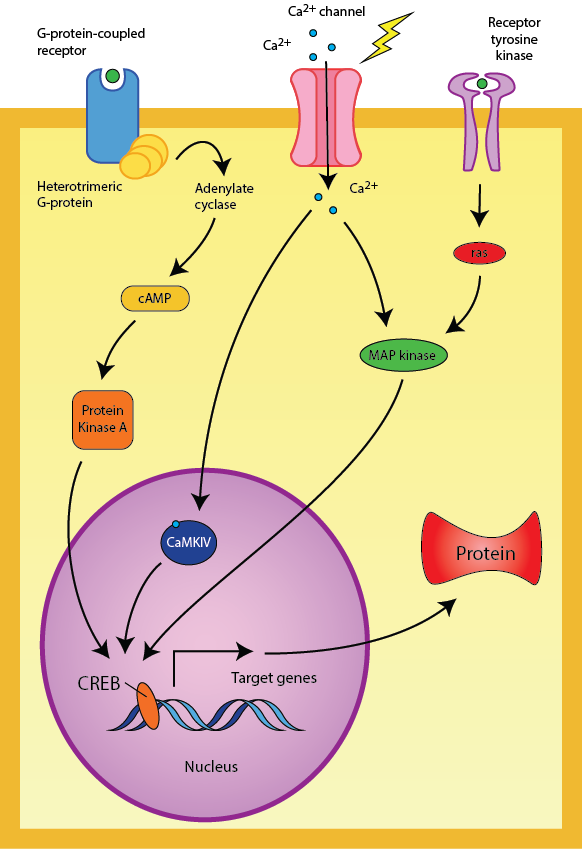
Calcium can be used as a second messenger.
- It can come from the outside of the cell or from storage compartments in the cytoplasm.
- When signaling molecules bind to ligand-gated calcium channels, calcium influx or release can occur.
- Some proteins have binding sites for calcium where the released Ca2+ ions can bind.
Cyclic AMP (cAMP)
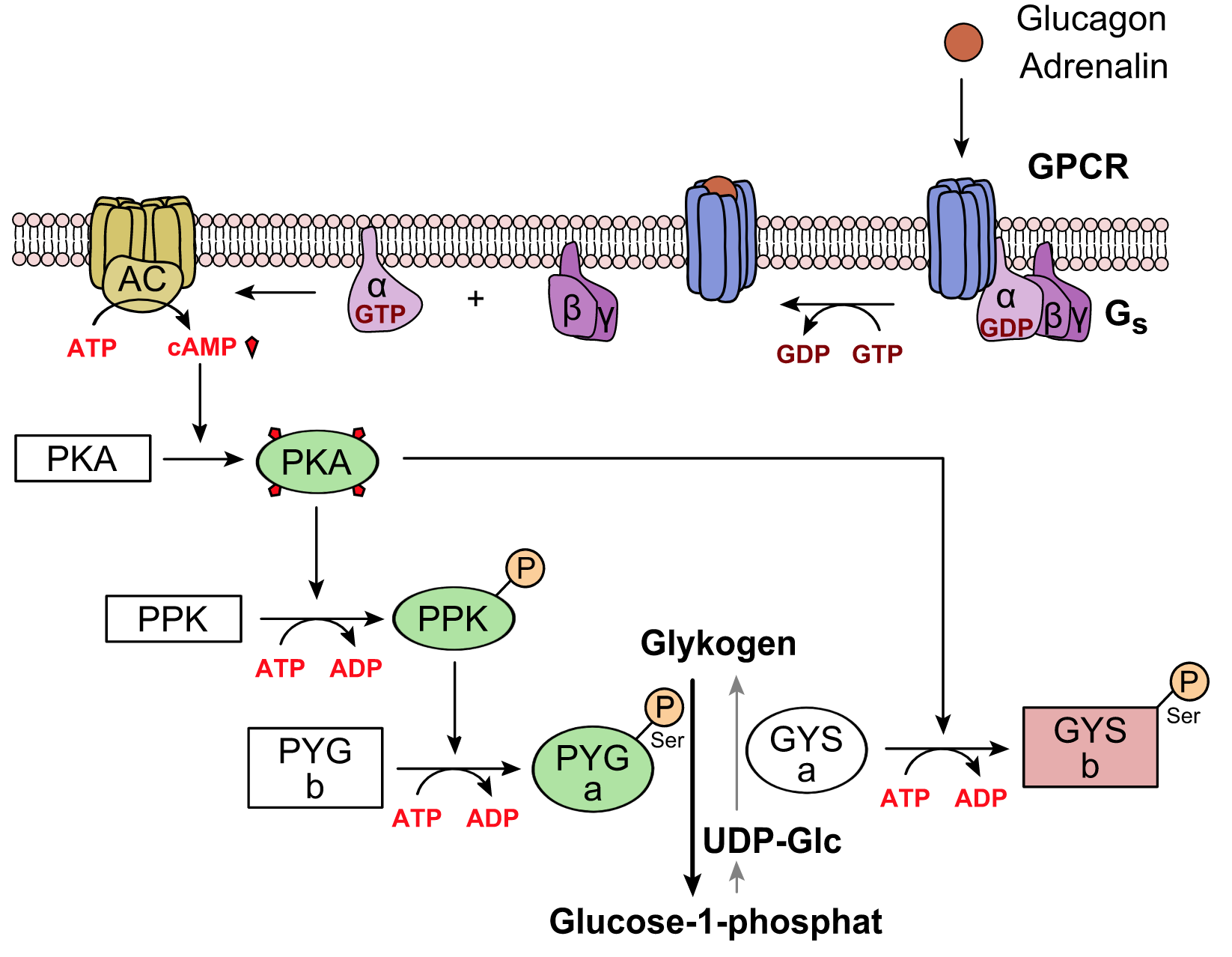
cAMP is synthesized by ATP by the enzyme adenylyl cyclase.
- In this example, a GPCR is activated and causes adenylyl cyclase to make cAMP from ATP.
- cAMP can take part in a cascade of events downstream.
- Activation of protein kinase A (PKA).
- Phosphorylation of downstream proteins.
Wize Tip
PKA has different protein targets in different cells. This allows for cAMP to have different effects in different contexts!
Inositol Triphosphate (IP3)
This molecule is derived from a phospholipid called phosphatidylinositol bisphosphate (PIP2).
- An enzyme called phospholipase C cleaves PIP2 into diacylglycerol (DAG) and inositol triphosphate (IP3).
- Both of these molecules can be second messengers.
- IP3 binds to intracellular ligand-gated calcium receptors located on the endoplasmic reticulum to release calcium.

About second messengers:
Which of the following is incorrect?