Popular Courses
Biology
General Course
General Biology
University Study Guides
BIOLOGY 1002B
Western University
BIOL 211
University of Calgary
BIOL 102
Queen's University
DAT
General Course
High School Biology
US High School
General Biology
University Study Guides
SC/BIOL 1000 3.00
York University
BLG 143
Toronto Metropolitan University
BIOL 112
McGill University
BIOL 1201
Western University
BISC 101
Simon Fraser University
BIOL 1011
Dalhousie University
BIOL 1P91
Brock University
BIOLOGY 2601A/B
Western University
BS 161
Michigan State University
BIOL 1020
University of Manitoba
BIOL 331
University of Calgary
BIOA01H3
University of Toronto

0:00 / 0:00
C4 Plants
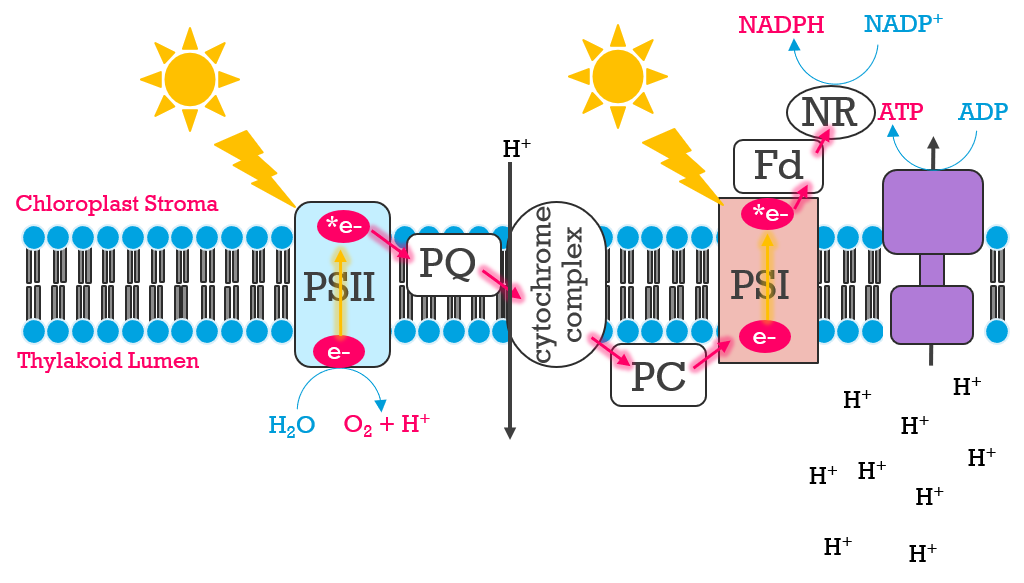
C4 plants have a mechanism to deal with photorespiration: they physically separate the light and dark reactions.
- The light-dependent reactions occur in the mesophyll.
- The Calvin cycle occurs in the bundle sheath cells.
- The result is no build up of O2 near Rubisco.

Reminder of Light-Dependent Reactions
The Strategy of C4 Plants
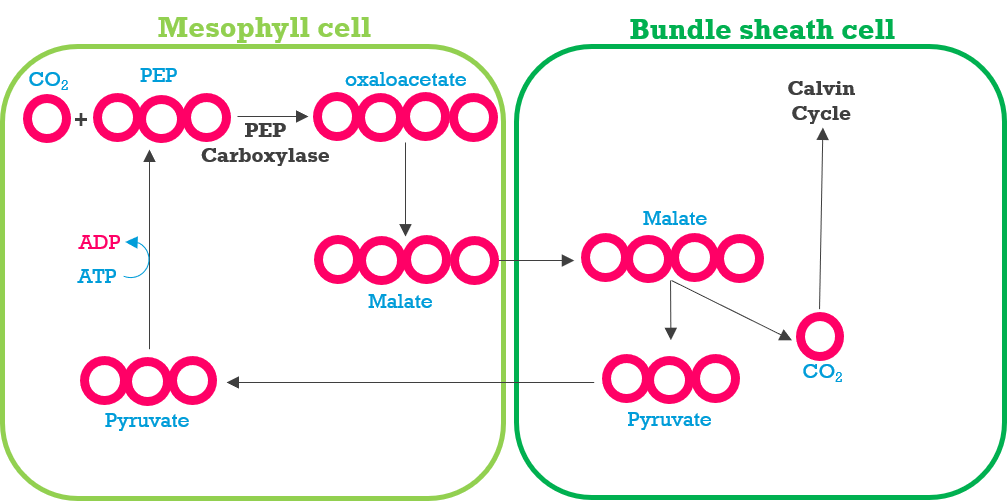
- CO2 fixation occurs in the mesophyll by PEP carboxylase to produce oxaloacetate.
- Oxaloacetate is converted to malate and transported to the bundle sheath cells.
- Malate is broken down to release CO2 which then feeds into the Calvin cycle.
- A 3-carbon molecule called pyruvate is returned to the mesophyll and converted back to PEP.
Examples of C4 Plants:
Usually found in hot, dry climates: sugar cane, certain types of grass, maize (corn).

Which of the following is true about the mechanism that C4 plants use to prevent photorespiration?