Wize University Biology Textbook > Evolution
Descent with Modification
Popular Courses
AP Biology Exam Prep Course
AP Exam Prep
Biology
General Course
General Biology
University Study Guides
Grade 12 Biology
Canada High School
High School Biology
US High School
BIOL 103
Queen's University
DAT
General Course
BIO 1131
University of Ottawa
BIOL 121
University of British Columbia
BIOLOGY 1M03
McMaster University
General Biology
University Study Guides
BIO120H1
University of Toronto
BIOL 108
University of Alberta
SC/BIOL 1000 3.00
York University
BIOL 111
McGill University
BIOL 243
University of Calgary
BIOL*1070
University of Guelph
BIOLOGY 2581A/B
Western University
BIOL 1010
Dalhousie University
SC/BIOL 1001 3.00
York University
0:00 / 0:00
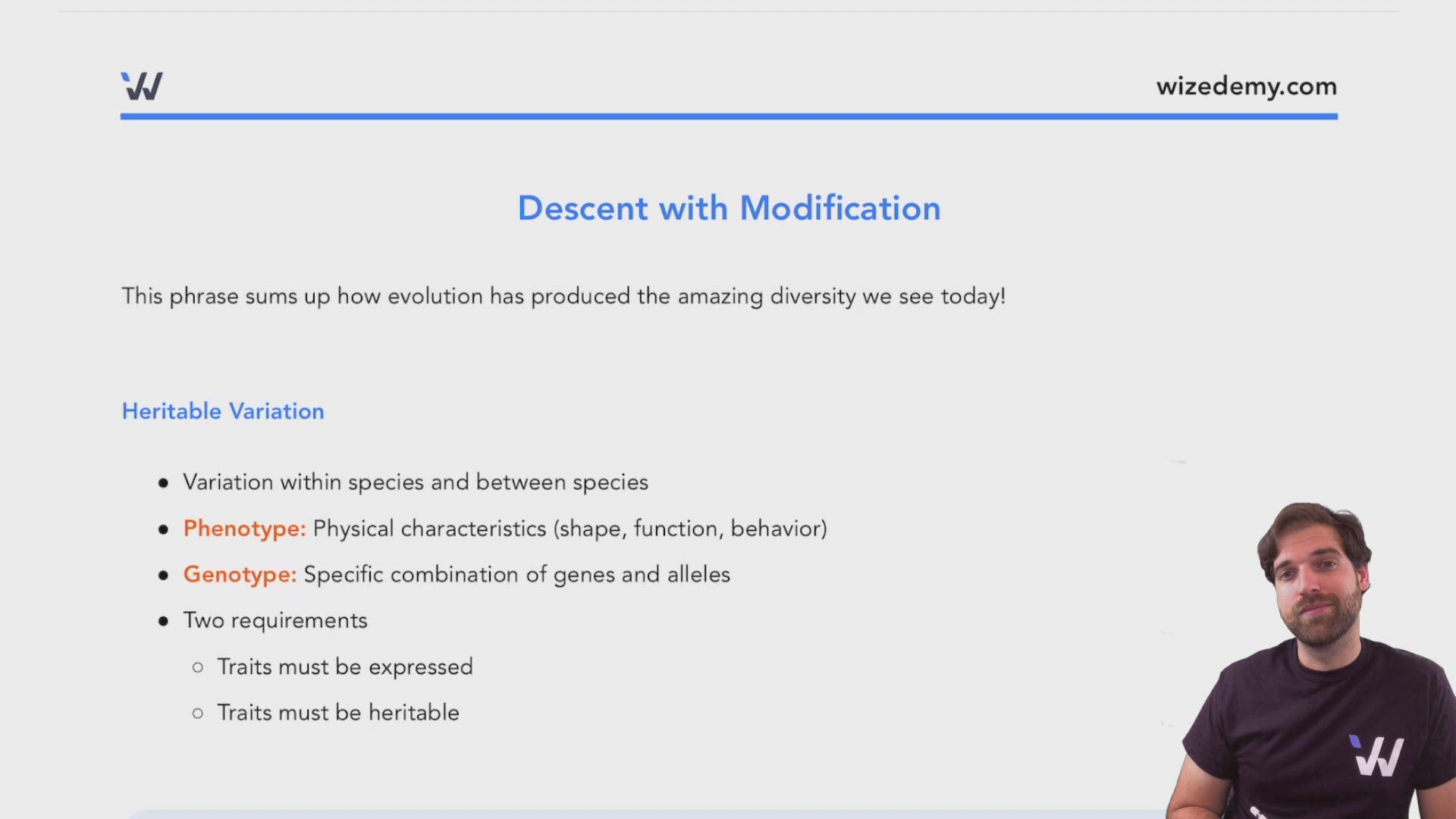
Descent with Modification
This phrase sums up how evolution has produced the amazing diversity we see today!
Heritable Variation
- Variation within species and between species
- Phenotype: Physical characteristics (shape, function, behavior)
- Genotype: Specific combination of genes and alleles
- Two requirements
- Traits must be expressed
- Traits must be heritable
Wize Concept
Variation is often random, however Natural Selection is NOT random. It selects individuals that do the best in the environment.
Sources of Variation
- Mutation: Random errors in DNA replication
- Meiosis: Sexual reproduction which can introduce genetic variation
- Recombination: chromosomes cross and exchange sections
- Independent Assortment: Offspring receive one of each chromosome at random from the parent
- Fertilization: Combining two parental genomes
Selection
- Acts on the individual
- Agent of selection: environmental feature that consistently produces differential survival
- Causes the weaker / less adapted to die off Example: Heat, drought, salinity
- Selective pressure: How intensely the environment is selecting a trait Example: What fraction of the population dies each year due to drought
- Biotic: living pressure Example: Prey, Predators
- Abiotic: Non-living pressure Example: Rainfall, Temperature, Nutrients

Natural Selection
- Natural Selection depends on the environment
- Context-dependent
- Does not move towards perfection
- Requirements
- Heritable Variation
- Limited Resources
- Differential survival
- Given these properties, the population will adapt
Evidence for Evolution
- Fossils Records: see species change gradually through time
- Comparative Embryology: distantly related species have similar embryonic stages (due to shared ancestry)
- Biogeography: the distribution of related species matches evolutionary theory
- Vestigial Structures: some traits have no current function and are slowly disappearing Example: Whale pelvis, Human tailbone
- Genomics: DNA is more similar between closely related species
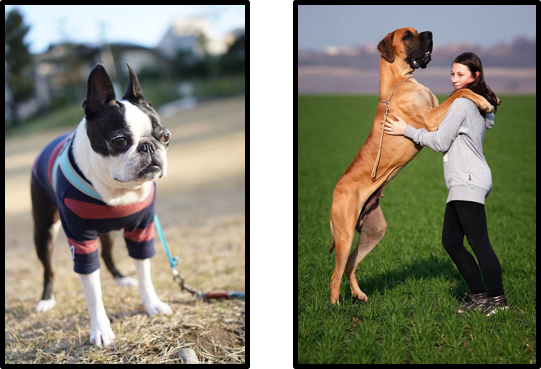
- Artificial Selection: We have selectively bred traits to produce desired phenotypes Example: Corn, Dogs
- Resistance in Pests: Pests have become resistant to our methods of control
Practice: Variation
Which of the following are forms of heritable variation? (select all that apply)
Practice: Variation
Which of the following is NOT a source of variation in populations?
Practice: Natural Selection
Which of the following is not a requirement of Natural Selection?
Practice: Evidence for Evolution
Which of the following is NOT evidence for evolution?