Wize University Biology Textbook > Evolution
Evolution of Populations
Popular Courses
AP Biology Exam Prep Course
AP Exam Prep
BIOLOGY 1001A
Western University
Biology
General Course
General Biology
University Study Guides
Grade 12 Biology
Canada High School
DAT
General Course
High School Biology
US High School
Grade 11 Biology
Ontario High School
Grade 11 Biology
Canada High School
BIOL 103
Queen's University
BIO 1131
University of Ottawa
BIOL 121
University of British Columbia
BIOLOGY 1M03
McMaster University
BIO120H1
University of Toronto
General Biology
University Study Guides
BIOL 108
University of Alberta
SC/BIOL 1000 3.00
York University
Biology 20
Alberta High School
BIOL 111
McGill University
BIOL 243
University of Calgary
0:00 / 0:00
Evolution of Populations
This is a huge section of conservation and evolutionary research that seeks to understand how populations change over time.
Natural selection acts on an individual, but evolution is seen in populations
Watch Out!
Individuals cannot evolve!
Evolution and Genetics
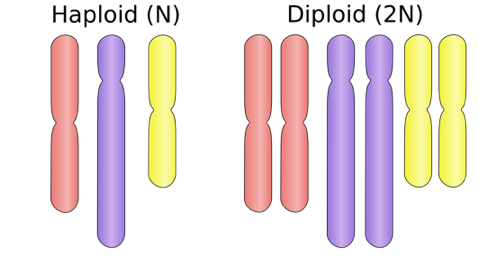
- Gene: DNA that codes for a trait
- in diploids there are 2 copies of each gene = 2 alleles
- Evolution: Change in allele frequencies of a population over time
- Fitness: How successful an individual's genotype is in the next generation Example: An individual which produces 2 offspring has 2x the fitness of an individual that only produces 1
Drivers of Evolution
- Natural Selection
- Directional Selection: one extreme value of a trait is most successful
- The mean population value shifts, but the variance stays the same
- Stabilizing Selection: an intermediate trait value is most successful
- the mean population value stays the same, but the variance decreases
- Disruptive Selection: the two extreme values of a trait are most successful
- the mean population value stays the same, but the variance increases

- Mutation
- Random change in DNA rarely results in evolution
- Genetic Drift
- Change in allele frequency due to chance (stochasticity)
- exaggerated in small populations
- Bottleneck Effect: population reduces drastically, leaving only a small subset of the original gene pool
- Founder Effect: small group breaks off from population and founds a new population with a small subset of the original gene pool
- Gene Flow
- Mating occurs between two distinct populations
- more variation within a population
- less difference between populations
0:00 / 0:00
Example: Directional Selection
In a forest in the northern latitudes rabbits use their fur color as camouflage. Most rabbits are brown, though there is significant variation in fur color.
If the climate changes and now snow covers the ground, what type of selection would you expect on fur color?
Describe the type of selection and the change in the population's fur color.
We would expect to see directional selection, since now rabbits with whiter fur will have higher survival in the population. This will shift
the mean fur color of the population towards white.
Practice: Genetics
How many alleles of each gene are present in diploid organisms?
Practice: Drivers of Evolution
Which of the following best describes disruptive selection?
Practice: Drivers of Evolution
Individuals migrating between two distant populations will result in __________.
0:00 / 0:00
Graphing Allele Frequencies Over Time
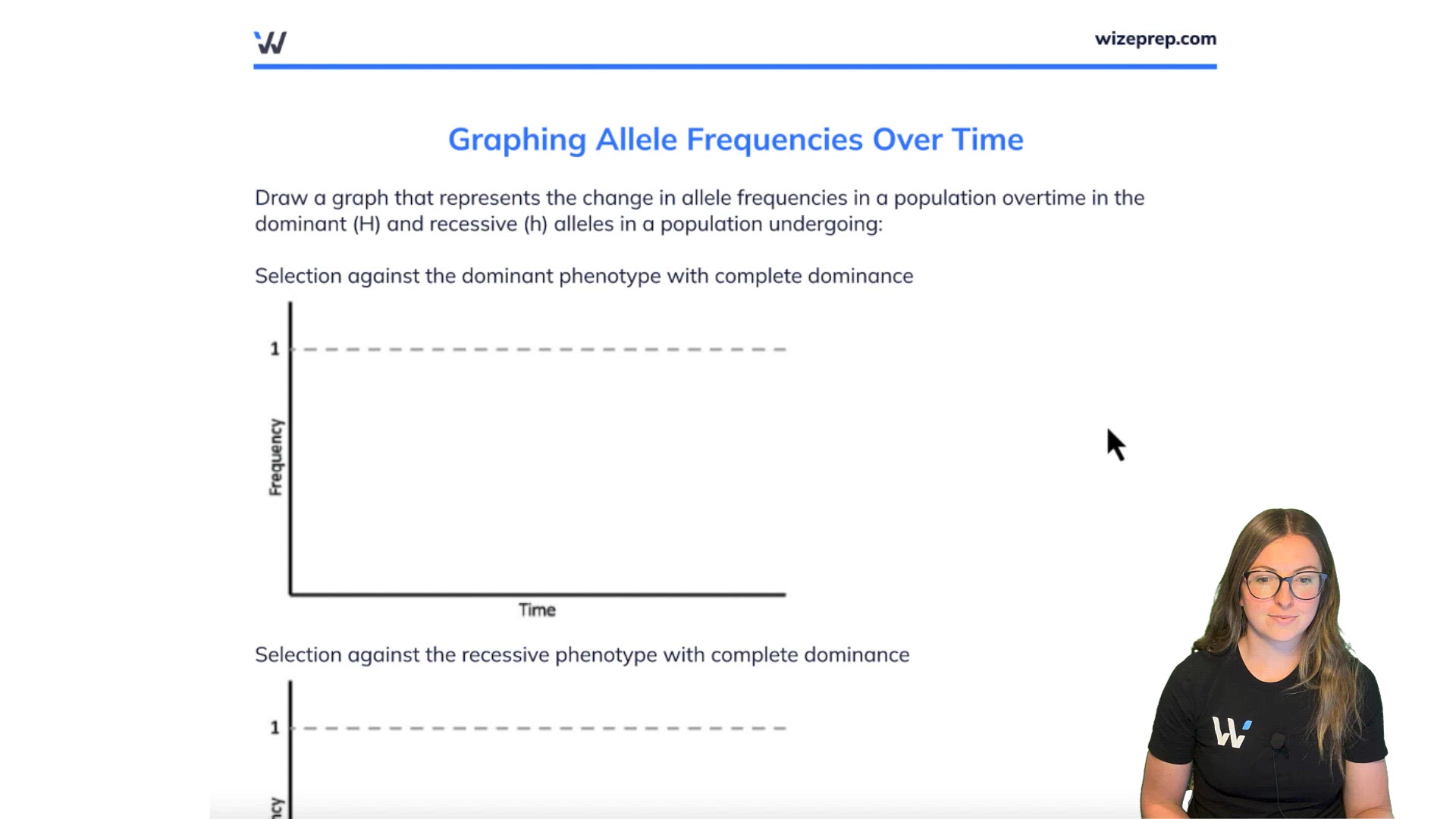
Draw a graph that represents the change in allele frequencies in a population overtime in the dominant (H) and recessive (h) alleles in a population undergoing:
Selection against the dominant phenotype with complete dominance
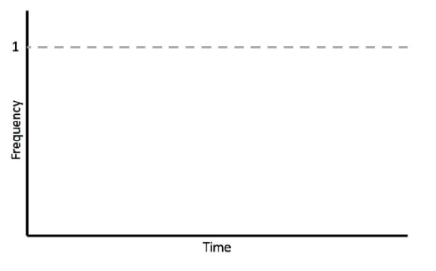
Selection against the recessive phenotype with complete dominance
Selection favoring heterozygotes with incomplete dominance
Selection against heterozygotes where H has an initially high frequency
Selection against heterozygotes where h has an initially high frequency
You are observing a population of pigs where the B locus controls pig colour with two alleles B1 and B2. There are so many pigs in this population that we can ignore the effects of genetic drift. You note that the starting frequencies of B1 and B2 are 0.7 and 0.3, respectively. Under which situation would B2 reach a frequency of 1 and B1 would disappear completely in the population?
- wB1B1 > wB1B2 < wB2B2
- wB1B1 < wB1B2 < wB2B2
- wB1B1 < wB1B2 > wB2B2
- wB1B1 = wB1B2 < wB2B2